

Show summary Hide summary
- Why hedgehogs need your garden more than ever
- Turn your lawn into a hedgehog-safe highway
- Make your beds and borders a natural hedgehog buffet
- Smart supplementary feeding without hidden risks
- Build safe spaces and hedgehog shelters that really work
- Keep tools, ponds and pets compatible with garden safety
- Recognise when hedgehog care means stepping in
- Eight powerful ways to boost wildlife support from home
Picture this: a quiet night, rain on the patio, and a rustle in the flowerbed – a hedgehog on patrol. With a few smart tweaks, your outdoor space can become a hedgehog shelter and a lifeline for these spiky companions that are vanishing from the countryside. If you’re interested in wider conservation, see how bold strategies rescue our planet go hand-in-hand with local action.
Why hedgehogs need your garden more than ever
Across rural Britain, hedgehog numbers have crashed since 2000, with surveys suggesting losses of between a third and three-quarters. Intensive farming has stripped away hedgerows and rough corners, while pesticides have thinned out beetles, worms, and caterpillars. Fewer insects mean less food, and fewer safe habitats mean more deadly encounters with roads and machinery.
Urban and suburban areas, though, tell a different story. Recent monitoring shows populations starting to stabilise where gardens connect and residents care about hedgehog protection. Your patch, however small, can join this network of wildlife support and tip the balance back in their favour.
How Microplastics Could Be Silently Harming Your Brain and Driving Alzheimer’s and Parkinson’s Diseases
Scientists Unveil Massive Spiraling Plumes Concealed Within the Depths of Greenland’s Ice Sheet
Turn your lawn into a hedgehog-safe highway
When ecologist “Hedgehog Hugh” Warwick talks about hedgehogs, he describes their perfect world as a mosaic: lawns, shrubs, log piles, and ponds connected like stepping stones. A single fenced-off garden breaks that pattern. A simple 13x13cm gap under a fence creates a gateway; a line of gardens doing the same becomes a hedgehog highway. For more insight into how fragmented habitats threaten species, consider the challenges posed by wildlife diseases and habitat breaks in the UK.
Homeowner Sarah in Leeds convinced four neighbours to cut matching holes and mark them with small wooden signs. Within two weeks, her wildlife camera filmed three different hedgehogs using the route. That kind of joined-up habitat conservation does more than any single “perfect” garden, and it costs nothing but a few minutes with a saw.
Make your beds and borders a natural hedgehog buffet
Hedgehogs are generalist feeders. In a healthy garden they hoover up beetles, caterpillars, earwigs, millipedes and earthworms. Short, pristine turf and heavy chemical use leave them with almost nothing. A richer layout – mixed shrubs, clumps of ornamental grasses, wildflower corners and bits of bare soil – brings the bugs flooding back. Connect these ideas with other biodiverse gardening practices to further boost your garden’s appeal for wildlife.
Think in layers: low ground cover for beetles, flowering plants for pollinators, and rotting wood or leaf piles for everything in between. Guides such as these hedgehog-friendly garden features show how a single log pile can become a mini invertebrate city. More prey means stronger, heavier animals heading into hibernation.
Smart supplementary feeding without hidden risks
With natural prey under pressure, top-up food can be useful, especially during dry spells or when mothers are nursing hoglets. High-meat kitten biscuits or specialist hedgehog kibble work well and keep their teeth strong. Water in a shallow dish is vital, particularly during heatwaves when natural puddles vanish overnight.
Uncontrolled feeding, though, can backfire. Crowded bowls encourage fights and increase disease spread. The trick is to place food inside a low, covered tunnel or box with a hedgehog-sized entrance, cleaned daily. Rotating the feeding spot nudges them to keep foraging naturally instead of queuing like pets.
Build safe spaces and hedgehog shelters that really work
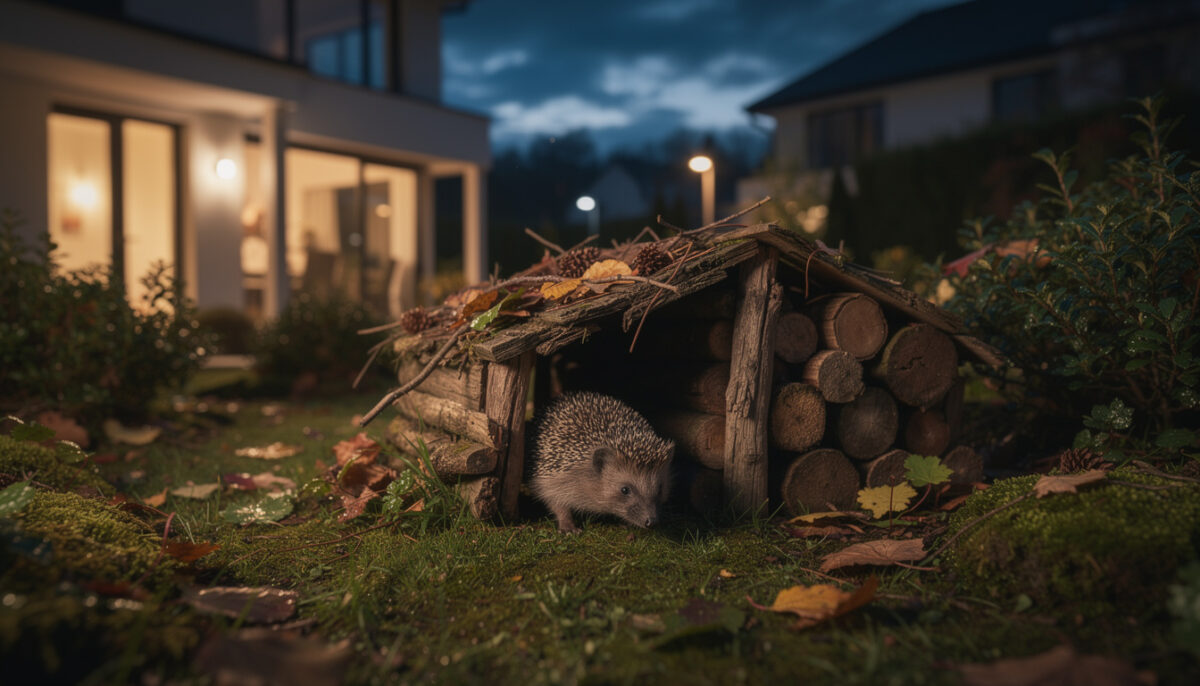
After food, cover is the next big need. Hedgehogs spend large chunks of the day and winter hidden away, so they look for dark, quiet corners that feel secure. Low, dense shrubs, untidy hedges, and tucked-away leaf banks are perfect. Where space allows, a purpose-built hedgehog shelter adds reliable protection from dogs, foxes, and bad weather.
You can build a box from untreated wood with a tunnel entrance and a dry, insulated chamber, then stuff nearby ground with leaves and twigs for bedding. For more design ideas, resources like best ways to create a safe outdoor space walk through different models that blend into flowerbeds or under decking. The goal stays the same: invisible, quiet, and predator-proof.
Keep tools, ponds and pets compatible with garden safety
Most injuries seen by rescue centres come from strimmers, mowers and bonfires. Before the first cut of the year, gardeners like Tom in Bristol now walk their lawns slowly, checking long grass, compost heaps and piles of rubbish. Lifting a tarp or poking a brush gently through leaves can reveal a sleeping animal just in time.
Ponds offer brilliant drinking spots, but steep sides trap hedgehogs. A simple ramp of bricks or a half-submerged plank turns a hazard into a safe waterhole. Cover uncovered drains, netting and deep holes, and think about dogs: supervised evening runs or a hedgehog-only corner give both species space.
Recognise when hedgehog care means stepping in
Nocturnal animals bustling around at midday often signal trouble. A hedgehog staggering, lying out in the open, covered in flies or screaming needs help fast. Thick gloves, a high-sided box, a towel, and a warm water bottle wrapped in fabric make an improvised ambulance while you phone a rescue centre.
Sometimes a daytime sighting is perfectly normal, such as a female dragging leaves in spring to build a nursery nest. When unsure, animal welfare groups advise calling for guidance rather than guessing. A short phone conversation can mean the difference between life-saving intervention and unnecessary stress.
Eight powerful ways to boost wildlife support from home
One resident cannot reverse decades of decline alone, yet small actions stack quickly across a street or estate. Ecologist Grace Johnson likes to summarise hedgehog-friendly living as a checklist that fits on a fridge door. Once ticked off, it effectively turns your home into a tiny conservation hub.
Use this list as your personal game plan for hedgehog care and broader environmental awareness:
- Cut 13x13cm access gaps to link gardens into safe habitats.
- Grow mixed-height planting, wildflowers and log piles for insect prey.
- Provide fresh water daily and species-appropriate dry food when needed.
- Install at least one hedgehog house or natural shelter zone.
- Check for nests before mowing, strimming or lighting bonfires.
- Make ponds and drains escapable with ramps or shallow edges.
- Share sightings and join citizen science projects monitoring populations.
- Contact local councils or landlords about wilder, connected green spaces.
For deeper garden planning ideas, guides like creating a hedgehog-friendly habitat in your garden show how these steps fit together into a coherent outdoor design.
What should I put in a hedgehog shelter?
Use untreated wood for the structure, then leave plenty of dry deciduous leaves, hay or torn strips of plain cardboard nearby so hedgehogs can choose their own bedding. Avoid straw that’s sharp or dusty, and never use plastic bags, shredded plastic or fabrics that can trap spines or legs. The interior must stay dry, dark, and free from regular disturbance.
Is it safe to feed hedgehogs every night?
Regular feeding is helpful when natural food is scarce, but it should not replace foraging. Offer a small portion of high-meat kitten biscuits or specialist hedgehog food and fresh water, then remove leftovers each morning. Place food inside a low tunnel or feeding box to deter cats. Moving the station occasionally and keeping portions modest reduces the risk of dependency and disease spread.
How do I know if a hedgehog needs rescuing?
Warning signs include being out in the open in daylight while inactive, appearing very thin, wobbling or circling, visible injuries, fly eggs or maggots, or loud distress calls. Babies alone outside the nest for a long time also need attention. If you notice any of these, place the animal in a ventilated box with a towel and gentle warmth, then phone a local hedgehog rescue or national wildlife helpline for instructions.
Can I keep a hedgehog as a pet if it visits often?
Scientists Sound Alarm: Australia’s ‘Zombie Tree’ Faces Possible Extinction Within a Generation
Scientists Uncover Hidden Alliance Between Plants and Beetles
Wild European hedgehogs must stay wild. They roam large areas, choose their own mates and rely on a varied natural diet. Turning a regular garden visitor into a pet would harm its welfare and is illegal in many regions. The best way to support frequent guests is to keep your garden safe, provide water, occasionally offer appropriate food, and leave them free to come and go along connected garden routes.
Do hedgehogs help control garden pests?
Yes, hedgehogs are natural pest managers. They eat slugs, beetles, caterpillars and other invertebrates that often damage vegetable beds and ornamentals. By encouraging hedgehogs rather than using pellets or sprays, you cut chemical inputs, support wider biodiversity and create a healthier soil community. Over time, this natural balance tends to reduce serious pest outbreaks while keeping your garden lively and resilient.