
Show summary Hide summary
- The Day Europe Lost an Entire Continent
- Hidden Forests, Ancient Bones: What Lies Beneath the Waves Today?
- How Scientists Are Mapping a Sunken Wilderness
- The People Who Lived Where the Sea Is Now
- Could It Happen Again? The Unsettling Lessons of a Lost World
- FAQ
- What evidence have scientists found to prove Doggerland existed beneath the North Sea?
- How did Doggerland become submerged under the North Sea?
- Why is Doggerland important for understanding European prehistory?
- Can we visit or explore Doggerland today?
- What can the story of Doggerland tell us about future changes in our coastlines?
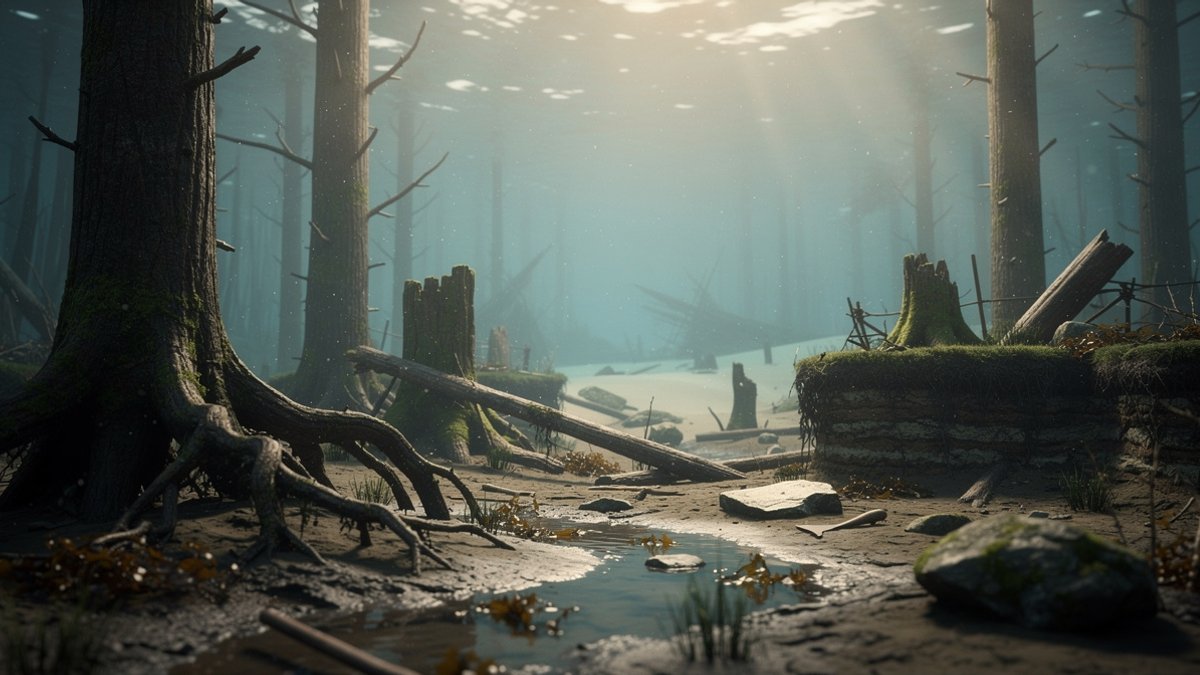
When we look out over the restless grey expanse of the North Sea, it is easy to imagine nothing but salt water and storm. Yet beneath these modern waves lies the ghost of another world – a vanished landscape filled with towering forests, wild herds, and the lost traces of entire human communities. Scientists now know that a “lost world” beneath the North Sea was once full of forests, teeming life, and the intricate trails of people who called it home. This drowned realm, submerged thousands of years ago, is only now revealing its ancient secrets through cutting-edge research that could reshape our sense of European prehistory.
New sonar maps, trawled-up bones, and deep sediment cores are forcing archaeologists and geologists to rethink what vanished during the floods that swallowed Doggerland, the so-called Atlantis of the North. What are we missing about the landscapes humans once claimed here? How does this lost chapter change our idea of who we are, and what might happen as our own coastlines change again? Beneath the North Sea, a forgotten continent is waiting to be rediscovered. astonishing ancient rituals
The Day Europe Lost an Entire Continent
At the end of the last Ice Age, a world existed that barely registers on our modern maps. Known as Doggerland, this was not an island or a mere coastal plain, but a vast expanse of land that bridged what we now call the North Sea. Imagine an unbroken stretch of prairies, lakes, and dense forests connecting present-day Britain to Scandinavia and mainland Europe. For thousands of years, bands of hunters and gatherers called this prehistoric landscape home, their lives threaded through the rhythms of rivers and the migrations of great animals.
A supervolcano almost erased humans 74,000 years ago—what we did to survive shocked scientists
Pirouetting and gaping: What scientists just saw as humpback migration begins—and why it’s causing serious debate
The tranquil facade shattered in the blink of a geological eye. Scientists studying the North Sea’s floor have uncovered evidence of a catastrophic event that condemned Doggerland to the depths. Around 8,200 years ago, as melting glaciers fed rising oceans, a massive tsunami was unleashed—likely triggered by the collapse of a vast undersea shelf near Norway, known today as the Storegga Slide. Imagine walls of water racing across the already flooded lowlands, erasing ancient forests and villages in a matter of hours. The seething ocean swallowed Doggerland almost overnight, transforming a thriving continent into a submerged landscape of silt and silence. ice age forests in the North Sea’s sunken “Lost World”
The loss of Doggerland is more than a tale of shifting coastlines. It is a reminder that prehistoric Europe was not as fixed or familiar as we imagine. The sea that now divides nations was once a corridor teeming with life—a world lost as suddenly as any civilization in myth, and only now beginning to yield its secrets.
Hidden Forests, Ancient Bones: What Lies Beneath the Waves Today?
- Beneath the roaring traffic of ships and oil rigs, the North Sea hides snapshots of a vanished world.
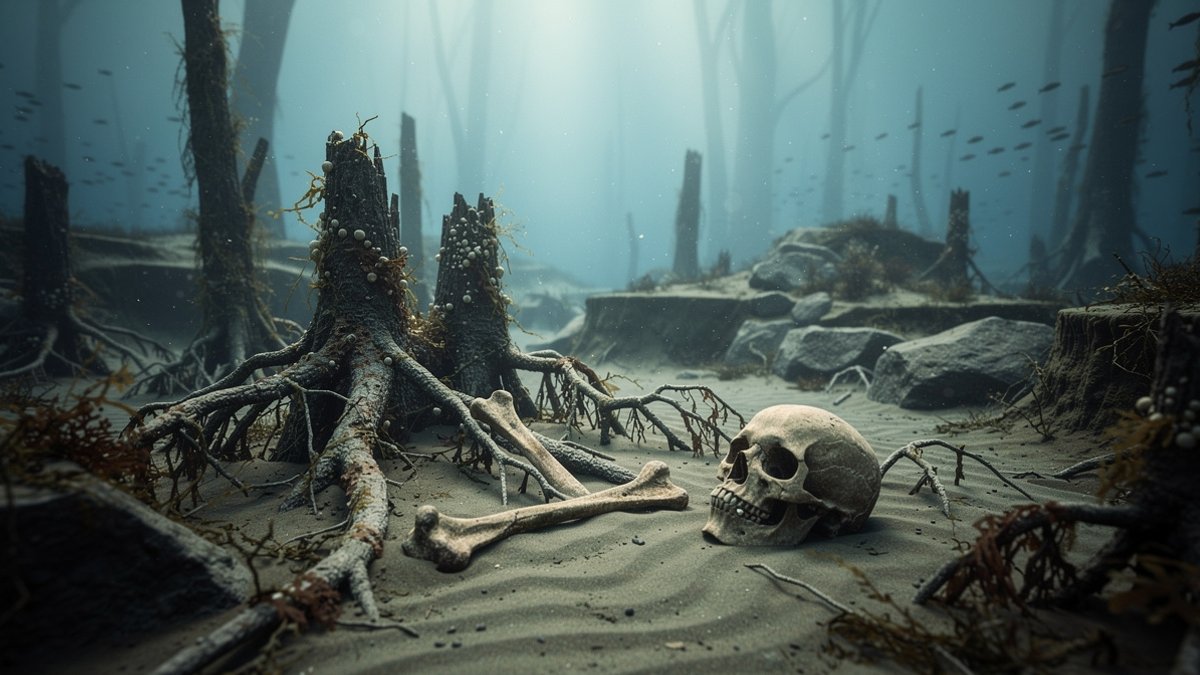
- Dragging their nets across the seafloor, fishermen sometimes haul up waterlogged tree trunks, tangled roots, and the petrified bones of creatures that no longer stalk the European wilds.
- Each unexpected find hints at a lush, green landscape, now drowned and forgotten.
Paleobotany has reconstructed this submerged terrain from sediment cores, revealing evidence of forests teeming with birch, pine, and hazel where now only saltwater swirls. Scattered among the plant remains are tusks and jaws of mammoths, reindeer antlers, and even prehistoric skeletons—proof that this was once a hunting ground for humans as well as the great herds. sauropod rearing behavior
Each relic challenges our sense of where land ends and sea begins. Beneath the waves, the remains of a thriving ecosystem still whisper stories of survival and sudden loss, giving scientists fresh clues to how rapidly landscapes—and lives—can be swept away by the turning of the Earth’s climate.
How Scientists Are Mapping a Sunken Wilderness
- To reimagine the vanished world beneath the North Sea, researchers tap a startling toolkit.
- Seismic mapping, once reserved for oil prospectors, now traces ancient riverbeds and the ghostly outlines of forests.
- Underwater archaeology teams deploy drones that glide through frigid, murky depths, snapping images of half-buried tree stumps and long-forgotten tools.
- Every fragment of preserved peat or mammoth tusk is a clue, carefully retrieved through sediment sampling, then studied for signs of prehistoric life.
The true breakthrough, however, may come from ancient DNA embedded in the seabed itself. Tiny genetic fragments, sifted from drowned soils, reveal the footsteps of elk, aurochs, and the humans who hunted them. Yet this detective work unfolds under growing threat. archaeological evidence of “Lost World” beneath the North Sea North Sea drilling and a changing climate risk scattering these fragile remains, muddying the signals that tell us how people adapted as continents drowned. The urgency is clear: every survey may capture a piece of history just before it vanishes.
The People Who Lived Where the Sea Is Now
Scattered along the seabed, where trawlers now sweep for shrimp, researchers have found compelling archaeological evidence—bones charred in ancient hearths, stone tools chipped by practiced hands—that points to Mesolithic communities living in what is now called Doggerland. These ancient hominins did not simply skirt the edges but flourished across broad plains, drawn by rivers and rich game now buried under layers of silt.
- From the intricacy of hunting weapons to human footprints preserved in prehistoric mud, a subtle but unmistakable culture emerges.
- The scale of occupation and the variety of tools hint at vibrant, adaptable groups with traditions unknown elsewhere in Europe.
- Recent underwater discoveries even suggest networks of migration and seasonal movement that challenge mainstream models of prehistoric human expansion.
- Each new artifact tugs at accepted narratives, painting a picture of a lost world as intricate and layered as any on land—one that only centuries of rising tides could erase.
Could It Happen Again? The Unsettling Lessons of a Lost World
Beneath the busy shipping lanes of the North Sea lies a vanished landscape, but its story is not just ancient history. The same forces that drowned Doggerland—rising seas, shifting climates—still shape our present. As global temperatures climb and ice sheets destabilize, sea level rise has become an urgent reality. Entire coastlines, from the Netherlands to Bangladesh, now live in the shadow of what happened here thousands of years ago. tailings dam failure
The geological history locked beneath the waves offers a stark warning. Doggerland did not vanish in a single catastrophic flood. Instead, it faded slowly, with each season carving away forest and field, with each storm pushing human settlements further from safety. Today’s coastal flooding events echo this pattern, relentless and incremental, erasing what was once considered permanent ground.
In rediscovering the lost world beneath the North Sea, we glimpse more than a prehistoric mystery. We confront a flickering vision of our own possible future—and a reminder that landscapes can slip beneath the tide.
FAQ
What evidence have scientists found to prove Doggerland existed beneath the North Sea?
Researchers have discovered ancient bones, wooden tools, and pollen grains in sediment cores taken from the North Sea floor, all pointing to the existence of Doggerland. Sonar mapping has also revealed the outlines of prehistoric rivers and landscapes now submerged.
How did Doggerland become submerged under the North Sea?
Doggerland was gradually flooded as sea levels rose at the end of the last Ice Age, with a catastrophic tsunami around 8,200 years ago finishing the process. This event transformed what was once a rich landscape into the Doggerland North Sea we know today.
Why is Doggerland important for understanding European prehistory?
Doggerland north sea research provides unique insights into how humans adapted to dramatic climate change and changing environments. The area once connected Britain to mainland Europe, so it reshapes our understanding of migration and ancient communities.
Can we visit or explore Doggerland today?
Labour’s Clean Air Act Is Facing a Major Hurdle—Charities Warn Hidden Delays Could Leave UK Air Unsafe
Stunning fossil discovery just shattered scientists’ beliefs about when animal life began—here’s why they’re reeling
Doggerland now lies underwater and cannot be physically visited, but scientists use underwater archaeology and sonar technology to study its remains. Artefacts are sometimes recovered by fishing trawlers or during seabed surveys.
What can the story of Doggerland tell us about future changes in our coastlines?
The submergence of Doggerland north sea shows how quickly landscapes can change due to climate-related events. It serves as a reminder of the impacts rising sea levels might have on modern coastal regions.