
Show summary Hide summary
- The Whale Code: How Scientists Stumbled on an Unlikely Linguistic Revolution
- Beyond Clicks: What Makes Sperm Whale Language So Human-Like?
- The Science vs. the Skeptics: Are We Over-Interpreting Whale Chat?
- If Whales Have Language, What Does That Mean For Us?
- The Hidden Message: What We Still Can’t Crack About the Deep-Sea Dialogue
- FAQ
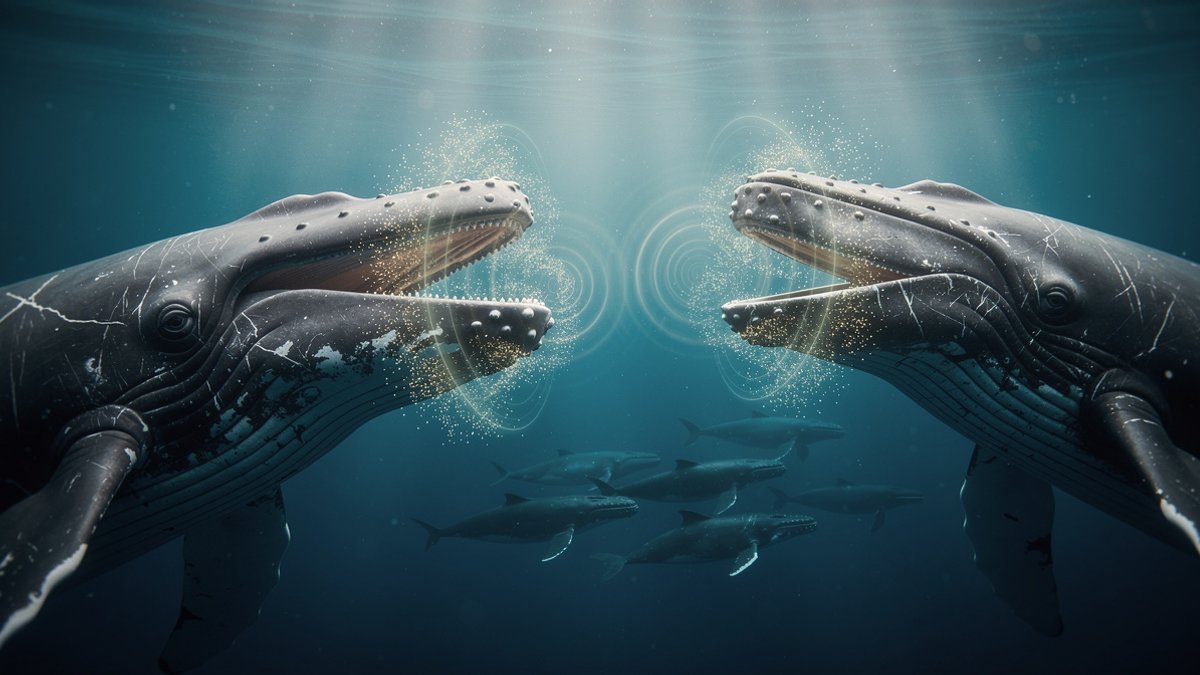
What if the most sophisticated conversation on Earth isn’t happening in a boardroom, but in the shadowy blue fifty meters beneath a wave? In a study poised to upend how we define language itself, scientists now argue that sperm whales’ communication closely parallels human language. Researchers have painstakingly cataloged thousands of whale clicks, revealing an intricate “codas” system that displays patterns far richer than simple animal signals. Something uncanny ripples beneath the surface: rules, combinations, and variations that hint at a grammar all their own.
The implications are wild and urgent. If whales wield a language this intricate, maybe our familiar narrative—that humans alone possess symbolic, creative communication—needs rewriting. But this isn’t just about egghead linguistics. Decoding these deep-sea conversations could challenge the limits of animal intelligence, turn global conservation upside down, and force us to rethink what it really means to speak, to listen, and to be heard—across oceans and species. The question isn’t whether whales can talk. It’s whether we’re finally starting to understand what they say. For a deeper dive into how language complexity shapes the world, see our article on global language universals.
The Whale Code: How Scientists Stumbled on an Unlikely Linguistic Revolution
Picture a team of marine biologists hunched over arrays of underwater microphones, listening not for the expected static of ocean life, but for patterns. What poured through their speakers sounded at first like chaos—rapid series of clicks, some snapping out in sharp succession, others settling into rhythmic bursts. Yet pattern-recognition algorithms illuminated something astonishing beneath the noise: the vocalizations of sperm whales were anything but random.
A supervolcano almost erased humans 74,000 years ago—what we did to survive shocked scientists
Pirouetting and gaping: What scientists just saw as humpback migration begins—and why it’s causing serious debate
- To the untrained ear, these clicks might have resembled mere echolocation signals, like an animal pinging its environment.
- But as researchers delved deeper, they uncovered previously unseen complex patterns in how the whales strung these pulses together.
- Instead of repeating single, simple codas, groups of whales appeared to assemble intricate combinations, sequences varying in structure and length depending on social context and even the individual whale.
Data scientists mapped these click patterns almost like sentences, uncovering a robust communication system. The whales changed not only the tempo and rhythm, but also the microstructure of their clicks, implying grammatical rules or dialect shifts within clans. Linguists looking at these tapes received a jolt: the diversity and flexibility in sperm whale vocalizations rivaled the complexity seen in early forms of human language.
Such findings forced a collision between marine biology and theoretical linguistics. Suddenly, the notion that language is a uniquely human feature appeared cracked if not shattered. The whales weren’t just signaling danger or food—they were swapping encoded information in ways that defied simple translation. The more data scientists parsed the clicks, the more daunting the task: we may be standing before a living code, as rich and as elusive as any spoken on land, whose rules have only just begun to surface. If we have underestimated the voices of giants beneath the waves, what other codes are we failing to hear? Read about how shrinking antarctic ice impacts knowledge of Earth’s hidden systems.
Beyond Clicks: What Makes Sperm Whale Language So Human-Like?
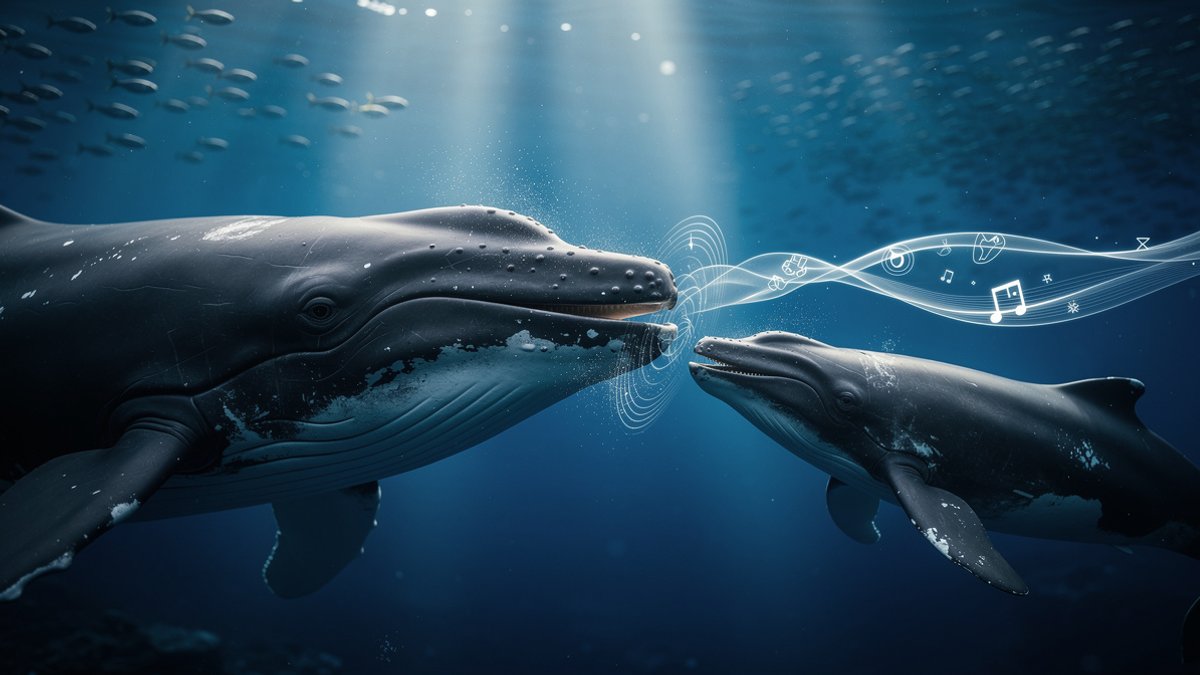
The signature clicks, or codas, shared among sperm whales might sound mechanical to the untrained ear, but recent analysis challenges this surface-level impression. Researchers have uncovered highly organized patterns in these sequences, suggesting a linguistic sophistication that seems to parallel our own. Codas aren’t tossed into the water haphazardly — their structure hints at rules, consistency, even an underlying syntax. Within certain groups, distinct arrangements emerge, resembling the formation of dialects across different human communities. This isn’t just information encoding for basic signaling; it’s a web of nuance and variation. To learn more about recent discoveries on human speech-like patterns in sperm whale clicks, visit ScienceAlert.
- Unlike the impressive but ultimately limited calls of dolphins, apes, or birds, sperm whales’ communication hints at far greater complexity.
- Avian song and primate calls, for all their beauty or emotional range, do not typically show this level of structured flexibility.
- In whale groups, the shifting patterns and modifications nearly mirror human language’s capacity for adaptation and subtlety.
- If these codas truly contain syntax, the implications are staggering: in the ocean’s depths, the boundary between animal communication and genuine language grows unnervingly thin.
The Science vs. the Skeptics: Are We Over-Interpreting Whale Chat?
As the excitement around sperm whales’ communication closely parallels human language, a ripple of skepticism cuts through the scientific debate. Some experts question whether we might be projecting our own craving for connection onto these patterns. What if, instead of nuanced semantics, what we call “whale language” is a more basic exchange—coded cues, not true conversation?
The crux of disagreement lies with animal cognition and the limits of intention and reference. Do the whales’ codas assign meaning the way our words do, or are we simply mapping our language definitions onto the unknown? Crucial questions remain unanswered: Is a click-record truly a story, a warning, a greeting? Or does our interpretation say more about us than about them?
The stakes ripple outward. If we are misreading the signals, centuries-long attempts to find kinship across species might distort more than reveal. Yet amid skepticism, the sheer complexity of whale soundscapes keeps challenging assumptions and pushing the boundaries of our linguistic comfort zone.
If Whales Have Language, What Does That Mean For Us?
- If sperm whales truly possess a structured, evolving language, the long-held belief in human linguistic supremacy begins to rupture.
- Suddenly, animal intelligence demands an upgraded definition—one that acknowledges intricate cognition outside our own species. It is not just a philosophical blow: if whales wield language, debates about their rights and conservation become urgent and inescapably personal.
- Granting linguistic complexity to another species invites uncomfortable questions. Could hunting or displacing whales equate to silencing an entire cultural lifeworld? The ethical terrain shifts underfoot as cross-species communication stops being a far-off dream and becomes a concrete scientific challenge.
- If we manage to decode their conversations, we will be forced to confront what it means to share the planet with minds both kin and utterly alien—forever reframing the human story inside the chorus of oceanic voices. If you’re interested in animal evolution and adaptation, our article on ancient giant kangaroos provides fascinating insights.
The Hidden Message: What We Still Can’t Crack About the Deep-Sea Dialogue
The real puzzle isn’t hearing whale codas, but decoding their layers. Current acoustic analysis techniques let researchers map click patterns at an astonishing scale, yet the underlying “grammar” of sperm whale conversations remains slippery. We hear the contours—the rhythms, the dialect patches, the split-second pauses that might signal nuance or intent—but we are fundamentally eavesdroppers, not fluent participants.
Even with deep learning algorithms processing terabytes of underwater recordings, translation is far from straightforward. Unlike human languages, the whales’ structure may be non-linear, with meaning distributed across entire group choruses or hidden in timing subtleties imperceptible to us. Future research may uncover codebooks within codebooks, layers of reference that even the most advanced AI cannot yet decipher. For ongoing scientific breakthroughs, check out our selection of top must read science books.
Perhaps the most profound limitations are also the most seductive. Every scientific advance uncovers more questions: Are whales sharing personal stories or just broadcasting navigational updates? What cultural memories might be locked beneath a single chorus? As we tune in, the ocean is still humming with conversations just out of reach—an open invitation to imagine what complex truths swim calmly below the surface, unsaid and untranslatable. For now, the greatest message of the deep may be how much remains unknown, waiting for us to listen harder and learn more.
FAQ
How do scientists study sperm whale language in the wild?
Researchers use hydrophones to record whale clicks and advanced pattern-recognition software to analyse the data. By tracking individual whales and their social groups, they can identify patterns and potential rules within whale communication.
Why is sperm whale language considered similar to human language?
Recent studies reveal that sperm whale codas show structured patterns, combinations, and context-based variations, much like human grammar. This suggests that their communication could involve complex ‘rules’ rather than just basic signals.
What could understanding sperm whale language mean for conservation?
Labour’s Clean Air Act Is Facing a Major Hurdle—Charities Warn Hidden Delays Could Leave UK Air Unsafe
Stunning fossil discovery just shattered scientists’ beliefs about when animal life began—here’s why they’re reeling
Deciphering sperm whale language could help us better protect their habitats and social structures by revealing how they communicate threats or coordinate activities. It adds urgency to conservation efforts since disturbances might disrupt vital social connections.
Are all whale species thought to have complex languages like sperm whales?
Most evidence for intricate, rule-based communication is strongest in sperm whales, though some other whales and dolphins show signs of complexity. The depth and structure seen in sperm whale language, however, appear unusually advanced among marine mammals.