
Show summary Hide summary
- Artemis II launch: how NASA wrote a new page in history
- What happens during the 10-day Artemis II mission
- Artemis II’s role in NASA’s long-term Moon strategy
- Key takeaways for followers of modern space exploration
- FAQ
- Who are the astronauts aboard Artemis II and what are their roles?
- How long will the Artemis II mission last and what will the astronauts do during the flight?
- What makes the Artemis II launch different from the earlier Apollo missions?
- How does the Artemis II launch impact future lunar missions?
- Where can I watch updates and follow the progress of the Artemis II mission?
Your phone lights up: Artemis II has finally left Earth. Four astronauts are now carving a new path around the Moon, the first time anyone has gone this far since Apollo. Here is what truly changes for space exploration—and for your vision of the sky.
Artemis II launch: how NASA wrote a new page in history
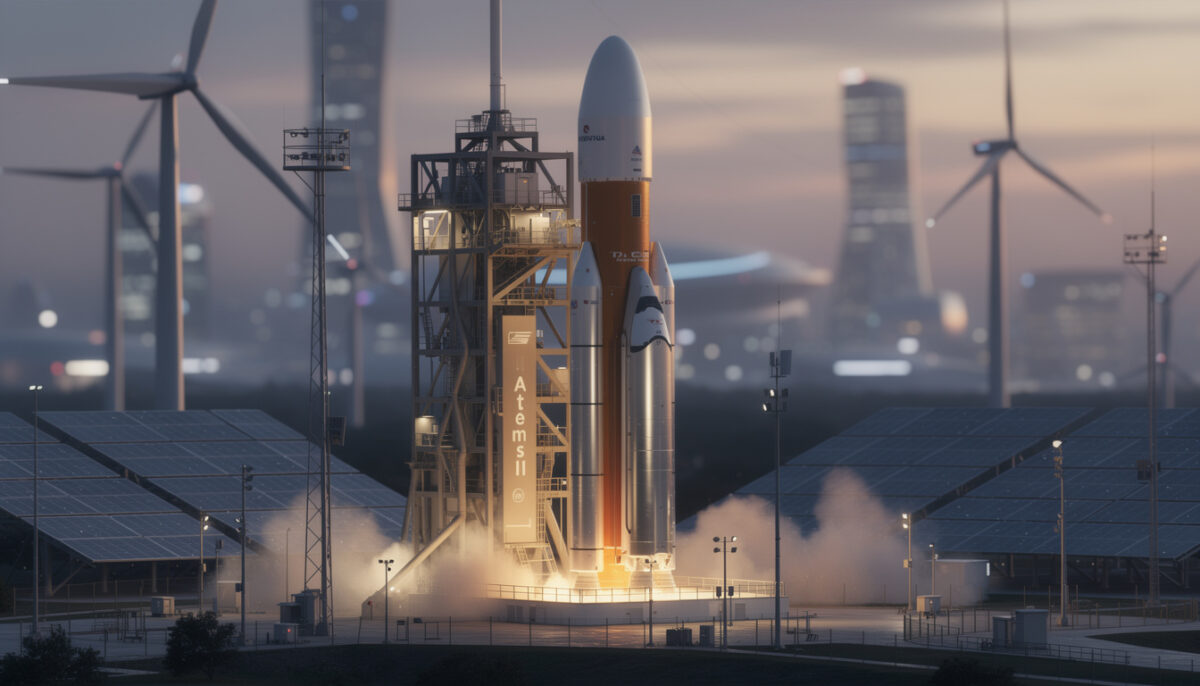
The historic launch of Artemis II from Kennedy Space Center turned Florida’s coast into a giant open-air stadium. Families, veteran space fans, and first-time spectators watched the Space Launch System light up the horizon with a tower of flame. At 6:35 p.m. Eastern, the rocket tore through low clouds, pushing the Orion spacecraft and its four-crew team toward the Moon.
This is only the second flight of the SLS and Orion combination, after the uncrewed Artemis I rehearsal. For NASA engineers, the ignition sequence validated years of redesigns and simulations. For observers following events through outlets such as international live coverage, the launch symbolized something more personal: humans leaving Earth orbit again, on a mission that reconnects with Apollo while pointing squarely toward a long-term presence in deep space.
A Groundbreaking New Theory Sheds Light on the Origins of the Big Bang
Webb Telescope Uncovers Enigmatic Explosion Challenging the Laws of Physics
The crew behind this pioneering journey to the Moon
On board Orion, four astronauts carry both personal stories and collective ambition. Commander Reid Wiseman, a former US Navy pilot, has spent years focused on one objective, as highlighted in a detailed profile on his preparation for this mission. Beside him, Victor Glover serves as pilot, bringing experience from a previous long-duration stay on the International Space Station. Read more about Wiseman’s focus on the artemis 2 mission.
Christina Koch, already known for holding the record for the longest single spaceflight by a woman, now becomes the first woman to orbit the Moon. Her path toward this role has been followed closely in reports on her unique responsibility, as discussed in christina koch artemis 2 features. Rounding out the crew, Canadian Space Agency astronaut Jeremy Hansen represents international partnership, underlining that this mission is not only American, but global in ambition.
What happens during the 10-day Artemis II mission
Once the launch phase ends, the real test flight begins. The first two days keep Orion in Earth orbit, while the crew checks every major system. They manually pilot the capsule for a rendezvous and docking test with an older spacecraft already circling the planet. Autonomous software handles most procedures, yet the team must prove they can intervene fast if a docking maneuver ever drifts off-plan.
Victor Glover summed it up shortly before liftoff: the point is not to dock by hand every time, but to be able to stop a bad approach at the right second. This scenario-focused training prepares them for future flights, when more complex vehicles will dance around the Moon and the planned lunar Gateway station, sharpening the choreography of space exploration. For those interested in more on lunar infrastructure, see commercial space station development articles.
Breaking distance records on the far side of space
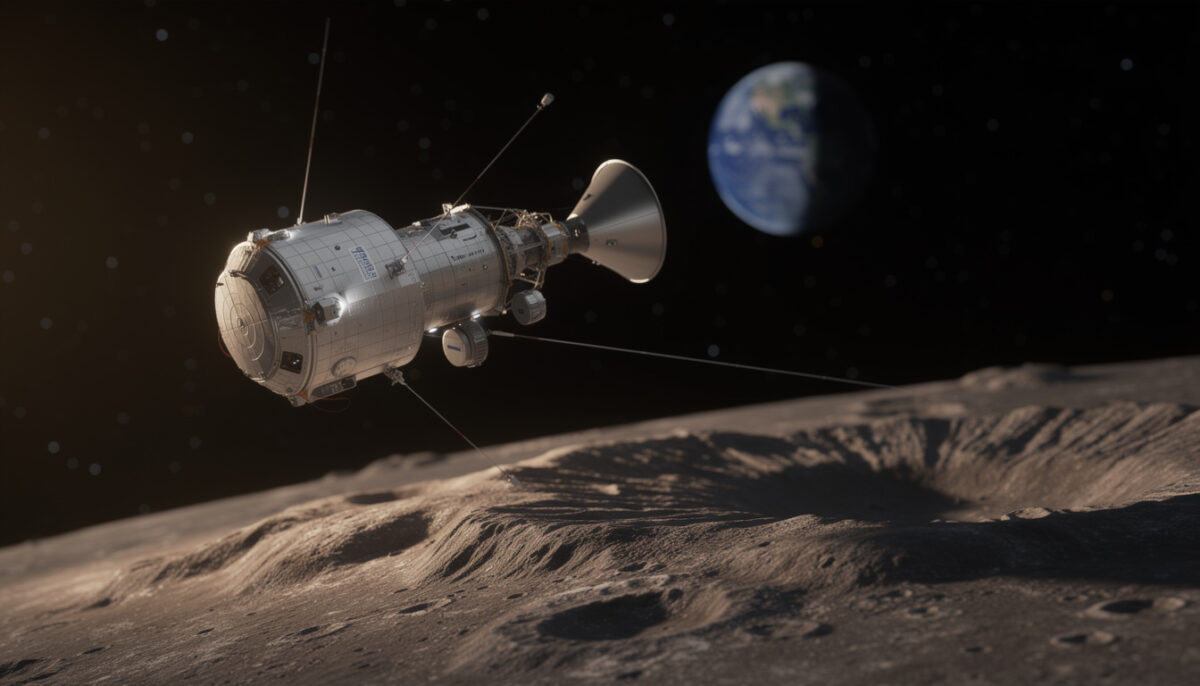
After the initial checks, Orion fires its main engine and heads for a distant lunar flyby. The trajectory sends the crew on a huge loop around the Moon, peaking at roughly 402,000 kilometres from Earth. That exceeds the distance reached by Apollo 13 and sets a new record for how far humans have ever traveled from home.
Near closest approach, the capsule passes about 6513 kilometres above the lunar surface. Light conditions differ from those during Apollo, allowing the crew to observe regions that no human eye has previously seen in direct sunlight. For fans following detailed explainers such as those on in-depth mission breakdowns, that segment of the flight is where science, technology, and pure emotion meet on the crew’s external cameras.
Artemis II’s role in NASA’s long-term Moon strategy
Artemis II is not just a standalone adventure; it functions as a dress rehearsal for the next steps of NASA’s roadmap. Wiseman regularly repeats an internal motto: the goal is to help Artemis III succeed. The current plan sets Artemis III for an orbital mission that fully tests docking procedures with the lunar lander systems, before any crew attempts to touch the surface.
NASA recently reshaped its broader program, a shift analyzed in features about its renewed lunar strategy. Artemis IV now carries the target of the first new Moon landing, along with assembly work for the Gateway outpost. This staggered approach spreads risk, builds experience, and lets engineers learn from Artemis II’s every sensor reading, from engine burns to how the crew sleeps and works in deep space.
From temporary missions to a lived-in lunar neighbourhood
Christina Koch often describes a simple image: every person on Earth looking up and seeing the Moon not as a distant rock, but as a reachable destination. That vision underpins plans for a permanent base near the lunar south pole, where water ice hides in crater shadows. The data from this pioneering flight will guide choices on life support, radiation shielding, and energy management for that future outpost.
For a young engineer like Maya, following the mission from a university lab, Artemis II turns career dreams into concrete tasks: designing better docking cameras, safer re-entry software or more comfortable crew quarters. The mission’s legacy will live in a generation who sees going around the Moon as a testbed for everything from Mars voyages to new ways of monitoring Earth’s climate from deep space. Explore more about how subsurface oceans icy moons can guide future missions.
Key takeaways for followers of modern space exploration
Artemis II compresses fifty years of progress into one tightly choreographed flight. In only 10 days, the crew validates the SLS–Orion stack, checks manual piloting, sets a new distance record and opens the way for future landings. For anyone tracking each update through sources like scientific analysis of the mission, several concrete points stand out.
- The mission marks the first crewed voyage beyond low Earth orbit since 1972, restarting human deep-space operations.
- Orion’s manual docking test prepares crews to manage complex traffic near the Moon and the Gateway station.
- The distant lunar loop pushes humans farther from Earth than any previous flight, expanding operational experience.
- Artemis II directly feeds into Artemis III and IV, which aim for sustained lunar infrastructure and eventual landings.
- International participation, including Canada, signals that long-term Moon projects will be built as shared ventures.
How long will the Artemis II mission last?
Artemis II is planned as a roughly 10-day mission. The first couple of days are spent in Earth orbit for system tests and a manual docking exercise. The rest of the flight follows a wide loop around the Moon before Orion re-enters Earth’s atmosphere and splashes down in the ocean.
How is Artemis II different from Apollo missions?
Apollo missions went directly to the Moon with smaller capsules and a different rocket architecture. Artemis II uses NASA’s Space Launch System and the Orion spacecraft, designed for repeated use in a broader program. The goal is not just a single landing, but setting up the foundations for long-term lunar operations and future trips to Mars.
Will Artemis II land on the Moon?
No. Artemis II is a flyby mission. The crew will travel around the Moon on a distant trajectory without touching the surface. This flight focuses on testing life-support systems, navigation, communication and manual piloting, paving the way for later missions that will attempt lunar landings.
Who are the astronauts on Artemis II?
The crew consists of commander Reid Wiseman, pilot Victor Glover, mission specialist Christina Koch, and Canadian astronaut Jeremy Hansen. Their backgrounds span test piloting, long-duration space station missions and international collaboration, reflecting the program’s mix of experience and partnership.
What happens after Artemis II in NASA’s Artemis program?
After Artemis II, NASA plans Artemis III as an orbital mission focused on testing docking with lunar lander systems. Artemis IV is currently expected to carry out the next landing attempt and contribute to building the Gateway station. Together, these flights aim to establish a sustainable human presence in lunar space.
FAQ
Who are the astronauts aboard Artemis II and what are their roles?
Artemis II carries four astronauts: Commander Reid Wiseman, Pilot Victor Glover, Mission Specialist Christina Koch, and Mission Specialist Jeremy Hansen. Each brings unique experience in piloting, engineering, and mission support to the artemis ii launch.
How long will the Artemis II mission last and what will the astronauts do during the flight?
The Artemis II mission is scheduled to last about 10 days, during which the crew will test Orion’s systems on a lunar flyby. This includes navigation checks, communication tests, and life support assessments vital for future Moon landings.
What makes the Artemis II launch different from the earlier Apollo missions?
Unlike Apollo, Artemis II relies on modern technology like the Space Launch System and Orion spacecraft, with updated safety and navigation features. The mission also marks the first time a diverse, international crew has travelled this far from Earth.
How does the Artemis II launch impact future lunar missions?
Artemis 2 Commander Reid Wiseman’s Singular Focus: Preparing for a Historic Journey to the Moon
Harnessing a Giant Magnet: A Bold New Strategy to Shield Earth from Hazardous Asteroids
Artemis II paves the way for crewed Moon landings by validating deep space flight systems and crew safety procedures. Its success is essential for NASA’s plans to establish a sustainable human presence on and around the Moon.
Where can I watch updates and follow the progress of the Artemis II mission?
You can follow Artemis II mission updates through NASA’s official website, live streams, and social media pages. Major news outlets and space-focused platforms also provide regular coverage of the artemis ii launch and its milestones.