
Show summary Hide summary
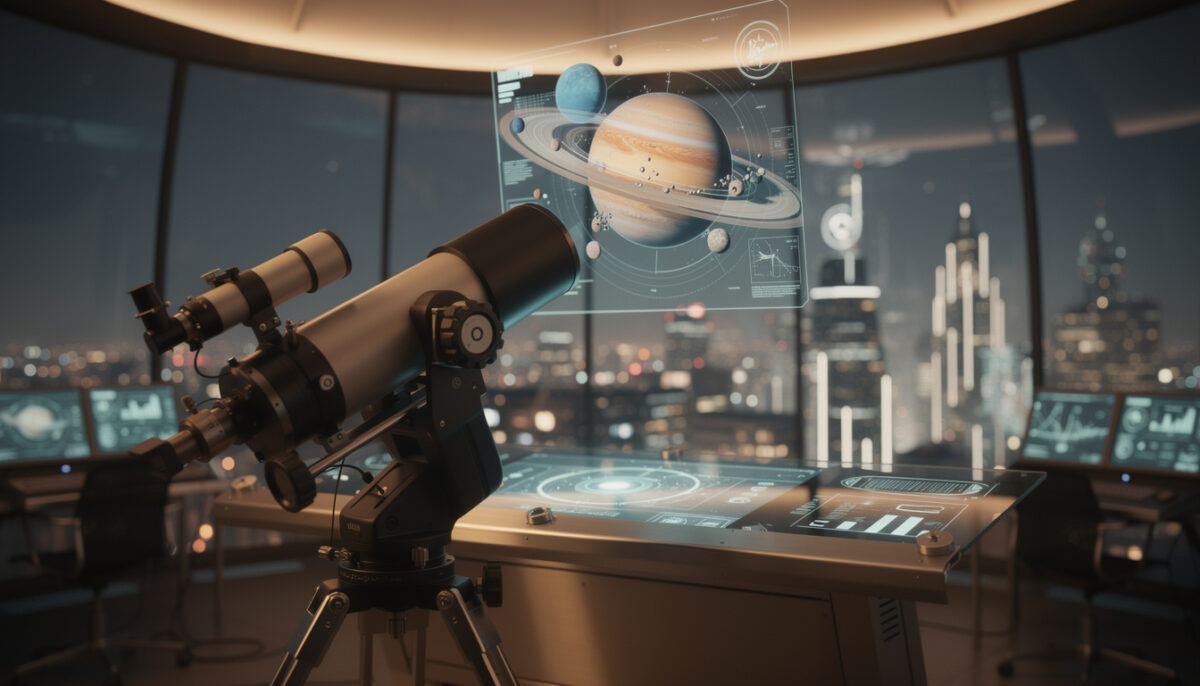
Imagine checking the score of a tight match and seeing Saturn and Jupiter trade points, not in goals but in moons. That is exactly what Astronomers are doing right now as new faint satellites keep appearing in their telescopes.
Behind the numbers, your planetary system is turning into a crowded arena of tiny celestial bodies. Each new orbit mapped around Jupiter or Saturn reshapes how space exploration teams plan future missions and how you picture the outer solar system. For a deeper look at what scientists are discovering, see how subsurface oceans on icy moons might exist beneath frozen crusts.
Astronomers push Jupiter to 101 moons and Saturn to 285
The latest discoveries add four new moons to Jupiter and 11 to Saturn. That raises their totals to 101 and 285 respectively, and the overall count of known moons around planets and dwarf planets reaches 442. This tally does not even include swarms of tiny moonlets around asteroids and Kuiper Belt objects.
Astronomers Identify the Origin of the Most Intense Fast Radio Burst Recorded
Our Sun Possibly Fled the Milky Way’s Core Alongside Thousands of Sibling Stars
The newcomers are all small, averaging about 3 kilometers across. You could drive around one in less than an afternoon. They are extremely faint, shining at magnitude 25 to 27, far beyond any backyard telescope, which explains why this “family photo” of the solar system keeps filling in so late.
How giant telescopes reveal invisible satellites
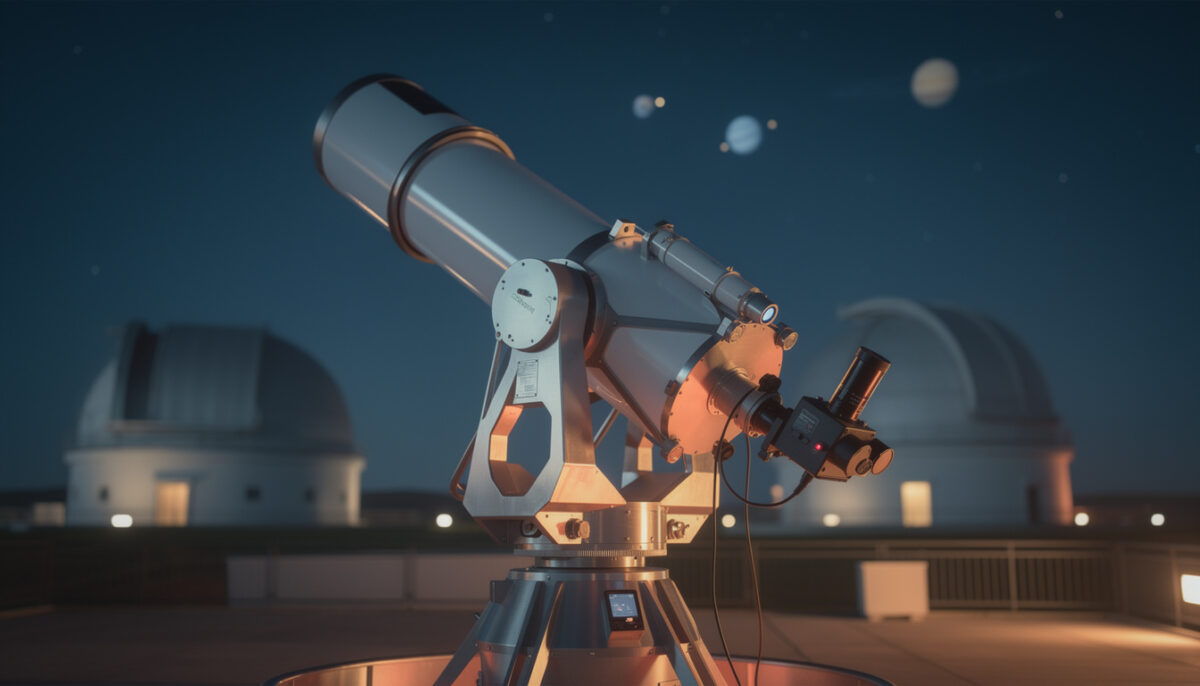
To catch these tiny moons, researchers rely on some of the world’s largest optical instruments. The four Jovian moons were detected by Scott Sheppard and David Tholen using the 6.5‑meter Magellan–Baade telescope in Chile and the 8‑meter Subaru telescope on Mauna Kea. Long sequences of images capture faint moving dots drifting against background stars.
A separate team led by Edward Ashton uncovered Saturn’s 11 new moons with the 3.5‑meter Canada–France–Hawaii Telescope. Ashton’s group already made headlines when they revealed 128 hidden Saturnian moons a year earlier, work reported widely by outlets such as Daily Galaxy. That earlier haul helped confirm Saturn as the dominant “moon king” of the solar system. Explore more about what made Saturn’s rings and moons unique in planetary history.
Why so many small moons orbit Jupiter and Saturn
Look beyond the scoreboard and you find a story of violent beginnings. These tiny satellites usually follow distant, inclined, and often retrograde paths far from their planets. Their orbits hint that many are captured objects, leftovers from ancient collisions in the outer solar system rather than siblings of big regular moons like Titan or Ganymede.
Irregular clusters around Saturn, described in detail by NASA’s overview of Saturn’s moons, form families that likely share common parent bodies. Around Jupiter, similar groups may preserve clues about how early building blocks of planets moved and shattered, echoing ideas discussed in research on how Jupiter’s moons could harbor the building blocks of life.
What these celestial bodies reveal about planetary history
These captured moons act like time capsules. Their compositions and orbits trace the density of early debris, the frequency of collisions, and the gravitational tug‑of‑war between giant planets. When you map dozens of such objects, patterns appear that no single flagship mission could uncover on its own.
For mission planners, every new satellite is a potential navigation marker or, conversely, a hazard. Probes flying through the Jovian or Saturnian systems must weave through an intricate cloud of rock and ice, especially when they cross regions where irregular satellites concentrate. You can also see how NASA revamps the Artemis program for future discoveries beyond Earth’s moon.
Europa Clipper, JUICE and the next wave of discoveries
While most of these new moons are too small to host oceans, their discovery prepares the ground for the next decade of space exploration. NASA’s Europa Clipper and ESA’s JUICE spacecraft are on their way to the Jovian system. Both missions target large icy satellites, but their navigation cameras will constantly scan the surroundings, ready to flag any additional faint objects.
If more small moons are uncovered near Jupiter, the current gap with Saturn could narrow. Earlier work showing Saturn’s 128‑moon surge, covered in depth by sources like Orbital Today, suggests that deeper searches around Jupiter might still uncover a similar hidden population, waiting just below current sensitivity limits.
Astronomers’ growing playbook for hunting moons
Behind each press release, teams refine a careful workflow. They stack images to boost signal, filter out cosmic rays and distant galaxies, then track moving points frame by frame until a stable orbit emerges. Only after many months of follow‑up do objects become officially recognized satellites.
Sheppard and Ashton have each contributed to more than 200 such identifications. Their work shows how persistence and better algorithms can transform noisy images into a coherent architecture of satellites around the giant planets, gradually turning guesswork into a detailed census.
- Detect faint moving dots on deep images near a giant planet.
- Confirm repeated detections over multiple nights and seasons.
- Compute provisional orbits and weed out interloping asteroids.
- Refine trajectories until the object can be predicted years ahead.
- Register the moon with the Minor Planet Center for official status.
How many moons do Jupiter and Saturn have now?
Current counts place Jupiter at about 101 known moons and Saturn at roughly 285. These totals include recently confirmed small satellites on wide, faint orbits and may continue to rise as surveys push to deeper detection limits.
Why are the newly discovered moons so small and faint?
Most recent finds are only around 3 kilometers across and lie far from their planets, reflecting sunlight weakly. Their distance and size make them extremely dim, which is why only large professional telescopes with long exposures and careful image processing can detect them.
Do these small moons affect future space missions?
Yes. Even tiny moons influence navigation and risk assessments for spacecraft operating near Jupiter or Saturn. Mission teams use updated moon catalogs to refine trajectories, avoid debris-rich regions, and sometimes exploit the gravity of small bodies for subtle course adjustments.
Could any of these moons host life?
A Black Hole and Neutron Star Engage in a Mysterious Oval Dance Before Colliding
Astronomers Believe They’ve Observed a Rare Collision Between Two Planets
The new additions are too small to sustain subsurface oceans or thick atmospheres, so they are not prime candidates for life. However, understanding their origin helps researchers interpret conditions on larger icy moons, where hidden oceans remain promising locations for habitability studies.
Will the moon counts keep increasing?
Very likely. Improved detectors, longer surveys, and upcoming telescopes will reveal fainter and more distant satellites. As analysis methods evolve, astronomers expect the census of moons around the giant planets and dwarf planets to grow steadily over the next decade.