
Show summary Hide summary
- How plants and beetles built a risky deal
- A hidden alliance: fruit drop that saves both sides
- When ecology turns waste into long-term stability
- Connecting beetle alliances to wider plant–insect stories
- How you can read a forest differently
- What is nursery pollination mutualism?
- Why do Japanese red elder plants drop fruits with beetle larvae?
- How do fallen fruits benefit beetle larvae?
- Are beetles always necessary pollinators for these plants?
- What does this alliance teach about biodiversity conservation?
You walk through the forest, see a bright cluster of berries drop to the ground and think: wasted fruit. Scientists now reveal that, for one Japanese shrub and its tiny beetle partner, those “lost” fruits hide a winning strategy built on a hidden alliance.
How plants and beetles built a risky deal
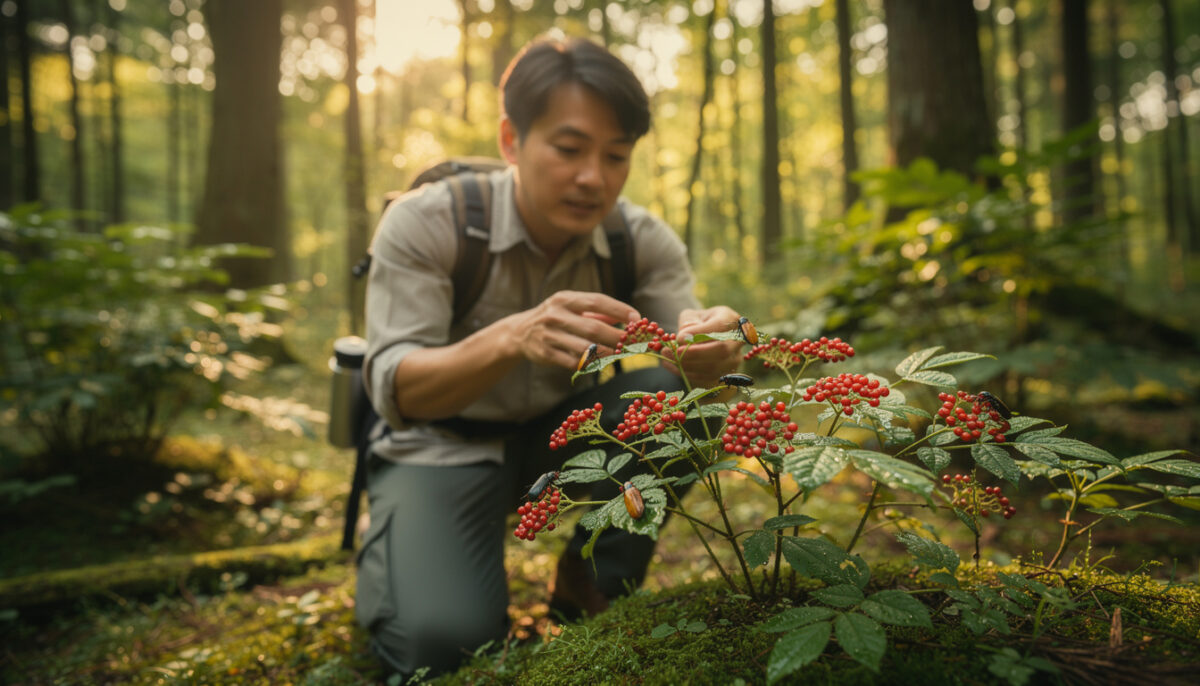
Picture Kenji, a field botanist, watching Japanese red elder shrubs at dawn. The flowers are crowded with beetles mating and feeding, petals dusted with pollen. Weeks later, many fruits blackened by larvae fall en masse. To any observer, this plant looks like it is losing.
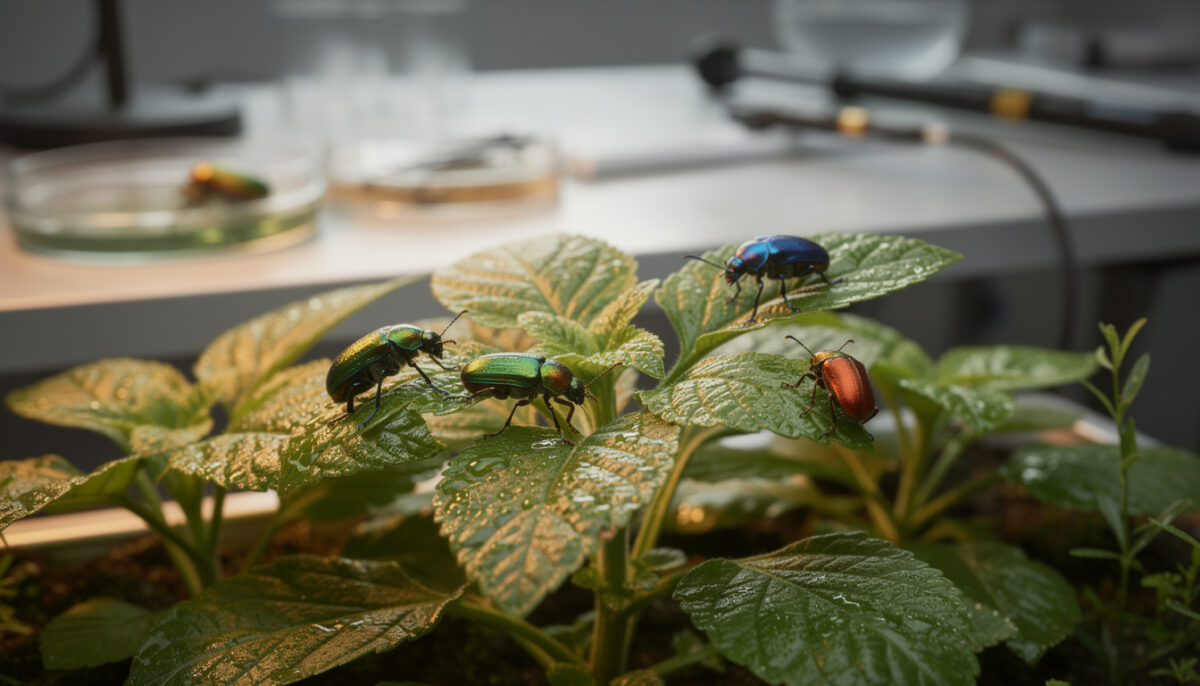
Yet detailed tracking of this plant-animal interaction tells another story. The insects pollinate the flowers while also laying eggs inside developing fruits. Biologists call this arrangement nursery pollination mutualism, a form of symbiosis where one partner gets baby care and the other secures reproduction under tight conditions.
This Week in Wildlife: A Soaked Macaque, Four Tiny Piglets, and a Sneaky Fox Stowaway
The Hidden Danger of Mining Waste Dams Worldwide: What Unfolds When They Fail?
From figs and yuccas to a new kind of balance
Classic examples of this kind of mutualism include fig trees with fig wasps, or yuccas with yucca moths. In those cases, plants usually control insect numbers by dropping fruits overloaded with larvae. Because larvae inside those fallen fruits often die, this “fruit abortion” has long been interpreted as punishment that keeps the relationship from tipping toward exploitation.
The Japanese red elder, Sambucus sieboldiana, rewrites that script. Here, fruits packed with Heterhelus larvae drop too, but the story does not end on the forest floor. This shift forces ecology researchers to rethink how cooperation and conflict coexist within the same partnership.
A hidden alliance: fruit drop that saves both sides
Kenji Suetsugu and master’s student Suzu Kawashima designed an unusually complete study. They combined exclusion experiments, hand pollination and long-term monitoring of larvae after fruit fall. Their goal was clear: understand whether these insects are true key pollinators and how the shrub avoids being drained by them.
Their field tests showed that Japanese red elder depends strongly on Heterhelus beetles for pollination. When the beetles were kept away, fruit set plummeted. Yet the shrub aborts almost every fruit containing larvae, sharply limiting energy invested in feeding beetle offspring. At first glance, that looks like the standard “sanction” model.
Larvae that walk away from failure
The twist appears after the fruit hits the ground. Instead of perishing, larvae chew their way out, drop into the soil and continue their development safely underground. What looked like a fatal penalty becomes an exit strategy. The plant recovers nutrients from the aborted fruits, while larvae escape competition in the canopy.
Kawashima describes this as a shared compromise rather than a one-sided punishment. Fruit abortion acts like a negotiated boundary: the plant prevents runaway damage, and beetle populations remain viable. This subtle hidden alliance shows how biodiversity can be maintained through processes that initially resemble waste or failure.
When ecology turns waste into long-term stability
This system also depends heavily on local context. The research team compared several sites and calculated costs and benefits for both partners. They found that the pay-off of this symbiosis shifts with environmental conditions, such as the availability of alternative pollinators and soil characteristics that affect larval survival.
All Heterhelus species studied rely on elder shrubs for reproduction. The inverse is more flexible: not every elder species depends on these beetles to the same degree. In areas where the beetle dominates the pollinator community, the “fallen-fruit compromise” becomes a smart solution. Where other insects take over pollination, the alliance loosens.
What this hidden alliance means for biodiversity
For field biologists and conservation managers, this case functions as a reminder that visible losses in nature sometimes hide structural benefits. A forest floor sprinkled with dropped berries might signal a cleverly tuned plant-animal interaction, not simple damage. The elder–Heterhelus relationship helps stabilize local biodiversity by anchoring both a plant and an insect in the same habitat.
Understanding these mechanisms also sharpens how you interpret other systems. Recent work on cycads, for instance, shows ancient plants using internal heat to attract pollinating beetles via infrared signals, as described in studies on plants using internal heat to attract pollinating beetles. Together, these stories sketch a richer picture of how mutualism evolves under tight energetic budgets.
Connecting beetle alliances to wider plant–insect stories
The Japanese red elder is not isolated; it belongs to a growing list of systems where scientists uncover surprising trade-offs. Research on dinosaur-era cycads, summarized in outlets like reports on heat-based pollination, reveals cones that warm up to send infrared “come here” signals to beetle pollinators. The beetles, in turn, evolved sensors tuned to that heat.
Across these species, the pattern repeats: energy is redirected into signals, structures or “wasteful” fruits that secure long-term partners. Instead of a simple story of cooperation or cheating, ecology shows gradient relationships, where both sides constantly renegotiate limits through mechanisms like heat pulses, scent plumes or fruit abortion.
How you can read a forest differently
Next time you walk through woodland with a friend who loves nature, you can decode the scene together. A few simple clues hint at similar hidden pacts between plants and insects:
- Fallen fruits that show tiny exit holes, suggesting larvae escaped successfully.
- Flowers heavily visited by one insect group, while others largely ignore them.
- Strong seasonal patterns where the same beetles return exactly when buds open.
- Unusual smells or warmth near reproductive structures, like cones or dense inflorescences.
Each of these signs points to a possible long-term symbiosis shaped by both conflict and partnership. Once you learn to spot those signals, a simple walk in the woods turns into a live lesson on evolutionary bargaining.
What is nursery pollination mutualism?
Nursery pollination mutualism is a partnership where an insect both pollinates a plant and uses its fruits or flowers as a nursery for its offspring. The insect gains a protected site and food for larvae, while the plant receives targeted, often highly efficient pollination services.
Why do Japanese red elder plants drop fruits with beetle larvae?
Japanese red elder shrubs abort fruits containing Heterhelus larvae to limit how many resources they invest in feeding beetle offspring. However, the larvae survive by exiting the fallen fruits and burrowing into the soil. This turns apparent waste into a compromise that controls costs for the plant while keeping beetle populations stable.
How do fallen fruits benefit beetle larvae?
After a fruit falls, Heterhelus larvae leave the pulp and move into the soil, where they continue development. The ground environment likely offers fewer predators and less competition than the fruit still attached to the plant, improving their chances of reaching adulthood despite the fruit abortion.
Are beetles always necessary pollinators for these plants?
Researchers Unveil a Universal Temperature Blueprint Underpinning All Life Forms
Six Decades of Data Reveal How Extreme Weather Severely Impacts Baby Birds
All known Heterhelus beetles rely on elder plants for reproduction, but not every elder species depends entirely on these beetles. In some locations other insects provide part of the pollination service, reducing the plant’s reliance on nursery pollinators and changing how strongly the fallen-fruit strategy is favored.
What does this alliance teach about biodiversity conservation?
This alliance shows that processes that appear wasteful, like massive fruit drop, can stabilize interactions and support biodiversity. Conservation strategies benefit from looking beyond visible losses and considering hidden mechanisms that keep mutualisms balanced, especially under changing environmental conditions.