
Show summary Hide summary
- How habitat loss reshapes mosquito feeding in forests
- From biodiversity to blood: the science of vector behavior
- Disease transmission risks: from yellow fever to malaria
- What these findings mean for prevention and policy
- Practical steps for communities at the forest edge
- How does deforestation change mosquito behavior?
- Why is human blood so important in these studies?
- Do these findings relate to malaria risk?
- Can restoring forests reduce mosquito-borne diseases?
- What can individuals living near forests do to protect themselves?
When a forest vanishes, you expect birds to disappear and monkeys to flee. You probably do not expect mosquitoes deep inside a reserve to be filled almost exclusively with human blood — yet that is exactly what Brazilian researchers are now finding.
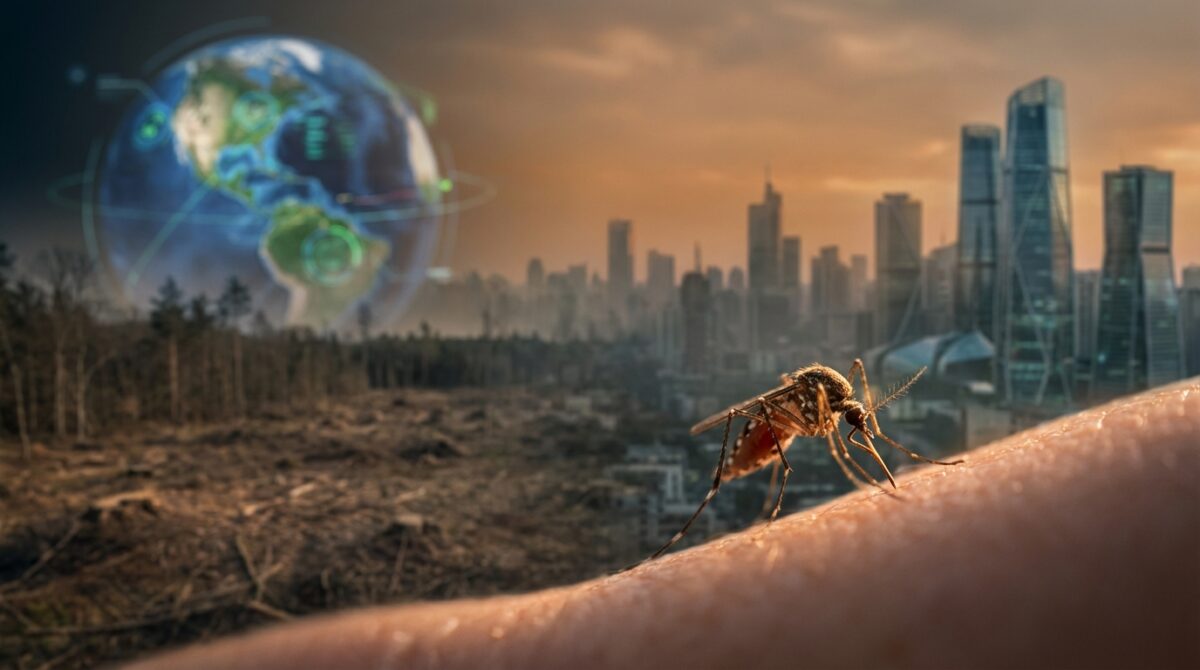
The story unfolding in Brazil’s Atlantic Forest turns a distant idea like “deforestation” into something uncomfortably close to skin. Habitat that once buffered people from biting insects is shrinking, and the insects are quietly rewiring their vector behavior. The result is a sharper risk of disease transmission every time someone steps under the trees.
How habitat loss reshapes mosquito feeding in forests
Running along Brazil’s coastline, the Atlantic Forest was once a sprawling refuge for hundreds of species of mammals, birds, reptiles and amphibians. Today, only about one third of that forest remains, fragmented by roads, farms and expanding cities. As this habitat loss accelerates, the mix of animals that mosquitoes can bite is changing in real time.
Six Decades of Data Reveal How Extreme Weather Severely Impacts Baby Birds
Researchers Unveil Seven Mysterious Frog-Inspired Insect Species Concealed within Uganda’s Rainforest
According to new work highlighted by Frontiers in Ecology and Evolution, mosquitoes captured in forest fragments near Rio de Janeiro are no longer feeding on a broad spectrum of wild hosts. Instead, they show a marked tilt toward humans. Research summaries from outlets such as Earth.com and Mongabay all echo the same message: when wildlife dwindles, mosquitoes adapt, not by disappearing, but by turning to the nearest warm body.
Inside the Atlantic Forest: what the new study found
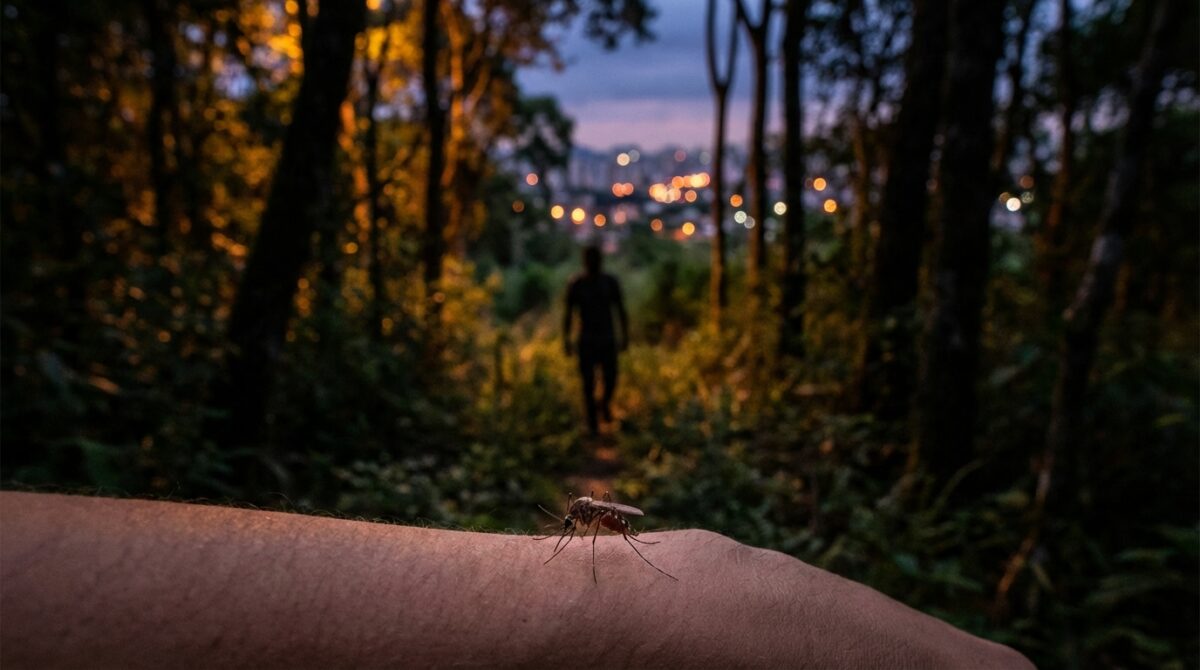
To understand who is getting bitten, scientists set light traps at two protected sites in Rio de Janeiro state: Sítio Recanto Preservar and the Guapiaçu River Ecological Reserve. Female mosquitoes that had recently taken a blood feeding were carefully sorted in the laboratory. Their meals became the dataset for a quiet but important story about environmental change.
From 1,714 mosquitoes representing 52 species, 145 females were visibly engorged. Researchers successfully identified the origin of the blood in 24 of them. Eighteen meals came from humans, while only a handful traced back to an amphibian, several birds, a canid and a single mouse. That pattern, mirrored in reports by ABC News and Science Focus, suggests a clear tilt toward people even inside designated reserves.
From biodiversity to blood: the science of vector behavior
Behind every mosquito bite is a surprisingly sophisticated decision. The team in Rio de Janeiro used a genetic “barcode” technique, sequencing a short DNA fragment from the blood meal. Each vertebrate species carries its own version of this marker, so matching sequences against databases allowed the scientists to identify hosts, much like scanning items at a supermarket checkout.
The results did not show a simple one-bite-one-host pattern. Some individuals carried mixed meals, revealing that mosquitoes such as Cq. venezuelensis had fed on both an amphibian and a human. Others, like Cq. fasciolata, combined rodent and bird blood, or bird and human blood. This mosaic of feeding shows how flexible vector behavior can be once the forest food web is disrupted.
Why mosquitoes are choosing humans more often
In a dense, intact forest, primates, birds and small mammals offer abundant options for hungry insects. As deforestation advances and wildlife declines, those options shrink. Scientists quoted by Popular Science and Scientific American describe a simple ecological logic: mosquitoes track the hosts that are easiest to find. Near forest edges, that increasingly means people working, walking or living nearby.
The senior researchers involved emphasise that some species appear to have an innate pull toward human odour or body heat. However, host availability and proximity weigh heavily. When forest animals vanish or retreat deeper into remaining fragments, mosquitoes adjust their ranges, breeding in water-filled containers, roadside puddles and forest-edge pools where human presence is constant.
Disease transmission risks: from yellow fever to malaria
The Atlantic Forest has long been a region where viruses circulate among wildlife with only occasional jumps to humans. As mosquitoes take more human blood, that barrier weakens. Species in the study area can carry pathogens such as Yellow Fever, dengue, Zika, Mayaro, Sabiá and Chikungunya viruses. Every extra human-focused bite increases the chance of spillover between forest cycles and urban outbreaks.
Global health agencies have seen similar patterns for malaria in other tropical regions, where forest clearing changes mosquito breeding sites and brings people closer to vector species. Reports like those from ScienceDaily and a health advisory from Powers Health warn that forest-edge communities can become new front lines for mosquito-borne infections as ecosystems unravel.
When climate, land use and mosquitoes intersect
Rising temperatures and shifting rainfall patterns already influence mosquito ranges. Add environmental change from logging, agriculture and infrastructure, and the effect is multiplied. Fragmented landscapes create hot, sunlit pools that favour some disease vectors, while pushing people into more frequent contact with them.
This combination has a wider ecological impact. The loss of predators, host diversity and vegetation structure transforms forests from buffers into amplifiers for infection. Instead of diluting disease by spreading mosquito bites across many animal hosts, simplified ecosystems funnel those bites towards one species: humans.
What these findings mean for prevention and policy
The Brazilian study had limits: fewer than 7% of captured mosquitoes contained visible blood meals, and researchers could identify host DNA in only about 38% of those. That small window already delivers a strong warning, yet it also calls for larger datasets and improved methods to detect mixed meals across seasons and different forest fragments.
Public health teams can use this information to sharpen surveillance. If monitoring reveals that local mosquitoes are feeding predominantly on humans, early-warning systems for outbreaks can be tightened. Authorities can time vaccination drives for Yellow Fever, adjust dengue control campaigns and invest in targeted monitoring where deforestation is most active, as highlighted in analyses such as this recent report.
Practical steps for communities at the forest edge
The link between forest loss and biting risk might feel abstract until you imagine a community like Luiza’s, a teacher living near the Guapiaçu reserve. Her daily routine — walking along a forest road, collecting water, tending a small garden — now places her in the centre of a shifting “blood market” for insects that previously targeted wildlife.
For families like hers, prevention is not only about repellents. It involves a mix of environmental and health measures, including:
- Eliminating standing water around homes to reduce mosquito breeding sites.
- Using window screens, bed nets and protective clothing, especially at peak biting hours.
- Supporting local campaigns to conserve remaining forest patches and restore degraded areas.
- Participating in community surveillance for fevers and rash illnesses after the rainy season.
- Engaging with local authorities on land-use plans that protect both biodiversity and human health.
How does deforestation change mosquito behavior?
When forests are cleared or fragmented, many wild animals disappear or move away. Mosquitoes lose traditional hosts and adapt by shifting their blood feeding toward the most available species, often humans living or working near forest edges. This change in vector behavior increases the chance that viruses circulating in wildlife will reach people.
Why is human blood so important in these studies?
Detecting human blood in mosquitoes shows how often people are being bitten compared with other animals. A strong bias toward humans indicates higher potential for disease transmission, because pathogens carried in mosquitoes have more direct access to human hosts, making outbreaks of dengue, Zika or Yellow Fever more likely.
Do these findings relate to malaria risk?
The Atlantic Forest study focused mainly on arboviruses, not malaria parasites. However, similar ecological mechanisms apply. In many tropical regions, habitat loss and environmental change alter breeding sites and host availability for malaria vectors, which can bring them into closer contact with people and raise infection risk if competent mosquito species are present.
Can restoring forests reduce mosquito-borne diseases?
London, San Francisco, and Beijing Make Significant Strides in Slashing Air Pollution Levels
The Reappearance of a ‘Ghost’ Great White Shark Sparks New Questions in the Mediterranean
Restoring forest structure and wildlife diversity can help dilute disease transmission. When mosquitoes bite a wider range of animals instead of mainly humans, the probability that an infected mosquito will meet a susceptible person decreases. Reforestation and landscape planning, combined with public health measures, can therefore support disease control.
What can individuals living near forests do to protect themselves?
People can reduce risk by managing water containers, using physical barriers such as screens and nets, and seeking medical advice quickly for unexplained fevers or rashes. Supporting conservation initiatives and local monitoring programmes also helps, because healthier ecosystems often mean fewer mosquito bites concentrated on humans.