
Show summary Hide summary
- Destabilized ice shelf: what is happening in West Antarctica
- Why this Antarctic glacier matters for global sea level rise
- How satellites and models revealed the rapid acceleration
- From Antarctic research to Earth applications and future decisions
- What comes next for Pine Island and global adaptation
- How fast is Pine Island glacier moving now?
- Why does a destabilized ice shelf increase sea level rise?
- What role does Climate Change play in Pine Island glacier’s behaviour?
- How do satellites measure Antarctic Ice Dynamics?
- Will sea level rise from West Antarctica stop if emissions drop?
A floating ice shelf on the edge of West Antarctica has started to fail, and the ice behind it is suddenly surging forward. This rapid acceleration of Pine Island glacier is not just a polar curiosity – it is a direct warning for future sea level rise that will shape coastal cities worldwide. Cracks in Antarctic ice shelves have led to increased concerns about accelerating ice flow.
Every new satellite image over this corner of the Antarctic now reads like a live update on how fast the planet’s great ice reserves are unraveling under Climate Change.
Destabilized ice shelf: what is happening in West Antarctica
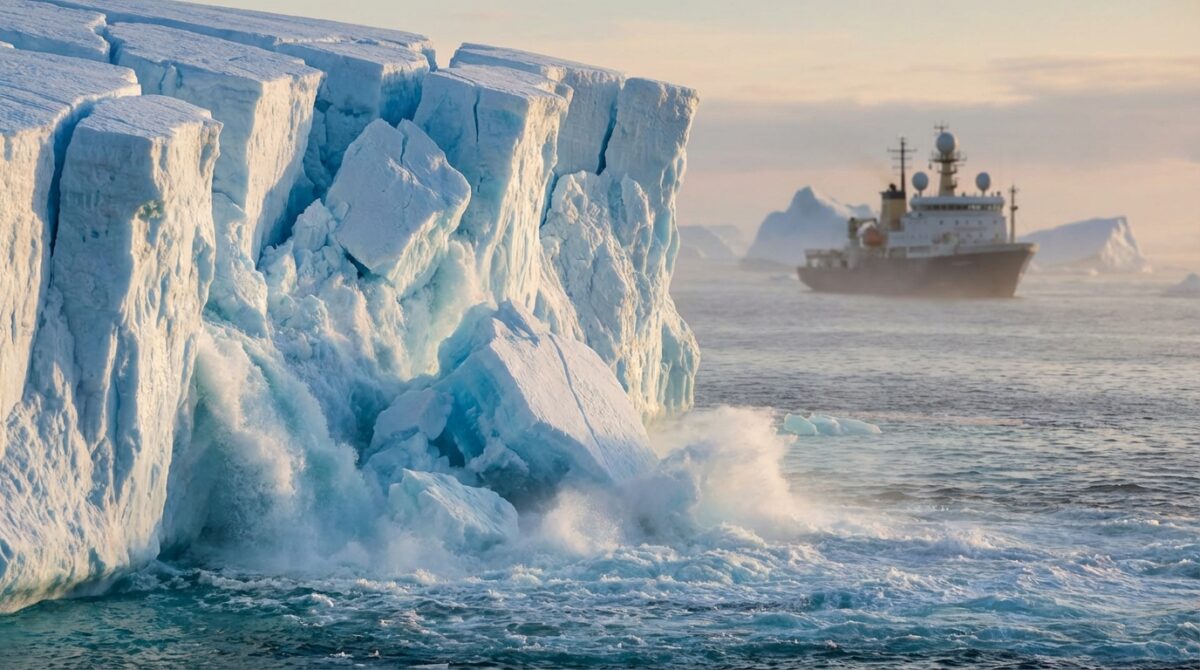
Pine Island glacier sits in the Polar Regions of West Antarctica, draining ice from deep inside the continent toward the Amundsen Sea. For decades, a floating Ice Shelf in front of it acted like a natural dam, slowing the glacier and shielding it from warm water. Recent research led by Sarah Wells-Moran shows that this buttress is now largely destabilized. Weakening ice shelf studies indicate significant implications for global sea levels.
River Thames Among 13 Prime Locations Shortlisted for Official Swimming Recognition
When Valuing Nature Falls Short: Can Bold Strategies Rescue Our Planet?
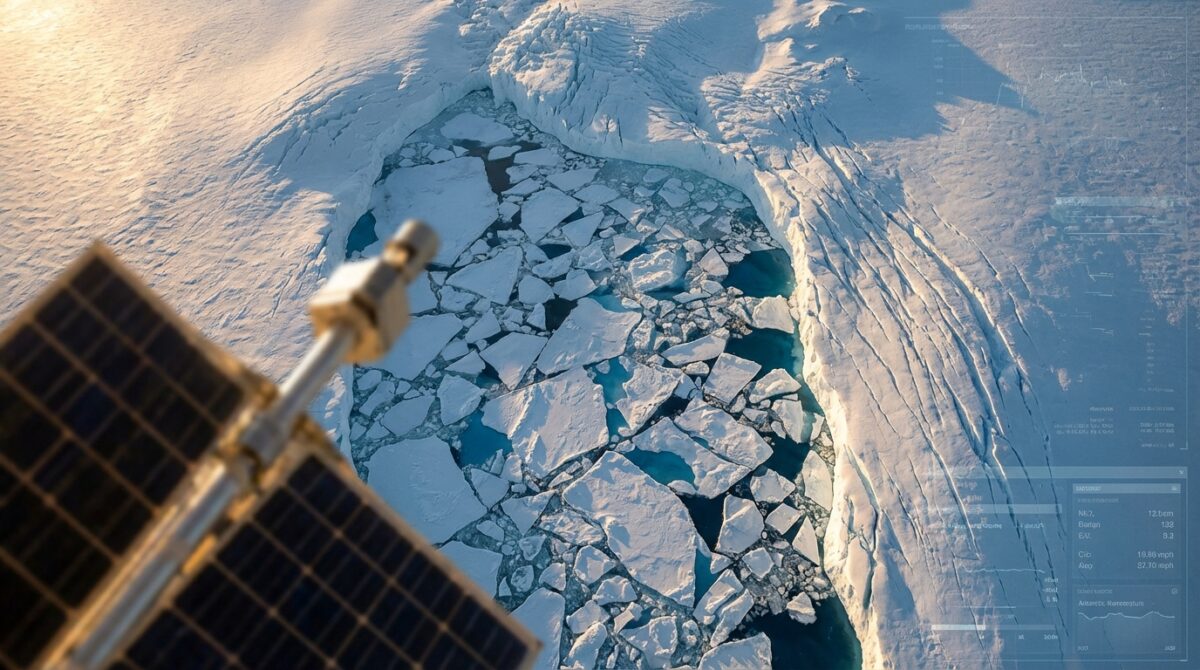
Using data from the European Space Agency’s Copernicus Sentinel-1 radar satellites, combined with historical observations dating back to the 1970s, the team tracked how fast the glacier has been sliding toward the ocean. Their results reveal a striking pattern: once the ice shelf began to thin, fracture, and lose contact with its sides, the glacier’s speed jumped.
Glacier speeds doubling and grounding line retreating
Back in 1974, Pine Island glacier was already fast by glaciological standards, moving roughly 2.2 kilometres per year. By 2008, that flow had climbed to about 4 kilometres per year. Then came the real jolt: between 2017 and 2023 the glacier sped up again to nearly 5 kilometres per year, a jump of around 20 percent in just six years and an increase of more than 100 percent since the early 1970s.
At the same time, the glacier’s grounding line – the point where ice stops resting on bedrock and starts to float – has pulled back by more than 30 kilometres. For a coastal engineer in Jakarta or Miami, that retreat translates into more ice sliding unrestrained into the sea, decade after decade. This is akin to how spacecraft observes ‘magnetic phenomena impacting Earth.
Why this Antarctic glacier matters for global sea level rise
Pine Island is currently the fastest-flowing glacier in Antarctica and the single largest Antarctic contributor to sea level. It is part of the broader West Antarctic ice sheet, which stores enough ice to raise oceans by around 5.3 metres if it were ever lost completely. The floating ice shelf in front of Pine Island alone had been helping hold back ice equivalent to roughly half a metre of potential sea level rise.
Researchers now warn that the ice shelf “provides negligible buttressing” to the glacier upstream. In practice, that means gravity has gained the upper hand. The combination of thinning ice, giant calving events and structural damage has weakened the shelf so much that it can no longer effectively resist the pull of the inland ice. What happened to the Larsen Ice Shelf parallels these developments.
From polar ice dynamics to life in coastal cities
Why should a resident of Lisbon, Lagos or Los Angeles care about a remote Glacier thousands of kilometers away? Because what happens in Antarctic Ice Dynamics translates directly into tides lapping higher on familiar shorelines. Even a modest additional rise of several tens of centimeters intensifies storm surges, erodes beaches and pushes saltwater into freshwater systems.
Urban planners are already using this kind of Glaciology research to stress-test dikes, ports and evacuation plans. Some climate adaptation reports, such as those discussed in analyses on emerging environmental risks, now treat rapid ice sheet change in West Antarctica as a central scenario rather than a distant outlier.
How satellites and models revealed the rapid acceleration
The current picture of Pine Island’s transformation is built on a fusion of technology and theory. ESA’s Sentinel-1 radar instruments can measure ground motion through clouds and polar darkness, capturing the glacier’s flow rate every few days. These satellite snapshots were lined up with earlier imagery and aircraft surveys dating back to the 1970s, creating a time-lapse of the glacier’s behavior over half a century.
Researchers then compared observations with sophisticated ice-flow models. By tweaking how the modeled ice shelf thinned, fractured and detached at the sides, they identified the scenarios that match reality. The most consistent explanation points to warm ocean water intruding farther under the shelf, melting it from below, and “unzipping” its margins from the surrounding ice. This approach is similar to other global projects where UK’s warm homes face similar systemic challenges.
Warm oceans, shear margins and the ‘unzipping’ effect
Scientists such as Sue Cook and Ted Scambos emphasize that simply breaking off large icebergs at the front does not fully explain the glacier’s recent surge. The real story lies in the shear margins – the zones where fast-moving ice grinds past slower ice or rock. Increased damage and fracturing along these flanks weaken the structural integrity of the whole shelf.
As relatively warm water circulates into Pine Island Bay, a fjord carved by past ice flow, it melts the underside and edges of the shelf. That process speeds up the local ocean circulation, further eroding the ice where it meets the sea floor. Once those side anchors give way, the shelf loses its bracing effect, and the inland glacier responds by sliding faster toward the coast.
From Antarctic research to Earth applications and future decisions
This Antarctic story is part of a broader race to understand tipping points in Earth’s climate system. Knowledge gained from monitoring Pine Island feeds into global climate models, insurance risk calculations and even strategic decisions about infrastructure placement. The same analytical mindset that drives breakthroughs in areas like genetic code rewriting, as in some cutting-edge studies highlighted on advanced research reports, is now being applied to ice sheet stability.
In one coastal city planning office, an engineer named Elena uses updated Antarctic projections to rethink where a new hospital should stand in 2080. Her team overlays Sea Level Rise maps, storm surge models and transportation networks, and the Pine Island data shift their preferred site several kilometers inland. For them, this is not an abstract polar saga; it is a design constraint they have to respect.
What comes next for Pine Island and global adaptation
Current studies suggest that Pine Island and its neighbor, Thwaites glacier, will continue to lose ice for decades, even if emissions fall sharply. The question is how quickly the loss accelerates and whether deeper parts of the West Antarctic ice sheet become unstable. Long-term, the cost of protecting or relocating coastal communities will dwarf the price tags of space missions or Earth observation satellites.
Ongoing monitoring from NASA, ESA and partner agencies will be critical. Their combined fleet of radar, laser altimetry and gravity missions turns the Antarctic into a real-time laboratory. The more precisely these systems track Ice Dynamics, the more confidently societies can plan for the centuries-long legacy of today’s Climate Change choices.
- Satellite radar reveals how fast Antarctic glaciers are moving and thinning.
- Grounding line retreat signals where ice starts to float and lose friction.
- Warm ocean currents attacking ice shelves can trigger rapid acceleration inland.
- Sea level projections from glaciology now guide major coastal investments.
- International collaboration keeps long-term polar monitoring financially viable.
How fast is Pine Island glacier moving now?
Recent satellite analysis shows Pine Island glacier is currently flowing at nearly 5 kilometres per year, more than double its speed in the 1970s. This acceleration is linked to the weakening of its floating ice shelf and increased melting from warm ocean water.
Why does a destabilized ice shelf increase sea level rise?
The ice shelf itself already floats, so when it melts it does not directly raise sea level. However, it acts like a brace for the grounded glacier behind it. Once the shelf loses strength, inland ice slides more quickly into the ocean, adding new water and raising global sea levels.
What role does Climate Change play in Pine Island glacier’s behaviour?
Climate Change warms both the atmosphere and the ocean. In West Antarctica, relatively warm ocean currents are reaching farther beneath ice shelves, thinning them from below. This undermines their stability, accelerates glacier flow and increases long-term contributions to sea level rise.
How do satellites measure Antarctic Ice Dynamics?
Radar satellites such as ESA’s Sentinel-1 track surface motion by comparing phase changes between repeated passes. Other missions use laser altimetry to map ice height and gravity measurements to estimate mass change. Together, these tools give glaciologists a precise picture of how ice thickness and velocity evolve.
Will sea level rise from West Antarctica stop if emissions drop?
Portugal Faces Urgent Call to Tackle Climate Crisis Following Devastating Storms
Shrinking Antarctic Ice Threatens the Stability of a Crucial Global Carbon Sink
Reducing greenhouse gas emissions will limit long-term warming and slow additional ice loss. However, many parts of West Antarctica, including Pine Island glacier, have already crossed thresholds where continued ice loss is expected for decades or centuries. Emission cuts still matter, but adaptation to higher sea levels also becomes unavoidable.