

Show summary Hide summary
- From science fiction to a real Project Hail Mary map
- Where alien life may hide: 45 prime exoplanets
- Pushing the limits of planetary habitability
- A field guide for the next generation of space explorers
- What this means for the search for extraterrestrial life
- What makes these 45 exoplanets good candidates for alien life?
- Does being in the habitable zone mean a planet is inhabited?
- Which exoplanets are the top priorities for telescopes right now?
- How does Project Hail Mary relate to this real research?
- When could we know if any of these planets truly host life?
- FAQ
- What is the habitable exoplanets list?
- How do astronomers decide which planets make it onto the habitable exoplanets list?
- Why is the habitable exoplanets list important for the search for alien life?
- How many planets are currently on the new habitable exoplanets list?
- Where can I find more information about the habitable exoplanets list?
You loved watching Ryan Gosling saving Earth in Project Hail Mary? Astronomers have now drawn the first real map of where such a mission would go: 45 nearby exoplanets flagged as the best potential homes for alien life. The best places to look for alien life have been identified and are featured in the current habitable exoplanets list.
From science fiction to a real Project Hail Mary map
At Cornell University, Professor Lisa Kaltenegger and her students set themselves a bold task: if a real Hail Mary spacecraft launched tomorrow, where should it head first? Using more than 6,000 known exoplanets from the NASA Exoplanet Archive plus precise star data from ESA’s Gaia mission, they filtered the list down to fewer than fifty rocky worlds with promising habitability conditions. For more about our Sun possibly fleeing the Milky Way’s core alongside thousands of sibling stars, see our related exploration.
The study, published in Monthly Notices of the Royal Astronomical Society, echoes the Hollywood storyline without copying it. In Andy Weir’s novel and the upcoming film, the hero meets the alien “Rocky” and weird microbes like Astrophage and Taumoeba. The new catalogue instead asks a grounded question: among all these distant exoplanets, which ones should astrobiology and planetary science target first to search for real extraterrestrial life?
NASA Unveils Innovative Approach to Boost Commercial Space Station Development
An Unforgettable Journey: A Photographer’s Capture of the March 3 Total Lunar Eclipse Over Malaysia
How astronomers picked the most promising alien worlds
The team focused on planets in the so‑called habitable zone, the orbital band where a planet is neither frozen nor baked. Within this region, surface temperatures could allow liquid water, still the best-known ingredient for life. Kaltenegger’s group also tracked how much stellar energy each planet receives, comparing it to what Venus, Earth, and Mars get from the Sun to bracket a realistic “Goldilocks” range.
The result is a ranked catalogue: 45 rocky worlds inside broad habitable zones, plus 24 extra planets in a tighter 3D definition that accounts for how much heat an atmosphere can handle before a planet turns into a Venus‑like oven. This list is meant as a working tool, not just a headline. As one co-author put it, the idea was to hand other scientists a short, practical target list for serious life detection campaigns.
Where alien life may hide: 45 prime exoplanets
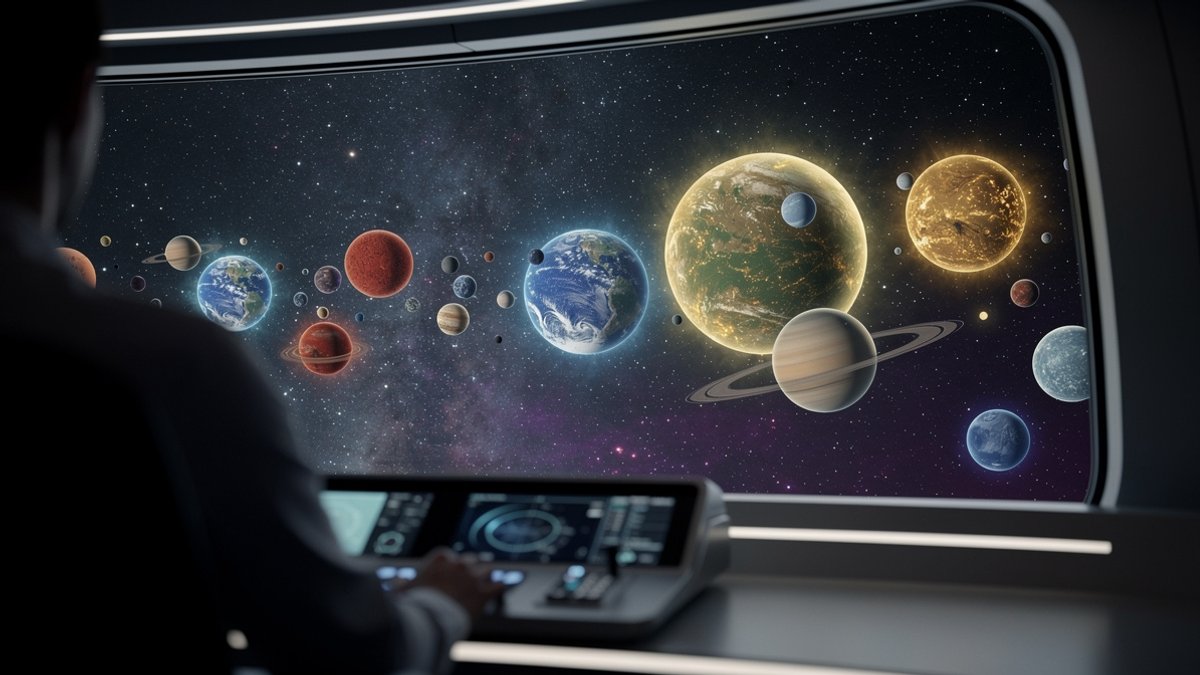
Several names on the list will already be familiar to anyone who follows space exploration. Close to home sits Proxima Centauri b, orbiting the star nearest to the Sun. The compact TRAPPIST‑1 system, about 40 light‑years away, contributes four gems: planets d, e, f, and g. Another standout is LHS 1140 b, around a cool red dwarf only 48 light‑years from Earth. To dive into more on related findings, check out our article about astronomers observing a rare collision between two planets.
These planets are not guaranteed to host oceans or atmospheres, yet their locations and estimated sizes make them high-value bets. According to coverage by the Royal Astronomical Society, these are among “the best places to look for alien life,” a phrase that has quickly spread across outlets such as research highlights on promising Earth-like worlds and Popular Science’s deeper dive into a real-world Project Hail Mary short list.
Ten worlds that feel most like home
Inside the broader sample, the team isolated planets that receive almost the same stellar radiation as Earth. That subset includes transiting worlds such as TRAPPIST‑1 e, TOI‑715 b, Kepler‑1652 b, Kepler‑442 b, and Kepler‑1544 b, along with radial-velocity planets like GJ 1002 b, GJ 1061 d, and Wolf 1069 b.
These targets offer a double advantage. They likely sit in comfortable temperature ranges, and their orbits or gravitational tugs make them accessible to telescopes. Early analysis already points to TRAPPIST‑1 e and TOI‑715 b as top choices for near-term atmospheric studies, especially with the James Webb Space Telescope aiming repeated glances at their dim red host stars.
Pushing the limits of planetary habitability
The catalogue does more than collect safe bets. Kaltenegger’s team deliberately included worlds near the hot inner edge and the cold outer edge of their habitable zones. Planets like K2‑239 d, TOI‑700 e, K2‑3 d, Wolf 1061 c, and GJ 1061 c sit closer to the “too hot” frontier, while TRAPPIST‑1 g and Kepler‑441 b sample the chilly outskirts.
Some of these planets also have very elliptical orbits, meaning their distance to the star swings significantly over time. Observing such systems can answer a key question in astrobiology: does a world need to stay permanently in the habitable zone, or can it surf in and out and still hold surface water? Similar boundary‑pushing studies are reshaping other areas of planetary research, from how Earth’s crust moved billions of years ago to models of rare collisions between planets that sculpt young systems.
How telescopes will hunt for alien atmospheres
To turn candidate worlds into credible potential homes for alien life, astronomers must detect and dissect their atmospheres. The new catalogue tags which planets are best suited to each technique: transits for worlds that cross their star’s face, precision radial-velocity for those found via stellar wobbles, and future direct-imaging for the nearest, darkest targets.
Current and planned observatories line up like a relay race. JWST has already begun probing some systems. The Nancy Grace Roman Space Telescope and the ground-based Extremely Large Telescope will add sharper vision later this decade. Further ahead, concepts such as NASA’s Habitable Worlds Observatory and the European-led LIFE interferometer aim to take actual spectra of Earth-sized planets, searching for combinations of gases that hint at biology rather than pure geology.
A field guide for the next generation of space explorers
For a young researcher like our fictional graduate student Maya, this catalogue functions like a travel guide to the galaxy. She can build a thesis project around one system, knowing that other teams will observe the same world with different tools. That kind of coordination mirrors how lunar samples from Apollo still fuel new results, such as studies of ancient Moon magnetism reshaping ideas about early solar history. For example, see our review on Apollo Moon Rocks revealing new insights into lunar magnetic mysteries for more scientific background.
The list of 45 also carries a cultural twist. Commentators at outlets like ScienceDaily’s coverage of the new exoplanet catalogue and NASA’s explainer on the science behind Project Hail Mary note how fiction and research now feed each other. Stories about aliens “that look nothing like life on Earth” push scientists to widen their expectations while still grounding their work in measurable planetary science and realistic habitability criteria.
What this means for the search for extraterrestrial life
Instead of scanning the sky at random, astronomers now hold a shortlist of 45 exoplanets where extraterrestrial chemistry might already be rewriting atmospheres. That does not guarantee that telescopes will find life, yet it dramatically raises the odds that upcoming missions will at least encounter planets with complex climates, clouds, and maybe hints of surface oceans.
If humanity ever builds a true Hail Mary starship, these coordinates will shape the flight plan. Until then, each new spectrum and light curve from these worlds trains scientists to read subtle fingerprints of alien life, turning a once‑fantastical quest into a disciplined branch of modern space exploration.
- 45 rocky exoplanets identified as prime life-search targets
- Subset of 24 planets sits in a tighter 3D habitable zone
- Key systems include TRAPPIST‑1, Proxima Centauri b and LHS 1140 b
- Focus on liquid water, stellar energy and orbital shape
- Catalogue optimised for JWST and future telescopes
What makes these 45 exoplanets good candidates for alien life?
They are small, likely rocky planets that orbit in their star’s habitable zone, where surface temperatures could allow liquid water. The team also checked how much stellar energy each world receives, selecting those that get amounts similar to or between Venus, Earth, and Mars, which gives a realistic range for testing habitability.
Does being in the habitable zone mean a planet is inhabited?
No. The habitable zone only indicates where liquid water might be possible. A planet can still lack an atmosphere, have toxic air, or be locked in a deep freeze. The catalogue highlights promising locations, but telescopes must now search for atmospheres and chemistry that could support biology.
Which exoplanets are the top priorities for telescopes right now?
TRAPPIST‑1 e and TOI‑715 b stand out because they receive Earth-like radiation and orbit small, dim stars. That combination makes their atmospheric signatures easier to detect with instruments like the James Webb Space Telescope, so they are prime near-term targets for detailed follow-up.
How does Project Hail Mary relate to this real research?
The novel imagines a desperate interstellar mission that encounters non-human life and exotic microbes. Researchers borrowed the Hail Mary concept as a metaphor: if we had to choose a handful of real destinations where life is most likely, this catalogue provides the map based on actual observations and models.
When could we know if any of these planets truly host life?
First atmospheric measurements for several targets are expected within the next few years as JWST and other observatories complete their programmes. Detecting clear biosignatures, such as incompatible gases that strongly suggest biology, will probably require a combination of these data and future dedicated missions in the 2030s and 2040s.
FAQ
What is the habitable exoplanets list?
The habitable exoplanets list is a catalogue of planets outside our solar system that might support life. These planets are identified based on factors such as their position in the habitable zone and their similarity to Earth.
How do astronomers decide which planets make it onto the habitable exoplanets list?
Astronomers analyse factors like a planet’s distance from its star, the amount of energy it receives, and its potential to have liquid water. Only those worlds that meet strict habitability criteria are included in the habitable exoplanets list.
Why is the habitable exoplanets list important for the search for alien life?
The habitable exoplanets list helps scientists focus their search for signs of extraterrestrial life on the most promising candidates. By narrowing down thousands of possibilities, research and future missions can be better targeted.
How many planets are currently on the new habitable exoplanets list?
Lucky Telescope Capture Reveals the Enigmatic Breakup of a Mysterious Comet
Rare Daytime Fireball Lights Up Texas Sky: Discover Where Meteorites Could Have Landed
The latest habitable exoplanets list, as identified by astronomers, contains 45 nearby rocky planets. These have been flagged as the top contenders for potentially supporting life beyond Earth.
Where can I find more information about the habitable exoplanets list?
You can read more about the latest habitable exoplanets list in scientific publications such as the Monthly Notices of the Royal Astronomical Society and on reputable astronomy websites. These sources often publish updates as new discoveries are made.