
Show summary Hide summary
- Artemis II, the space mission that reset the bar
- What the astronauts really saw around the moon
- A once-in-a-lifetime eclipse only visible from deep space
- Science haul: why Artemis II matters beyond the headlines
- What comes after Artemis II in NASA’s lunar strategy
- FAQ
- How is the Artemis 2 mission different from previous lunar missions?
- Who are the astronauts on the Artemis 2 mission?
- What was the main goal of the Artemis 2 mission?
- Why is the Artemis 2 mission considered a milestone for space exploration?
- How long did the Artemis 2 mission last and what route did it take?
Ten days, one loop around the moon, and a view of Earth that no human had ever seen: NASA’s Artemis II just rewrote what you picture when you think of space travel. From record-breaking distance to raw human reactions, this flight quietly changed the future of lunar exploration.
Artemis II, the space mission that reset the bar
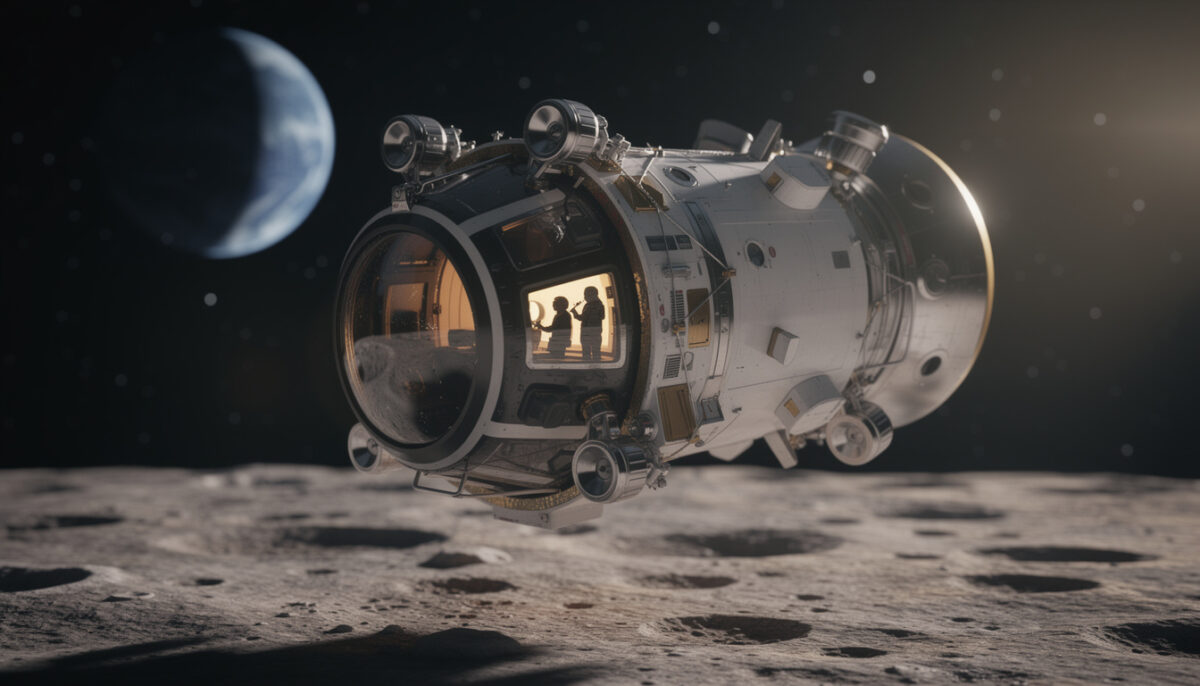
Launched from Cape Canaveral on 1 April, the Artemis II space mission sent four astronauts farther from Earth than any crew had ever flown. Their spacecraft, Orion, looped around the moon before splashing down off California on 10 April.
Commander Reid Wiseman, NASA astronauts Victor Glover, Christina Koch and Canadian flyer Jeremy Hansen became the first humans to leave low Earth orbit since Apollo. Wiseman’s laconic “four green crew members” call on splashdown summed up a flight that mixed cool professionalism with raw wonder.
Scientists Spot Signs of a Growing Rift in Southern Africa—Could a New Continent Be Taking Shape?
NASA’s Hubble just found a planet nursery so extreme it defies everything we thought we knew—see what’s inside
A historic milestone for modern space exploration
At its farthest point, Orion reached about 406,771 kilometres from Earth, nudging past the distance record set by Apollo 13 in 1970. That number is more than a statistic; it marks a new frontier for space exploration beyond low Earth orbit.
For NASA, Artemis II was a full-scale rehearsal for future moon landing attempts, but it also became a historic milestone in public imagination. Coverage from outlets like NASA’s own launch report turned the mission into a global event, echoing the shared emotion of earlier Apollo liftoffs.
What the astronauts really saw around the moon
From far away, the moon looks flat grey. Up close, the astronauts described something totally different: subtle patches of green, brown and even orange across the surface. Those tones, barely hinted at in robotic images, jumped out as Orion skimmed past the lunar far side.
Some of the regions they described had never been examined directly by human eyes. For Artemis science lead Kelsey Young, those “off-script” comments, recorded in real time, are gold for planning where crews should land to grab the most revealing rocks and regolith.
When earthshine turned the moon into a “sponge of light”
One of the strangest surprises came when Earth and the moon were in the same window. Sunlight reflected from Earth, the so‑called earthshine, washed out the subtle colours on the lunar surface. Koch said the moon suddenly “went matte”, like a light-soaked sponge, losing contrast in an instant.
The glare was so intense through one Orion window that the crew taped up a spare shirt as an improvised shade. That tiny hack will likely drive real engineering changes; future crews will not fly without dedicated window covers designed for these alignments.
A once-in-a-lifetime eclipse only visible from deep space
While Orion slipped behind the moon, radio contact with Earth cut out and the crew watched a solar eclipse that nobody on the ground could see. From their vantage point, the sun appeared smaller than the lunar disk as it slid behind the horizon of the moon.
Wiseman recalled five silent minutes where the cabin was filled with nothing but human reaction to that sight: a glowing rim of light, the black circle of the moon, and infinite darkness behind. That shared pause gave the mission a human heartbeat you cannot capture in telemetry.
Chasing impact flashes on the dark lunar surface
Right after the eclipse, someone in the cabin broke the silence: “Let’s look for impact flashes.” Almost immediately, the crew spotted tiny bursts of light on the night side of the moon—meteoroids slamming into the surface during their radio blackout.
These flashes matter for future lunar exploration. By comparing the frequency and brightness of such events with telescopic monitoring from Earth, planners can estimate how risky a long-duration surface stay might be for habitats, suits and rovers.
Science haul: why Artemis II matters beyond the headlines
Beyond spectacles, Artemis II delivered a deep scientific payoff. The crew recorded detailed voice notes and high‑resolution photos describing craters, ridges and subtle layering that satellites had hinted at but never fully captured.
Kelsey Young framed the moon as a “witness plate” for the inner solar system. Every crater the crew described tells something about the bombardment history that also shaped Earth and Mars, helping refine when oceans formed and when conditions for life stabilized.
Key contributions of the Artemis II mission
To grasp the mission’s value for coming decades, focus on a few concrete gains that now sit in NASA’s toolbox.
- Human-tested Orion systems: Life support, navigation and communications all endured a full deep-space loop.
- Real-time visual survey: Nuanced crew descriptions will steer where Artemis landers touch down.
- Impact risk data: Flashes spotted on the dark lunar side refine meteorite hazard models.
- Lighting and earthshine lessons: Window management and sensor exposure strategies can now be updated.
- Operational playbook: From sleep schedules to camera workflows, every routine was trialled in real conditions.
For readers who followed the mission day after day, guides like the day‑by‑day Artemis II timeline captured how these scientific tasks unfolded across the ten‑day loop.
What comes after Artemis II in NASA’s lunar strategy
Artemis II was never meant to put boots on the ground, yet it reshaped the roadmap. NASA has shifted from the earlier idea of a big lunar-orbiting gateway toward a leaner plan with a surface base at its core.
The next flight, Artemis III, will focus on perfecting orbital rendezvous between Orion and lunar landers in Earth orbit. That pivot, detailed in analyses such as NASA’s revamped Artemis program overview, aims to make the architecture more practical and modular.
Artemis IV and the race for a sustainable moon presence
Artemis IV is currently slated to deliver the next actual moon landing, alongside hardware for a long‑term foothold. The goal is simple to state and hard to execute: transform trips to the lunar surface into something as routine as visiting the International Space Station.
China is working toward a similar permanent presence, turning the moon into a new arena where technology, science and national ambition intersect. Whether your interest is geology, engineering or geopolitics, Artemis II has become the reference point against which all upcoming space mission plans are measured. For a glimpse of Christina Koch’s role on Artemis 2, see our feature on this historic crew member.
What made NASA’s Artemis II mission historically significant?
Artemis II was the first crewed journey beyond low Earth orbit since the Apollo era, sending four astronauts around the moon in the Orion spacecraft. The mission reached about 406,771 kilometres from Earth, surpassing Apollo 13’s distance record and validating systems needed for future moon landings and long-term lunar exploration.
Did Artemis II land on the moon?
No. Artemis II flew a lunar flyby trajectory without attempting a moon landing. The objective was to test Orion’s life-support, navigation and communication systems with humans onboard in deep space, while gathering scientific observations to guide where future Artemis landers should touch down.
Who were the astronauts on Artemis II?
The crew consisted of NASA commander Reid Wiseman, NASA astronauts Victor Glover and Christina Koch, and Canadian Space Agency astronaut Jeremy Hansen. Together they became the first humans since Apollo to travel to lunar distance, returning safely after a ten‑day mission.
What scientific results came from Artemis II?
The crew captured detailed imagery and voice descriptions of the lunar surface, spotted meteorite impact flashes on the moon’s night side, and reported unexpected lighting effects from Earth’s reflected sunlight. These data improve impact risk estimates, refine landing‑site selection and help reconstruct the inner solar system’s history.
How does Artemis II fit into NASA’s future lunar plans?
Artemis II validated Orion for deep-space operations, clearing the way for Artemis III to test docking with lunar landers in Earth orbit and Artemis IV to attempt the next moon landing. All these missions support NASA’s long-term aim of building a sustainable human presence on the lunar surface.
FAQ
How is the Artemis 2 mission different from previous lunar missions?
The Artemis 2 mission was the first time astronauts left low Earth orbit since Apollo and looped around the moon. It sent a crew farther from Earth than any previous mission, breaking distance records and paving the way for future lunar exploration.
Who are the astronauts on the Artemis 2 mission?
The Artemis 2 mission crew includes Commander Reid Wiseman, NASA astronauts Victor Glover and Christina Koch, and Canadian astronaut Jeremy Hansen. They were the first humans to travel beyond low Earth orbit in over fifty years.
What was the main goal of the Artemis 2 mission?
The main goal was to test the Orion spacecraft with a crew on board, ensuring all systems worked safely for journeys further into space. Artemis 2’s success sets the stage for future missions that aim to land astronauts on the moon.
Why is the Artemis 2 mission considered a milestone for space exploration?
James Webb telescope’s clearest ever map of the Universe exposes a cosmic web detail that leaves scientists stumped
Where did the laws of physics come from? The answer one thinker claims to have found upends everything we expect
Artemis 2 marked the farthest distance astronauts have travelled from Earth and demonstrated new technologies and international partnerships. The mission acts as a crucial step towards returning humans to the lunar surface and beyond.
How long did the Artemis 2 mission last and what route did it take?
The Artemis 2 mission lasted ten days, launching from Cape Canaveral, looping around the moon, and splashing down off the coast of California. This trajectory tested key systems and offered a view of Earth never before seen by humans.