Show summary Hide summary
- Artemis II: the crew behind the epic lunar flyby
- Far side of the Moon: new human views in stunning detail
- Earthset, solar eclipse and the dance of changing phases
- Why these Artemis II images matter for future space exploration
- From Artemis II to living and working on the Moon
- How far from Earth did Artemis II travel during the lunar flyby?
- What made the Artemis II images of the Moon unique?
- Why is the terminator line so interesting to scientists?
- How do the Artemis II photos support future lunar missions?
- Where can I see more breathtaking images from the Artemis II mission?
- FAQ
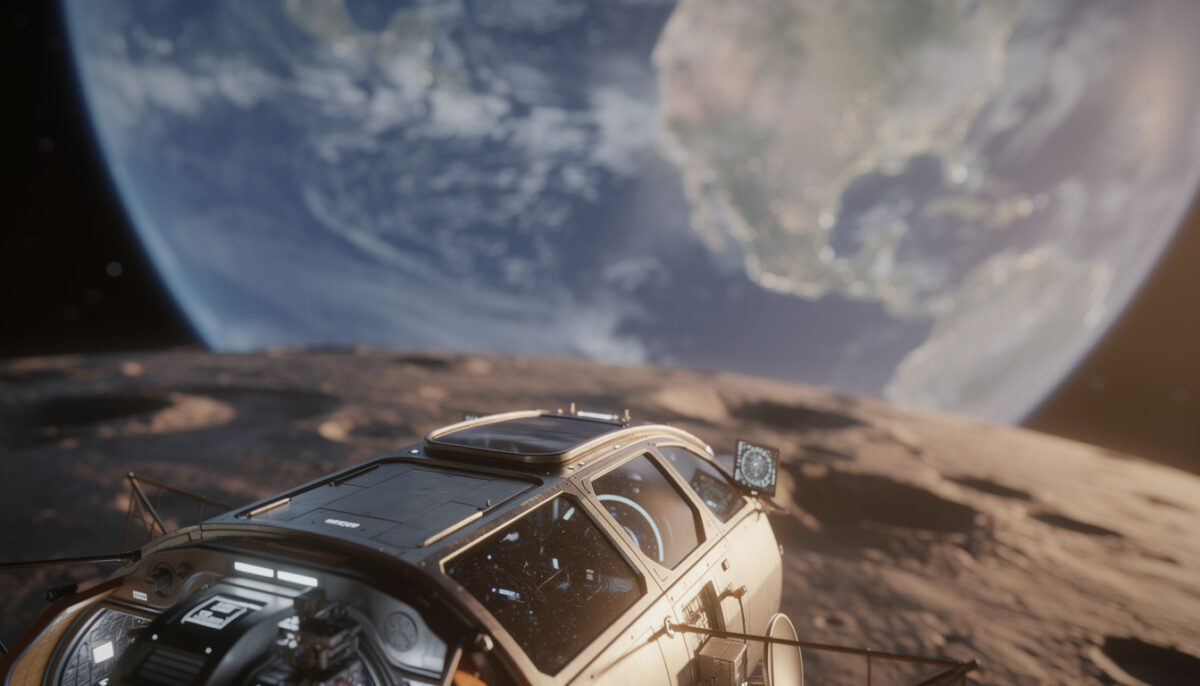
You press play on the latest Artemis II footage and suddenly the Moon fills the frame, scarred, luminous, frighteningly close. Now imagine being the person behind that window, watching Earth shrink to a pale crescent. That is exactly what this crew just lived.
The unique thread running through this mission is simple: seeing the Moon and Earth with human eyes from angles no one has ever witnessed, and bringing back those breathtaking images to rewrite how you picture our natural satellite. For more context on Artemis 2 mission preparations, you can explore related coverage.
Artemis II: the crew behind the epic lunar flyby
Four astronauts turned a technical Lunar Flyby into a visual story of modern Space Exploration. Commander Reid Wiseman, whose preparation was detailed in a portrait of his singular focus, guided the spacecraft Orion on a huge loop around the far side of the Moon. Alongside him, Christina Koch, Victor Glover and Jeremy Hansen rotated at the windows, cameras ready. Discover more about Christina Koch Artemis 2 before her historic journey.
The Creature Mistaken for the World’s Oldest Octopus Was Never an Octopus at All
This Innovative Walking Robot May Revolutionize Our Quest for Life on Mars
This was NASA’s first crewed lunar flyby since Apollo, pushing more than 406,700 kilometres from Earth, farther than any humans had travelled. For Koch, already highlighted as the first woman to orbit the Moon in this mission’s build-up on Christina Koch’s historic profile, every frame carried extra weight. The crew were not just passengers; they were image-makers for a new lunar era.
Orion at the edge of distance and history
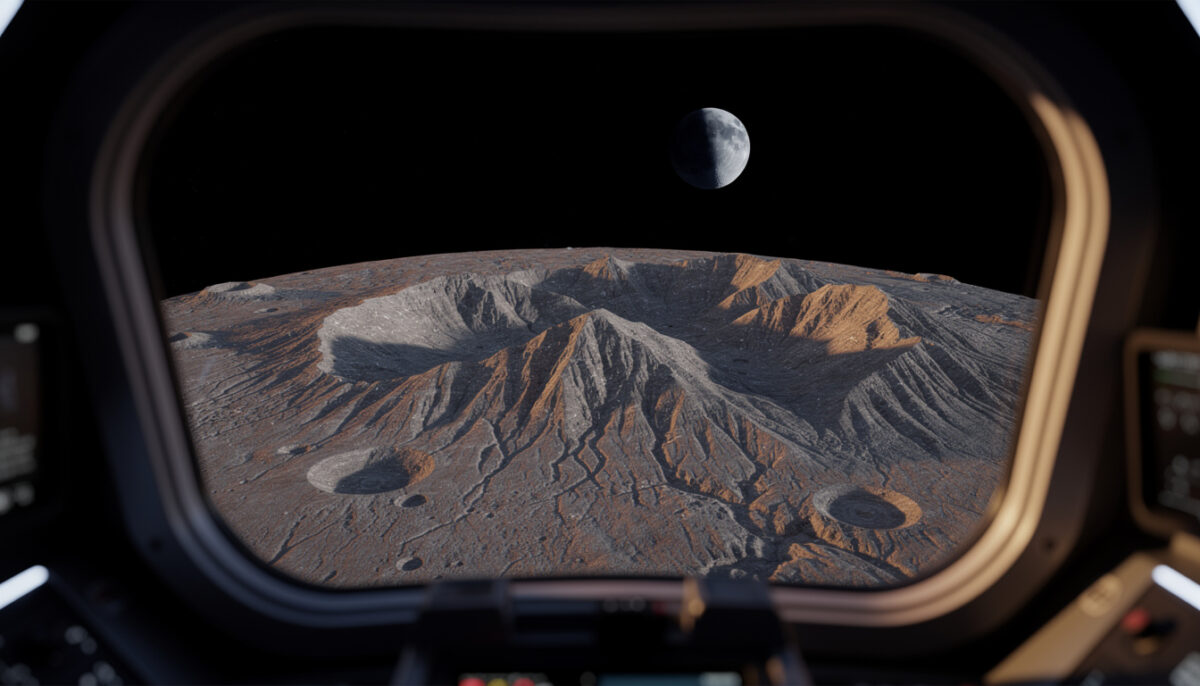
From Orion, Earth quickly turned from dominant globe to glowing marble. The crew flew past the far side, completely out of contact with mission control. They relied on training, checklists and instinct, yet still made time to press lenses to glass and narrate what they saw into recorders. Those audio notes will matter later when scientists match each emotion to a specific frame. Read more about gamma Cassiopeiae x-ray discoveries influencing modern observation techniques.
NASA designed this Lunar Mission to validate trajectories, life-support and navigation. Yet the images became an unexpected performance test: could Orion stay stable and safe while astronauts hunted for the perfect shot along the limb of the Moon? The answer, frame after sharp frame, appears to be yes.
Far side of the Moon: new human views in stunning detail
On the far side, the crew finally saw entire lunar formations that had only been mosaics on screens. The immense Orientale basin, for example, unrolled beneath them as a complete structure. Its central dark patch, once just a textbook feature, revealed itself as ancient frozen lava encircled by rings of battered mountains.
Two nearby small craters now carry proposed names born inside Orion: Integrity, a nod to the callsign, and Carroll, honouring Wiseman’s late wife. That quiet act turned anonymous impact scars into markers of human stories, a reminder that Astronomy often advances through personal gestures as much as big instruments.
The magic line: where lunar night meets day
Pilot Victor Glover became obsessed with the terminator, that shifting frontier between lunar daylight and darkness. At that line, low-angle sunlight stretched shadows like claws across crater rims and ridges, unveiling micro-relief that disappears under high noon lighting. He described valleys that looked like voids where you might fall straight toward the lunar core.
This is not just poetry. Those shadow patterns help geologists measure slopes and estimate rock heights. For enthusiasts poring over galleries like the best images from Artemis II, that angled light offers new data on how crust fractured during massive impacts. Beauty and science share the same pixels here.
Earthset, solar eclipse and the dance of changing phases
From Orion’s orbit, both Earth and Moon flicked through phases at speed. At one moment, astronaut Jeremy Hansen reported the Moon as gibbous and Earth as a thin crescent. Minutes later, the visual geometry reshuffled again. Watching those phase changes in real time made orbital mechanics feel like choreography rather than equations.
One of the standout scenes came when the small blue crescent of Earth slowly slipped behind the Moon’s limb: an Earthset no ground-based observer can see. That intimate alignment, captured in several breathtaking images shared across outlets including this detailed image recap, already circulates as a defining photo of the decade.
An hour-long eclipse and the glow of earthshine
On the far side, with radio contact lost, the crew watched an eclipse unlike any seen from Earth. For nearly an hour, the Moon completely blocked the Sun from Orion’s viewpoint, yet the lunar surface facing Earth still gleamed with reflected blue-white light. That earthshine was so strong earlier in the flight that the astronauts had to drape a spare shirt over one window.
For a space fan like our fictional reader Alex, following each update from home, that description flips the usual script. You normally picture the Moon glowing in sunlight. Here, Earth becomes the light source, painting the Moon’s face during an eclipse and turning the whole event into a living physics lesson.
Why these Artemis II images matter for future space exploration
Every shot the crew brought back feeds multiple audiences. Engineers study starfields and limb positions to refine navigation models. Geologists zoom into crater walls to hunt layering and landslides. Mission planners check cabin reflections and angles to plan camera mounts for the next flights deeper into Space Exploration.
For the public, curated galleries such as NASA’s Artemis II multimedia collection transform a distant Epic test flight into something personal. When you see Earth half-hidden behind the Moon through a spacecraft window, you are no longer just reading a press release; you are sharing the view with the crew.
From Artemis II to living and working on the Moon
This mission sits between heritage and ambition. Apollo showed that humans can briefly visit the lunar surface. Artemis II proves that a modern spacecraft can carry a diverse crew around the Moon, gather complex visual data and return safely, setting the stage for landings and, later, sustained bases. For more on habitable exoplanets list and ongoing space discoveries, check our dedicated resources.
Those vistas of rugged highlands, shadow-choked craters and smooth mare plains help choose future landing sites. They shape how architects imagine habitats tucked near the terminator, where sunlight and darkness alternate in useful rhythms. The photos are not just souvenirs; they are reference material for the next step outward.
- Training the eye: astronauts practice recognising landmarks visually, then confirm them against maps.
- Testing sensors: comparing handheld camera shots to onboard instruments validates exposure and pointing models.
- Engaging the public: viral images build support for budgets and long-term lunar infrastructure.
- Inspiring careers: young readers see faces like Koch and Glover and imagine their own paths into Astronomy.
How far from Earth did Artemis II travel during the lunar flyby?
During the Artemis II Lunar Flyby, Orion and its crew travelled more than 406,700 kilometres from Earth, pushing humans farther into deep space than any previous mission. This extended distance allowed the astronauts to loop behind the far side of the Moon and capture new perspectives of both Earth and lunar terrain.
What made the Artemis II images of the Moon unique?
The Artemis II astronauts photographed the far side of the Moon from close range, including a complete view of the Orientale basin and nearby unnamed craters. They also documented an hour-long solar eclipse seen only from the spacecraft and rare Earthset sequences, offering viewpoints no human eye had previously experienced directly.
Why is the terminator line so interesting to scientists?
The terminator, where lunar day meets night, produces long, sharp shadows that reveal subtle topography. Crater rims, boulders and ridges stand out clearly, helping geologists estimate heights, slopes and impact histories. For Artemis II, images along the terminator combined visual drama with highly useful scientific detail.
How do the Artemis II photos support future lunar missions?
The photos help refine navigation, identify promising landing regions and test camera setups for later Artemis flights. Engineers and scientists use these images to validate models of lighting, terrain roughness and visibility, all of which feed into planning safe approaches, surface operations and designs for longer lunar stays.
Where can I see more breathtaking images from the Artemis II mission?
You can explore curated selections in several online galleries, including NASA’s Artemis II multimedia page, independent analyses of the best images, and media features that focus on Earthset, the far-side craters and the eclipse sequence. Together they provide a comprehensive visual record of this Epic Lunar Mission involving artemis ii moon photos.
FAQ
Where can I view the official Artemis II moon photos from the lunar flyby?
You can find the official Artemis II moon photos released by NASA on their website and across NASA’s social media channels. These images offer a spectacular new perspective of the lunar surface and Earth from space.
What makes the Artemis II moon photos different from previous lunar images?
Unlike past robotic missions, the Artemis II moon photos are taken by astronauts themselves, capturing unique human perspectives and real-time reactions. These photos show never-before-seen views of both the Moon and Earth.
How did the Artemis II crew take such detailed photos during the flyby?
A Recent Impact on the Moon Leaves a Striking New Bright Scar
Did a Black Hole Just Erupt? This ‘Impossible’ Particle Could Be the Key Evidence
The crew used high-resolution digital cameras positioned at Orion’s windows to snap images as they orbited the Moon. Their planning and training ensured every key moment of the flyby was documented.
Can I use Artemis II moon photos for my own projects or research?
Most Artemis II moon photos released by NASA are available under public domain and can be used freely, though it’s recommended to credit NASA when sharing them. Always check the specific usage guidelines on NASA’s image library.