Show summary Hide summary
- Life’s origins: sticky goo on rocks as a new blueprint
- Inside the prebiotic gel-first hypothesis of existence
- From chemical gels to something like microbial life
- Testing the sticky goo: next steps in abiogenesis research
- Astrobiology: searching for xeno-films beyond Earth
- Limitations, open questions and healthy skepticism
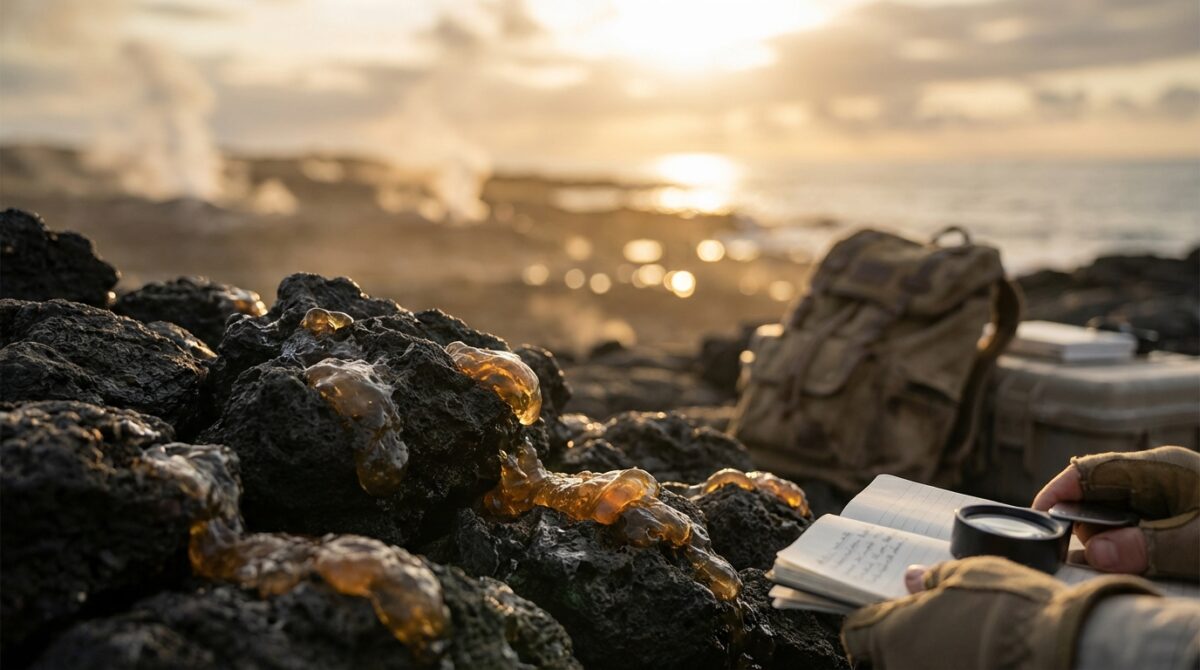
What if life origins did not begin in a free-floating ocean soup, but in sticky goo glued to rocks, acting like nature’s first “training ground” for biology? That is the striking idea emerging from a new international study on how existence may have started on our planet. Life may have started as sticky goo clinging to rocks.
The work, led by researchers at Hiroshima University in collaboration with teams in Malaysia, the United Kingdom and Germany, reframes how scientists picture abiogenesis. Published in the peer-reviewed journal ChemSystemsChem, it argues that primitive gels on early Earth might have sheltered the chemistry that eventually evolved into microbial life.
Life’s origins: sticky goo on rocks as a new blueprint
The central claim is simple but disruptive: before true cells appeared, surface-bound gels may have acted as semi-solid “nests” where chemical networks could grow, compete and slowly drift toward biology. Instead of focusing only on DNA, RNA, or membranes, the team places sticky goo at the core of the story.
Toxic Metals Discovered in Bananas Post Brazil Mining
Gravitational Wave Detection Validates Einstein Again
Drawing on about two decades of scattered experiments and theory in prebiotic chemistry and soft matter physics, the researchers argue that these gels behaved a bit like today’s biofilms. These are the slimy layers of microbes that cling to river stones, ship hulls or even your teeth. The twist here: on a lifeless Earth, the “film” would have been chemical, not biological.
How the gel-first model was pieced together
Instead of a single mega-experiment, the team led by Tony Z. Jia (Hiroshima University) and Kuhan Chandru (National University of Malaysia, Space Science Center) conducted a structured review and synthesis. In one sentence, their method: they combined data and concepts from soft matter chemistry, modern cell biology, geology and origin-of-life experiments to build a coherent “gel-first” framework.
The study does not give a final headcount or years of lab work like a clinical trial would. It instead weaves together dozens of results showing that simple organics, minerals and water can spontaneously form gels, films and matrices on solid surfaces. That mosaic of evidence underpins the scenario they label the prebiotic gel-first hypothesis.
Inside the prebiotic gel-first hypothesis of existence
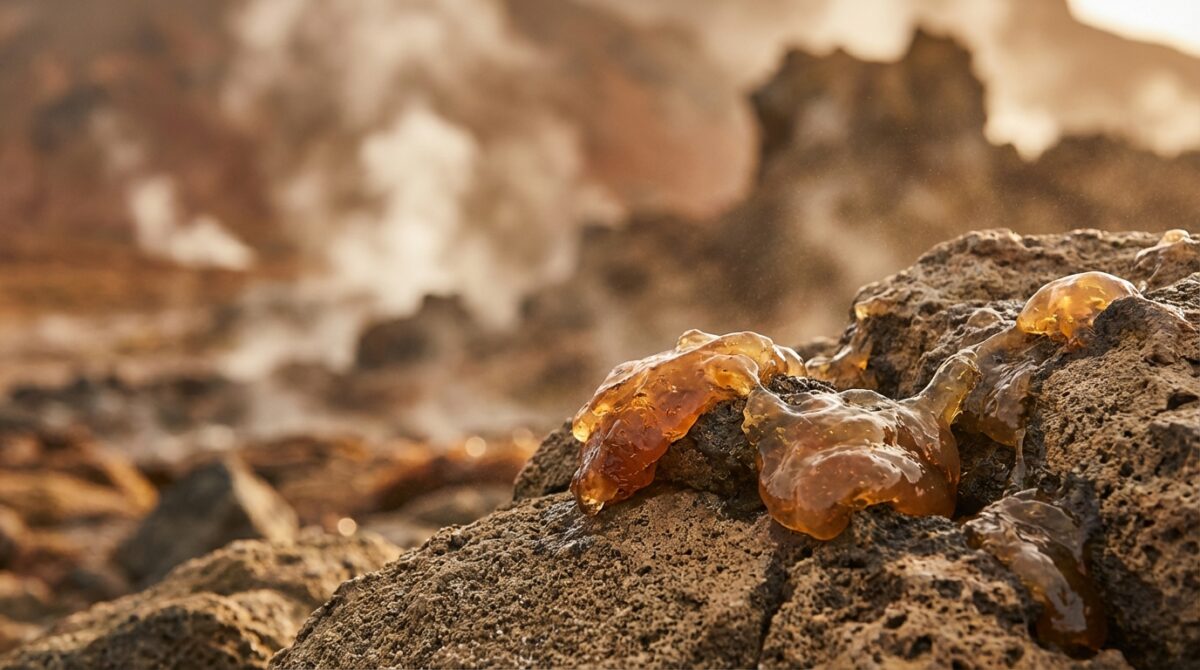
At the heart of the proposal lies a physical picture of early Earth shorelines, hot springs and tidal pools. On mineral surfaces, thin layers of gel-like material would form from organic molecules, salts and water. These sticky films adhered to rocks, much like slimy coatings seen on river pebbles today, but without any biology involved.
Within these gels, the concentration of molecules could rise well above that of the surrounding water. Local pockets would trap energy sources, catalytic minerals and small organic compounds. In this crowded playground, random reactions could join into loose networks, some gaining rudimentary features that resemble metabolism or replication—though still far from true cells. Life May Have Started as Sticky Goo Clinging to Rocks.
How gels may have solved early chemical challenges
Origin-of-life research often faces three hard puzzles: how to concentrate dilute molecules, how to protect fragile reactions, and how to keep useful products from drifting away. The gel-first model addresses all three at once through physical structure rather than advanced genetics.
According to the paper, surface-attached gels could have offered:
- Local concentration of organics and ions, boosting reaction probabilities.
- Retention of beneficial products, reducing loss into the open environment.
- Protection from temperature swings, UV light and mechanical stress.
- Compartment-like behavior without requiring fully formed cell membranes.
- Scaffolds for early polymers to assemble and interact repeatedly.
From chemical gels to something like microbial life
The authors suggest that, within these sticky goo matrices, early reaction networks might gradually have acquired proto-metabolic traits. Over many cycles of wetting, drying and energy input, some networks could in principle become more stable, copy certain structures and even outcompete rivals within the gel.
That idea echoes how modern biofilms allow real microbes to share nutrients, communicate chemically and resist stress. In the prebiotic version, there were no genes yet, but the physical setting might still have allowed a form of primitive selection and variation. The study carefully frames this as a plausible path, not a proven chain of events, keeping a clear line between correlation and firm causation.
Confidence, statistics and what remains uncertain
Because the paper in ChemSystemsChem is conceptual rather than a single statistics-heavy trial, it does not deliver classic p-values or one neat confidence interval. Instead, it leans on the cumulative weight of multiple experiments that each show aspects of gel formation, molecular concentration or surface chemistry.
Where numbers do appear—like measured increases in local concentration or stability within gels in previous lab work—they often indicate significant enhancements compared with control solutions. Yet the authors repeatedly highlight that no dataset currently lets science assign a precise probability such gels actually led to evolution and fully fledged life. The framework is constructed to be testable, not to close the case.
Testing the sticky goo: next steps in abiogenesis research
The team lays out specific experiments to stress-test their scenario. Under conditions mimicking volcano-heated ponds or tidal rock pools, they plan to mix simple organic molecules with minerals and salts to see when and how gels spontaneously appear, and what properties they show.
Metrics will likely include how strongly gels bind to rocks, how much they enrich particular molecules, and whether reaction networks inside them display self-sustaining cycles. Co-author Ramona Khanum, who worked on the project as an intern at the National University of Malaysia, explicitly calls for more laboratories worldwide to probe these questions.
Connecting to wider origin-of-life puzzles
This gel-centered approach sits alongside other major ideas, like RNA-first scenarios or hydrothermal vent chemistry. It does not dismiss those; it instead adds a physical layer that might support many chemical stories simultaneously. Gels could, for instance, concentrate nucleotide precursors that later feed an RNA world. Rock-Clinging Goo as a Life Origin Theory.
Recent work on strange fossils and deep-sea oxygen production, such as studies on dark oxygen in the deep ocean or on how early organisms built unusual structures, shows how complex environments can be. This new hypothesis suggests that, even before such biology, complex structure may have existed at the level of non-living gels.
Astrobiology: searching for xeno-films beyond Earth
One of the most intriguing implications lies far from Earth. The authors propose that similar surface-attached gels, dubbed xeno-films, might form on other planets or moons, using alien chemistries. These would not be Earth-style microbial life, but they might create chemical “hotspots” where something life-like can emerge.
That idea shifts how missions could search for signs of existence beyond our planet. Instead of targeting only familiar biomolecules, probes might scan rocks and sediments for organized, layered, gel-like structures that alter local chemistry in non-random ways, as hinted by research on Martian rocks shaped by ancient rainfall.
Real-world impact and policy angles
Why should this matter for readers far from the lab bench? First, the work reshapes public conversations about Life origins by highlighting physical environments, not just miracle molecules. That can influence how space agencies design instruments and which landing sites they prioritize on Mars, icy moons or exoplanets.
Second, funding bodies—from the Japan Society for the Promotion of Science to European foundations—often face choices between well-established pathways and bolder hypotheses. The gel-first framework, backed by support from groups like the Alexander von Humboldt Foundation and the Mizuho Foundation for the Promotion of Science, may encourage broader portfolios that give room to unconventional, yet testable, ideas.
Limitations, open questions and healthy skepticism
The authors are transparent about what the study does not show. No experiment yet tracks a full journey from lifeless gel to a self-sufficient cell. Many steps—polymer formation, information storage, reliable replication—remain actively debated in abiogenesis research, and the relative timing of each is still unresolved.
The framework also depends strongly on conditions on early Earth: availability of organics, mineral types, cycling of wet and dry phases. Different geological reconstructions would favor or weaken the scenario. As with landmark work on ancient fossils, like bizarre early life forms, interpretations can shift rapidly when new data arrive.
What exactly is the prebiotic gel-first hypothesis?
It is a scientific framework proposing that, before true cells existed, sticky gels attached to rocks or other surfaces created dense, sheltered environments where simple chemical reactions could become more complex. Within these gels, molecules concentrated, interacted repeatedly and formed early reaction networks that might have laid the groundwork for later biological evolution. The hypothesis does not claim to be the only path to life, but offers a structured, testable setting for abiogenesis.
Does this study prove how life began on Earth?
No. The research, published in ChemSystemsChem, summarizes and organizes existing experiments and theory into a coherent model. It shows that gels are plausible players in prebiotic chemistry, but it does not experimentally demonstrate a complete transition from non-living gel to living cell. The authors highlight this limitation and present their idea as one promising, testable scenario among several in origin-of-life science.
How is this different from the classic primordial soup idea?
The traditional primordial soup picture focuses on reactions happening freely in oceans or ponds. The gel-first hypothesis argues that semi-solid, surface-bound matrices were just as important, because they concentrated molecules, retained useful products and offered some protection. Instead of dilute reactions drifting in open water, chemistry happened in sticky, structured environments that behaved a bit like modern biofilms, only without any microbes yet.
Could similar gels exist on other planets or moons?
The authors suggest that xeno-films—alien versions of these gels—could form wherever the right combination of liquids, organics and mineral surfaces occurs. They would not automatically be living, but could create oases where complex chemistry thrives. This possibility has direct implications for astrobiology and upcoming space missions, which may start looking for structured surface films, not just specific biomolecules, as potential markers of pre-life environments.
Who funded and conducted this research?
Revealing the ancient secrets of the Greenland shark
Discovery of New Fossils Could Resolve the Enigma of Sail-Backed Spinosaurs
The work was led by scientists including Tony Z. Jia from Hiroshima University and Kuhan Chandru from the Space Science Center at the National University of Malaysia, with partners in the United Kingdom and Germany. Funding came from several organizations, such as the University of Leeds Research Mobility Funding, the Alexander von Humboldt Foundation, the Japan Society for the Promotion of Science and the Mizuho Foundation for the Promotion of Science. Their support allowed cross-border collaboration across chemistry, physics and biology.