
Show summary Hide summary
- Why measles is spreading again in the digital age
- What makes measles outbreaks so dangerous for communities
- Combating misinformation: strategies that actually protect families
- Why fighting measles misinformation matters beyond one disease
- From measles control to resilient public health systems
- Why is measles resurging despite existing vaccines?
- How dangerous is measles compared with other childhood infections?
- What evidence shows that MMR does not cause autism?
- How can individuals help combat vaccine misinformation?
- Why does high measles vaccination coverage protect people who are unvaccinated?
When a virus that should be held in check starts racing through schools and airports again, the danger is not only biological. The modern resurgence of Measles is being driven as much by online narratives as by viral particles, turning misinformation into a real-time threat to Public Health.
Once nearly eliminated in many countries, measles has returned in waves of outbreak clusters across the US, Europe and parts of Asia. Around the world, health workers see the same pattern: falling vaccination rates, weaponised rumours, and families trying to navigate a digital noise storm while simply wanting to protect their children.
Why measles is spreading again in the digital age
To understand why this supposedly “old” disease is back, it helps to follow one family. When eight-year-old Lena in London developed a high fever and a blotchy rash, her parents were shocked to learn it was measles. They had delayed her immunization after reading alarming posts on social media. That decision did not only affect their daughter; it exposed infants and immune‑suppressed neighbours who could not be vaccinated.
New Discovery May Enable Bones to Harness Exercise Benefits Without Physical Movement
Scientists Uncover the Mystery Behind Earth’s Most Bizarre Fossils
This personal story mirrors wider data. Analyses such as recent work on US measles resurgence show how even small drops in MMR coverage can fracture community protection. When coverage falls below about 95 percent, each infected person can spark chains of transmission, especially in crowded settings like schools, refugee centres or large religious gatherings.
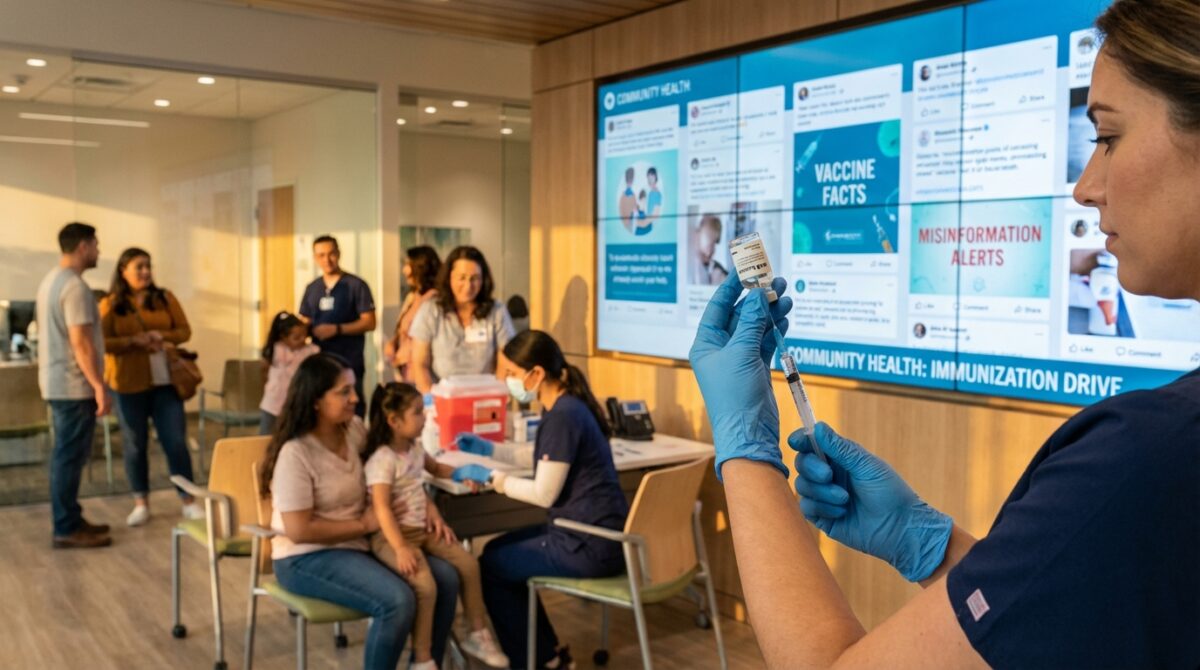
The long shadow of a fraudulent study
The modern wave of doubt about measles vaccines can be traced back to a single infamous paper from 1998 that falsely suggested a link between the MMR vaccine and autism. The study was later exposed as fraudulent and fully retracted, yet its narrative continues to ripple through social networks, parenting forums and video platforms nearly three decades later.
Robust population studies, including data from Japan where MMR use was halted for a period, repeatedly showed no change in autism rates when the vaccine was removed. These findings, echoed in systematic reviews such as those summarised in recent epidemiological analyses, leave no scientific room for a causal link. Still, fragments of that original claim fuel blogs, memes and viral threads that seem more persuasive than dry statistics.
What makes measles outbreaks so dangerous for communities
Measles is not just another childhood rash. It ranks among the most contagious human infections known. An unvaccinated person sharing an indoor space with a contagious case can be infected even two hours after the sick person leaves. About one in five children will face serious complications, including pneumonia, deafness, blindness or brain inflammation.
Even after the fever fades, the virus can delete immune memory cells that protect against other pathogens. Research indicates this “immune amnesia” can last for several years, leaving survivors more vulnerable to infections like pneumonia or diarrhoeal diseases. Global estimates suggest that around 95,000 people died from measles in 2024, yet the true mortality impact is likely higher when these secondary effects are counted.
How small dips in vaccination open big doors for disease
Because measles spreads so efficiently, communities need very high coverage to prevent sustained transmission. Experts consistently point to a threshold of around 95 percent coverage for two doses of measles-containing vaccine to keep the virus from gaining a foothold. When coverage slips to 90 percent or 85 percent in certain districts, pockets of susceptible people accumulate silently.
Those pockets often map onto social realities: areas with limited clinic access, communities exposed to intense anti-vaccine messaging, or groups affected by conflict and displacement. Analyses of recent outbreaks, including syntheses such as public health reviews on measles resurgence, show that outbreaks rarely respect borders. A single infected traveller can connect these vulnerable pockets across continents.
Combating misinformation: strategies that actually protect families
Stopping the virus demands more than delivering vials and syringes. It also requires reshaping the online ecosystems where doubts take hold. Platforms that once centred on light conversation now host highly coordinated campaigns questioning established disease prevention tools. Some are linked with broader political movements that also target climate science and democratic institutions.
Public health agencies, paediatric societies and independent fact‑checking groups are responding with new strategies. Initiatives like those described by digital safety advocates working on measles misinformation highlight the importance of rapid response teams that track viral falsehoods and provide timely, shareable corrections in plain language. These efforts aim to meet parents where they are: on their phones, not in lecture halls.
From clinic waiting rooms to the infosphere
In practice, combating misinformation means rethinking every step of the vaccination journey. When Lena’s parents finally returned to their local clinic, they were greeted by a nurse who did more listening than lecturing. She acknowledged their fears, then walked through the evidence with stories of children who could not be vaccinated because of cancer treatment and depended on others’ immunity.
This human, conversational approach reflects a broader shift. Many health systems now train staff in risk communication and digital literacy. Some run “vaccine confidence clinics” that dedicate time to longer discussions, rather than trying to squeeze complex questions into a rushed appointment. The goal is not to win an argument, but to rebuild trust one family at a time.
- Listen first: Understand specific concerns rather than assuming general “hesitancy”.
- Use clear comparisons: Explain that the risk of severe measles is far higher than the risk of serious vaccine side effects.
- Share local data: Show how outbreaks have affected nearby schools or hospitals.
- Address online sources: Help parents evaluate where posts come from and who funds them.
- Highlight community impact: Emphasise protecting newborns, older adults and people with fragile health.
Each conversation, whether in a clinic, a community meeting, or a group chat, becomes a small act of Awareness building that helps strengthen the social fabric against future outbreaks.
Why fighting measles misinformation matters beyond one disease
The battle over measles vaccines is about more than a single virus. It has become a test case for how societies handle complex science in an era of algorithm‑driven feeds and polarised politics. Patterns seen in anti-vaccine messaging now appear in campaigns against climate science, pandemic preparedness and even routine childhood health checks.
For scientists and communicators, the lesson is clear: evidence alone is not enough. Data must be paired with accessible storytelling, transparent discussion of uncertainties and honest acknowledgement of historical failures that have eroded trust. When this happens, people are more likely to distinguish between legitimate debate and orchestrated disinformation.
From measles control to resilient public health systems
Experience gained from measles control has direct applications for wider health security. Strengthening immunization registries, improving rapid diagnostics, and expanding digital surveillance for early warning can help detect other emerging threats. Collaborative frameworks that link national ministries, local clinics and private laboratories, as highlighted in several global health reviews, are already reducing response times when new clusters appear.
The same digital tools that spread rumours can also be re‑engineered to promote Awareness. Carefully designed campaigns can target communities with low coverage, provide appointment reminders, and share testimonies from parents who changed their minds after seeing outbreaks first-hand. In this sense, every effort to stabilise measles control becomes a rehearsal for the next major public health test.
Why is measles resurging despite existing vaccines?
Measles is resurging because vaccination coverage has fallen below the roughly 95% threshold needed to prevent sustained transmission. Local pockets of low immunization, often linked to misinformation, access barriers, conflict or social marginalisation, allow the virus to spread rapidly when it is introduced by travel or local exposure.
How dangerous is measles compared with other childhood infections?
Measles is extremely contagious and can lead to serious complications in about one in five children, including pneumonia, deafness, blindness and brain inflammation. It can also wipe out existing immune memory, leaving people more vulnerable to other infections for several years after recovery.
What evidence shows that MMR does not cause autism?
Large population-based studies from multiple countries, including periods when MMR was withdrawn in Japan, have found no difference in autism rates linked to the vaccine. The original 1998 study suggesting a connection was exposed as fraudulent and retracted, and its findings have not been replicated in rigorous research.
How can individuals help combat vaccine misinformation?
A Century-Long Stonehenge Enigma Poised for Breakthrough Resolution
Discovering a Novel Approach to Understanding Our Shared Reality
Individuals can share information from trusted medical sources, avoid forwarding unverified claims, and encourage respectful conversations about vaccines. Asking where a claim originates, whether it is supported by multiple independent studies, and who benefits financially from its spread are simple checks that help filter unreliable content.
Why does high measles vaccination coverage protect people who are unvaccinated?
When enough people are immune, the virus struggles to find new hosts, and chains of transmission break quickly. This indirect protection, called herd or community immunity, shields those who cannot be vaccinated, such as infants or people receiving cancer treatment, by reducing their chance of encountering the virus at all.