Show summary Hide summary
- EU electricity milestone: wind and solar overtake fossils
- Climate science behind the shift to renewable energy
- Who is affected by Europe’s clean energy milestone?
- What comes next for grids, storage and policy?
- Solutions: from batteries to smarter consumption
- How much of EU electricity came from wind and solar in 2025?
- Does more renewable energy mean higher electricity bills?
- If solar and wind are variable, how can the grid stay reliable?
- Are fossil fuels disappearing from the EU power mix?
- What can individuals do to support the clean energy transition?
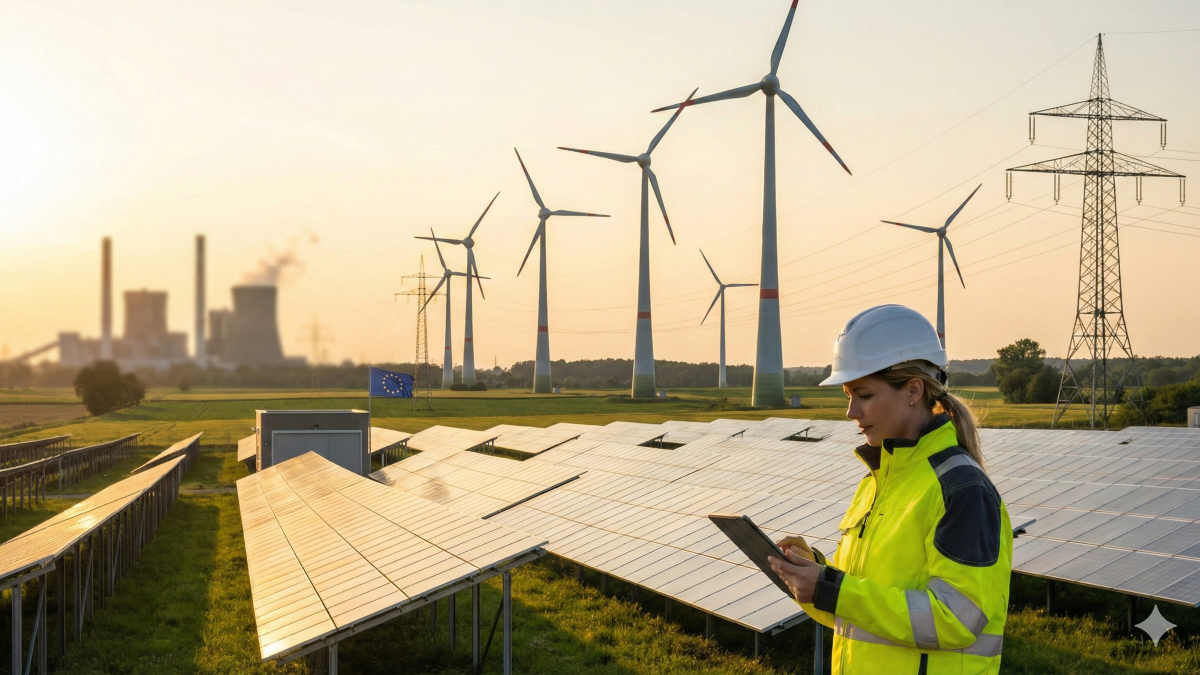
For the first time in EU history, Wind Energy and Solar Power together delivered more electricity than all Fossil Fuels combined. In 2025, turbines and panels supplied 30% of EU electricity, while coal, oil and gas plants slipped to 29%, according to a new analysis.
This apparently small one‑point gap marks a large shift. Behind it lie changing geopolitics, falling renewable costs and a power system learning to live with the rhythms of sun and wind. The number matters for households, factories and policymakers who depend on stable, affordable and clean power.
EU electricity milestone: wind and solar overtake fossils
The latest European Electricity Review from UK‑based think tank Ember, echoed in reports by international news agencies, confirms a symbolic first: wind and solar generated more EU electricity than fossil fuels in 2025. Coal fell to below 10% of the power mix, mostly concentrated in Germany and Poland.
Revolutionary Carbon Material Poised to Slash Carbon Capture Costs
Scientists Transform CO2 into Clean Fuel with Innovative Single-Atom Catalyst Breakthrough
Solar delivered a record 13% of EU power, boosted by rapid rooftop installations and utility‑scale parks. In five member states, including the Netherlands, solar supplied more than 20% of demand. Wind provided about 17%, slightly less than the previous year because of weaker winds, yet it remained the second‑largest single source of electricity.
Why this energy transition tipping point matters
Ember analyst Beatrice Petrovich describes this crossing of the lines as a “major tipping point” for Clean Energy in Europe. The shift is not only technical; it is also strategic. EU governments still remember the gas price shock after earlier geopolitical crises, when dependence on imported fuels pushed household bills to painful highs.
By raising the share of Renewable Energy in EU Electricity, member states reduce exposure to volatile gas markets and supply disputes. Studies referenced by outlets such as The Guardian’s environment desk suggest that each percentage point gained by wind and solar cuts fuel imports and related emissions at the same time. The tipping point is therefore a climate and security story in one graph.
Climate science behind the shift to renewable energy
The physics linking this Energy Transition to climate is straightforward. Burning fossil fuels releases carbon dioxide, a long‑lived greenhouse gas that traps outgoing heat in the atmosphere. According to the Intergovernmental Panel on Climate Change, around three‑quarters of global CO₂ emissions come from energy production and use.
Replacing coal and gas plants with Green Energy sources such as wind and solar immediately reduces those emissions. For every kilowatt‑hour generated, modern European solar farms and wind parks emit many times less CO₂ over their lifetime than gas turbines. That difference is the narrow band between stabilising warming close to 1.5–2°C and drifting into more dangerous territory for ecosystems and societies.
From sunlight and wind gusts to stable power
There is, however, a technical catch. Sunlight fades at sunset and wind output varies from hour to hour. Traditional grids were built around steady fossil plants, not fluctuating renewables. Grid operators need new tools to balance variability without simply firing up more gas units.
The Ember report and parallel coverage in sources such as Euronews Green highlight early signs of adaptation. Evening peaks, once dominated by gas, are increasingly met by batteries, flexible demand and cross‑border power flows. Italy, which already hosts roughly one‑fifth of EU battery capacity, may soon follow California’s trajectory, where batteries cover around 20% of some evening peaks.
Who is affected by Europe’s clean energy milestone?
For families, the shift affects bills and appliances. Households in sunny or windy regions can now pair rooftop solar with heat pumps and electric vehicles, cutting reliance on gas boilers and petrol. Analysts writing for platforms like heat pump investment briefings underline how clean power makes electrified heating more attractive over time.
Industries are also reshaping their strategies. Aluminium smelters, data centres and manufacturers are signing long‑term contracts with solar and wind projects to secure stable prices. Farmers in southern Europe are experimenting with agrivoltaics, where panels shade crops while producing electricity. These examples turn an abstract percentage into changes in daily work and income.
Geopolitics, dependency and new supply chains
The milestone also exposes new vulnerabilities. At the World Economic Forum in Davos, US officials warned that Europe’s limited domestic battery and solar manufacturing capacity could deepen reliance on Asian supply chains. The debate mirrors concerns raised in pieces such as coverage of Europe’s shift to wind and solar, which examine whether energy independence is really improving.
The question becomes not only “Where does the fuel come from?” but also “Who builds the turbines, panels and storage systems?” For policymakers, the answer will influence industrial policy, trade deals and research funding for the next decade. Energy security is gradually expanding to include technology security.
What comes next for grids, storage and policy?
The rapid rise of Sustainable Power brings a new dilemma. Generation capacity is scaling faster than the infrastructure needed to connect it. Grid expansion across Europe has lagged far behind the pace of solar rooftops and wind farms, leading to curtailment in some regions where turbines stand still because lines are saturated.
Analysts cited by outlets like Energy Live News argue that the bottleneck has shifted. The challenge is no longer whether solar and wind can grow rapidly; it is how quickly countries can modernise networks, install storage and reward flexibility so that every clean kilowatt‑hour finds a user.
Solutions: from batteries to smarter consumption
Several practical responses are already emerging across the continent. Together they sketch the outline of a power system where Renewable Energy is the backbone rather than an add‑on. For citizens and businesses, they also open new ways to participate in the transition.
- Grid upgrades – New high‑voltage lines and digital control systems reduce bottlenecks and allow power to flow from windy coasts to inland cities.
- Battery storage – Utility‑scale batteries, like those expanding in Italy and Spain, store midday solar peaks and release electricity in the evening.
- Flexible demand – Smart meters and tariffs reward consumers who shift consumption to hours with abundant wind or sun.
- Electrification – Heat pumps, electric vehicles and induction cooking replace direct fossil use, making full use of cleaner grids.
- Local energy communities – Neighbourhoods share rooftop solar and storage, spreading benefits to renters and low‑income households.
Reports from platforms such as renewable energy institutes, clean tech media and European environment briefings point toward one conclusion: the real frontier is no longer proving that wind and solar work, but organising societies around their strengths.
How much of EU electricity came from wind and solar in 2025?
According to Ember’s European Electricity Review, wind and solar together generated about 30% of EU electricity in 2025. Fossil fuel plants, including coal, oil and gas, supplied around 29%, meaning renewables overtook them for the first time on an annual basis.
Does more renewable energy mean higher electricity bills?
Evidence from several EU countries suggests that higher shares of wind and solar tend to reduce wholesale power prices, because their operating costs are very low once built. Retail bills still depend on taxes, network charges and policy choices, but over time clean energy usually dampens exposure to fuel price spikes.
If solar and wind are variable, how can the grid stay reliable?
Grid operators maintain reliability by combining diverse renewable sources, using batteries and hydropower, improving interconnections between countries and rewarding flexible demand. Early experience in regions with high renewable shares shows that, with planning and digital tools, reliability can be maintained or even improved.
Are fossil fuels disappearing from the EU power mix?
Fossil fuels are declining but have not disappeared. Coal use has reached historic lows, while gas still provides backup during dry years with low hydropower or during extreme cold spells. Policy plans across the EU aim to keep reducing the role of fossil generation this decade.
What can individuals do to support the clean energy transition?
Researchers Discover Innovative Method to Convert Sunlight into Sustainable Fuel
Researchers Develop Slippery Nanopores to Boost Blue Energy Harvesting
Individuals can improve home efficiency, consider rooftop solar where possible, switch to green tariffs, adopt heat pumps or electric vehicles when replacing old systems and support local energy initiatives. Voting for representatives who back ambitious but fair climate and energy policies also accelerates the shift.