
Show summary Hide summary
- Mining waste dams: hidden giants of toxic risk
- How tailings dams fail: from silent cracks to deadly waves
- Long-term environmental impact: when pollution never really ends
- Can safety regulations catch up with mining’s toxic timebomb?
- From toxic spill to disaster response: what communities actually see
- What makes tailings dams more dangerous than normal water dams?
- How can a community know if a nearby tailings dam is safe?
- Does climate change really increase tailings dam failure risk?
- Are there safer alternatives to large wet tailings dams?
- Who is responsible when a mining waste dam failure happens?
A river turning the colour of diesel in a single night, crops dissolving into yellow sludge, drinking water cut for half a million people. When a tailings dam failure happens, the disaster does not stay on mine property—it follows the current straight to your tap. For more on the impact of global warming, read about the iconic 1.5°C climate goal.
Mining waste dams: hidden giants of toxic risk
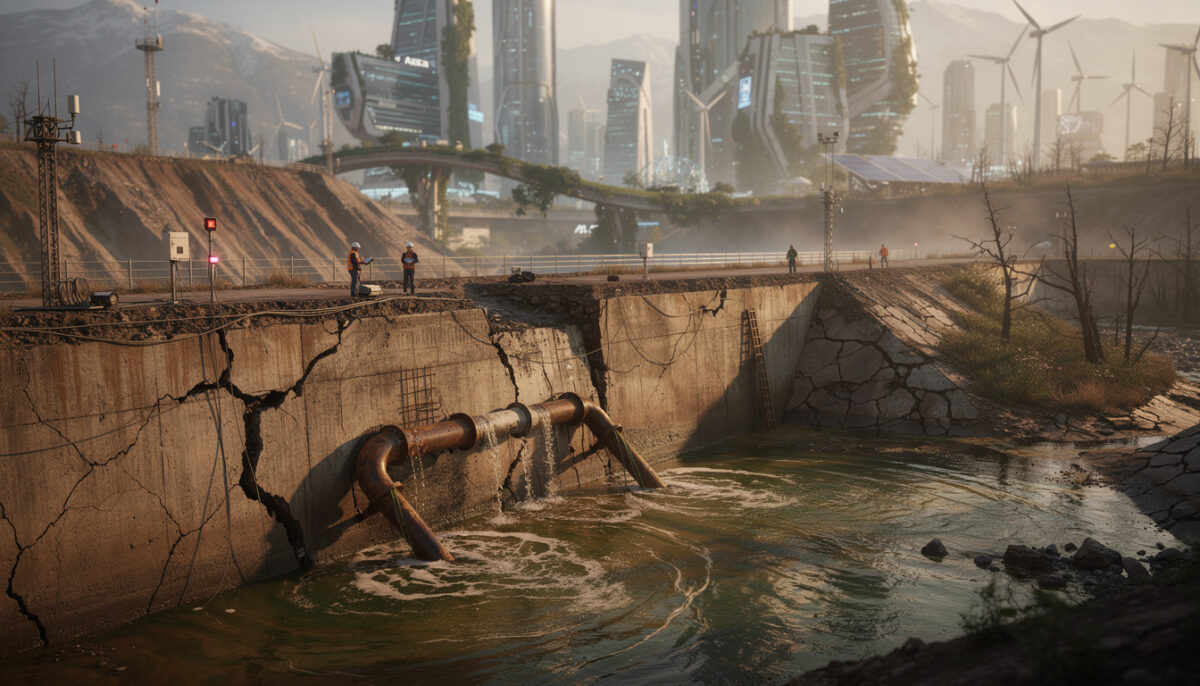
Across every mining region, huge walls of rock and mud stand between communities and millions of tonnes of mining waste. These tailings dams store slurry loaded with heavy metals, acids, and processing chemicals. They are supposed to last forever, yet many were built cheaply, expanded in haste, and monitored poorly.
From Canada’s Mount Polley to Brazil’s Mariana, long lists of dam failure incidents show the same pattern: a quiet structure suddenly gives way, releasing a moving wall of sludge. Studies gathered in resources such as global failure databases confirm more than a hundred major collapses since the 1960s, with many more likely unreported. Each one writes a new chapter in the industry’s environmental debt.
Researchers Unveil a Universal Temperature Blueprint Underpinning All Life Forms
Six Decades of Data Reveal How Extreme Weather Severely Impacts Baby Birds
When the Kafue turned toxic: Zambia’s 2025 wake-up call
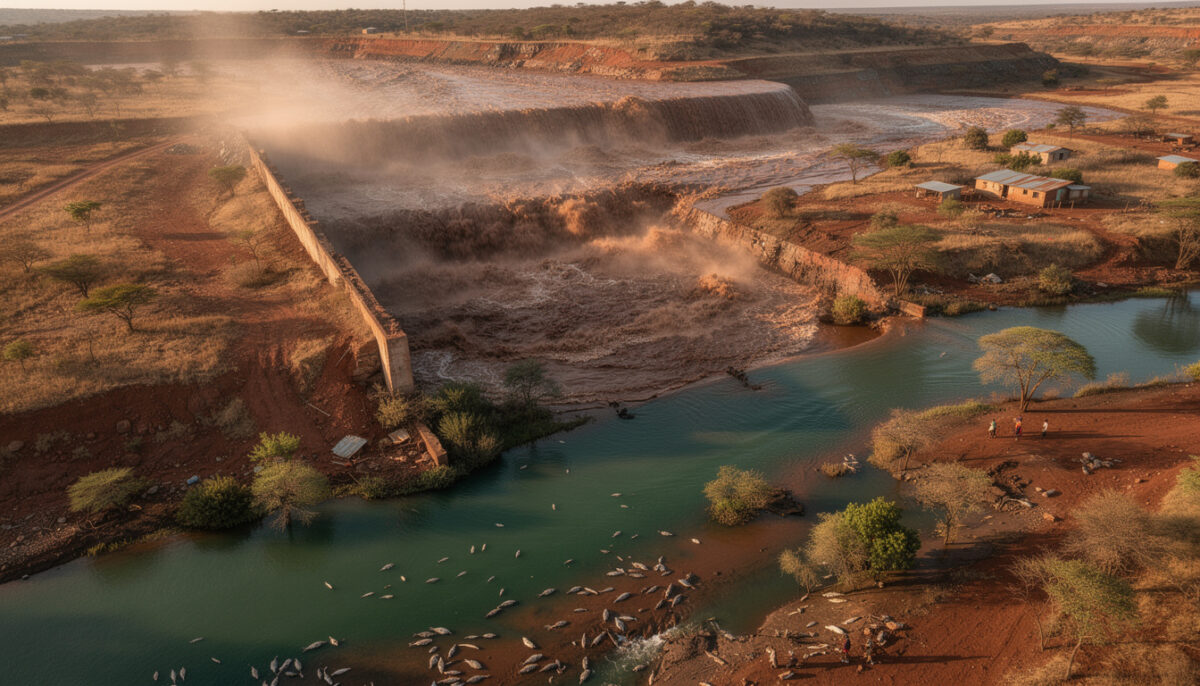
In February 2025, a fragile containment wall at the Sino-Metals Leach copper mine in Zambia’s Copperbelt split open. More than 50 million litres of acidic, metal-rich slurry surged into the Chambishi stream, then into the Kafue River, the country’s longest waterway. Within hours, thousands of fish floated belly-up and dead crocodiles lined the banks.
For Kitwe’s 500,000 residents, taps ran dry as authorities shut drinking water intakes. Farmers like 65‑year‑old Mary Milimo watched recently planted fields die, the soil turning greasy yellow with a pungent smell. Neighbouring grower Patrick Chindemwa saw irrigated maize dry out completely. Their experience shows how a single toxic spill can devastate livelihoods long after headlines fade. To understand risks from broader environmental disasters, see ‘it sounds apocalyptic’: UK floods endanger wildlife.
How tailings dams fail: from silent cracks to deadly waves
Most tailings facilities look calm on the surface: a lake of grey mud behind an earth wall. Inside that wall, however, water pressure, unstable layering, and gradual erosion constantly fight gravity. When design shortcuts, poor drainage, or rising pond levels push too far, the structure can liquefy and collapse in seconds.
The 2019 Brumadinho tragedy in Brazil showed how this happens without warning. Research led by ETH Zurich engineers, detailed in an analysis of the Brumadinho dam mechanism, linked the failure to changes after decommissioning that altered internal stresses. Workers in the canteen below had no chance; more than 270 people died under a fast‑moving wave of sludge.
Climate, earthquakes and ageing: why risk is rising
Older facilities were not built for today’s climate extremes. Intense flooding, prolonged rainfall, and rapid drawdown cycles saturate dam walls, raising pore pressure and undermining foundations. Heatwaves and drought can crack embankments, priming them to fail when storms return. This evolving environmental impact profile forces engineers to rethink safety margins. Dive deeper into escalating climate threats in approaching point return: Earth’s imminent climate risk.
In seismic regions, earthquake risk adds another layer. A moderate tremor can liquefy loose tailings or trigger slope failures in dams built by upstream methods. Reviews summarized in sources like recent scientific reports stress that many high-risk structures sit near faults, yet lack modern seismic design checks. Ageing pipes, corroded spillways, and informal expansions complete a dangerous cocktail.
Long-term environmental impact: when pollution never really ends
Once tailings escape their waste containment, nature has no quick fix. Metals such as lead, cadmium and arsenic do not break down; they shift between chemical forms, bind to sediments and move up food chains. Decades after the Mariana dam collapse, researchers still document elevated contamination and altered river ecosystems along hundreds of kilometres of waterways.
On the Kafue, heavy metals settled into floodplain soils where farmers rely on irrigation. Plants struggle to germinate in greasy, compacted layers. Soil microbes change, reducing fertility. Fish that survive may accumulate toxins in their tissues, posing risks to communities that depend on river protein. Once a river becomes a conveyor belt for mine waste, every flood can remobilise buried poisons.
When biodiversity hotspots host toxic reservoirs
Recent global mapping by researchers like Bora Aska reveals a troubling overlap between tailings infrastructure and conservation areas. At least 9% of known dams lie inside formal protected zones, many built after those protections were declared. Analyses for outlets such as international environmental investigations suggest the number is likely higher once undocumented sites are counted.
On the Kafue floodplains, rare antelopes, cranes and endemic birds share space with toxic sediments. In similar hotspots worldwide, one dam failure could wipe out local populations of already threatened species. For conservation planners, each new mining project becomes not just a land-use decision but a multi-generational liability.
Can safety regulations catch up with mining’s toxic timebomb?
After Brumadinho, investor coalitions representing trillions in assets pushed miners to disclose dam inventories and adopt stronger safety regulations. Industry bodies responded with detailed performance standards for design, monitoring and closure, including dozens of requirements on governance and emergency planning. Some major companies now publish independent audit results and real-time sensor data. To learn how legal action shapes environmental accountability, see legal battles erupt over EPA’s rollback.
However, these initiatives mostly cover large, listed firms. Many high-risk sites belong to smaller operators, state companies, or informal miners with limited oversight. The Kafue investigation reported no evidence of qualified engineers managing the failed dam, plus visible cracks and poorly compacted walls. Without enforcement, best-practice guidelines remain words on paper.
From toxic spill to disaster response: what communities actually see
When a breach hits, residents rarely care about acronyms or standards; they need water, information and medical support. In Zambia, helicopters dropping lime into the river symbolised desperate disaster response. The measure reduced acidity locally but could not remove metals already dissolved or bound to sediments. Months later, many farmers still faced dead ponds and ruined harvests.
Effective response hinges on three elements: early warning systems that detect instability, clear evacuation and communication plans, and long-term health and soil monitoring. Communities like Mary and Patrick’s want more than compensation promises; they want guarantees that dams upstream are safe, transparent, and independently verified.
- Demand transparency: ask for public maps, risk assessments and monitoring data for nearby tailings dams.
- Track warning signs: unusual water colour, fish deaths or sudden turbidity spikes can signal upstream problems.
- Engage regulators: push authorities to perform independent inspections, especially after heavy rain or earthquakes.
- Support safer mining: back projects using dry stacking, backfilling and reduced-water processing that cut mining waste volumes.
- Share lessons: every incident, from Brumadinho to Kafue, carries technical insights that must travel faster than the next flood.
What makes tailings dams more dangerous than normal water dams?
Tailings dams hold thick sludge mixed with chemicals and finely ground rock, not just clean water. This material can behave like liquid concrete when released, sweeping away buildings and people. The dams also grow over time as waste accumulates, often without the same design rigour, monitoring or spillway capacity used for conventional water reservoirs.
How can a community know if a nearby tailings dam is safe?
Start by checking whether the operator publishes independent inspection reports, risk classifications, and emergency plans. Ask local authorities for the dam’s hazard rating and last audit date. Warning signs such as cracks, rapid water-level changes, unusual seepage or discoloured downstream water should trigger immediate investigation by qualified geotechnical engineers. You may also find it useful to see insights into new insights reveal sea turtles’ resilience to environmental threats.
Does climate change really increase tailings dam failure risk?
Yes. More intense storms, longer wet seasons and sudden downpours add stress to dam walls by raising water levels and internal pressure. Heat and drought can dry and crack embankments, then heavy rain re-saturates them quickly. Design rules based on past climate no longer guarantee safety, so dams need updated hydrological studies and upgraded drainage systems.
Are there safer alternatives to large wet tailings dams?
Researchers Unveil Seven Mysterious Frog-Inspired Insect Species Concealed within Uganda’s Rainforest
London, San Francisco, and Beijing Make Significant Strides in Slashing Air Pollution Levels
Several options reduce reliance on massive impoundments. Dry stacking removes most water and stacks tailings as dense, compacted material. Backfilling returns waste underground into mined-out stopes. Thickened tailings reduce free water in ponds. Although these methods cost more upfront, they greatly lower the chance of catastrophic releases and long-term environmental impact.
Who is responsible when a mining waste dam failure happens?
Legal responsibility typically starts with the mine operator and can extend to parent companies, contractors, and, where oversight failed, regulators. Accountability may involve criminal charges, civil compensation, environmental restoration and tighter future licensing. Growing investor pressure and public scrutiny aim to ensure that the cost of negligence no longer falls on downstream communities.