
Show summary Hide summary
- Termination shock and the new climate economics warning
- Why geoengineering dependence reshapes climate policy choices
- Linking space-based observation, climate risk, and economic damage
- What this means for your decisions and public debate
- What is termination shock in climate engineering?
- How could termination shock affect the global economy?
- Does solar geoengineering reduce the need to cut carbon emissions?
- Why is governance so important for managing termination shock risk?
- What role does space-based observation play in assessing these risks?
Imagine the world deciding to cool the planet from the sky, succeeding for decades – and then, almost overnight, the cooling stops. Temperatures spike, ice sheets destabilise, and the economic impact of climate change surges far beyond current projections. This is the unsettling logic behind termination shock, and new climate economics research argues that mishandling it could cost more than doing nothing at all.
Termination shock and the new climate economics warning
Solar geoengineering, often framed as a last-resort climate tool, aims to reflect a small fraction of sunlight back into space. Techniques such as solar radiation modification (SRM) would likely inject sulphur dioxide into the stratosphere to cool the surface, a concept already explored in modelling studies by institutions from Columbia University to European research consortia. According to a recent analysis led by Francisco Estrada at the National Autonomous University of Mexico, the danger is not only how SRM works, but what happens if it stops.
The team compared a high-emissions future with and without a hypothetical SRM programme. Without strong cuts in carbon emissions, global temperatures could reach a median 4.5°C above pre-industrial levels by 2100, driving vast environmental damage and economic losses. Their estimation of climate damages aligns with growing concerns raised in assessments such as the World Economic Forum’s analysis of climate costs to global economies. Yet the same modelling suggests that an SRM scheme which began in 2020 and held warming to about 2.8°C might halve those losses – unless it is suddenly cut off.
Life With and Without Water: A Visual Journey from Surfing Waves to Vanishing Lakes
Facing the Dry Spell: What England Will Experience When the Taps Run Out
How termination shock turns relief into risk escalation
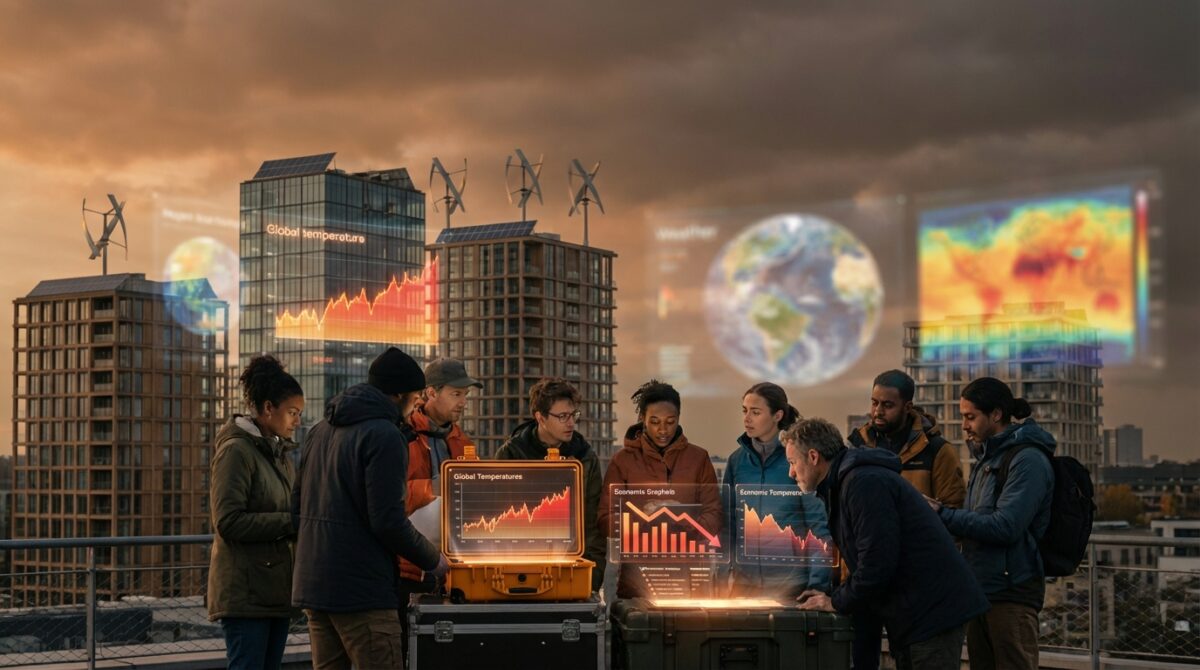
In the Estrada scenario, if stratospheric aerosol injections end abruptly in 2030, temperatures rebound by about 0.6°C within eight years. That steep rise leaves societies, ecosystems and infrastructure almost no time to adapt. The risk escalation is not just physical; it is economic. The projected damages in this termination case could exceed $1 trillion by 2100, outpacing even an unchecked warming pathway. This fits with broader warnings on how climate change disrupts labour, infrastructure and productivity.
The study is part of a growing body of work on termination shock risk from solar geoengineering. Researchers emphasise that the speed of warming matters almost as much as the total amount. Rapid temperature rebounds strain crop yields, public health systems and energy grids, multiplying economic risk. For financial planners, insurers and central banks, this pace of change is as alarming as the magnitude.
Global finance, from pension funds to reinsurance giants, has already started to stress-test portfolios against climate change scenarios. Insights from climate science, such as research on an Atlantic circulation slowdown, feed into these models. Termination shock adds another destabilising ingredient: a possible future in which climate policies rely heavily on SRM and then abruptly lose that shield.
Why geoengineering dependence reshapes climate policy choices
To cool Earth by roughly 1°C, several modelling efforts suggest that hundreds of dedicated aircraft would need to disperse millions of tonnes of sulphur dioxide into the stratosphere every year. That scale implies a planetary infrastructure vulnerable to war, pandemics, economic collapse or political sabotage. According to the concept of termination shock risk, any disruption could unleash the hidden warming that SRM had been covering up, leading to severe disaster risk and environmental damage.
Estrada’s team explored different combinations of policy and probability. Their modelling indicates that SRM only reduces total climate damages if the annual chance of termination is extremely low, just a few tenths of a percent, or if society can taper the intervention over more than 15 years. With deep emissions cuts and modest SRM, the system can tolerate a higher termination probability, around 10 per cent per year, because the rebound would be smaller. Yet a 10 per cent yearly risk still implies almost certain failure over a century, underscoring the tight linkage between climate policy and geoengineering governance.
This leads to what Estrada describes as a governance paradox. For SRM to be net beneficial, global institutions would need extraordinary coordination, trust and resilience – precisely the attributes already required to cut carbon emissions rapidly. If the world can manage that level of cooperation, many argue, the reliance on SRM becomes less necessary. Analyses such as the New Scientist coverage of SRM economics and technical papers on termination shock dynamics reach a similar conclusion: dependence on aerosols may lock societies into a fragile climate control regime.
From shipping emissions to Silicon Valley balloons: early signals
Hints of termination shock already exist in the real world. When international shipping regulations sharply reduced sulphur pollution in 2020, researchers noted an inadvertent “mini termination shock,” as cleaner skies allowed more sunlight to reach the ocean surface. Studies like those summarised in specialist presentations on aerosol climate impacts highlight how even unintentional changes in atmospheric particles can nudge regional temperatures.
Meanwhile, small private actors are testing the boundaries of SRM. The start-up Make Sunsets has launched hundreds of sulphur dioxide balloons, marketing them as cooling offsets, while the Israeli firm Stardust has raised tens of millions of dollars and lobbied US officials on geoengineering. Surveys conducted in recent years suggest that around two-thirds of climate scientists expect some form of large-scale SRM this century. These developments sharpen the need for transparent, inclusive discussion about climate economics, economic risk and who controls planetary cooling technologies.
Linking space-based observation, climate risk, and economic damage
For fictional green-tech investor Amara Chen, whose portfolio spans renewable energy, satellite data and climate insurance, the findings on termination shock change investment priorities. Instead of treating SRM as a future insurance policy, she sees a new layer of uncertainty added to the already complex map of climate change economic impact. Accurate Earth observation becomes central, not optional. Satellites developed under agencies such as NASA and ESA already track aerosols, sea-level rise and ice-sheet dynamics with increasing precision.
These instruments give decision‑makers a real-time picture of how close the planet edges toward tipping points such as ice sheet collapse or ocean circulation shifts. Work published in venues like Nature’s climate risk studies and scenario tools on long-term SRM dependence show how improved data feeds better economic modelling. For city planners designing coastal defences, or central banks assessing financial stability, these insights help translate abstract degrees of warming into material economic impact and infrastructure choices.
What this means for your decisions and public debate
For readers tracking climate and economic policy, the key message is not that SRM must never be researched. Instead, the lesson is that any strategy relying on long‑term atmospheric manipulation carries a built‑in hazard: the possibility of unplanned, rapid warming and spiralling losses. That awareness should shape debates on risk-sharing, emergency response and long-term investment in resilience.
Understanding termination shock also reframes everyday choices. Pressure for faster decarbonisation, support for robust climate policy, and backing for science-based adaptation reduce the temptation to lean on uncertain planetary “quick fixes.” The more societies stabilise emissions and strengthen institutions, the less they are forced into dangerous experiments that could magnify climate economics losses for generations.
- Mitigation first: Rapid cuts in greenhouse gases reduce both warming and reliance on SRM.
- Robust governance: International rules and monitoring are necessary if SRM research advances.
- Data-driven planning: Satellites and climate models must inform economic and infrastructure decisions.
- Inclusive debate: Communities most exposed to disaster risk need a voice in geoengineering discussions.
What is termination shock in climate engineering?
Termination shock describes the abrupt and intense warming that would occur if a large-scale solar geoengineering programme, such as stratospheric aerosol injection, were suddenly stopped after operating for years or decades. The masked greenhouse gas warming would rebound quickly, creating severe physical and economic shocks.
How could termination shock affect the global economy?
Rapid temperature increases strain agriculture, health systems, infrastructure and energy demand all at once. Climate economics research suggests that a sudden rebound can generate higher long-term economic damages than a scenario with no geoengineering at all, due to the speed and intensity of the adjustment.
Does solar geoengineering reduce the need to cut carbon emissions?
No. Studies indicate that solar radiation modification can only limit temperatures temporarily and introduces new risks, including termination shock. Deep and sustained reductions in carbon emissions remain the most reliable way to limit climate change and long-term economic risk.
Why is governance so important for managing termination shock risk?
Truth Behind the Blind, Slow, and Centuries-Old Greenland Sharks
Surge in Water-Related Violence Observed Since 2022: An Alarming Trend
SRM would require uninterrupted operation for many decades, potentially centuries. Any disruption from conflict, political decisions or technical failure could trigger termination shock. Strong international governance is needed to minimise this risk, ensure transparency and coordinate responses.
What role does space-based observation play in assessing these risks?
Earth-observing satellites monitor aerosols, cloud properties, ice sheets and ocean currents, all of which influence climate dynamics. High-quality data help scientists detect unintended consequences of geoengineering, refine models of termination shock and provide decision-makers with early warning signals for environmental and economic damage.