Show summary Hide summary
- Why Svalbard’s polar bears are getting heavier
- Climate science behind a thriving yet fragile population
- What Svalbard’s bears reveal about future ecosystems
- Why this matters far beyond the Arctic Circle
- Are fatter Svalbard polar bears a sign that climate change is harmless for the species?
- How fast is the Barents Sea warming compared with the global average?
- What new foods are Svalbard polar bears using to cope with habitat loss?
- Are all polar bear populations experiencing the same trends as in Svalbard?
- Why should people outside the Arctic care about polar bear research?
At the very moment when Arctic Warming is accelerating fastest on the planet, one group of Polar Bears is quietly gaining weight. The numbers from Norway’s Svalbard archipelago show unexpected Weight Gain in a population that should be struggling, forcing scientists to rethink how climate change reshapes life at the top of the world.
This story begins in the northern Barents Sea, between Svalbard and Russia’s Novaya Zemlya, where the ocean has warmed roughly seven times faster than the global average. Sea ice here now disappears about two months earlier in winter and spring than it did twenty years ago, a dramatic Environmental Change that normally signals Habitat Loss and declining health for ice-dependent predators.
Why Svalbard’s polar bears are getting heavier
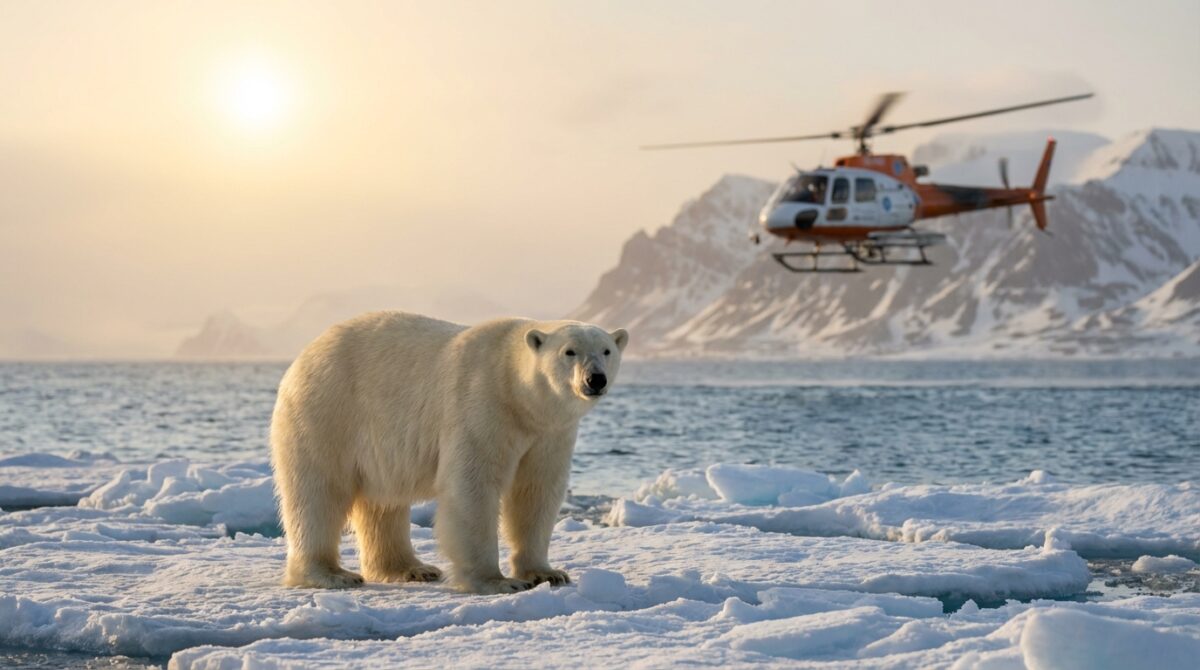
Researchers from the Norwegian Polar Institute, led by biologist Jon Aars, have followed this Barents Sea population for three decades. From helicopters, teams tranquilised more than 770 Polar Bears, stepped out onto the ice, and measured body length and chest girth to estimate weight. Trend analysis revealed a striking pattern: body condition fell up to about 2000, then rose steadily until 2019.
How to Create a DIY Worm Farm That Can Compost Food Scraps, Paper, and Even a Whole Kangaroo
How Squid Triumphed Over Earth’s Greatest Extinction to Dominate the Oceans
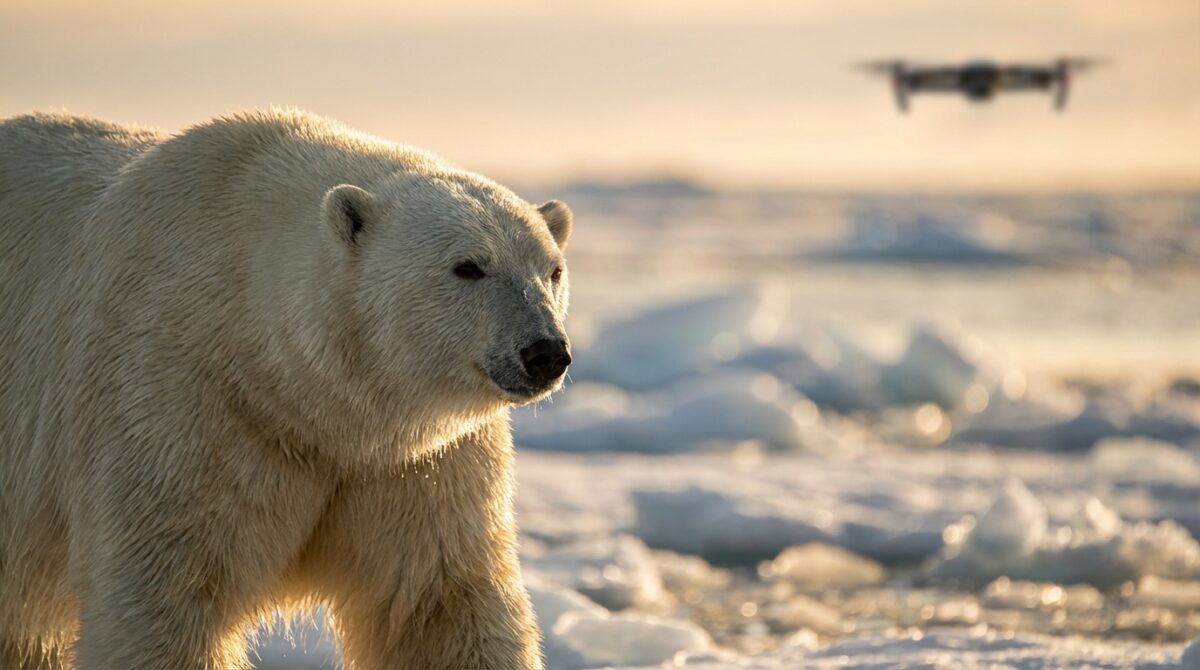
The average bear in Svalbard is now larger and heavier than at the start of the century, even though Global Warming has shortened the hunting season on sea ice. For a region warming faster than anywhere else in the Arctic, this finding runs counter to the familiar narrative of starving bears and immediate collapse. As several reports, such as recent field coverage from Svalbard, underline, the picture is more complex than a single dramatic photograph.
New hunting strategies in a shrinking ice world
The key to this paradox lies in how these animals use a changing ecosystem. In spring, Polar Bears traditionally focus on ringed seals that give birth in snow lairs on sea ice. With less ice, seal habitat has contracted into smaller patches, making the seals more concentrated and potentially easier to find. According to work cited by projects such as Svalbard research on seals and biodiversity, predators can briefly benefit from such crowding.
About 250 “local bears” now remain around the islands when the ice retreats, instead of following the floes far offshore. These coastal hunters increasingly raid goose and duck colonies, pursue reindeer across tundra slopes, and feed on walrus carcasses left on beaches. Bearded and harbour seals, expanding north with warmer seas, add further prey. This Animal Adaptation is not comfortable or risk free, but it has so far translated into improved body condition.
Climate science behind a thriving yet fragile population
The Barents Sea subpopulation was estimated at roughly 1900 to 3600 individuals around twenty years ago, and current evidence suggests it is stable or perhaps increasing. Yet this apparent success sits inside a wider picture in which many other groups are declining. According to status assessments compiled by organisations such as Polar Bears International, several populations in Alaska, Canada, and Greenland show falling numbers or poorer body condition.
The contrast illustrates how uneven Wildlife Impact from Climate Change can be. The Barents Sea is now an ecological experiment, with algae on the underside of sea ice – the microscopic base of the food web – already disrupted by loss of ice cover. As primary productivity shifts, every species up the chain, from zooplankton to seals to bears, must adjust or decline.
Distances, energy costs and the physics of ice loss
For female bears that still use traditional denning areas on Svalbard’s islands, the costs of survival are increasing. Some now swim 200 to 300 kilometres between offshore hunting grounds and land-based dens where they give birth and nurse cubs. Each long-distance swim drains fat reserves they worked hard to build in spring.
Those fat stores are central to polar bear biology. The species is sometimes described as “the king of fat” because adult females can convert rich blubber into energy-dense milk, fueling cub growth through months when hunting is impossible. As warming air and ocean temperatures melt white sea ice and expose dark ocean beneath, the Arctic absorbs more solar energy, accelerating Global Warming in a feedback loop that steadily erodes the very platform these hunters depend on.
What Svalbard’s bears reveal about future ecosystems
Ecologist Jouke Prop of the University of Groningen has described Svalbard’s bears as a species pushed into improvisation. They are experimenting with new foods, new landscapes, and new behaviour. That creativity has delayed extinction in this region, but it does not remove the hard physical limits set by ice and energy. Both Prop and Aars warn of a threshold beyond which these adaptations will no longer secure a “reasonable” population.
Across the Arctic, scientists see signs of broader Ecosystem reconfiguration. Harbour seals moving north, walrus numbers rebounding, and reindeer herds shifting their ranges all reshape the menu available to large predators. The same Environmental Change that temporarily benefits one species can undermine others, as algae, fish, and invertebrates tied to ice lose habitat. Long term, the disappearance of seasonal sea ice would almost certainly mean the disappearance of most ice-dependent bears.
Why this matters far beyond the Arctic Circle
For a reader far from Svalbard, these findings are not just distant wildlife trivia. Polar Bears act as sentinels for climate systems that stabilise weather, sea level, and ocean circulation worldwide. Their Weight Gain in one rapidly warming region does not contradict Global Warming; it highlights how non-linear and surprising the early stages of Habitat Loss can appear.
The Svalbard case helps explain why forecasts of Wildlife Impact cannot rely on one iconic image or a single trend line. Better models of Animal Adaptation, energy use, and food web shifts feed into improved climate projections. Those projections inform coastal planning, agricultural policy, and even insurance risk in cities thousands of kilometres away, from Rotterdam to Shanghai.
- Polar bear health signals the stability of Arctic food webs tied to global climate.
- Sea ice trends influence weather extremes, shipping routes, and fisheries management.
- Adaptive behaviour in top predators guides conservation strategies for other species.
- Long-term monitoring improves early warning systems for abrupt Environmental Change.
Field campaigns in the Barents Sea rely on helicopters, darting equipment, satellite tags, and decades of data management. This kind of long-term science is not cheap, yet it is modest compared with the economic cost of unanticipated climate shocks. Analyses of Arctic monitoring programmes suggest annual budgets in the low tens of millions of dollars across agencies – less than the cost of a single mid-size Earth observation satellite mission run by agencies such as NASA or ESA.
Beyond government-funded research, public curiosity drives media, science tourism, and education projects that link climate and culture. Features on changing Arctic wildlife and human adaptation reflect growing interest in how remote regions influence daily life elsewhere. The story of Svalbard’s heavier bears gives that discussion a tangible, surprising focal point.
Are fatter Svalbard polar bears a sign that climate change is harmless for the species?
No. The recent Weight Gain in Svalbard’s bears reflects short-term benefits from concentrated prey and new coastal food sources. Climate Change is still removing sea ice, which underpins their hunting strategy. Researchers expect a threshold beyond which continuing ice loss will cause population declines, even in the Barents Sea.
How fast is the Barents Sea warming compared with the global average?
Measurements indicate that the northern Barents Sea, including waters around Svalbard, has warmed about seven times faster than the global mean. This rapid Arctic Warming shortens the sea ice season by roughly two months compared with conditions about twenty years ago, fundamentally changing habitat for seals and polar bears.
What new foods are Svalbard polar bears using to cope with habitat loss?
Bears that stay near Svalbard’s coasts now feed on a wider range of prey. They hunt more bearded and harbour seals, raid nesting colonies of ducks and geese for eggs, chase reindeer on land, and scavenge walrus carcasses. These diet shifts show strong Animal Adaptation but may not fully compensate for long-term sea ice loss.
Are all polar bear populations experiencing the same trends as in Svalbard?
Jungle Wildlife Shares a Common Tree as Their Preferred Latrine Spot
How Beavers Transform Rivers into Potent Carbon Capture Ecosystems
No. Global assessments show a mixed picture. Some populations appear stable or increasing, while others in Alaska, Canada, and Greenland are shrinking or showing poorer condition. For several regions, data remain limited. The Svalbard case is one example of local adaptation, not a global recovery.
Why should people outside the Arctic care about polar bear research?
Polar bear monitoring provides early insight into how Ecosystem changes in the Arctic reflect broader Global Warming. Shifts in sea ice affect ocean circulation, weather extremes, and sea level, which influence food security, infrastructure planning, and economic risk worldwide. Understanding these predators helps refine models that guide climate and conservation decisions on every continent.