Show summary Hide summary
- How squid turned disaster into ocean dominance
- Genomes rewriting the story of squid evolution
- From deep origin to coastal expansion of marine life
- Cephalopod innovation: brains, camouflage and future research
- What the squid story means for today’s oceans
- How did squid survive Earth’s biggest extinction event?
- When did modern squid lineages start to diversify?
- Why is the squid fossil record so limited?
- What makes squid genomes difficult to study?
- How does squid evolution help understand modern marine biodiversity?
- FAQ
- How did squid manage to survive Earth’s greatest extinction when so many other marine species vanished?
- What changes occurred in squid evolution after extinction events?
- Why is the ‘long fuse’ pattern important for understanding squid evolution after extinction?
- How did surviving extinction influence modern squid traits?
- Are there still gaps in our knowledge about squid evolution after extinction?
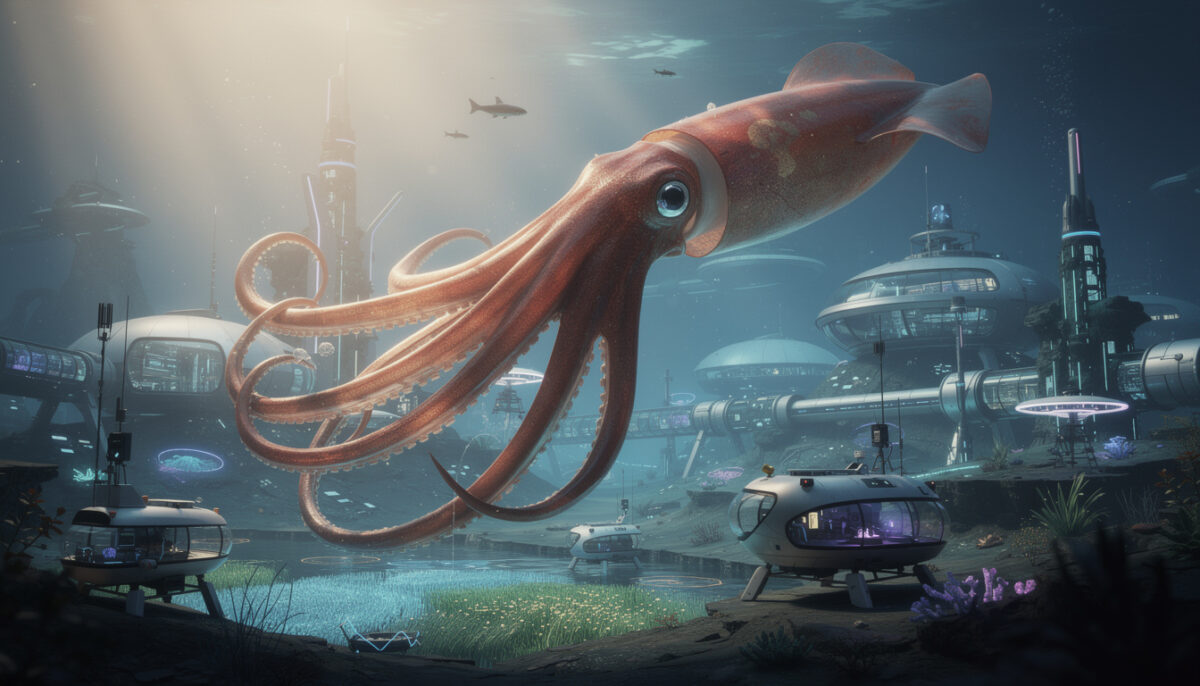
Imagine Earth’s surface oceans turned into a toxic soup where most marine life disappears. In the darkness below, quiet hunters wait, adapt, and later rise to dominance. That is the real story behind modern squid and cuttlefish. How squid survived Earth’s biggest extinction and took over offers additional detail on this dramatic evolutionary saga.
New genomic research finally shows how these animals navigated Earth’s greatest extinction and then reshaped ocean ecosystems in their favor.
How squid turned disaster into ocean dominance
When the Cretaceous–Paleogene extinction wiped out about three-quarters of life, including non-avian dinosaurs, the oceans were also devastated. Many large predators vanished from surface waters. Squid ancestors, already adapted to deeper zones, did not just survive; they quietly prepared their future dominance.
Jungle Wildlife Shares a Common Tree as Their Preferred Latrine Spot
How Beavers Transform Rivers into Potent Carbon Capture Ecosystems
Genomic work from the Okinawa Institute of Science and Technology reveals a “long fuse” pattern in squid and cuttlefish evolution. Major lineages split roughly 100 million years ago yet diversified explosively only after the extinction shock, when recovering habitats opened new ecological space across the oceans.
Deep refuges: why squid survived when others vanished
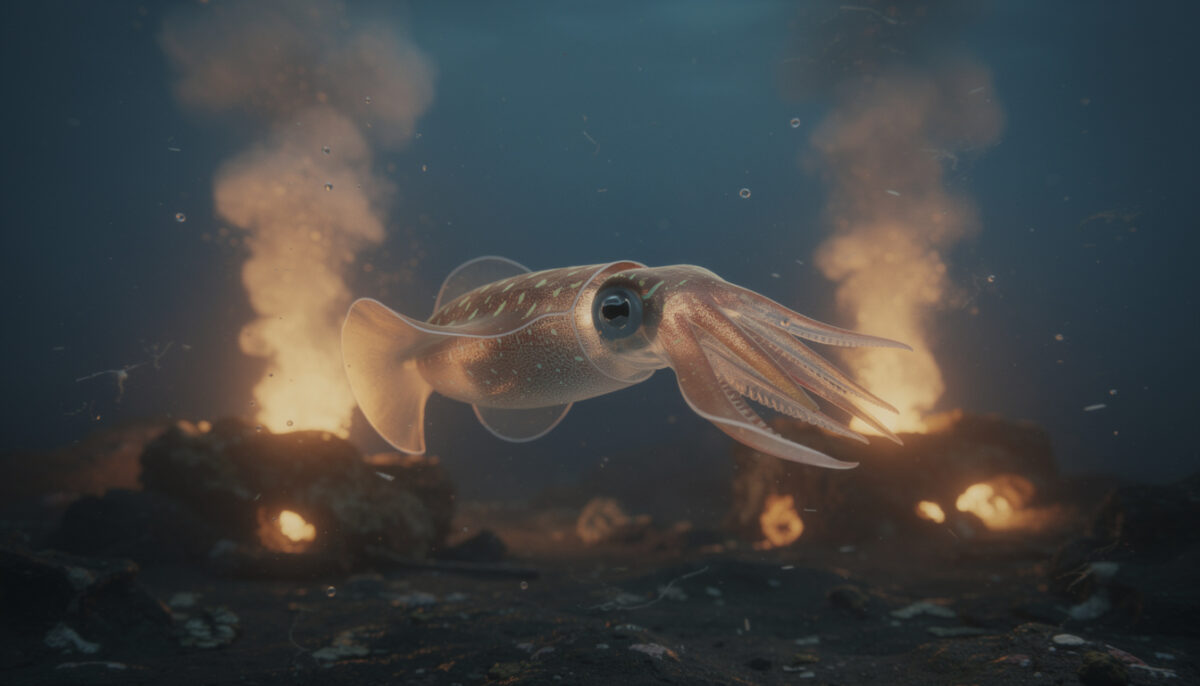
During the extinction interval, shallow seas suffered low oxygen and strong acidification. For shelled organisms, that combination was lethal. Genetic and fossil evidence now converge on one point: early decapodiform cephalopods retreated, or were already established, in deeper, oxygen-rich refuges where conditions stayed more stable.
In these depths, forms like the ram’s horn squid kept their delicate internal shells intact. This hidden stronghold meant their line continued while many competitors, stuck near coasts, disappeared. Survival here required flexibility in metabolism, locomotion, and behavior, foreshadowing the agile predators that would later dominate midwater food webs. For more on adaptation under extreme conditions, see when valuing nature falls short.
Genomes rewriting the story of squid evolution
For decades, paleontology struggled to reconstruct squid history because their soft bodies rarely fossilize. Even when shell fragments were found, they were often misinterpreted. Recent digital fossil-mining and CT-based methods, highlighted in reports such as studies on hidden squid fossils, started to unlock the puzzle.
The decisive push came from large-scale genome sequencing. OIST researchers combined global datasets with three newly decoded squid genomes, finally producing a robust evolutionary tree covering nearly all major decapodiform lineages and revealing how their genetic toolkit expanded over time.
Cracking giant genomes from the deep
Sequencing squid DNA is far from routine. Many species carry genomes up to twice the size of ours, packed with repeated elements that challenge current algorithms. Collecting high-quality tissue is another obstacle because key lineages live in remote reefs or the deep ocean, where traditional sampling is slow and expensive.
Through international efforts like the Aquatic Symbiosis Genomics Project, teams filled the remaining gaps. The genome of the elusive ram’s horn squid proved pivotal, settling long-standing debates about whether its curled internal shell aligned it more closely with cuttlefish or with other deep-sea squids.
From deep origin to coastal expansion of marine life
The new evolutionary tree reveals a compelling timeline. Major decapodiform branches emerged in the mid-Cretaceous, around 100 million years ago, as also suggested by work on how ancient seas hosted the ultimate squid game. Then comes a long stretch with relatively few splits, the quiet “fuse” phase while ecosystems stayed crowded with established predators.
After the extinction, coral reefs gradually reappeared, and nutrient-rich shelves recovered. Genomic signatures indicate a burst of diversification at that stage. New coastal squids and cuttlefish adapted to shallow waters, while open-ocean lineages refined high-speed jet propulsion and advanced vision, reshaping predator–prey dynamics across multiple depths. To learn about the importance of carbon sinks in marine recovery, see shrinking antarctic ice.
Shells, bodies, and the power of adaptation
Nearly all squid and cuttlefish share some form of internal shell, but the structure varies dramatically. Cuttlefish build a buoyant cuttlebone suited to hovering above seafloors, many squids rely on a blade-like gladius for streamlined swimming, and a few shallow-water lineages lost the shell entirely for extra agility.
This diversity reflects repeated adaptation to changing habitats rather than a simple linear trend. Keeping at least a vestige of the shell through intense acidification periods signals how deeply rooted their deep-ocean origin is, while later losses show how flexible their body plan became once new niches opened.
Cephalopod innovation: brains, camouflage and future research
The new genomic framework does more than clarify ancestry; it highlights how squid and cuttlefish became innovation hotspots in marine life. Expanded gene families link to their color-changing skin, complex nervous systems and unusual organs that manage buoyancy, ink, and sensory input.
Researchers can now compare closely related species that differ in traits like reef camouflage, schooling behavior or deep-sea bioluminescence. These comparisons should reveal which molecular tweaks underlie major leaps in cognition, body pattern control, and ecological strategy.
What the squid story means for today’s oceans
For a marine biologist like our fictional researcher Maya, tracking modern cephalopods is also a way to read future oceans. Some squid populations are already shifting ranges as temperatures rise and oxygen minimum zones expand, repeating in real time the kind of pressures that once drove their ancestors into deep refuges.
Understanding their past survival through crisis helps interpret present trends in biodiversity. Species that evolved under unstable conditions may cope better with current climate stress, yet their fate still depends on how quickly human societies reduce impacts on the sea. See how government tried hide this alarming report on ecosystem collapse for parallels in ecosystem challenges.
- Deep origin: genomic and fossil data place early squid and cuttlefish in oxygen-rich deep waters.
- Long fuse evolution: major lineages split before the K–Pg event, then diversified rapidly afterwards.
- Shell flexibility: from robust cuttlebones to near-loss in agile coastal squids.
- Innovation hotspot: large genomes support advanced brains, camouflage and sensory systems.
- Modern relevance: their resilience offers clues about how life responds to rapid ocean change.
How did squid survive Earth’s biggest extinction event?
Genomic and geological evidence indicates that early squid and cuttlefish lived in deeper, oxygen-rich waters that remained more stable while shallow seas became acidic and oxygen-poor. These deep refuges protected their lineages when many coastal predators died out, allowing them to later expand as ecosystems recovered.
When did modern squid lineages start to diversify?
Major decapodiform branches split around 100 million years ago during the mid-Cretaceous. However, most diversification happened after the Cretaceous–Paleogene extinction, during the recovery phase, when new ecological niches appeared in both open ocean and coastal habitats.
Why is the squid fossil record so limited?
Squid bodies are mostly soft tissue, which decays quickly and rarely fossilizes. Only internal shells or hard parts usually remain, and these are easily eroded or misidentified. New digital imaging and fossil-mining methods are now revealing many more hidden cephalopod fossils inside existing rock collections.
What makes squid genomes difficult to study?
Many squid species have very large genomes, often up to twice the size of the human genome, with numerous repeated regions that complicate assembly. Collecting fresh, high-quality DNA from deep or remote environments adds another layer of technical challenge for sequencing teams.
How does squid evolution help understand modern marine biodiversity?
Their history shows how lineages can persist through extreme environmental stress by exploiting stable refuges, then diversify quickly when conditions improve. This pattern offers a framework to interpret how today’s marine species might respond to rapid climate-driven changes, shifting habitats and new ecological opportunities or losses. For a deeper look at animal adaptation, explore wildlife animal behavior.
FAQ
How did squid manage to survive Earth’s greatest extinction when so many other marine species vanished?
Squid ancestors were already adapted to deeper, low-oxygen ocean zones, which helped them survive when surface ecosystems collapsed. Their flexibility and resilience allowed them to thrive while many other predators disappeared.
What changes occurred in squid evolution after extinction events?
After mass extinction, squid rapidly diversified to fill ecological niches left vacant in the oceans. This explosion in diversity is a key part of squid evolution after extinction, allowing them to dominate many marine environments.
Why is the ‘long fuse’ pattern important for understanding squid evolution after extinction?
The ‘long fuse’ pattern means that squid lineages split millions of years ago but didn’t rapidly diversify until after the extinction opened new habitats. This helped them seize new evolutionary opportunities.
How did surviving extinction influence modern squid traits?
Rising Ocean Temperatures Trigger a Dramatic Shift in Antarctic Sea Ice Patterns
Microplastics Descend from the Sky, Contaminating Forest Ecosystems
Surviving harsh post-extinction environments selected for squid with adaptable behaviours, complex nervous systems, and camouflage abilities. These traits helped them become successful ocean predators today.
Are there still gaps in our knowledge about squid evolution after extinction?
Yes, researchers are still uncovering details from genomic data and fossils. The story of squid evolution after extinction is ongoing as new discoveries reveal more about their ancient rise.