Show summary Hide summary
- A million-year-old fossil that rewrites spider origins
- Inside the anatomy of a Cambrian clawed predator
- Bridging a major gap in arachnid ancestry
- From forgotten specimen to headline fossil discovery
- Why this matters for spiders, scorpions, and us
- Key takeaways from Megachelicerax for spider fans
- What exactly did the minuscule claw reveal about spider origins?
- How is Megachelicerax cousteaui different from modern spiders?
- Why did it take decades to recognize the importance of this fossil discovery?
- What does this find tell us about evolution during the Cambrian Explosion?
- Why is this important beyond paleontology specialists?
- FAQ
- What does the oldest chelicera fossil reveal about the evolution of spiders?
- How does the oldest chelicera fossil change the timeline of arachnid ancestry?
- Why is the chelicera significant in understanding spider and scorpion origins?
- What was unexpected about the fossil discovered in the Wheeler Formation?
- How does Megachelicerax cousteaui compare to modern spiders and scorpions?
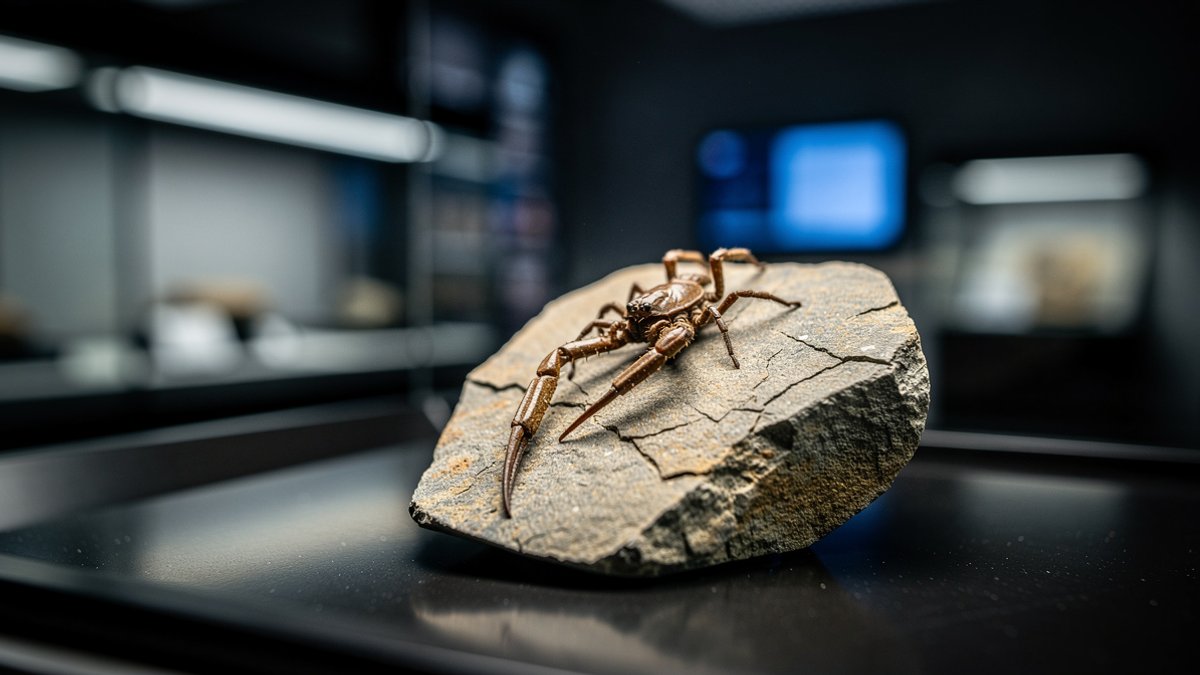
A tiny rock in a museum drawer, a tired researcher, a minuscule claw where no claw should exist. In a few minutes, the story of spider origins changed. This is how one million-year-old fossil forced scientists to redraw the family tree of arachnids.
A million-year-old fossil that rewrites spider origins
After a long day in the classroom, paleontologist Rudy Lerosey-Aubril sat down to clean what looked like a routine Cambrian specimen. The fossil came from Utah’s Wheeler Formation, famous for beautifully preserved ancient arthropods, but nothing about it initially suggested a breakthrough.
Under the microscope, Rudy gently removed rock with a fine needle. Where he expected a simple antenna, he suddenly uncovered a small pincer. That minuscule claw did not fit any known Cambrian anatomy. Within minutes, he realized he was looking at the oldest chelicera fossil—the defining mouthpart of spiders, scorpions, and horseshoe crabs.
Landspace Conducts Test of 220-Ton Methane Engine Paving the Way for Next-Gen Heavy-Lift Rockets
Colorado Startup Lux Aeterna Secures $10 Million to Pioneer Reusable Satellite Technology Shaping the Future Space Economy
The birth certificate of chelicerates
The team described the animal in Nature as Megachelicerax cousteaui, a roughly 8-centimeter-long marine predator. It comes from rocks dated to around 500 million years ago, making it the earliest known member of the chelicerate group, which today includes spiders, scorpions, mites, horseshoe crabs, and sea spiders.
This single fossil pushes the timeline of arachnid ancestry back by roughly 20 million years. Older candidates existed, but none preserved an unmistakable chelicera. Here, the pincer sits exactly where modern spiders carry their fangs, providing smoking-gun evidence for when this body plan first appeared.
Inside the anatomy of a Cambrian clawed predator
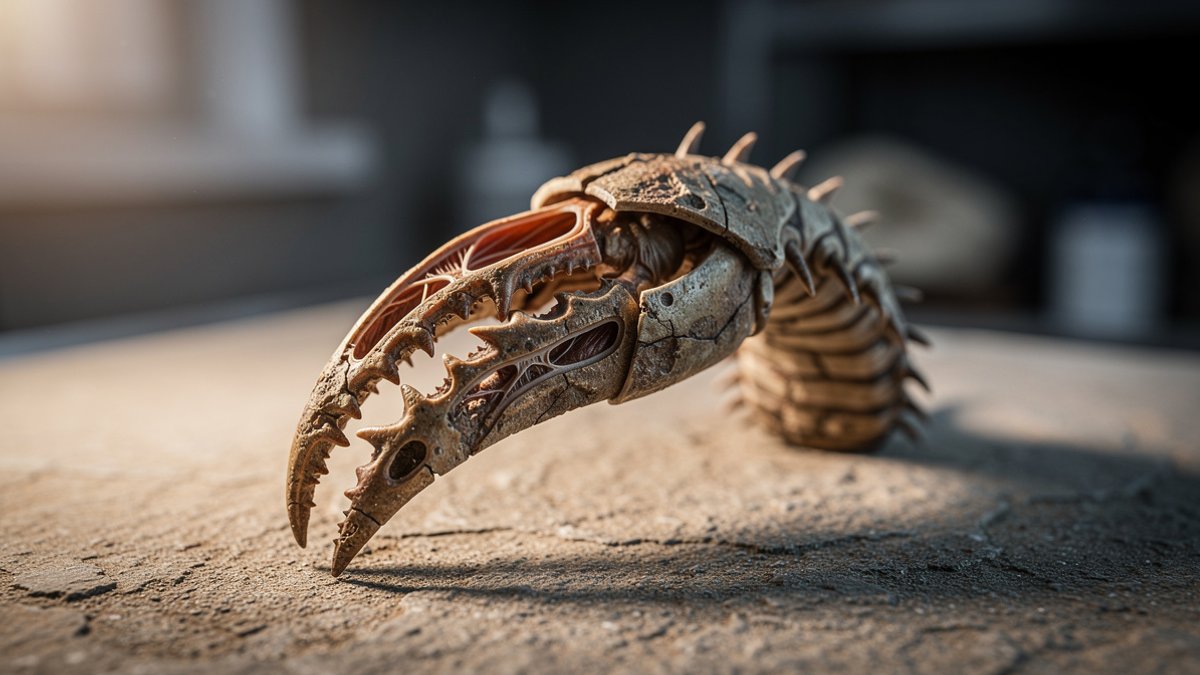
To unlock the anatomy, Lerosey-Aubril spent more than 50 hours under a microscope. The fossil preserves a broad head shield followed by nine articulated segments, forming a sturdy dorsal exoskeleton. That layout already feels surprisingly modern for the Cambrian.
Beneath the head, six pairs of appendages emerge. Some were used to sense the environment, others to manipulate prey. Under the body, thin plate-like structures resemble the book gills of horseshoe crabs, offering a direct link between this fossil discovery and living chelicerates.
Why the tiny claw changes evolutionary biology
The front appendage is the real star. Instead of a flexible antenna, Megachelicerax carries a stout, pincer-like chelicera structure. In modern spiders, that position hosts venom-delivering fangs; in horseshoe crabs, robust grasping pincers. In both cases, it defines the group.
Finding this structure in a 500-million-year-old predator shows that the basic blueprint of prehistoric spiders and their relatives was already in place shortly after the Cambrian Explosion. Recent coverage highlights how this detail forces specialists in evolutionary biology to reconcile previously competing models of chelicerate origins.
Bridging a major gap in arachnid ancestry
Before Megachelicerax, the oldest secure chelicerates came from the Early Ordovician Fezouata Biota in Morocco, about 480 million years old. Those animals already resembled small horseshoe crabs, leaving a 20-million-year ghost interval in paleontology between early arthropods and clear chelicerates.
Megachelicerax sits neatly in that gap. Its body is divided into two specialized regions, much like later forms, yet some head appendages still carry outer branches, unlike the leg-like limbs of modern spiders. The fossil therefore acts as a transition between primitive Cambrian arthropods and classic horseshoe crab–style chelicerates. See also quantum gravity big bang for more on evolutionary timescales and early animal divergence.
What this means for Cambrian evolution
The mid-Cambrian was a time when anatomical experimentation ran at high speed. Megachelicerax shows that complex body plans did not appear gradually over hundreds of millions of years; many were already taking shape while trilobites still dominated the seafloor.
This early sophistication did not translate immediately into ecological dominance. For a long stretch, chelicerates remained background players compared with trilobites and other groups, reminding researchers that evolutionary success depends on context and opportunity, not just innovation.
From forgotten specimen to headline fossil discovery
The story behind the rock is almost as striking as its anatomy. Amateur collector Lloyd Gunther found the specimen in Utah’s House Range in the late 1970s. He donated it to the University of Kansas museum in 1981, where it joined drawers of “ordinary” Wheeler fossils.
Decades later, Lerosey-Aubril selected it for closer study while surveying Cambrian arthropods. Only during painstaking preparation did that unexpected claw emerge. Coverage such as this detailed analysis has turned a once-overlooked rock into a reference point for anyone studying spider origins. For a different look at cosmic discoveries, review webb telescope gamma ray burst.
A tribute to Jacques-Yves Cousteau
The species name, Megachelicerax cousteaui, honors French ocean explorer Jacques-Yves Cousteau. For Lerosey-Aubril, also French, linking this ancient marine predator to a pioneer of underwater exploration felt natural.
Cousteau helped the public see ocean life as complex and vulnerable. Megachelicerax now reveals that similar complexity already thrived in Cambrian seas, reminding readers that today’s marine ecosystems sit atop a deep evolutionary history.
Why this matters for spiders, scorpions, and us
Chelicerates today include more than 120,000 described species, from household spiders to medically important scorpions and agriculturally significant mites. Horseshoe crabs provide blood used to test the safety of medical products, placing this group at the heart of modern health care.
Tracing their arachnid ancestry back to a single oldest chelicera fossil sharpens models of how terrestrial predators evolved from marine hunters. It also informs how researchers interpret new finds, whether from classic Cambrian sites or recently explored deposits. Explore how astronomical discoveries are changing science at something massive lies.
Key takeaways from Megachelicerax for spider fans
For anyone fascinated by prehistoric spiders, this fossil offers a concrete timepoint and a vivid image of an early relative. The discovery also highlights how much remains hidden in museum collections, waiting for a careful eye and fresh questions.
- Oldest chelicera: first unambiguous pincer-like mouthpart in the Cambrian record.
- New timeline: pushes chelicerate origins back by around 20 million years.
- Transitional anatomy: blends features of early arthropods and later horseshoe crab–like forms.
- Marine predator: confirms that early chelicerates were active hunters on the seafloor.
- Museum value: underscores why long-term fossil collections remain vital for new discoveries.
Behind every glass case and drawer, there may be another small detail waiting to reshape the story of evolution.
What exactly did the minuscule claw reveal about spider origins?
The tiny claw turned out to be a chelicera, the pincer-like mouthpart that defines chelicerates, including spiders and scorpions. Finding this structure in a 500-million-year-old fossil showed that the basic body plan of spider relatives already existed in the mid-Cambrian, pushing their origin back by about 20 million years and confirming that chelicerates evolved earlier than previously documented.
How is Megachelicerax cousteaui different from modern spiders?
Megachelicerax lived in the ocean, not on land, and lacked silk or webs. Its body had a head shield and nine segments, with some appendages still bearing outer branches unlike the leg-like limbs of spiders today. However, it shared a key feature with modern arachnids: a frontal chelicera used to grasp prey, making it part of the same broader evolutionary lineage.
Why did it take decades to recognize the importance of this fossil discovery?
The fossil was collected in the late 1970s and donated to a museum in 1981, where it was stored with many other Cambrian specimens. Only when Rudy Lerosey-Aubril prepared it in detail, spending more than 50 hours under a microscope, did the chelicera become visible. Without that meticulous work, the diagnostic claw would have remained hidden in the surrounding rock.
What does this find tell us about evolution during the Cambrian Explosion?
Megachelicerax shows that complex body plans emerged quickly after the Cambrian Explosion. Features that define major animal groups, such as the chelicera in chelicerates, were already in place 500 million years ago. The fossil also illustrates that evolutionary innovation can appear long before a group becomes ecologically dominant, highlighting the role of environmental context in shaping long-term success.
Why is this important beyond paleontology specialists?
Understanding the deep history of chelicerates helps explain the origins of animals that directly affect daily life, from spiders in homes to horseshoe crabs in medicine. The story of Megachelicerax also shows how patient research and well-curated museum collections can transform a seemingly ordinary rock into a discovery that reshapes scientific narratives and public understanding of life’s history.
FAQ
What does the oldest chelicera fossil reveal about the evolution of spiders?
The discovery of the oldest chelicera fossil shows that the key features of spiders and their relatives were already present 500 million years ago. This fossil proves that chelicerates originated much earlier than previously thought.
How does the oldest chelicera fossil change the timeline of arachnid ancestry?
The fossil pushes the origin of chelicerates back by around 20 million years. It gives direct evidence of spider-like anatomy in the Cambrian period.
Why is the chelicera significant in understanding spider and scorpion origins?
The chelicera is a distinctive mouthpart unique to spiders, scorpions, and related groups. Finding the oldest chelicera fossil helps scientists pinpoint when these animals first evolved their defining features.
What was unexpected about the fossil discovered in the Wheeler Formation?
Potential First Observation of a ‘Dirty Fireball’ Star Explosion Unveiled
Historic Artemis II Mission Launches Astronauts on Pioneering Journey to the Moon
Researchers did not anticipate finding a chelicera in such an ancient fossil. Its presence provided clear evidence of early chelicerate anatomy where none had been seen before.
How does Megachelicerax cousteaui compare to modern spiders and scorpions?
While Megachelicerax cousteaui lived in the sea and looked different from modern spiders, its chelicera placement and structure closely match those found in today’s arachnids. This highlights the evolutionary continuity of these features.