Show summary Hide summary
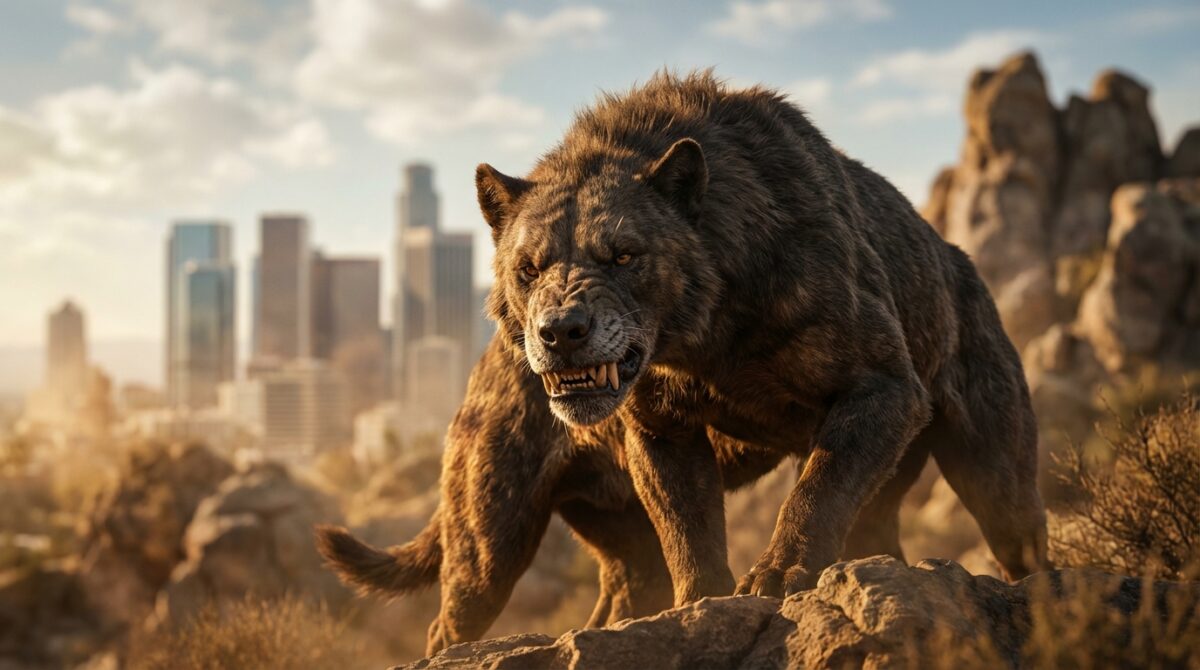
You think lions are terrifying? Imagine facing a bone-crushing predator the size of a small lion, built like a tank, roaming prehistoric America. The epic return of Epicyon in popular culture shows how this long-extinct beast still grips our imagination.
When scientists and artists bring back a creature like Epicyon, they do more than revive a fossil. They reopen a window onto a brutal, fast-changing world where giant carnivores hunted with power we barely see today. Understanding this animal reshapes how you picture ancient North America, far beyond the usual mammoths and sabre-toothed cats.
Epicyon, the bone-crushing giant that ruled prehistoric america
Before big cats dominated, prehistoric America had another top predator: Epicyon, a massive member of the “bone-crushing dogs”. This carnivore lived roughly 15 to 5 million years ago, long before humans appeared on the continent. Its body combined the weight of a big cat with the proportions of a super-sized wolf.
How the Rethinking Economics Movement Is Transforming Education
Life’s Origins Sticky Theory: Goo Sparks Existence
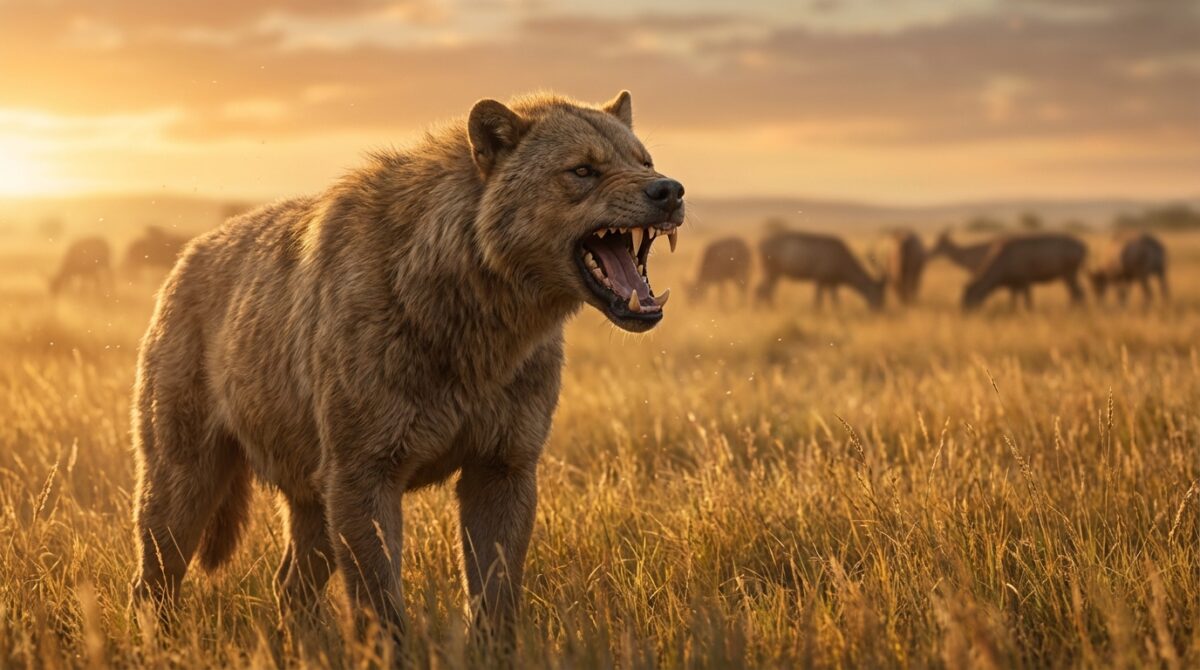
Fossils show a creature standing almost as tall as a modern lion at the shoulder, with a skull built for raw power. Its jaws could crack large bones to reach marrow, turning carcasses into full meals instead of leaving scraps for scavengers. In that Miocene landscape, any herbivore that hesitated for a second risked becoming fuel for this muscular hunter.
What made epicyon such a fearsome carnivore
Researchers point first to the skull. Epicyon carried huge cheek teeth and thickened jaws, perfect for smashing bones, not just slicing flesh. The widened muzzle gave room for powerful muscles, turning each bite into a crushing strike. This bone-focused diet let it exploit carcasses more completely than many other predators of its time.
Its body tells the rest of the story. Short, strong limbs suggest explosive power rather than marathon running. Picture a sprinter that prefers ambush or short pursuits over long chases. This build likely made it dangerous in broken terrain, where one sudden charge could bowl over a fleeing antelope-like animal. The combination of strength, bite force and stamina made Epicyon a nightmare for medium and large herbivores.
Inside the anatomy of a bone-crushing predator
To grasp why Epicyon fascinates experts, you need to look at its skeleton in detail. The head dominates, with a broad cranium and bone-crushing teeth shaped like heavy tools rather than delicate blades. These teeth did not just cut meat; they fractured thick limb bones the way a nutcracker shatters shells.
Behind that skull, the spine and shoulders supported tremendous force. Robust vertebrae and a deep chest anchored the muscles required for wrestling large prey to the ground. This architecture turned every lunge into a controlled collision. Even scavengers had reason to stay back: one sideways snap from those jaws could break smaller rivals with frightening ease.
Teeth, jaws and bite force beyond modern dogs
Compared with wolves or big domestic breeds, Epicyon pushes the concept of a dog’s skull to another level. Enlarged premolars and molars formed a crushing platform, while reinforced jaw joints handled stress modern canids rarely approach. This design meant fewer sharp slicing edges, more heavy-duty crushing surfaces.
Paleontologists estimate its bite force per tooth would have rivaled or surpassed many large cats. That power changed its options at every kill site. While lighter carnivores focused on softer organs and muscles, this hunter could dig straight into joints and long bones. The result: more calories per carcass, an advantage in times when competition around a dead animal could be intense.
Life and hunting strategies in prehistoric america
The world that Epicyon patrolled looked both familiar and alien. Grasslands stretched across large parts of America, dotted with forests and river systems. Herds of three-toed horses, camel-like browsers and early antelope relatives moved constantly in search of food and water. Each migration route offered feeding opportunities to a powerful carnivore waiting for weakness.
Within this landscape, predators competed fiercely. Sabre-toothed relatives, slender cheetah-like cats and other bone-crushing dogs all shared territory. To thrive, Epicyon needed strategies that maximized each hunt’s payoff. Fossil sites showing repeated remains of similar prey hint at selective targeting of certain species or age groups, just as African lions focus on specific herd members today.
Did Epicyon hunt in packs or alone?
One question still sparks debate: did Epicyon behave like modern wolves, or more like solitary big cats? Its robust body and bone-focused diet could match either pattern. Some paleontologists see hints of group behavior in clustered fossil remains, especially where multiple individuals died near rich prey deposits.
Other experts note that a highly muscular hunter might rely more on ambush and power than on coordinated pack tactics. The reality could sit somewhere between, with small family groups forming around rich territories. Whatever the social structure, prey animals likely recognized the scent and silhouette of this fearsome hunter and responded with immediate alarm.
The epic return of epicyon in modern culture and science
Today, the epic return of Epicyon does not mean real animals stalking our forests again. It describes how this extinct giant surges back into documentaries, museum exhibits, video games and social networks. Paleo-artists reconstruct its posture and coat patterns, giving a visual identity to bones once locked in rock.
Streaming platforms now feature series on prehistoric predators of America, where Epicyon often steals the show from more famous dinosaurs. Viewers discover that top carnivores did not disappear with T. rex; they evolved into new, equally intimidating forms. Each new reconstruction triggers debates among fans and researchers about fur color, hunting style and social behavior.
Why epicyon captivates audiences in 2026
In a world packed with creature design from films and games, Epicyon feels oddly modern. Its silhouette recalls a scaled-up, heavily built wolf, something people can easily imagine standing across a field. That familiarity mixed with size and power gives it a unique emotional punch compared with more alien-looking extinct animals.
Many enthusiasts also see parallels between this ancient predator and current conservation issues. When they learn how climate shifts and changing ecosystems helped push it toward extinction, they draw connections to present-day large carnivores under pressure. The “return” of Epicyon in media becomes a quiet warning about how quickly dominant hunters can vanish.
What epicyon fossils reveal about extinction and survival
Every new Epicyon skeleton adds clues about why such a successful predator eventually disappeared. Layers of rock show that by the late Miocene, environments across America changed. Grasslands expanded or shifted, prey species evolved, and new competitors arrived. Some big cats and more modern dogs moved into niches once held by older bone-crushing forms.
Wear on teeth, healed fractures and bone pathologies offer a direct look at the pressure these animals faced. Individuals with heavy tooth wear suggest tougher diets late in the lineage, maybe from harder bones or leaner carcasses. That kind of evidence supports the picture of a powerful hunter gradually squeezed by shifting conditions until its line ended.
Lessons modern ecosystems can take from epicyon
The story of this fearsome carnivore carries a message for today’s wildlife managers. Even apex predators built to crack bones and dominate kills remain vulnerable when habitats and prey change too fast. Large animals need space, stable food sources and time to adapt, whether they live in the Miocene or now.
By studying how Epicyon responded to environmental stress, researchers refine models predicting which modern species face similar paths. That knowledge guides decisions about protected areas and corridors for big carnivores across the Americas. The ghost of this bone-crushing dog quietly influences how we protect living lions, wolves and jaguars.
What was Epicyon and where did it live?
Epicyon was a giant bone-crushing dog, a powerful prehistoric carnivore that lived in North America during the Miocene, roughly between 15 and 5 million years ago. It roamed open grasslands and mixed habitats across large parts of what is now the United States and neighboring regions.
How big and strong was this prehistoric predator?
Epicyon reached a size comparable to a small lion, with a massive skull and heavy jaws. Its teeth and jaw muscles were adapted to crack large bones, giving it a much stronger crushing bite than modern wolves or domestic dogs of similar size.
What did Epicyon eat in prehistoric America?
This fearsome carnivore hunted medium to large herbivores such as early horses, camel-like animals and antelope-like species. It consumed not only flesh but also bones, using its bone-crushing teeth to reach nutrient-rich marrow that many other predators could not access.
Why did Epicyon go extinct?
Toxic Metals Discovered in Bananas Post Brazil Mining
Gravitational Wave Detection Validates Einstein Again
Epicyon likely disappeared because of a combination of environmental change, shifts in prey communities and growing competition from emerging big cats and more modern canids. As habitats and food sources changed across America, its specialized bone-crushing lifestyle became less competitive.
Why do people say there is an epic return of Epicyon?
The phrase refers to the renewed interest in this extinct predator across documentaries, museum exhibits, games and online content. Scientific reconstructions and media projects bring Epicyon back into the public eye, making its story part of a broader fascination with prehistoric life and ancient apex predators.