
Show summary Hide summary
- Ancient Australian rocks and the birth of niobium wealth
- How geologists decoded 500 million years of Earth history
- Why these rare rocks matter for clean energy and exploration
- Linking Earth’s secrets to wider planetary stories
- Correlation, causation and what remains uncertain
- What is niobium and why does it matter?
- How do rare Australian rocks trace the birth of this metal?
- Does the study prove supercontinent breakup always creates niobium deposits?
- Which institutions carried out this research?
- Where can I learn more about similar studies?
What if a hidden seam of rock beneath central Australia could reveal both Earth’s secrets and the story of a vital clean-energy metal? New research now shows that rare volcanic rocks, formed as a supercontinent began to tear apart, record the metal birth of one of the most strategic elements of this century: niobium.
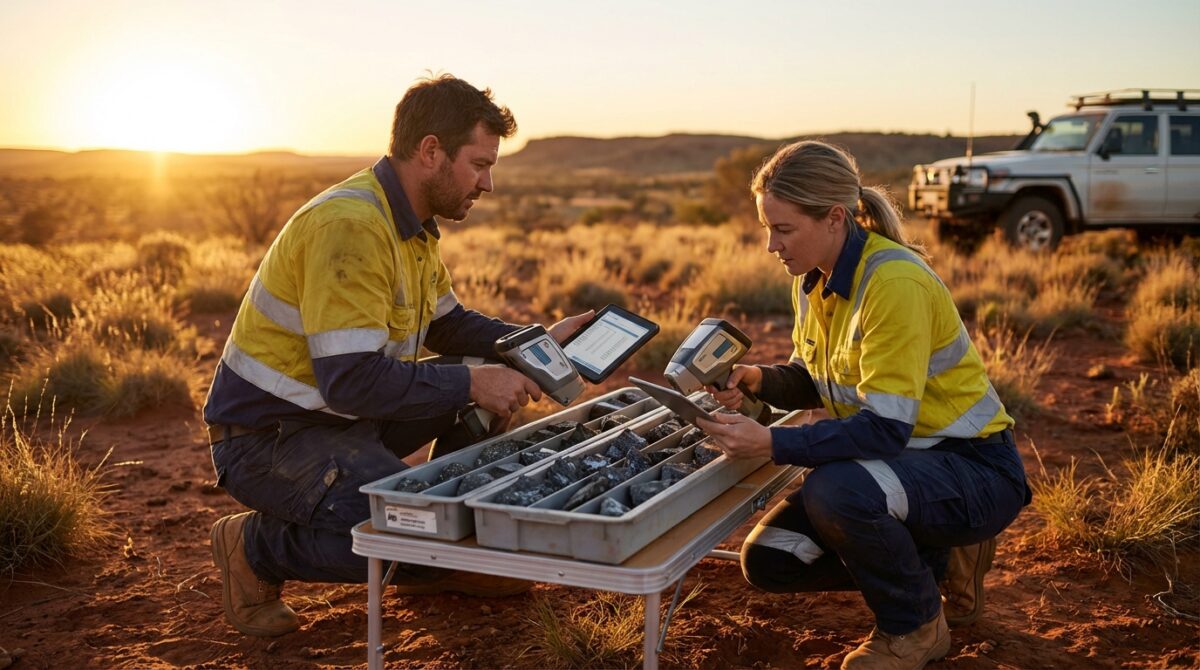
This study, led by Curtin University with collaborators from the University of Göttingen, traces how niobium-rich magma rose from deep within the planet about 830–820 million years ago. The work, published in Geological Magazine, combines isotope dating and geochemical analysis on drill cores from central Australia to reconstruct more than half a billion years of tectonic history and metal formation.
Ancient Australian rocks and the birth of niobium wealth
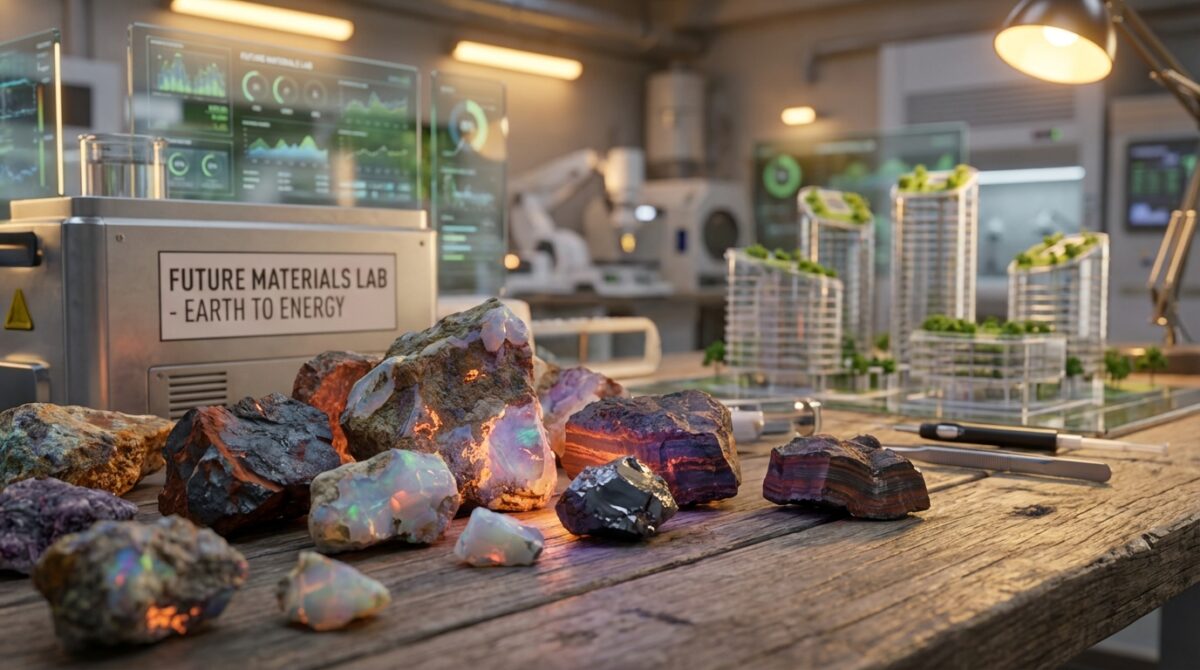
The central finding is stark: rare rocks called carbonatites, buried in the Aileron Province, host one of the world’s most promising new niobium sources and formed exactly when the supercontinent Rodinia started to break apart. This timing links a specific tectonic event to a major mineral tracing opportunity for future resource exploration.
Ancient 400-Million-Year-Old Fish Fossils Unveil the Origins of Terrestrial Life
Researchers Unveil Microscopic Plant Mechanism Poised to Boost Crop Production Dramatically
Niobium strengthens steel for aircraft, pipelines and electric vehicles, and it appears in some next-generation batteries and superconductors. For policy makers, this means a deeper, science-based understanding of how a critical metal accumulates in the crust, rather than relying on chance discoveries. The finding fits into broader initiatives such as UNCOVER Australia, which aims to map the country’s hidden mineral systems.
From deep Earth magma to surface metal treasure
The team, led by Dr. Maximilian Dröllner from Curtin’s Timescales of Mineral Systems Group and the University of Göttingen, shows that niobium-rich magma travelled upwards along long-lived fault zones. These faults had been active for hundreds of millions of years and reopened as Rodinia began to rift apart, allowing deep mantle melts to reach the upper crust.
As this magma cooled, it crystallised into carbonatites, locking niobium and other strategic elements in place. According to the study, this process did not randomly scatter metals. Instead, it followed a predictable structural pattern tied to continental stretching, a pattern that may be replicated in other ancient rift zones globally.
How geologists decoded 500 million years of Earth history
The methodology is surprisingly straightforward to describe: researchers combined multiple isotope-dating systems with micro-scale geochemical analysis on drill core samples to separate original magmatic ages from later geological overprints. Behind that single sentence, however, lies a detailed analytical effort.
Co-author Professor Chris Kirkland, also from Curtin’s Timescales of Mineral Systems Group, explains that carbonatites often record several heating, deformation and alteration events. By targeting specific minerals and zones within the rock using high-resolution imaging, the team could identify which isotopic “clocks” still recorded the original crystallisation between 830 and 820 million years ago.
What the numbers say about metal formation
The age range of 830–820 million years places niobium emplacement in an early phase of Rodinia’s breakup, before full ocean basins opened. This timeframe matches independent reconstructions of rifting in central Australia and supports models where thinning crust becomes a highway for metal-rich melts.
Although the article summary does not provide explicit confidence intervals, such multi-method dating typically aims for age uncertainties of a few million years, which is considered robust on these deep timescales. The convergence of several isotopic systems reduces the risk that the ages simply reflect later heating rather than the original metal formation event.
Why these rare rocks matter for clean energy and exploration
For a fictional exploration company, “Desert Arc Minerals”, this research changes strategic decisions. Instead of drilling where earlier prospectors found scattered anomalies, geologists can now prioritise ancient rift structures similar to those in the Aileron Province, where niobium-bearing carbonatites are likely to occur.
That insight is echoed in popular coverage such as analysis of vast niobium sources and features on rare volcanic rocks in Australia. Together, they show how tectonic stretching, long-lived faults and mantle-derived magmas interact to produce deposits that could support low-carbon technologies for decades.
Real-world applications and policy angles
For readers concerned with energy transition and supply security, several implications stand out:
- Critical metal supply mapping: Governments can target airborne surveys and deep drilling along ancient rift zones rather than random terrain.
- Risk diversification: Countries relying on a few niobium suppliers gain a geological blueprint to identify new jurisdictions.
- Environmental planning: Better predictions reduce unnecessary drilling, limiting disturbance in sensitive landscapes.
Reports such as Australia’s buried niobium “treasure” emphasise this balance between resource demand and environmental responsibility, anchored in solid earth sciences rather than speculation.
Linking Earth’s secrets to wider planetary stories
The same Australian crust that records niobium’s metal birth also preserves ancient clues about the origin of the Moon. Other studies on 3.7‑billion‑year‑old rocks and feldspar crystals in Western Australia, covered by outlets like WelshWave and Betebt, support the giant impact hypothesis through subtle chemical fingerprints.
Together, these projects demonstrate how geology works as a time machine. Whether it is the trajectory of a rare metal or the aftermath of a planetary collision, both stories rely on the same toolkit: isotope systems, mineral chemistry and careful reconstruction of tectonic history from deeply buried rocks.
Correlation, causation and what remains uncertain
The Curtin study strongly links niobium-rich carbonatites to Rodinia’s breakup, but it does not prove that every supercontinent rift automatically generates similar deposits. The relationship is best described as a well-supported geological model, not a universal rule.
Unknowns remain. The exact depth where niobium-enriched melts separated from the mantle, the detailed composition of those melts and the full three-dimensional geometry of the ore bodies all require further drilling and modelling. Articles such as recent ScienceDaily coverage highlight this complexity, reminding readers that each new dataset refines rather than replaces earlier understanding.
For now, the central insight is clear: by tracing rare rocks beneath Australia, scientists can read a deep-time archive of mineral tracing, plate motions and metal formation. Those stories shape not only scientific debates but also the materials that build aircraft, power grids and climate solutions.
What is niobium and why does it matter?
Niobium is a metallic element used mainly to strengthen steel, making it lighter yet tougher for applications such as aircraft, pipelines and structural components. It also appears in some advanced batteries and superconducting technologies, which makes it strategically important for clean energy systems and high-tech industries.
How do rare Australian rocks trace the birth of this metal?
In central Australia, niobium is concentrated in rare igneous rocks called carbonatites. These formed when metal-rich magma rose from the mantle through long-lived fault zones about 830–820 million years ago, as the supercontinent Rodinia began to rift. Dating and geochemical analysis of these rocks reveals when and how niobium entered the crust.
Does the study prove supercontinent breakup always creates niobium deposits?
The research indicates a strong link between Rodinia’s breakup and niobium-bearing carbonatites in the Aileron Province, but it does not guarantee the same outcome everywhere. The result suggests that similar tectonic settings are promising exploration targets, yet each region’s mantle composition and fault architecture can change the outcome.
Which institutions carried out this research?
How a Peruvian Peak is Turning into a Groundbreaking Particle Detection Frontier
Scientists Unveil the Secrets Behind Yeast’s Minuscule Centromeres
The work was led by Curtin University’s Frontier Institute for Geoscience Solutions, specifically the Timescales of Mineral Systems Group, with collaboration from the University of Göttingen. The findings are reported in Geological Magazine under the title ‘Multi-method geochronology and isotope geochemistry of carbonatites in the Aileron Province, central Australia’.
Where can I learn more about similar studies?
You can explore related research on Australia’s hidden mineral systems through initiatives such as UNCOVER Australia, and public explainers on niobium and ancient rocks on platforms like SciTechDaily and LiveScience. Several video explainers on YouTube also introduce how ancient Australian rocks preserve Earth’s secrets about tectonics and planetary evolution.