
Show summary Hide summary
What if the story of Agriculture in the American Southwest began not with corn, but with tiny Wild Potatoes carried in traveling pouches 10,000 years ago? New research suggests that Ancient Peoples physically moved a hardy wild tuber across deserts and plateaus, nudging it toward domestication long before formal farming emerged.
This new picture comes from work led by archaeologist Lisbeth Louderback at the University of Utah, published in the open-access journal PLOS One. By combining microscopic residue analysis, genetics and Indigenous knowledge, the team shows that people did not simply harvest what grew nearby. They Transported the Four Corners potato across long distances, reshaping its range and their own food traditions.
Ancient wild potatoes and an unexpected origin of agriculture
The focus of the study is the Four Corners potato (Solanum jamesii), a small, nutrient-dense tuber that still survives from southern Utah and Colorado down into northern Mexico. According to the PLOS One article, this species may represent an early, overlooked chapter in the history of crops in the region, complementing rather than replacing maize and beans.
Top 10 U.S. Products Expert-Recommended to Combat Seasonal Affective Disorder
Revolutionizing Life: Top Breakthroughs in Genetic Code Rewriting of the Century
Evidence summarized by sources such as Scimex and Phys.org indicates that this wild potato was not a peripheral resource. Instead, it formed part of a persistent food tradition across the Colorado Plateau, important nutritionally and spiritually for local communities, including Navajo (Diné) families who still recognize and use it.
How archaeology and botany traced potato movements
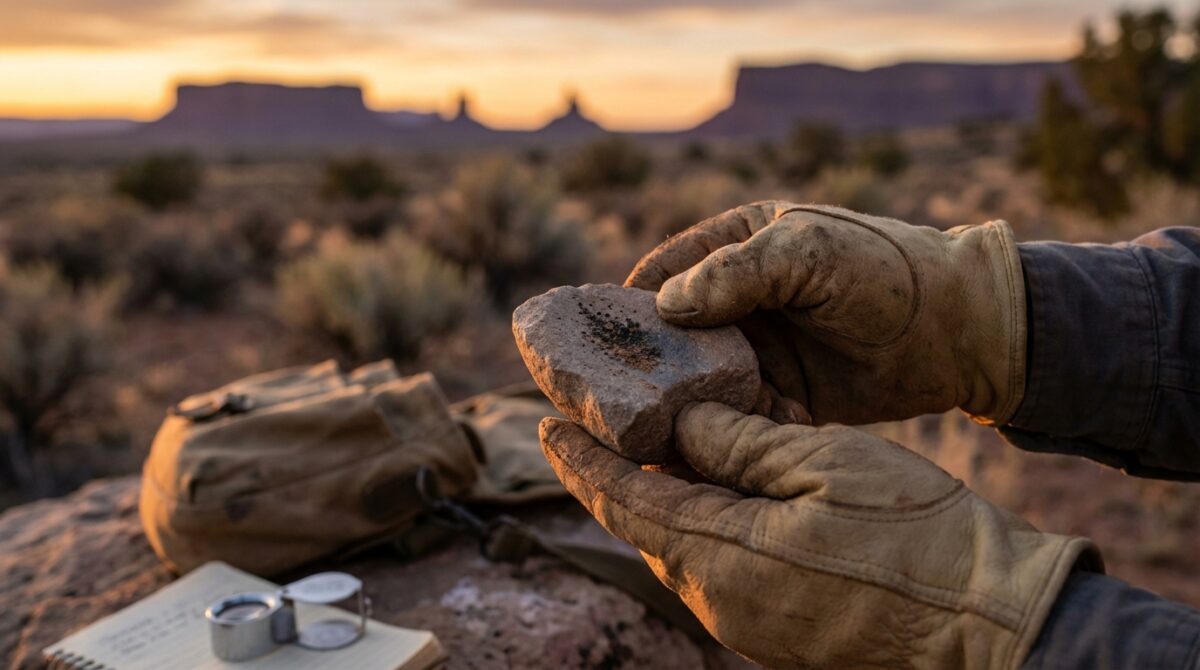
To understand how this plant traveled, Louderback’s team followed a simple but powerful method: they looked for microscopic starch grains trapped on ancient tools, then compared these patterns with modern genetic data. This single sentence summary hides years of work across Archaeology, Botany and Indigenous studies.
Researchers analyzed ground stone tools from 14 archaeological sites scattered across the Colorado Plateau, spanning from a few hundred years old to roughly 10,900 calibrated years before present. On tools from nine sites, they identified starch granules matching Solanum jamesii, confirming repeated processing of the tubers at locations often far from the species’ original habitat in the south.
Stone tools, genetics and long-distance transport
Several of the sites that yielded potato starch lie near the modern northern limit of the plant, across the intersecting borders of Colorado, Utah, Arizona and New Mexico. According to coverage on SciTechDaily, these dates push the use of the Four Corners potato back more than 10,000 years, into an era usually associated with mobile hunter-gatherers rather than crop management.
Genetic analyses conducted in earlier work add another layer. Some living populations in these northern zones show southern genetic signatures, implying they descended from tubers originally growing much farther south. That pattern is difficult to explain through random dispersal alone and strongly suggests that Ancient Peoples intentionally or repeatedly moved planting material along emerging Trade Routes or during seasonal Migration.
Evidence for early domestication, not full control
Domestication is not a single event but a gradual process. Researchers highlight two behaviors visible here: sustained harvesting and processing over millennia, and movement of the plant beyond its natural ecological range. According to the formal paper in PLOS One, these are hallmarks of an early, low-level domestication stage.
At the same time, there is no claim that the Four Corners potato ever became a fully domesticated crop like the modern Andean potato. The available data indicate influence rather than total genetic control. The authors are careful to frame the evidence as correlation between human movements and genetic patterns, supported by archaeological residues, rather than direct proof of deliberate breeding choices in every case.
Living cultural memory and Indigenous foodways
The research team did not rely only on microscopes. They also conducted interviews with 15 Navajo (Diné) elders. These conversations, reported in outlets like @theU (University of Utah), show that the Four Corners potato is still known, eaten and used in ceremonial contexts.
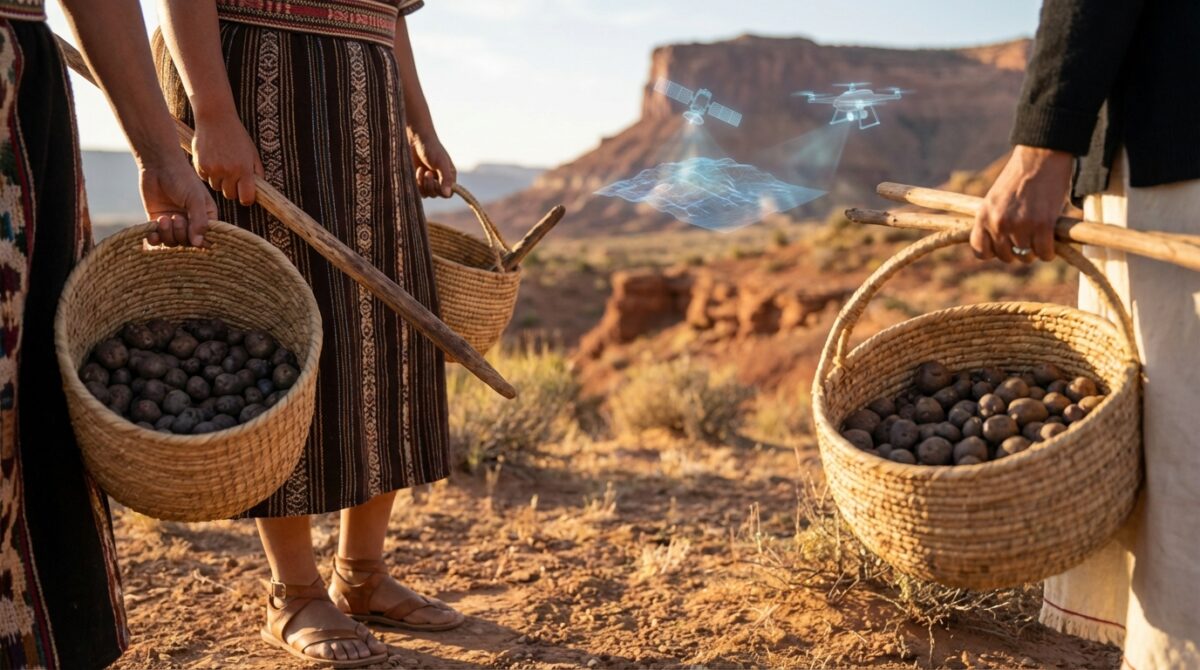
Elder and food sovereignty advocate Cynthia Wilson emphasizes that the mobility of Indigenous food traditions was tied to kinship, especially matrilineal lines. Women carried seeds, tubers and stories as families moved across the landscape. This social fabric helps explain how Wild Potatoes could travel hundreds of kilometers while retaining their identity and uses.
Why this matters for agriculture and resilience
Modern agronomists are paying attention for practical reasons. The Four Corners potato is unusually hardy, tolerating frost and drought better than many commercial varieties. As highlighted by summaries on Mirage News and ScienceDaily, its genetics may offer clues for breeding crops that endure climate stress without heavy irrigation.
For a young researcher such as the fictional botanist “Alicia,” the study suggests a roadmap: rather than searching only in laboratories, she might consult Indigenous communities, herbariums and archaeological datasets to identify ancient, underused species that could bolster future food security in arid regions.
- Nutritional value: dense in carbohydrates, with documented cultural uses as both food and medicine.
- Ecological tolerance: survives in poor soils and low-water settings typical of the American Southwest.
- Cultural continuity: still remembered and harvested by Indigenous families, providing guidance on safe preparation.
- Genetic diversity: offers traits useful for breeding resilient potatoes and related crops.
What remains uncertain and where research goes next
Despite the rich dataset, important questions remain open. Starch residues show that the plant was processed at particular times and places, yet they cannot by themselves reveal harvesting methods, storage strategies or the exact scale of consumption. Genetic signals show past movements, but do not always pinpoint specific routes or motivations.
Funding from the National Science Foundation (Award BCS-1827414), along with support from Red Butte Garden and the Natural History Museum of Utah, will likely enable further sampling of sites and modern populations. Future work may test whether similar human-mediated dispersal shaped other wild crops across the Southwest, extending the insights first shared by sources like Natural Science News and Anthropology.net.
For readers, one key idea stands out: long before large fields and irrigation canals, people were already experimenting, carrying and tending useful plants. The Four Corners potato story suggests that early Agriculture in the American Southwest emerged not as a sudden “invention,” but as a mosaic of small, patient choices made by families walking ancient paths.
What is the Four Corners potato and where does it grow?
The Four Corners potato (Solanum jamesii) is a small wild potato native to the American Southwest. Today it grows from southern Utah and Colorado through Arizona and New Mexico into northern Mexico. It tolerates cold nights and low moisture, making it well adapted to high desert and plateau environments.
How do we know ancient peoples transported these wild potatoes?
Researchers found microscopic starch granules from Solanum jamesii on stone grinding tools at nine archaeological sites, some dating to about 10,900 years ago. Several sites lie outside the plant’s original southern range. Genetic studies of modern populations also show that some northern patches likely descended from southern sources, indicating human-mediated movement.
Does this mean the Four Corners potato was fully domesticated?
Current evidence points to early stages of domestication rather than a fully domesticated crop. People repeatedly harvested, processed and moved the tuber beyond its natural range, which are key domestication behaviors. However, the plant retains many wild traits, suggesting long-term interaction without complete genetic transformation.
Why is this research important for modern agriculture?
Why Do Some People Suffer Severe Colds While Others Stay Unaffected ?
A Groundbreaking Revelation Reshaping the History of Syphilis
The Four Corners potato shows resilience to drought and cold, traits valuable under climate change. Studying its genetics and Indigenous management practices may guide breeding of more robust potatoes and other crops. It also broadens the story of agriculture, highlighting overlooked native species and traditional knowledge systems.
Who led the study and where was it published?
The research was led by archaeologist Lisbeth Louderback of the University of Utah, together with an international team. Their findings appear in the open-access journal PLOS One, alongside complementary summaries on platforms such as SciTechDaily, ScienceDaily and other science news outlets.