

Show summary Hide summary
- New study: how toilet phone use harms your health
- Why phones on the toilet increase hemorrhoid risk
- Hemorrhoids: common, painful, and very expensive
- Hygiene, germs, and phones: another hidden problem
- How to break the habit without losing your mind
- Practical steps to protect your bathroom health
- How long is it safe to sit on the toilet?
- Does scrolling on my phone directly cause hemorrhoids?
- Is reading a book on the toilet just as risky as phone use?
- Can better hygiene with my phone reduce bathroom health issues?
- Should I see a doctor for hemorrhoid symptoms?
You finish a quick scroll on the toilet, stand up, and feel a sting of discomfort. Harmless habit, or did that last reel just cost your health?
A new study on phones on toilet health risks in the bathroom finally puts data behind a suspicion many doctors already had: lingering on the toilet with a smartphone is linked to more pain, more health issues, and a higher risk of hemorrhoids.
New study: how toilet phone use harms your health
Researchers at Beth Israel Deaconess Medical Center followed 125 adults coming in for routine colonoscopy screening. Before the procedure, they completed a detailed survey about lifestyle, bowel habits, and smartphone behavior in the bathroom.
Uncovering the Secret Metabolic Processes Functioning Within the Cell Nucleus
High-Fiber Diets Linked to Increased Duration of Deep Sleep
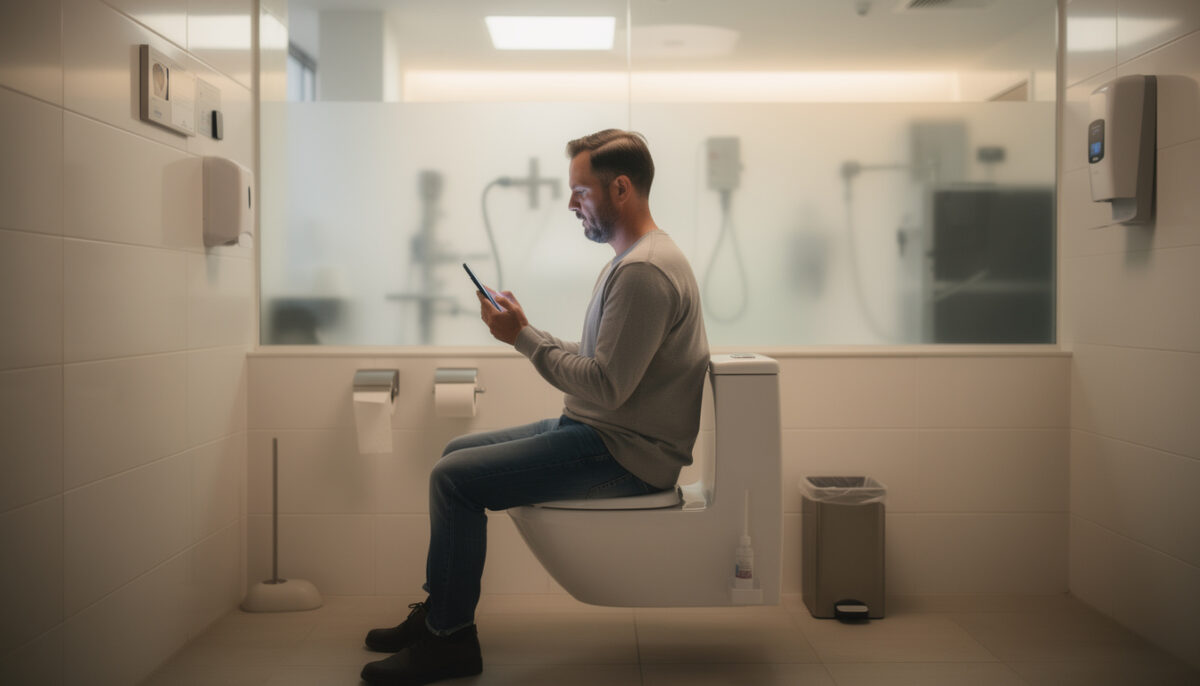
Endoscopists then checked each participant for hemorrhoids. After adjusting for age, diet, fiber, exercise, and other known factors, one pattern stood out strongly: people who used their phones while sitting on the toilet were 46% more likely to have hemorrhoids than those who left their devices outside.
What this bathroom study really measured
The survey did not just ask “Do you scroll on the toilet?” Participants reported how long they typically sat, what they did on their phones, and how often they strained during bowel movements.
About two-thirds admitted to regular smartphone use in the bathroom. Most described reading the news, checking emails, or scrolling social media feeds, a trend also highlighted in coverage like smartphone use on the toilet and the risk of hemorrhoids on this topic.
Why phones on the toilet increase hemorrhoid risk
Lead author Chethan Ramprasad and senior author Trisha Pasricha noticed a clear behavioral link: phone users sat longer. Around 37% of people who used smartphones on the toilet stayed more than five minutes per visit, compared with only 7.1% of non-users.
That extra sitting time increases pressure in the anal and rectal veins. Over time, repeated pressure can cause veins to swell, creating or worsening hemorrhoids and the burning or bleeding that often follows.
Pressure, posture, and hidden pain
Sitting on a toilet seat is not the same as sitting on a chair. Your body weight rests differently, and the opening of the bowl leaves less support for the pelvic floor.
Add a phone, and suddenly a quick trip stretches into an unplanned break. You might think you are relaxing; your veins are not. This mismatch between comfort and silent damage explains why such a simple habit can trigger so much discomfort later.
Hemorrhoids: common, painful, and very expensive
Hemorrhoids are not rare or niche. In the United States alone, they drive nearly 4 million medical visits each year and generate more than $800 million in healthcare spending.
They develop when veins in the anus or lower rectum swell and become irritated. Typical symptoms include pain while sitting, bleeding on toilet paper, or an itchy, heavy sensation after a bowel movement.
Real-life impact behind the statistics
Take Alex, a 32-year-old office worker who treats each bathroom break as “scroll time.” What started as a five-minute escape turned into a 15-minute habit, several times a day.
Months later, Alex notices blood in the bowl and a constant ache at the desk. The colonoscopy confirms hemorrhoids; the specialist’s first advice is simple: shorten toilet sessions and ditch the phone.
Hygiene, germs, and phones: another hidden problem
The new research focused on hemorrhoids, but your smartphone brings other health issues into the bathroom. Toilets aerosolize tiny droplets when you flush, spreading germs onto nearby surfaces, including your screen.
That contaminated phone then follows you to the kitchen, desk, and bed. The combination of poor hygiene, extended sitting, and constant scrolling multiplies your exposure to both infection and discomfort. Find out how doctor searching top-quality gut health can offer further advice for a healthier gut.
Sanitation tips for your bathroom routine
Good sanitation starts with cutting down what you carry into the restroom. Keeping your phone out reduces both contamination and extra toilet time. When you cannot avoid bringing it, regular cleaning with appropriate wipes helps limit bacterial buildup.
Some physicians, especially those focused on gut health and microbiome research like the experts tracking high-quality stool samples in recent medical features, increasingly emphasize the bathroom as a key environment for everyday disease prevention.
How to break the habit without losing your mind
The study authors highlight one straightforward strategy: leave the smartphone outside. That single change shortens most toilet visits automatically. Your body gets what it needs, and you move on.
If you feel restless, try a small routine swap. Some people keep a short paper magazine nearby, others set a mental time limit by focusing on breathing for two or three minutes, then standing up as soon as they are finished.
Practical steps to protect your bathroom health
Adopting healthier bathroom behavior starts with small, repeatable actions. Over a few weeks, your routine can shift from distracted scrolling to quick, focused visits that respect your body’s signals.
- Set a soft time cap: aim for three to five minutes on the toilet, then stand up.
- Park your phone elsewhere: leave it on a counter or in another room.
- Respond to urges, do not wait: delaying bowel movements often makes them harder and more painful.
- Move more during the day: regular activity supports bowel regularity and reduces venous pressure.
- Prioritize fiber and water: easier stools mean less straining and less irritation.
Health outlets from ScienceDaily to bathroom phone time linked to hemorrhoids all converge on the same message: quick, mindful toilet use is far kinder to your veins than a long digital break.
How long is it safe to sit on the toilet?
Most gastroenterologists recommend limiting each toilet visit to around three to five minutes. If you are regularly staying longer, especially because of phone use, you increase venous pressure in the anal area and raise the risk of hemorrhoids and related pain.
Does scrolling on my phone directly cause hemorrhoids?
The phone itself does not damage your veins. The problem is that using a smartphone encourages you to sit much longer than necessary. That extended sitting increases pressure on anal tissues, which can promote or worsen hemorrhoids over time.
Is reading a book on the toilet just as risky as phone use?
Any activity that keeps you seated on the toilet for too long can contribute to hemorrhoid risk. However, phones are particularly distracting and designed to capture attention, so they tend to extend toilet time more than a short printed article or magazine.
Can better hygiene with my phone reduce bathroom health issues?
Revolutionary Iron-Based Nanomaterial Targets Cancer Cells While Preserving Healthy Tissue
Researchers Identify Genetic Switch Crucial for Maintaining Organ Health
Cleaning your phone and washing your hands carefully lower the spread of germs, which improves sanitation. That said, hygiene does not solve the pressure problem. To protect yourself from hemorrhoids, you also need to shorten toilet sessions and avoid unnecessary lingering.
Should I see a doctor for hemorrhoid symptoms?
Yes, especially if you notice bleeding, persistent pain, or a lump around the anus. A clinician can confirm the diagnosis, rule out other conditions, and discuss treatment. Bringing up your toilet habits and smartphone use helps them tailor practical advice for your daily life.