Show summary Hide summary
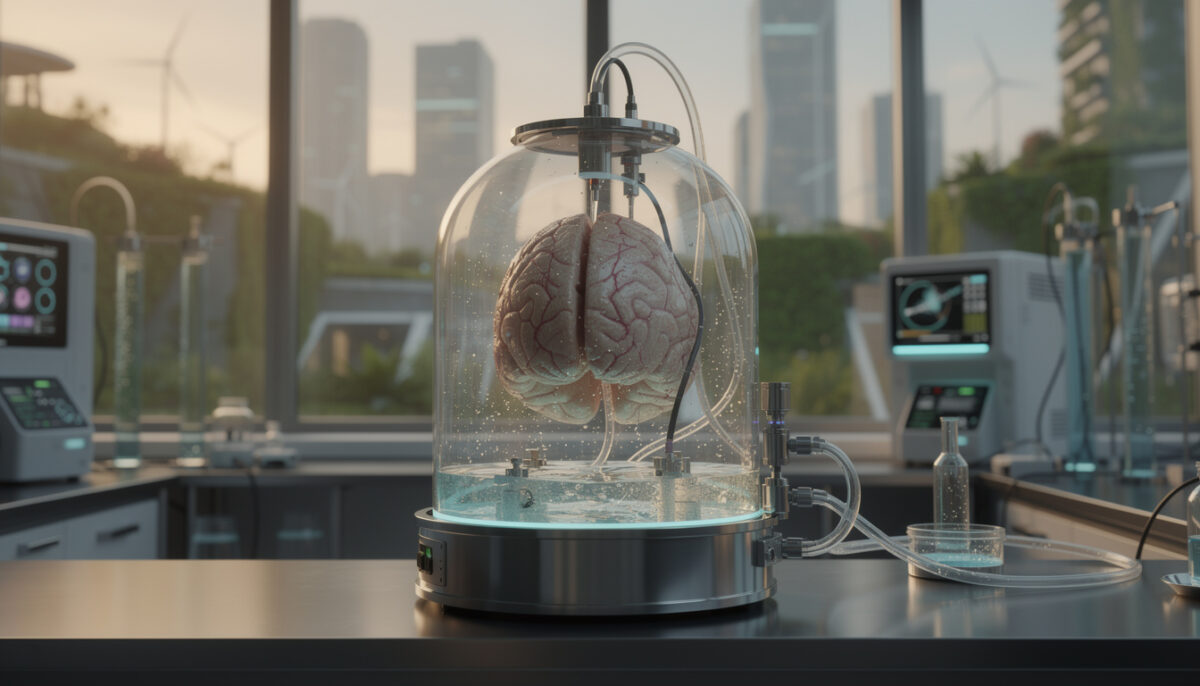
You reading these lines right now could be the last version of you that ever dies. A new groundbreaking advance in revival science has shown that a whole mammal brain can be perfectly preserved post-death, with its microscopic structure locked in place for a future comeback.
Instead of freezing a body in panic after death, a team at Nectome has designed a protocol that starts at the precise instant of a planned passing. Their ambition is radical: protect every trace of neural information that shapes a personality, memories and emotions, making true long‑term brain preservation technically realistic.
How scientists preserved a mammal brain after death
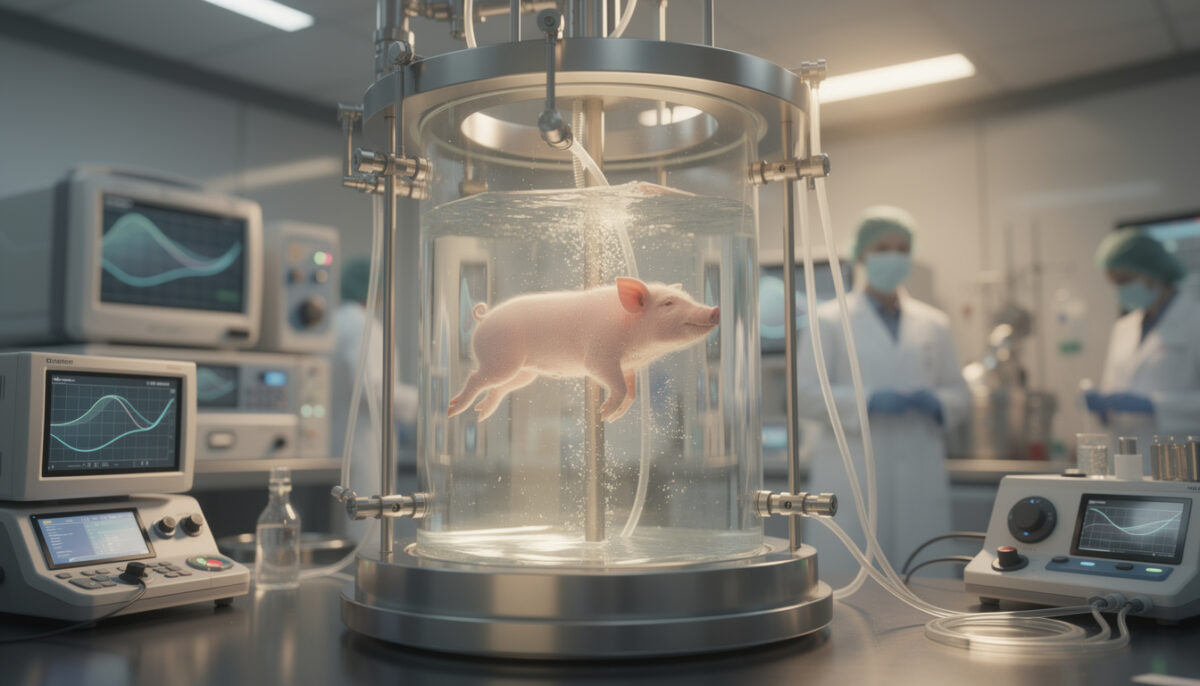
The story starts with pigs, whose brains and blood vessels resemble ours closely enough for serious neuroscience. Nectome’s researchers induced cardiac arrest, then waited about one minute before inserting a cannula directly into the heart. From there, they flushed out the blood and perfused a cocktail of preservation fluids.
How ‘Forever Chemicals’ Might Be Undermining Children’s Bone Health Permanently
Scientists Engineer Probiotic Bacteria into Precision Tumor-Targeting Cancer Fighters
These solutions contained aldehydes, chemicals that create molecular “bridges” between components inside cells. This process fixes neurons and synapses in place, stopping the internal collapse that normally unfolds within minutes after circulation stops. Timing mattered hugely: when the team waited 18 minutes, microscopy later showed damaged structures; cutting that delay to just under 14 minutes changed everything.
From chemical fixation to glass-like vitrification
Once the aldehydes had “locked” cellular activity, cryoprotectant solutions replaced much of the water inside the tissue. This step, long used in cryonics, prevents ice crystals from shredding cells during cooling. The researchers then lowered temperature to around −32 °C, pushing the mixture into a glass-like state called vitrification.
In that solid glassy phase, the overall architecture of the brain can be maintained for extremely long periods. When they later took samples from the outer cortex and examined them with electron microscopy, the results looked astonishingly close to living tissue. Neurons, synapses and even key molecules remained clearly recognisable and densely preserved.
What this means for revival science and the connectome
If the fine wiring of the brain stays intact, then in theory researchers can reconstruct the full map of connections, the famous connectome. Nectome’s Borys Wróbel argues that their method keeps the three-dimensional arrangement of neurons and synapses so well that, one day, every connection could be traced.
Why does this matter? Our experiences, beliefs and behaviours are believed to emerge from those physical patterns. Other teams have already spent years mapping tiny fragments of mouse brains at nanometre resolution. Scaling that to a whole preserved human brain would demand extreme computing power, but the principle now looks less like science fiction and more like a staggeringly hard engineering task.
Virtual immortality or just a perfect copy?
Not every expert agrees that a reconstructed mind would still be “you”. Biogerontologist Joao Pedro de Magalhaes argues that even a flawless copy would be a new entity. Still, some people see this as a route to a form of digital continuation, in parallel with other frontiers such as microbiome research highlighted in work like these recent reports on biological longevity.
Nectome remains agnostic about the exact revival path. A future mind could be rebuilt as software, or perhaps re-implanted into biological tissue through advanced resuscitation technologies. For now, their focus is simple: safeguard all the information that might be required for any of those options.
How this brain preservation differs from classic cryonics
Traditional cryonics organisations usually step in only after legal death from disease or age, racing to cool the body and infuse it with cryoprotectants. Even with good logistics, deterioration often begins before teams arrive, because enzymes quickly start digesting neurons once blood flow stops.
Nectome’s protocol changes the script by working with physician‑assisted death laws. A terminally ill person chooses the time of their passing, spends final days with family, then undergoes the procedure at a facility prepared in advance. Intervention can start almost immediately, which seems to make a dramatic difference to microscopic quality.
The Oregon scenario: a very different last journey
Imagine Alex, a fictional patient with an untreatable neurodegenerative disease. Instead of waiting for the final emergency, Alex travels to Oregon, where Nectome plans to operate. After several days with loved ones, an independent doctor prescribes medication that gently stops the heart.
Only when this is legally recognised as death does the surgical team move in. They open the chest, start the specialised perfusion and guide the brain towards vitrification. For Alex, the bet is that some future generation may one day read out that frozen connectome and revive everything that mattered most.
Limits, risks and the meaning of death
For all the excitement, this method does not revive brains today. As de Magalhaes points out, the chemicals used are toxic; the organ is fixed like an ultra-detailed museum specimen. Similar tension surrounds other research on preserved tissue, from suspended animation of brain slices described in post-mortem cellular activity reported in pig brains and frozen mouse tissue.
Still, the ability to maintain structure after long periods without blood flow challenges long‑held assumptions about when a person is truly gone. As Brian Wowk from 21st Century Medicine notes, declaring death on the basis of stopped circulation has always been a prediction about irreversibility, not a mystical cutoff.
Why this changes the conversation on the brain and disease
Beyond speculative immortality, this work may transform how researchers study conditions like dementia, stroke or post-cardiac arrest injury. Perfectly preserved brains could reveal how diseases reshape neural networks at the finest scale, complementing studies that link vascular problems, obesity or blood pressure to cognitive decline, such as those discussed in recent dementia-focused research.
Combine that with other experimental approaches, like German teams reviving frozen mouse brain tissue after a week or Yale researchers restoring cellular activity in slaughterhouse pig brains, and a clear pattern appears: the frontier between life and death for the brain is being redrawn by methodical, incremental advances.
Key takeaways from this mammal brain breakthrough
To keep the big picture in mind, it helps to list what this experiment really shows, and what it does not claim to deliver yet. The signal for future revival science is strong, even if fully bringing someone back remains out of reach.
- Whole-brain preservation: A complete mammal brain can be fixed and vitrified with near‑living microscopic detail maintained.
- Post-death timing: Intervening within about 14 minutes after cardiac arrest seems to avoid major structural damage.
- Information focus: The goal is storing neural information, not keeping tissue biologically alive in the short term.
- Future revival unknown: No current method can restore such a brain to biological function, digitally or otherwise.
- Ethical shift: Planned procedures with informed consent differ sharply from emergency cryonics rescues.
The next steps will likely mix high‑resolution imaging, AI‑driven connectome reconstruction and hard philosophical debates about identity. Whether you see this as eerie or inspiring, the line separating a preserved brain from a possible future person has never looked thinner.
Does this preservation technique bring a dead brain back to life?
No. The current protocol fixes the brain using toxic chemicals and then vitrifies it at low temperature. Cellular activity stops completely and there is no biological resuscitation. What it appears to preserve very well is the physical structure of neurons and synapses, which might one day be read and reconstructed, but not reanimated with today’s technology.
How is this different from traditional cryonics services?
Standard cryonics cools the body after legal death, often with minutes or hours of delay and variable access to blood vessels. Nectome’s approach is designed around physician-assisted death, allowing intervention within minutes under controlled conditions. It also relies heavily on chemical fixation before cooling, prioritising structural information quality over short-term biological survival.
Could a preserved connectome really recreate my mind?
Supporters argue that if every connection and relevant molecular pattern are mapped, a sufficiently advanced system could reproduce your memories, personality and behaviour. Critics respond that such a reconstruction would still be a new entity, not your original consciousness. The experiment strengthens the technical side of preservation but does not settle the philosophical question of personal identity.
Who might be eligible for this kind of brain preservation?
A Critical Chromosome Disappears in Men as They Age, Potentially Leading to Fatal Consequences
Cells Detect Signals Ten Times Beyond Previous Limits, Offering New Insights into Cancer Metastasis
Nectome plans to work with people diagnosed as terminally ill, living in regions where physician-assisted death is legal. Candidates would need to donate their brain and body for scientific research, give informed consent, travel to a dedicated facility and accept that revival remains hypothetical, with no current path back to a living body or consciousness.
What are the main risks and controversies?
Ethical concerns focus on consent, the influence of futuristic promises on vulnerable patients and the possibility that revival never arrives. There are also scientific risks: unknowns about whether all relevant information is truly preserved and whether future technologies will be able to decode it. For now, the procedure offers information preservation, not a guaranteed second life.