
Show summary Hide summary
- Genetic insights that redraw Neanderthal evolution
- Climate shocks and the south-west France refuge
- Population crashes and the road to extinction
- Odd survivors and the “Thorin” exception
- What Neanderthal genetics reveal about human ancestry
- Key takeaways for understanding population dynamics
- How did genetics change the story of Neanderthal decline?
- Why does low genetic diversity matter for Neanderthals?
- What role did climate play in Neanderthal extinction?
- Did Neanderthals completely vanish from our ancestry?
- How do archaeology and paleogenomics work together on this topic?
- FAQ
Imagine following a single maternal bloodline across ice ages, crashes and comebacks. That is what new Ancient DNA work just did for Neanderthals, rewriting how their decline really unfolded.
Genetic insights that redraw Neanderthal evolution
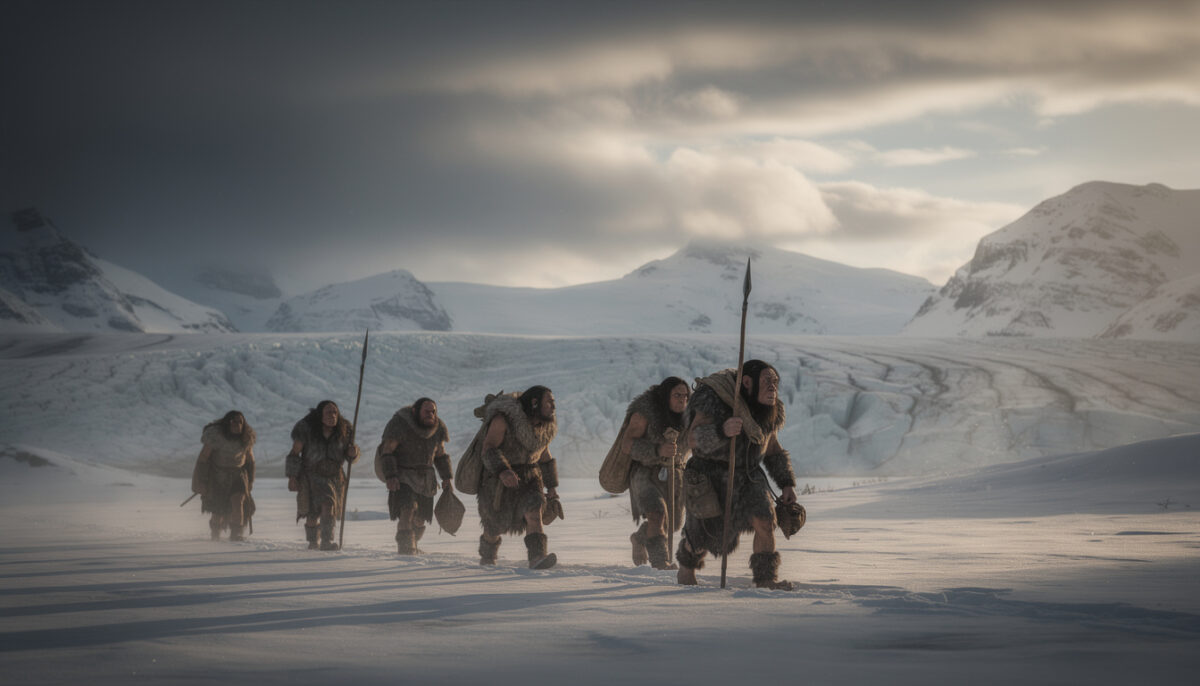
Instead of a slow fading, the latest Genetics research shows a story of repeated population hits and comebacks. Neanderthals endured long periods on a demographic knife’s edge, before a final collapse about 40,000 years ago.
By analysing mitochondrial genomes from 10 new individuals and comparing them with dozens already sequenced, researchers tracked one dominant maternal lineage that took over Europe late in Neanderthal evolution. This genetic sweep reveals how vulnerable their populations had become.
Why Closing Your Eyes to Hear Better Could Backfire
Groundbreaking Advance in Revival Science: Mammal Brain Successfully Preserved Post-Death
How paleogenomics pieces together their story
Teams led from Tübingen and other European labs sequenced Ancient DNA from bones and teeth found in Belgium, France, Germany and Serbia. They focused on mitochondrial DNA, passed from mothers to children, a powerful tracer for population dynamics.
When they compared these genomes to earlier sequences, almost all Neanderthals living between 60,000 and 40,000 years ago fell into one single maternal lineage. Older lineages, common before 70,000 years ago, had virtually disappeared, signalling a sweeping demographic turnover.
Climate shocks and the south-west France refuge
The genetic turnover lines up with a severe climatic cooling that began roughly 75,000 years ago. Glacial conditions pushed Neanderthals out of huge parts of Europe, forcing them into a geographic stronghold in what is now south-west France.
Archaeology backs this up. Site density in that region spikes between 80,000 and 70,000 years ago, while caves elsewhere fall silent. This contraction meant fewer groups, living closer together, sharing a shrinking gene pool under harsh environmental pressure.
From refuge to expansion, but with lost diversity
When the climate warmed again after about 60,000 years ago, that south-western lineage spread outward. Traces appear as far east as the Caucasus, suggesting Neanderthals recolonised old territories from their French refuge.
Yet their numbers did not bounce back strongly. Even widely separated groups carried strikingly similar mitochondrial DNA. This low genetic variation meant that, although they walked farther again, they did so as a biologically impoverished population.
Population crashes and the road to extinction
The new work fits with a broader picture emerging from paleogenomics. Evidence from earlier periods already pointed to a severe bottleneck around 100,000 to 110,000 years ago, with another contraction later on, each one stripping away genetic lineages.
Studies like recent reconstructions of population crashes show repeated demographic blows. Every crash reduced variation further, leaving Neanderthals with fewer tools to adapt to shifting environments and incoming competitors.
Why small, scattered groups were so fragile
Behavioural reconstructions suggest Neanderthals usually lived in very small bands, roughly three to sixty individuals. Those tight-knit groups had advantages for cooperation, yet genetically they were vulnerable.
In such tiny communities, harmful mutations spread more easily, and random events — an epidemic, an accident, a poor hunting season — could wipe out whole lineages. Over thousands of years, that pattern ate away at their overall diversity and resilience.
Odd survivors and the “Thorin” exception
One individual, nicknamed Thorin from Grotte Mandrin in France, breaks the neat pattern. Dated to around 50,000 years ago, Thorin’s mitochondrial DNA belongs to an older lineage thought to have vanished in the earlier contraction.
This outlier shows that some ancient lines persisted locally, even while the newer south-west French lineage spread across most of Eurasia. Neanderthal history was not a single uniform wave, but a mosaic of overlapping, sometimes surviving, populations. Exploring how genetics and environment each shape half of our lifespan further illuminates these complexities in population genetics.
How archaeology and genetics now talk to each other
For specialists in Archaeology, this genetic map is a powerful partner for stone tools and cave layers. When a site shows a sudden shift in artefact style, researchers can now ask whether that reflects cultural change or incoming people with different DNA.
Similar crossovers have already reshaped views on other ancient humans, such as wooden tool makers or early seafarers highlighted in reports on very early woodworking and unexpected seafaring abilities. Insights are also deepened by research like breathtaking maps that unveil DNA’s architecture before life begins.
What Neanderthal genetics reveal about human ancestry
Modern Europeans and Asians still carry small percentages of Neanderthal DNA, proof of interbreeding after our species left Africa. Recent work, including analyses discussed in outlets such as Neanderthal ancestry through time: Insights from genomes, suggests part of their story is not pure Extinction but absorption.
The bottlenecks revealed by these mitochondrial lineages help explain why that surviving imprint is relatively limited. By the time Homo sapiens arrived in large numbers, Neanderthals were already genetically thinned, their Human ancestry legacy constrained by earlier demographic blows.
Key takeaways for understanding population dynamics
If you had to summarise what this wave of studies adds to our picture of Neanderthal Decline, three points stand out:
- Repeated climate-linked crashes reshaped their genetic landscape long before the final disappearance.
- Small, isolated bands magnified the impact of chance events and harmful variants.
- Low genetic diversity left them less flexible when modern humans, new diseases and rapid environmental change arrived.
Together, these insights turn Neanderthals from a simple extinction tale into a complex case study in long-term demographic stress.
How did genetics change the story of Neanderthal decline?
Ancient DNA allowed researchers to track maternal lineages through time. They discovered that most Late Neanderthals shared a single mitochondrial lineage that arose in south-west France after a major climatic cooling. This genetic dominance revealed severe earlier population crashes and a contraction into one main refuge, reshaping our understanding of how their decline unfolded.
Why does low genetic diversity matter for Neanderthals?
Low diversity meant Neanderthal groups had fewer genetic options to adapt to rapid climate swings, new pathogens, or competition with Homo sapiens. Small, isolated bands made it easier for harmful mutations to persist and for random disasters to erase entire lineages, gradually undermining their long-term survival chances.
What role did climate play in Neanderthal extinction?
Major glaciations around 75,000 years ago forced Neanderthals to retreat into south-western Europe, especially today’s south-west France. This contraction reduced their numbers and genetic variation. Even when the climate later improved and they expanded again, that lost diversity was not recovered, leaving populations more fragile in the face of later pressures.
Did Neanderthals completely vanish from our ancestry?
No. Genetic studies show that many people outside Africa carry around one to two per cent Neanderthal DNA, evidence of interbreeding. While Neanderthals disappeared as a distinct group, parts of their genome persist in modern humans, influencing traits such as immune responses and even some metabolic functions.
How do archaeology and paleogenomics work together on this topic?
Archaeology provides the sites, artefacts and dates, while paleogenomics supplies the genetic relationships between individuals and populations. When tool styles or site locations shift, DNA can reveal whether that reflects cultural change within the same group or the arrival of new people. This combined approach gives a much sharper view of Neanderthal population dynamics and movements across Eurasia.
FAQ
What have recent studies revealed about Neanderthal extinction genetics?
Recent studies on Neanderthal extinction genetics show their populations experienced repeated crashes and recoveries before finally disappearing about 40,000 years ago. By analysing ancient DNA, scientists are uncovering the complex demographic history behind their decline.
How does genetics help us understand the extinction of Neanderthals?
Genetic research, especially into Neanderthal extinction genetics, allows scientists to trace population changes over time. Sequencing ancient mitochondrial DNA highlights how vulnerable and fragmented Neanderthal groups became before extinction.
What role did population size play in Neanderthal extinction genetics?
How ‘Forever Chemicals’ Might Be Undermining Children’s Bone Health Permanently
Scientists Engineer Probiotic Bacteria into Precision Tumor-Targeting Cancer Fighters
Neanderthal extinction genetics research suggests that dramatic reductions in population size left them genetically vulnerable. These population bottlenecks may have made Neanderthals less able to adapt, contributing to their eventual disappearance.
Does modern human DNA contain Neanderthal extinction genetics clues?
Yes, traces of Neanderthal DNA found in modern humans provide valuable Neanderthal extinction genetics clues. These genetic remnants help researchers reconstruct Neanderthal history and their interactions with early Homo sapiens.