Show summary Hide summary
- Uber’s strategic vision: robotaxis as an urban growth engine
- How Uber’s autonomous vehicle development actually works on the street
- Real-world pilots: what changes for city residents
- Scaling up to 100,000 self-driving cars and beyond
- What this long game means for people in cities
- Will autonomous Uber rides be cheaper than human-driven trips?
- How safe are Uber’s self-driving cars compared to human drivers?
- Will Uber’s autonomous vehicles replace driver jobs?
- Which cities are most likely to see Uber robotaxis first?
- How do autonomous vehicles affect public transport?
Stuck in traffic, watching the meter tick up on a short trip across town, many riders wonder why a 15-minute journey feels like a daily marathon. Uber’s latest Strategic Vision for Autonomous Vehicles aims to turn that frustration into predictable, cleaner and cheaper city travel.
Behind the investor talk sits a simple promise for city dwellers: fewer unknowns when you tap “Request ride”, and more options for how you move, whether you live in downtown San Francisco or a quieter street in Atlanta.
Uber’s strategic vision: robotaxis as an urban growth engine
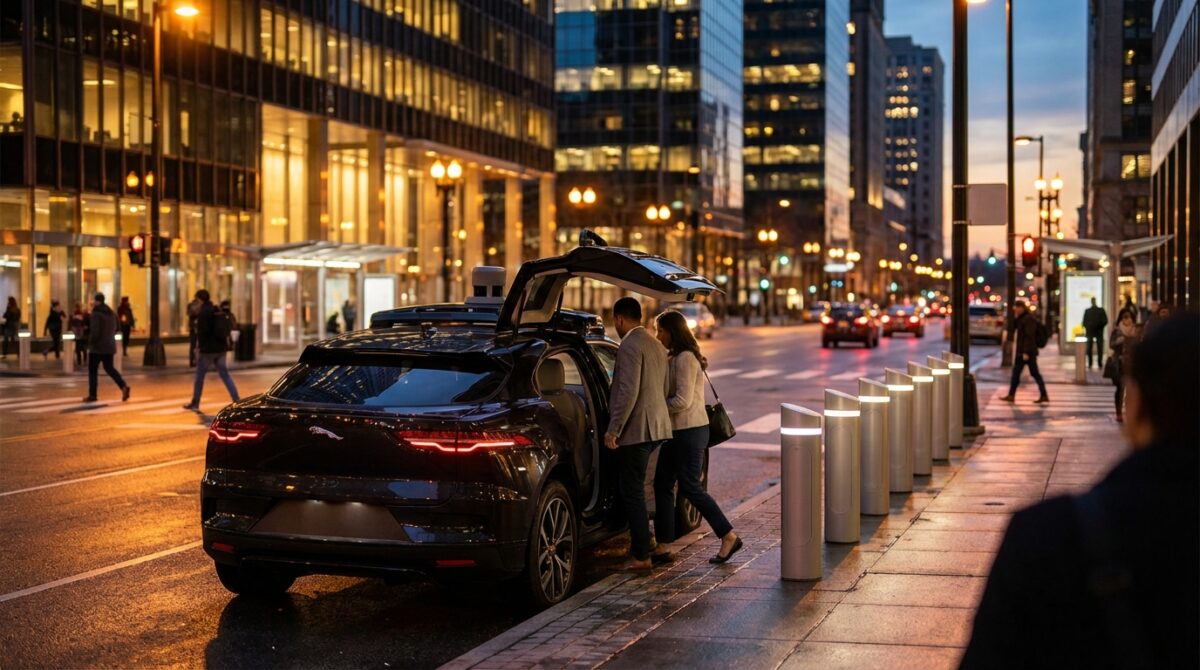
The Uber CEO, Dara Khosrowshahi, has laid out a clear target: robotaxis in around 15 cities by the end of this year, and the largest share of global autonomous trips by 2029. In places where self-driving pilots already operate, such as San Francisco, Atlanta and Austin, Uber reports that Autonomous Vehicles act as a growth accelerant, generating more rides rather than simply replacing existing ones.
Satellites Reveal Hidden Flaws in Bridges Across America and Beyond
New Study Reveals AI Enthusiasm Amidst Poor Preparation
For residents, that means denser coverage at busy times and a better shot at finding a car on a rainy Friday night. While self-driving still accounts for roughly 0.1% of trips on and off the platform, Khosrowshahi now describes AVs as a “multitrillion-dollar opportunity” for Uber, a long-term bet that reshapes how streets are used, how parking is planned and how public transport connects to ride-hailing.
From building cars to orchestrating self-driving fleets
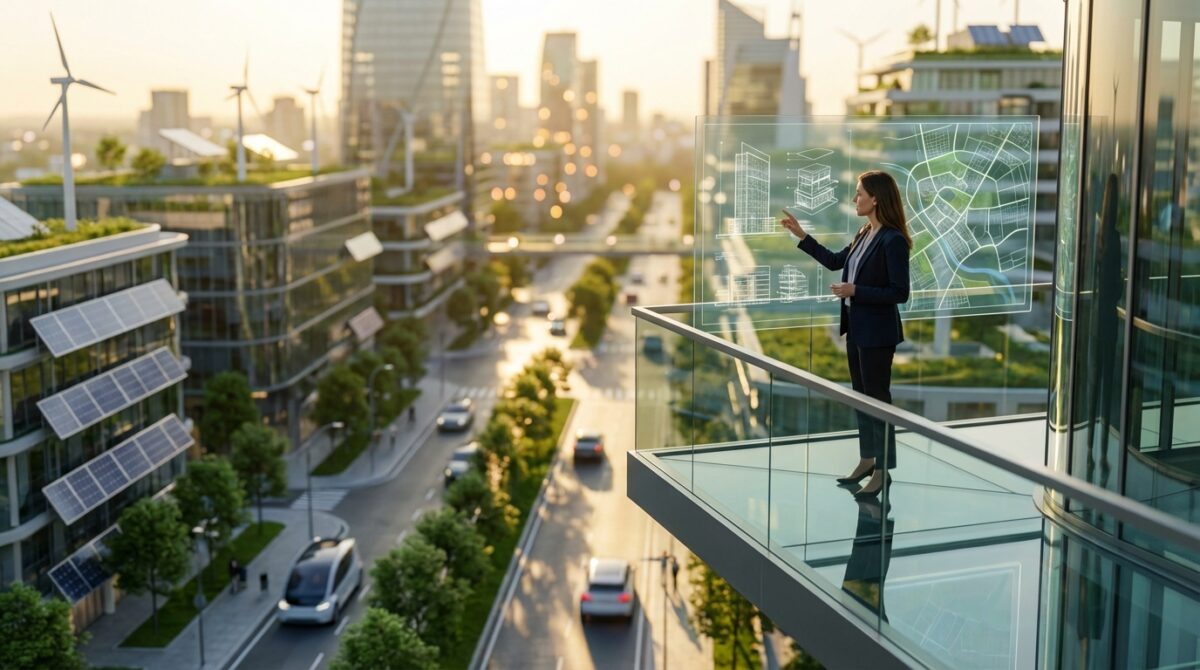
Uber no longer designs its own Self-Driving Cars. After selling its in-house ATG unit in 2020, the company pivoted toward a network role, described by analysts as an “autonomous orchestrator”. Recent deals highlight this shift: at least 20,000 robotaxis are planned through a partnership with EV maker Lucid and AV specialist Nuro, while Stellantis will supply up to 5,000 Level 4 vehicles powered by NVIDIA DRIVE hardware.
This partnership-first model allows Uber to stitch together different Transportation Technology providers—Waymo, May Mobility, Momenta, Pony.ai, WeRide—into one app. Riders do not choose the algorithm or sensor suite. They just see a car arriving faster, often at a lower off-peak price. A recent corporate update on deploying one of the largest AV networks with NVIDIA AI shows how deeply this orchestration role is now embedded in Uber’s roadmap.
How Uber’s autonomous vehicle development actually works on the street
Behind every smooth AV ride sits a layered system. Vehicles rely on Artificial Intelligence to read traffic lights, detect cyclists and interpret unpredictable human behaviour. NVIDIA-based computers process sensor data in real time, while cloud systems dispatch vehicles and adjust pricing. Uber’s software then decides which mix of human-driven and autonomous cars to send into a neighbourhood by time of day and expected demand.
During a Friday evening rush in Austin, for example, the app might prioritise AVs on well-mapped, wide avenues and keep human drivers focused on airport runs or complex suburban pickups. That blend is not just technical optimisation; it shapes who gets which type of trip, at what price point and with what level of service reliability.
Augmenting drivers instead of wiping them out
Khosrowshahi spends time dismantling a powerful myth: that AVs will sweep away human drivers overnight. On recent calls he pointed to December’s San Francisco blackout, when many Waymo vehicles stopped safely but also stopped moving, creating gaps in service. He also highlighted the absence of robotaxis in lower-income zones like parts of Oakland, where streets are more complex and data is thinner.
His message is blunt: this technology will augment human drivers rather than erase them for years to come. Drivers could see fewer late-night dangerous routes as AVs take those, while still handling school runs, luggage-heavy families or underserved districts that algorithms struggle to interpret. Margins on autonomous rides, as detailed in analyses such as reports on AV ride margins needing years to grow, illustrate how far the economics still need to evolve before full replacement enters the frame.
Real-world pilots: what changes for city residents
On Market Street in San Francisco, a fictional office worker, Lena, already sees the shift. At 8 p.m., her Uber app sometimes offers a slightly cheaper “autonomous” option for a standard ride home. In test zones, wait times can shrink from 10 minutes to around 4, thanks to cars circulating continuously rather than competing for downtown parking.
Atlanta residents in early-service corridors report quieter vehicles and more predictable journey times. A key benefit lies in consistency: robotaxis do not speed to chase bonuses or argue over routes. For people working night shifts or depending on late buses that rarely appear, a predictable AV arrival can mean a safer, less stressful end to the day.
Safety, equity and the environmental angle
The Uber CEO insists that machines must meet higher safety standards than humans, echoing positions covered in outlets such as recent safety-focused interviews on self-driving cars. AV-only fleets will only scale when city authorities are convinced by crash data, emergency response behaviour and transparent reporting. Current deployments combine onboard safety operators, remote monitoring and strict weather or speed rules.
Most AVs in Uber’s pipeline are electric, tying the vision to cleaner air goals. This places the strategy alongside other Future Mobility and regulatory debates, for example those discussed in analyses of federal autonomous vehicle frameworks. Yet equity remains a concern: if AVs stick to premium downtown districts, they risk becoming another layer of mobility privilege rather than a citywide service.
Scaling up to 100,000 self-driving cars and beyond
Scaling from pilots in 15 cities to a truly global mesh of robotaxis requires money, patience and political cooperation. Analysts track Uber’s target of around 100,000 self-driving cars, highlighted in coverage such as reports on plans for a 100,000-vehicle driverless fleet. Achieving that level means years of capital investment by vehicle makers, AV software firms and charging providers, not just Uber’s own spending.
Timelines stay measured. Khosrowshahi talks about a turning point for AVs already passed, yet warns that profitability on autonomous rides could take several more years. In financial notes like analyses of AVs as a multitrillion-dollar opportunity, Uber’s path looks like a slow-burn infrastructure play rather than an overnight disruption.
What this long game means for people in cities
For residents, the scale-up translates into a gradual set of changes rather than a sci‑fi shock. Everyday impacts could include:
- More consistent availability in dense corridors, reducing cancelled trips and long waits.
- New pricing patterns, with cheaper off-peak autonomous rides but premiums in complex neighbourhoods that still rely on human expertise.
- Street redesigns, as planners reallocate parking space to pick-up zones, bike lanes or greenery.
- Job transitions for drivers, with some moving to fleet operations, maintenance or customer support roles tied to AV services.
- Closer integration with buses and metros, where AVs handle the “first and last kilometre” in suburbs or industrial zones.
As cities negotiate new rules on data sharing, curb space and safety audits, everyday riders and drivers become the real test of this Innovation-driven vision. If tapping a ride means cleaner air, shorter waits and safer nights out—whether a human or an algorithm sits behind the wheel—then Uber’s bet on Vehicle Development at scale will be judged a success at the neighbourhood level, one trip at a time.
Will autonomous Uber rides be cheaper than human-driven trips?
In the early stages, some autonomous rides may be priced slightly lower to encourage adoption, particularly on well-mapped routes and off-peak periods. However, overall prices will depend on local regulations, operating costs, and how quickly large fleets scale. In complex areas that still rely heavily on human drivers, prices are unlikely to drop quickly.
How safe are Uber’s self-driving cars compared to human drivers?
Uber and its partners design autonomous systems to meet stricter safety thresholds than average human drivers. Vehicles use sensors and AI to monitor surroundings continuously and follow rules consistently. That said, the technology is still developing, so most deployments include safety operators, strict conditions on where AVs can drive, and close cooperation with city regulators.
Will Uber’s autonomous vehicles replace driver jobs?
For the next several years, AVs are expected to complement rather than fully replace drivers. Robotaxis will likely focus on repeatable, predictable routes, while human drivers continue to handle complex environments, special requests, and underserved areas. Over time, some driver roles may shift toward fleet operations, maintenance, or customer service tied to autonomous networks.
Which cities are most likely to see Uber robotaxis first?
How One City Boosted Bus Speeds by 20% with AI
Kansas City Missouri Leads with New Data Center Ordinance
Early deployments typically start in cities with clear AV regulations, strong digital maps, and cooperative local authorities. Current and announced pilots focus on places like San Francisco, Atlanta and Austin, along with selected international hubs. Expansion to new cities depends on road layouts, weather conditions, and the willingness of local governments to authorise testing and operations.
How do autonomous vehicles affect public transport?
If managed well, AVs can strengthen public transport by handling first- and last‑kilometre trips to stations, particularly at off-peak times. Poorly coordinated deployment, however, could pull riders away from buses and metros. Many cities now require data sharing and pilot programmes to understand how AVs interact with existing transit before allowing large-scale rollouts.