
Show summary Hide summary
- NYC’s $1 billion automated traffic safety plan
- From pilot project to citywide traffic safety enforcement expansion
- Who pays, who benefits, and how equity fits in
- Challenges, controversies and the road ahead for NYC drivers
- What this means for people moving through the city
- How many intersections will NYC’s automated traffic safety program cover?
- Will the $1 billion investment raise costs for everyday drivers?
- How does NYC address privacy concerns with automated cameras?
- Are automated traffic cameras proven to improve safety?
- What role do community groups play in shaping the program?
Every New Yorker knows that feeling: standing on a curb in Queens or Brooklyn, watching cars blast through a red light, and wondering whether the next honk will be a crash. Now, a new $1 billion pledge aims to change how NYC polices those dangerous seconds at the intersection.
The city is betting that an expanded, fully automated traffic safety enforcement program can slow drivers down, save lives and still keep daily commutes moving. Behind the headlines about a billion-dollar investment sits a simple promise for residents: fewer close calls on the walk to school, to work, or to the subway.
NYC’s $1 billion automated traffic safety plan
New York City has finalized a nearly $998 million, five-year contract with Verra Mobility to expand its network of red-light, speed and bus-lane cameras across all five boroughs. This builds on earlier commitments of more than $900 million for safer streets announced as traffic deaths rose in recent years.
Satellites Reveal Hidden Flaws in Bridges Across America and Beyond
New Study Reveals AI Enthusiasm Amidst Poor Preparation
The goal is ambitious: by the end of the year, the city plans to have 600 intersections equipped with red-light cameras, adding about 50 new intersections each week during the rollout phase. For a city of roughly 8.5 million people, that means a very different driving culture on everyday streets, from Staten Island arterials to packed Manhattan avenues.
How the expanded automated enforcement program works
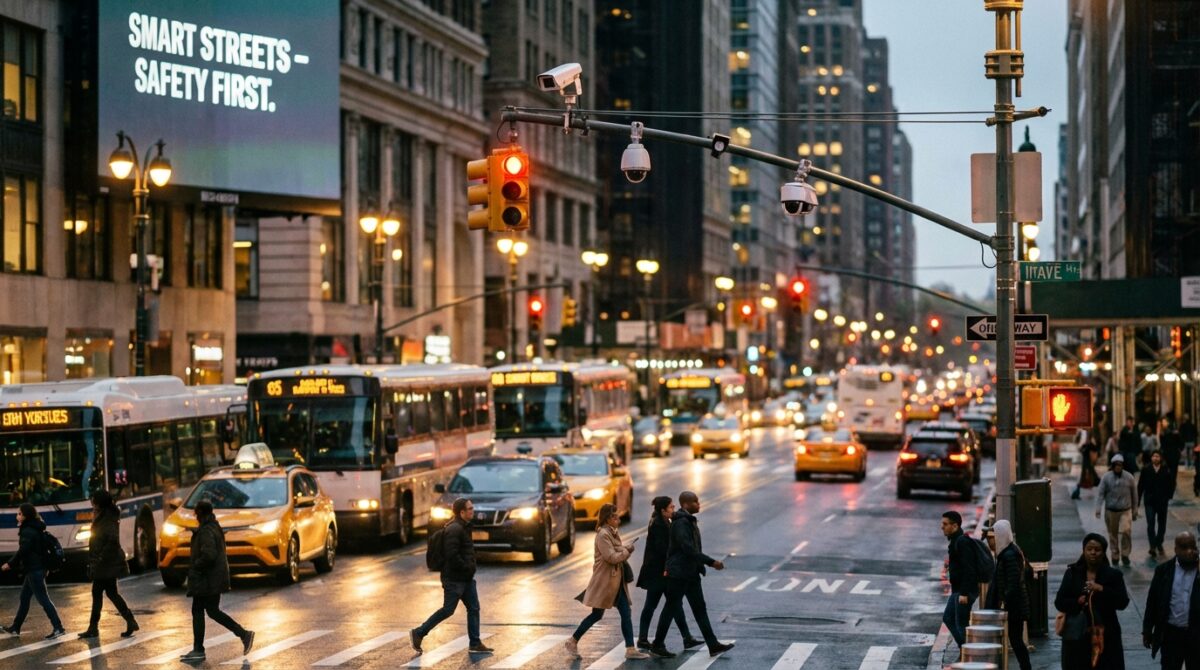
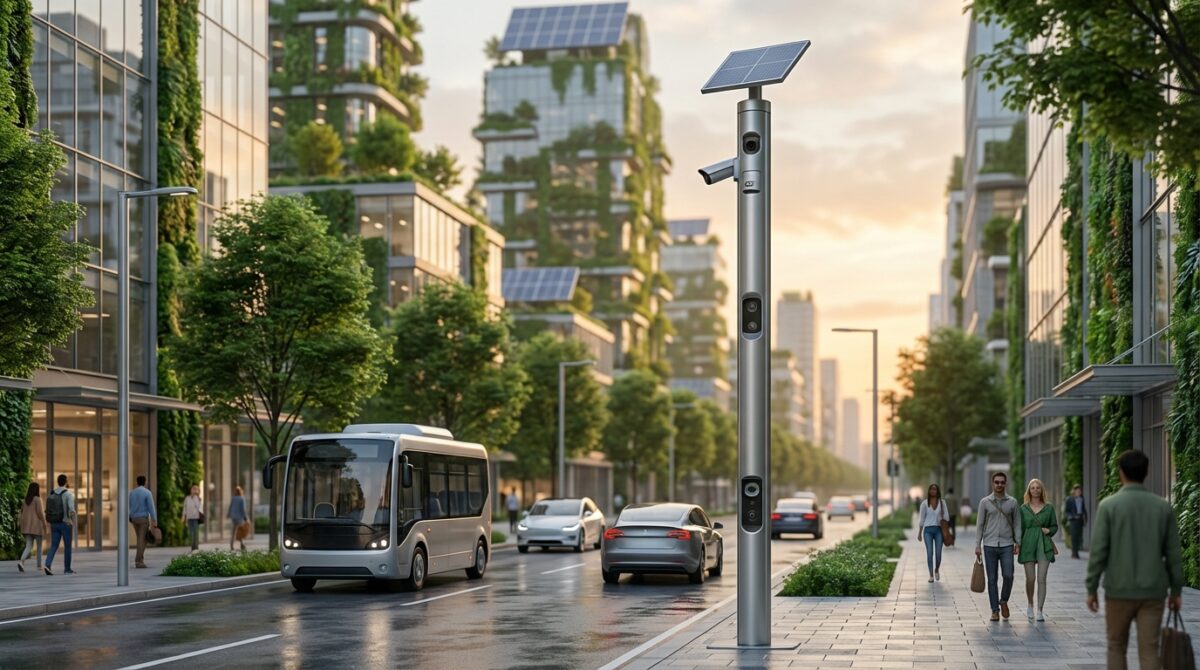
The expanded automated enforcement program centers on several types of cameras working together. At intersections, red-light cameras capture vehicles that enter after the signal turns red. On key corridors, speed cameras measure how fast drivers are going, especially near schools and high-injury streets. Bus lanes gain automatic monitoring, with cameras identifying vehicles blocking transit routes.
The same contract also covers equipment to detect overweight trucks on the Brooklyn-Queens Expressway, where heavy vehicles threaten both safety and long-term infrastructure. Verra Mobility is responsible for design, installation, testing, and maintenance under a turnkey model, outlined in detail in the city’s request for proposals for the automated system.
From pilot project to citywide traffic safety enforcement expansion
New York’s red-light camera effort is not new. Over roughly 30 years of operation, the program has recorded a 73% drop in red-light violations at monitored intersections. T-bone crashes fell by around 65%, while rear-end collisions declined nearly 49% where cameras are in place, according to NYC Department of Transportation data.
Those numbers help explain why the city feels confident about this new expansion. When drivers get a ticket after speeding past a school or racing through a red light, many change their habits. Fewer risky maneuvers translate into fewer crashes and fewer life-altering injuries for people walking, cycling or riding the bus.
Real-world results and human stories behind the numbers
Behind each statistic sits someone like a Lower Manhattan pedestrian struck in 2017, who later joined Families for Safe Streets. Survivors of collisions often describe long-term pain and anxiety every time they approach a crosswalk. For them, automated enforcement is less about punishment and more about making sure no one else has to live with the same trauma.
New York is not alone. Cities like San Francisco and Philadelphia report measurably lower speeding and collision rates after rolling out camera networks. A national review, such as The State of Automated Traffic Enforcement Report 2025, highlights similar safety gains in more than 300 communities that have installed red-light or speed cameras.
Who pays, who benefits, and how equity fits in
NYC’s system is designed to be largely self-funded. Since the start of camera enforcement, the city has collected hundreds of millions of dollars in fines, roughly $364 million by mid‑2023. That revenue helps pay for installation, maintenance and public outreach, while the long-term savings come from avoided crashes, hospital stays and property damage.
Still, revenue creates tension. Critics question whether cameras prioritize safety or city budgets, echoing concerns raised in analyses like the debate on safety versus revenue. For low-income drivers, repeated fines can quickly spiral into unmanageable debt. Advocacy groups such as Transportation Alternatives argue that camera enforcement must be paired with safe street design and options for reduced or income-based penalties.
Key elements of NYC’s $1 billion safety investment
To understand what this means on the ground, it helps to break down the city’s approach:
- Scale: Around 600 red-light camera intersections, hundreds of speed cameras and bus-lane enforcement points across all boroughs.
- Timeline: Five-year contract, with the bulk of camera installation front-loaded in the first year.
- Stakeholders: NYC DOT, the state government that authorizes cameras, private vendor Verra Mobility, advocacy groups and millions of residents.
- Equity commitments: At least 33% inclusion of minority- and women-owned businesses in the contract.
- Public education: Campaigns to inform drivers and communities about how the system works and why it exists.
This structure reflects a broader state-level push, aligned with proposals like those outlined in Governor Hochul’s transit-focused plans, which include expanded camera use to keep intersections clear and buses moving.
Challenges, controversies and the road ahead for NYC drivers
Not every resident welcomes more cameras. Some see them as “gotcha” tools, or worry about miscalibrated systems and unfair tickets. Others raise privacy concerns about constant recording in public space. Earlier reports on contracts approaching nearly $1 billion with camera vendors prompted scrutiny from watchdogs over billing practices and oversight.
At the federal level, the U.S. Department of Transportation has scaled back grants for traffic camera projects, now limiting funding mainly to school and work zones. That puts more responsibility on cities like New York to fund their own automated traffic safety enforcement programs and prove they deliver real benefits for residents.
What this means for people moving through the city
For someone like Malik, a delivery worker weaving through Manhattan and Brooklyn each day, this expansion could mean fewer cars swerving into bike lanes or rushing through yellows. For parents walking their kids to school in the Bronx, it might show up as drivers easing off the accelerator near the crosswalk.
If the billion‑dollar pledge succeeds, city life could feel a little less hostile at the curb: shorter waits for buses, calmer left turns at big intersections, and fewer sirens after a crash. The challenge now is to make sure the technology serves people first, not the other way around.
How many intersections will NYC’s automated traffic safety program cover?
The expanded program aims to equip roughly 600 intersections across all five boroughs with red-light cameras, alongside a large network of speed and bus-lane cameras. That scale is designed to reach both major arterials and neighborhood streets where serious crashes are common.
Will the $1 billion investment raise costs for everyday drivers?
Most funding comes from fines generated by violations, so there is no direct new tax tied to the program. Drivers who respect red lights, speed limits and bus lanes will not receive tickets. The goal is to change behavior, which over time should reduce both fines and crash-related costs for everyone.
How does NYC address privacy concerns with automated cameras?
Cameras focus on capturing vehicle license plates at the moment of a violation, not tracking individuals. Images are stored for limited periods and used strictly for enforcement and adjudication. Oversight rules and audits are designed to prevent broader surveillance uses.
Are automated traffic cameras proven to improve safety?
How One City Boosted Bus Speeds by 20% with AI
Kansas City Missouri Leads with New Data Center Ordinance
Decades of data from NYC and other U.S. cities show lower red-light running, reduced speeding and fewer serious crashes where cameras operate. New York has seen drops of up to 65% in T-bone collisions at camera-equipped intersections, suggesting a strong link between enforcement and safer streets.
What role do community groups play in shaping the program?
Advocacy groups such as Families for Safe Streets and Transportation Alternatives push for camera locations in high-injury areas, fair fine structures and street design upgrades. Their input helps ensure the program responds to lived experience, not just traffic models and revenue forecasts.