

Show summary Hide summary
- Colorado’s housing crisis meets a new policy playbook
- How the HOME Act would reshape urban development
- Real-world stakeholders and the lawsuit testing state power
- Scaling Colorado’s housing legislation beyond the Front Range
- Key changes city dwellers may notice first
- How quickly could Colorado’s new housing laws create more homes?
- Will these reforms lower rents for existing tenants?
- What types of land can be used for new affordable housing?
- How does transit investment support housing solutions?
- Why are some Colorado cities challenging the state in court?
On a winter night in Denver, a nurse finishing a late shift scrolls through rentals she still cannot afford. She is part of the 106,000‑home housing shortage that Colorado’s own analysis identified, a gap now driving some of the boldest housing legislation in the United States.
New Colorado legislation is attempting something simple yet politically explosive: unlock land, relax old rules, and force the housing market to work for regular residents again. Behind each bill are months of demographic studies, lawsuits from cities, and families wondering if they can stay in the neighborhoods they love.
Colorado’s housing crisis meets a new policy playbook
Colorado has become one of the most expensive states to live in, with the housing crisis now touching teachers in Fort Collins, cooks in Pueblo and retirees along the Front Range. According to an analysis released by the governor and the State Demography Office, the state still needs tens of thousands of homes to stabilize prices. That study, detailed by the Department of Local Affairs, shows years of underbuilding and zoning rules that shut out affordable housing options.
Exploring the Impact of AI on Urban Life in 2026: How Cities Are Embracing Intelligent Technologies
LA Plans High-Tech, Computer-Controlled Subway Line Through Sepulveda Corridor
In response, Governor Jared Polis and legislative leaders have advanced a sequence of housing solutions over the last few years, from ending minimum parking mandates for apartment buildings to promoting transit-oriented development. Coverage in outlets such as Axios Denver has highlighted how state leaders now speak openly about a 106,000-unit gap. The latest package goes further, directly targeting underused public and nonprofit land while tying new homes to better transit.
Bold legislation to unlock land and speed construction
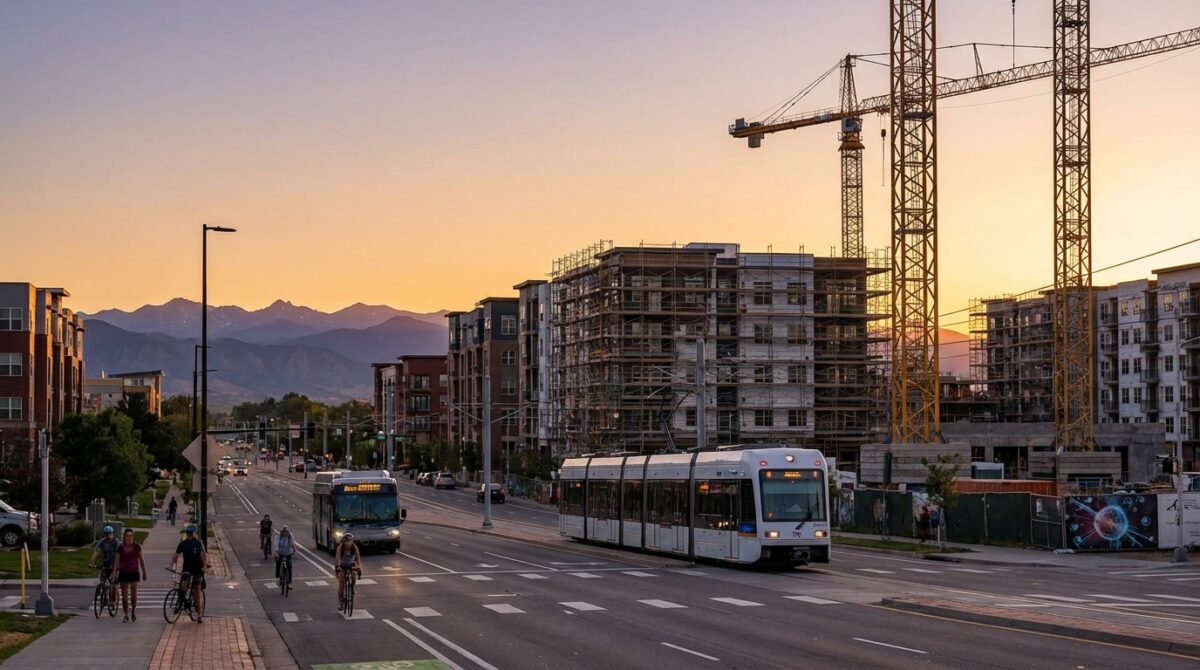
The centerpiece, the HOME Act (HB26‑1001), would allow new homes on land owned by school districts, state colleges, transit agencies and nonprofits, turning parking lots and surplus parcels into apartments instead of leaving them empty. Local governments would be barred from blocking building heights of up to three stories on these sites, lowering a barrier that has stalled projects in many suburbs. Supporters describe this as a “big swing” at the state’s housing shortage because it targets land already served by roads, sewers and, often, transit.
A second proposal, often described as the Transit Investment Area Act, focuses on corridors where buses and trains already carry thousands of riders. It would use tax-increment financing to steer a share of future state sales tax growth into new stations, sidewalks, bike lanes and basic infrastructure that makes higher-density living work. The bill also proposes an Affordable Housing in Transit Investment Zones Tax Credit, aimed at low- and middle-income residents who want to live near reliable transportation rather than be pushed to distant exurbs.
How the HOME Act would reshape urban development
To understand the impact at street level, consider a fictional but typical site: an aging park‑and‑ride lot outside a light‑rail stop in Aurora. Under past zoning, that land might have stayed a sea of asphalt. Under the HOME Act, a transit district could partner with a nonprofit developer, lease the parcel, and build three-story mixed-income apartments. A property tax exemption proposed in the third bill, HB26‑1066, would allow every dollar of nonprofit investment to go into bricks, not tax bills on vacant land.
This approach aligns with recent coverage of Colorado’s pro-housing turn in sources like Next City and Colorado Newsline, which describe a deliberate shift toward using market forces while setting clear public goals. By removing parking minimums and enabling homes on institutional land near stores and buses, the state tries to shorten commutes, reduce emissions and keep service workers closer to jobs. For residents, that can mean trading a stressful, hour‑long drive for a 20‑minute train ride.
Financial tools behind Colorado’s housing solutions
Behind the human stories lies a dense web of policy reform tools. Tax‑increment financing assumes that new homes and businesses will increase sales tax revenues along transit corridors. A defined portion of that future growth would then be reinvested locally, paying for safer crossings, upgraded utilities and station improvements without raising rates today. The transit housing tax credit, targeted at low- and middle-income households, seeks to keep new districts from becoming purely upscale enclaves.
At the same time, HB26‑1066 would extend property tax exemptions beyond traditional nonprofit uses to include new affordable rental housing. As state Senator Matt Ball has argued, when land is being assembled for below-market homes, every dollar lost to taxes delays a project or shrinks its size. By lifting this burden, the bill attempts to stretch limited housing funds further, a concern echoed in national analyses such as recent real estate commentary on Colorado’s evolving strategy.
Real-world stakeholders and the lawsuit testing state power
The new government action is not happening in a vacuum. School districts, transit agencies, universities and nonprofits all stand to gain new revenue streams by leasing their land for housing, often with affordability requirements attached. For families, that could translate into below-market apartments close to child care, campuses or frequent bus routes. Developers, especially mission-driven ones, get access to sites that would otherwise be financially out of reach.
Yet several cities have sued Colorado, arguing that tying compliance with pro-housing rules to certain state grants amounts to overreach. As reported in outlets such as Yahoo News coverage of the “big swing” bills and earlier discussions of transit-oriented zoning reforms, local leaders worry about losing control over height limits, parking rules and neighborhood character. A Denver District Court virtual status conference is expected to determine how quickly the case moves, and the outcome could shape how far the state can push future land-use reforms.
What this legislative push means for city residents
For someone like that Denver nurse, the bills are not abstract. If they work, more apartments near hospitals, bus lines and commercial districts should begin to appear within a few years. Some may be built on land once reserved for parking or future school expansions. Others may be layered above ground‑floor shops along transit routes, combining daily needs and mobility in one walkable stretch.
Reporting from sources including Colorado Politics and the governor’s own HOME Act announcements stresses that these policies aim to slow rent growth, not necessarily cut prices overnight. Residents should expect gradual change: more “missing middle” buildings, fewer empty lots, and a closer link between where homes are built and where buses and trains actually run. The everyday effect could be shorter commutes, a more diverse mix of neighbors and slightly less pressure when a lease comes up for renewal.
Scaling Colorado’s housing legislation beyond the Front Range
While much attention focuses on Denver, Boulder and the Front Range, the housing shortage extends into resort towns and rural communities where tourism and limited land inflate costs. Turning school or nonprofit parcels into workforce housing could help nurses in Grand Junction or hospitality workers in mountain regions remain close to their jobs. Analyses from the State Demography Office, available through state reports, show that even smaller cities face shortages that threaten local economies.
Scaling these policies will require careful coordination. Transit investment zones make the most sense in corridors with high ridership potential, while property tax exemptions need guardrails to prevent speculative use. Yet if early projects succeed, other states watching Colorado’s approach, as discussed in national pieces like recent evaluations of its effectiveness, may adapt similar strategies. For residents across the West, that could mean a new era in which urban development is built around people’s daily lives instead of car storage and rigid zoning.
Key changes city dwellers may notice first
Over the next few years, if the bills become law and withstand legal challenges, you may notice tangible shifts in your neighborhood. Not all will be dramatic towers; many will be modestly scaled, three‑story homes tucked beside existing shops and schools. The following changes are likely to appear first in many communities:
- More mid-rise housing near transit, replacing or shrinking park‑and‑ride lots and vacant parcels.
- New nonprofit-led affordable complexes on land previously held for future institutional use.
- Fewer oversized parking lots as minimum parking rules relax for multifamily buildings.
- Incremental sidewalk and station upgrades funded by tax‑increment financing in transit corridors.
- More diverse residents living near jobs, as low- and middle-income households gain access to transit-rich districts.
Each of these shifts changes how a street feels: more lights on in the evening, more feet on the sidewalks, and more chances for people of different incomes to share the same block. For many Coloradans, that is what successful real estate and policy reform will look like in everyday life.
How quickly could Colorado’s new housing laws create more homes?
If the current Colorado legislation passes and survives legal challenges, planning and permitting changes could begin within one to two years. Actual buildings usually take longer. Residents may start seeing the first wave of new affordable housing and mixed-income projects on public or nonprofit land within three to five years, with larger transit-area changes unfolding over a decade.
Will these reforms lower rents for existing tenants?
The bills aim to increase supply and slow rent growth rather than instantly reduce current rents. By opening more sites for development and supporting housing near transit, the policies are designed to ease pressure over time. For many tenants, the most realistic benefit will be fewer steep rent hikes and more options when it is time to move.
What types of land can be used for new affordable housing?
Under the HOME Act proposal, land owned by nonprofits, school districts, state colleges and universities, and transit authorities could host new residential projects. These sites often sit near jobs, shops and bus or rail lines. The goal is to turn underused parking lots and surplus parcels into homes rather than leaving them idle.
How does transit investment support housing solutions?
The Transit Investment Area Act would reinvest a portion of future state sales tax growth from busy corridors into local infrastructure. Better sidewalks, stations and utilities make it practical to live without long car commutes. Combined with targeted tax credits, this approach encourages affordable housing in places where daily travel by bus or train is realistic.
Why are some Colorado cities challenging the state in court?
Study Reveals Early Challenges Faced by Newly Elected Mayors in Advancing Their Agendas
Remote Work and Severe Weather Drastically Transform Urban Traffic Dynamics
Several municipalities argue that tying compliance with state housing rules to certain grants undermines local control over zoning, parking and building heights. They have filed a lawsuit claiming state overreach. The case will clarify how far Colorado can go in pushing statewide housing solutions, and the decision could influence similar debates in other states.