Show summary Hide summary
- Speed-limiting tech: promise, pushback and new regulations
- California study: what 286 drivers really think
- Pilots, incentives and everyday impacts on city driving
- What this future means for people living in cities
- Scalability, equity and the road ahead
- What is intelligent speed assistance in simple terms?
- Do most drivers actually support speed-limiting systems?
- Will these technologies become mandatory in all new cars?
- How does ISA affect the driving experience day to day?
- What about data privacy with speed-limiting technology?
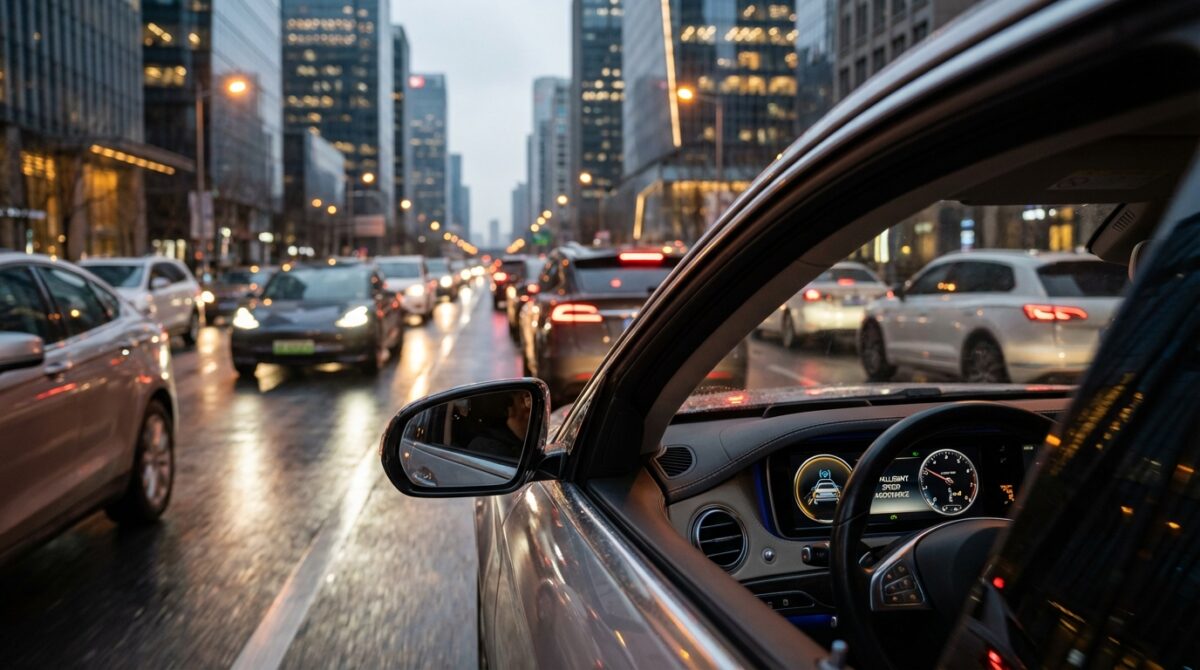
On a busy Los Angeles boulevard at rush hour, the difference between 35 mph and 50 mph can be the difference between a near miss and a fatal crash. In 2023 alone, nearly 12,000 people died in speeding-related collisions in the U.S., a number that forces an uncomfortable question: are drivers really ready to let speed-limiting technology step in?
As traffic deaths climb, cities face a stark choice between more enforcement on the ground and more automation inside vehicles. From roadside memorials to neighborhood petitions, pressure is rising to make road safety less about individual reflexes and more about built‑in protection. That is where intelligent speed systems move from niche feature to political flashpoint.
Speed-limiting tech: promise, pushback and new regulations
California shows how tense this debate has become. State lawmakers passed a bill in 2024 requiring all new cars sold there to include a passive intelligent speed-assistance system that warns when vehicle speed climbs more than 10 mph above the posted limit. Yet Governor Gavin Newsom vetoed it, citing concerns over how fast such a rule should move.
Satellites Reveal Hidden Flaws in Bridges Across America and Beyond
New Study Reveals AI Enthusiasm Amidst Poor Preparation
Across the Atlantic, the European Union already mandates some form of intelligent speed assistance (ISA) on new models, placing Europe several steps ahead of the U.S. regulatory curve. Analysts at The Transportation Alliance describe this shift as a new regulatory frontier, one where traditional speed limits meet software, satellites and data. The tension is clear: cities want safer streets, but drivers resist feeling policed by their own dashboards.
How intelligent speed assistance actually works in cars
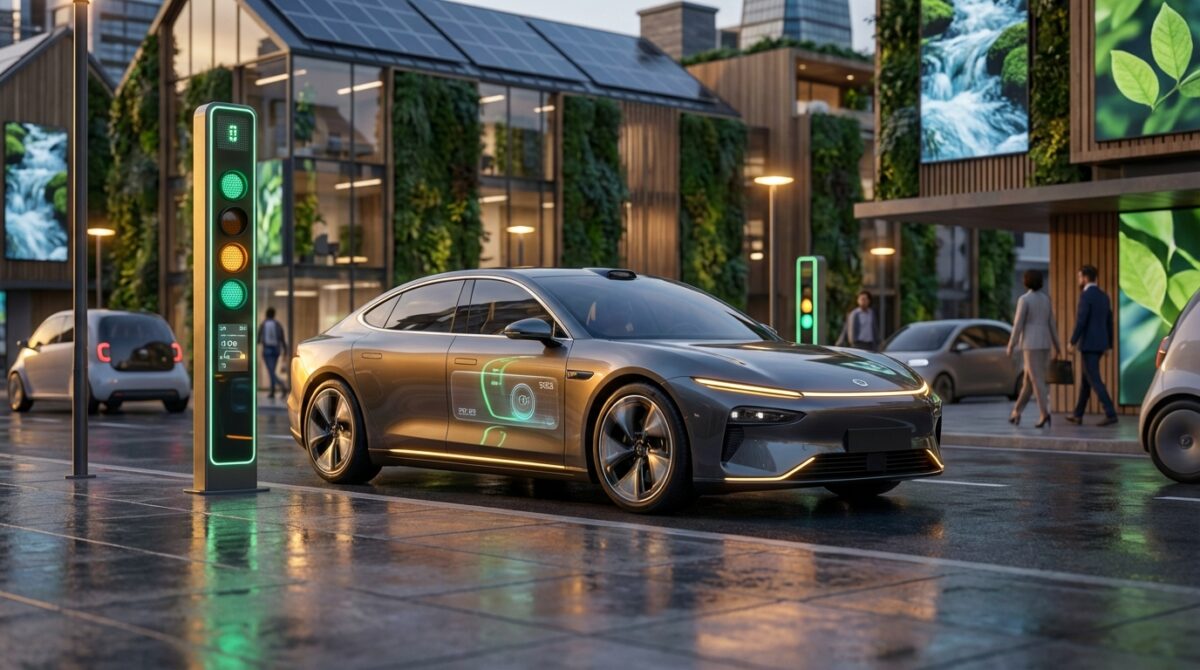
To many drivers, ISA sounds abstract until they sit behind the wheel. The system typically combines GPS location, a database of legal speed limits and sometimes cameras that read roadside signs. Together, these tools estimate the correct limit for the lane and direction of travel in real time.
Researchers usually group ISA into four levels, each changing driver behavior in a different way. Instead of a single “on/off” switch, speed control lies on a spectrum, from gentle coaching to active intervention.
The four levels of control, from advisory to automatic
At the lightest end are display-only systems, where the dashboard or head-up display simply shows the current speed limit. Next come advisory systems, which flash or chime when the car exceeds that limit, leaving every decision to the human behind the wheel.
More assertive half-open systems push back on the accelerator pedal, making it harder, though not impossible, to speed. The final category, sometimes called limiting systems, automatically cap engine power so the car stays at or below the legal limit unless temporarily overridden. As control shifts from the driver to the system, anxiety about autonomy rises just as crash risk tends to fall.
California study: what 286 drivers really think
To move the debate beyond theory, the Mineta Transportation Institute and San Diego State University surveyed 286 California drivers. The study, led by civil engineering researcher Nusheen Baradaran, explored how people respond to different levels of ISA control once the details are explained, not just the headlines.
One finding stood out: acceptance dropped each time driver control decreased. Display-only and advisory alerts attracted the most comfort; automatic speed-limiting attracted the most skepticism. Yet most respondents also believed ISA would actually reduce their own speeding, acknowledging a gap between intentions and real-world behavior.
Trust, privacy and the fear of constant monitoring
When people hesitated, the reasons went far beyond thrill-seeking. Many feared data tracking: who sees their speed history, how long it is stored, and whether insurers or governments might use it to raise premiums or issue automated fines. For drivers already wary of connected cars, ISA looked less like help and more like permanent surveillance.
These worries echo national surveys, including research summarized by Safety+Health Magazine, which shows support for speed-limiting devices but also lingering unease about data. The message to policymakers is clear: without strict privacy rules and transparent communication, even the smartest technology can feel like a hidden trap.
Pilots, incentives and everyday impacts on city driving
Baradaran’s team did not stop at attitudes; they mapped out a realistic path to adoption. Their recommendations start small: launch pilot programs in high-risk corridors, where crash patterns and community complaints already justify bold action. On a deadly suburban arterial or near a school zone, ISA becomes easier to explain as a shared safeguard rather than a blanket restriction.
Insurance incentives then enter the picture. Lower premiums for vehicles that keep vehicle speed within limits could nudge hesitant owners to voluntarily activate ISA, especially in families with teen drivers. For many households, a visible discount speaks louder than abstract safety statistics.
From advanced driver assistance to cultural change
The study also recommends integrating ISA with existing advanced driver-assistance systems such as lane keeping and automatic emergency braking. When speed control appears as part of a familiar safety package instead of a stand-alone punishment tool, resistance tends to drop.
Public education plays a similar role. Participants who received clear explanations about how ISA works proved more willing to embrace it. Framing matters: when described as a supportive co-pilot that catches human lapses rather than a digital cop, ISA feels closer to seat belts and airbags than to extra fines.
What this future means for people living in cities
Behind every graph lies a human story. Imagine Layla, a delivery driver in Oakland juggling app pings, narrow streets and unpredictable traffic. For her, a well-designed ISA system could silently prevent risky surges of speed between stops, shaving only seconds from each trip but dramatically lowering crash risk in dense neighborhoods.
In communities where children walk to school and older residents cross wide arterials, fewer high-speed impacts mean not just saved lives but also a different emotional climate. Parents worry less about every intersection; residents reclaim streets for walking and cycling. Over time, technology that quietly trims peaks in driver behavior can reshape how safe a city feels at ground level.
Scalability, equity and the road ahead
Looking beyond California, cities from New York to Houston will face the same questions. Large-scale rollout of speed-limiting tools will depend on coordinated action from governments, automakers, insurers and drivers. Each group holds a piece of the puzzle: regulation, design, pricing and daily use.
Equity debates will intensify as well. If only premium models receive sophisticated ISA, safety gains may concentrate in wealthier areas while low-income neighborhoods, already bearing the brunt of dangerous traffic, wait for hand-me-down protection. Thoughtful policy design, phased timelines and support for retrofits can prevent that gap from widening.
- Governments set the rules and designate high-risk corridors.
- Automakers integrate ISA into dashboards and driving modes.
- Insurers create rewards for safe, consistent driver behavior.
- Citizens decide whether to activate, trust and keep using the system.
Surveys from Europe and North America, including analysis in recent coverage of driver attitudes, suggest a quiet shift: many drivers “wouldn’t mind” some form of limiter, especially advisory systems. Acceptance grows when people see real-world examples where technology prevented tragedy without ruining the driving experience.
What is intelligent speed assistance in simple terms?
Intelligent speed assistance, or ISA, is a type of speed-limiting technology that helps keep a vehicle within the legal limit. It reads the current speed limit using GPS data and sometimes cameras, then either shows the limit, warns when you go over it, or gently limits how fast the car can accelerate. The driver stays in charge, but the system reduces the chances of unintentionally speeding.
Do most drivers actually support speed-limiting systems?
Surveys in California and across the U.S. show that many drivers are open to advisory systems that give alerts when they exceed the limit. Acceptance drops when the system automatically limits speed or feels like it takes full control. Still, a clear majority agree that these tools could reduce speeding and improve road safety, especially if they come with insurance discounts and strong privacy protections.
Will these technologies become mandatory in all new cars?
In the European Union, some form of ISA is already required on new models. In the United States, decisions are happening state by state and at the federal level, with debate over how strict the rules should be. California’s recent veto shows that mandates are not guaranteed, but pilot projects and voluntary adoption are likely to expand as more data links ISA to fewer serious crashes.
How does ISA affect the driving experience day to day?
How One City Boosted Bus Speeds by 20% with AI
Kansas City Missouri Leads with New Data Center Ordinance
For most drivers, advisory ISA feels like an extra gauge on the dashboard or an occasional chime on faster roads. Many people adapt quickly, using it as a reminder rather than a constraint. More active systems that resist acceleration can take more getting used to, but when tuned well, they mainly smooth out sharp bursts of speed rather than changing the whole trip.
What about data privacy with speed-limiting technology?
Privacy is one of the biggest concerns people raise. ISA itself does not have to store long-term records of where and how fast you drive, but connected services and insurers might seek that data. Clear regulations, transparent privacy policies and options to limit data sharing will be key to building trust so drivers feel protected, not monitored.