
Show summary Hide summary
- Yorkshire Dales windfarm: why this controversy exploded
- Scientific background: climate goals versus peatland protection
- Current impact on communities and moorland life
- Environmental impact and national precedent
- Sustainable development: what a fair compromise could look like
- Possible paths forward for the Yorkshire Dales
- Why is the Hope Moor windfarm proposal so controversial in the Yorkshire Dales?
- How does building wind turbines on peat affect climate goals?
- Will local communities around the Yorkshire Dales have a say on the windfarm?
- What benefits are being offered to communities near the proposed turbines?
- Are there alternative sites or solutions to meet renewable energy targets?
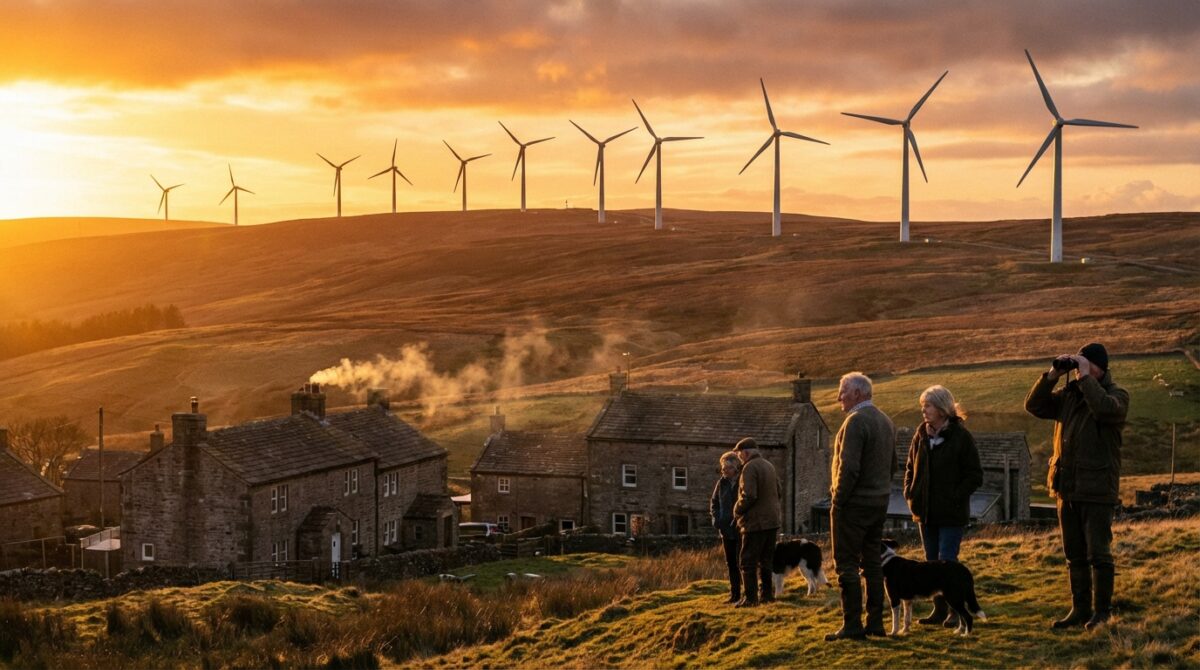
From village greens to moorland ridges, conversations in the Yorkshire Dales have shifted to one question: can Renewable Energy targets justify 20 wind turbines as tall as city skyscrapers on deep peat overlooking a national park?
The proposed Hope Moor project has turned a quiet corner of northern England into a test case for how far the UK is ready to go to hit its goal of generating about 95% low‑carbon electricity by 2030. What looked like a technical planning file has become a story about landscape, identity and the speed of the energy transition.
Yorkshire Dales windfarm: why this controversy exploded
The Hope Moor windfarm plan covers high moorland between the Yorkshire Dales national park and the North Pennines National Landscape. Developers want to install 20 wind turbines, with blade tips reaching 200 metres – roughly the height of the Manchester Deansgate Square tower, the tallest building outside London.
The Lithium Surge: Can an Abandoned Quarry Unlock Cornwall’s Hidden Wealth?
Innovative Catalyst Transforms Carbon Dioxide into Sustainable Clean Fuel
On paper, the scheme would supply clean power for around 81,000 homes, feeding directly into national climate targets. On the ground, residents from Reeth to Barningham see something else: industrial-scale machines on horizons that, for now, still offer 360‑degree views with almost no man-made structures.
From peat bog to planning battlefield
The moorland targeted for the development lies just outside formal park boundaries, yet much of it is mapped by Natural England as blanket bog with extensive areas of “deep peat” more than 30cm thick. Peatlands store carbon accumulated over thousands of years, layer by slow layer.
Residents question how digging huge turbine bases and access roads into this carbon bank sits with climate policy. One local summed it up bluntly: excavating peat to cut emissions “makes no sense” when every disturbed square metre can turn a sink into a long‑term source of CO₂.
Scientific background: climate goals versus peatland protection
The UK’s Climate Change Committee and successive IPCC reports are clear: onshore wind remains one of the lowest‑carbon, cheapest ways to cut emissions this decade. A modern turbine can pay back its construction carbon in months and generate clean power for 25 years or more.
Peat, however, complicates this calculation. The UK Centre for Ecology & Hydrology estimates that damaged peatlands already release around 23 million tonnes of CO₂ equivalent a year nationwide. Drainage, construction and vehicle tracks accelerate that loss, undercutting gains from new green infrastructure.
Why turbine height and location matter
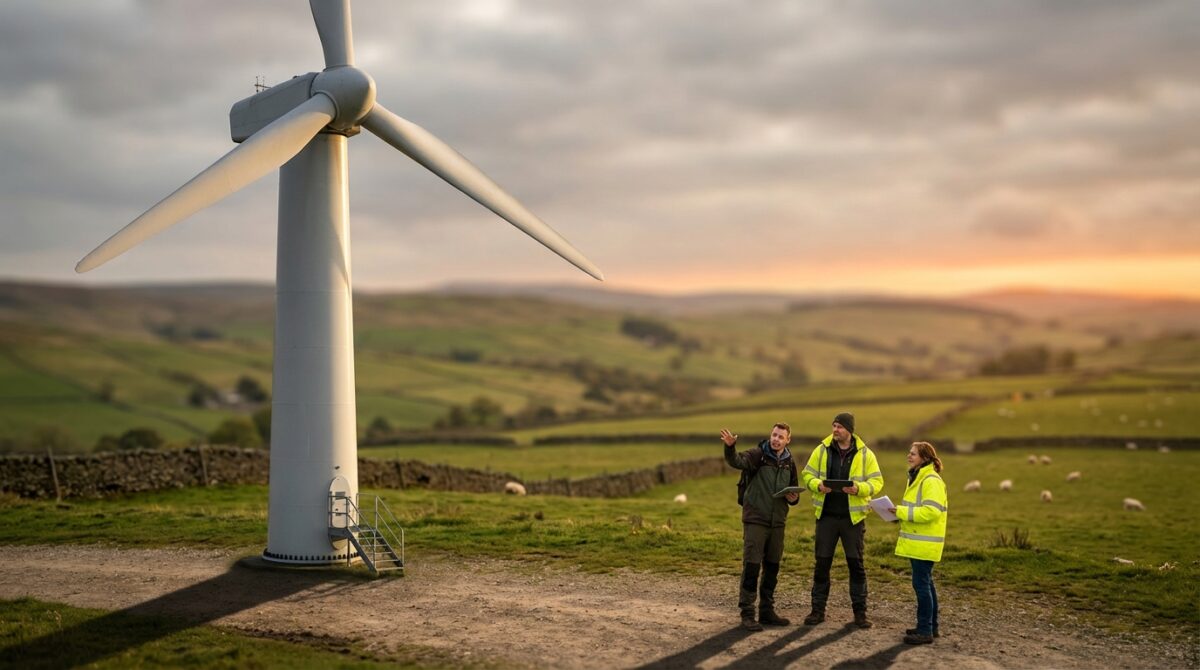
Onshore turbines a decade ago often stood close to 100m. Current designs nearing 200m capture stronger, steadier winds, increasing output per mast. For Hope Moor, that means more megawatts – the project is sized at about 100MW, five times larger than the recently approved 20MW Imerys site in Cornwall.
Yet taller towers cast far longer visual shadows. A local academic’s sightline analysis suggests the turbines would be visible from wide stretches of the Yorkshire Dales and, on clear days, even parts of the Lake District. That clash between energy density and Landscape Conservation lies at the heart of the current Controversy.
Current impact on communities and moorland life
For nearby villages, the proposal has already rewired everyday life. A sculptor in Reeth built a scale model turbine using model railway gauge so neighbours could visualise what 200m really looks like against the sky. Campaign meetings now pack village halls that once focused on sheep sales and local shows.
In Barningham, a coffee table book celebrating curlew, nightjars, rare black grouse and hen harriers has become an unofficial manifesto. The volume, created in memory of former estate owner Sir Anthony Milbank, now circulates at gatherings as residents argue that this “heaven” of sphagnum moss and wader calls is too fragile to risk.
Local opposition and political fault lines
A formal Local Opposition group has formed, touring the region with the model turbine and drawing support from across party lines. Long‑time Labour voters stand alongside Conservative neighbours, united less by ideology than by a shared sense of place and unease about the project’s scale.
Some of that tension stems from process. Because of its size, Hope Moor is classed as a Nationally Significant Infrastructure Project. Planning control shifts from local councillors to the national Planning Inspectorate, with the UK energy secretary taking the final decision. Local voices worry that key “scoping” choices on the Environmental Impact Assessment could be set before communities fully speak.
Environmental impact and national precedent
The Hope Moor debate now reaches far beyond one moor. Media reports on similar proposals at Walshaw Moor and across Calderdale highlight a pattern: upland sites with strong wind resources often sit on carbon‑rich soils and near cherished landscapes. How this case lands will influence projects from Pendle to West Yorkshire.
Coverage by outlets such as the BBC and regional media has underlined this national ripple effect. Detailed reporting, for example in regional planning coverage and long‑form features like this in‑depth investigation, traces how each new site reopens the same questions of Environmental Impact, public consent and who ultimately shapes the countryside.
Promises, trade‑offs and community benefits
Developers argue the scheme could deliver around £500,000 a year into local funds for three decades, while supporting farming and moorland management. Project leaders talk of a “modern, balanced approach” where habitat restoration, traditional skills and clean power evolve together.
Opponents hear a different story. To them, money cannot compensate for new access roads, pylons, cable routes, potential strain on “pristine” water sources, or noise and shadow flicker from blades. Many insist they are not “nimbys”, pointing out their backing for wind at sea, on degraded land or on smaller, community‑owned schemes.
Sustainable development: what a fair compromise could look like
Behind every meeting and petition lies a harder climate reality. The UK’s last decade ranks among its warmest on record, and heavy rain events over northern England have become more frequent according to the Met Office. The energy system must decarbonise fast to keep global heating close to 1.5‑2°C.
The question, then, is not if more wind is needed, but where and how. A Sustainable Development pathway for places like Hope Moor would respect three tests: protect high‑carbon peat, safeguard distinctive landscapes, and still add serious clean capacity to the grid.
Possible paths forward for the Yorkshire Dales
Several options stand out in the current Community Debate:
- Prioritise turbines on degraded, low‑carbon soils or industrial land before intact blanket bog.
- Demand peat‑positive schemes, where any disturbance is offset by funded restoration across wider catchments.
- Explore smaller or fewer turbines, co‑designed with locals, to reduce visual dominance yet retain meaningful generation.
- Guarantee early, binding community input on Environmental Impact Assessment scope, not only on final designs.
- Pair onshore wind with rooftop solar, storage and energy efficiency to ease pressure on the most sensitive sites.
Each of these choices will decide whether the Dales become a symbol of imposed transition or a template where climate action and Landscape Conservation pull in the same direction.
Why is the Hope Moor windfarm proposal so controversial in the Yorkshire Dales?
The Hope Moor project combines very tall 200m wind turbines, a location overlooking the Yorkshire Dales national park and construction on deep peat blanket bog. Supporters point to power for around 81,000 homes and national climate targets. Opponents worry about carbon‑rich soil disturbance, wildlife, skyline change and the fact that planning power sits with national authorities rather than local councillors.
How does building wind turbines on peat affect climate goals?
Peatlands act as long‑term carbon stores. When peat is drained, excavated or compacted by tracks and foundations, it can start releasing CO₂ and other greenhouse gases for decades. Onshore wind still has a very low carbon footprint overall, but schemes on deep peat must show that lifetime emission savings from the turbines clearly outweigh any additional peat‑related emissions.
Will local communities around the Yorkshire Dales have a say on the windfarm?
Because Hope Moor is classed as a Nationally Significant Infrastructure Project, the Planning Inspectorate and the UK energy secretary take the final decision. However, the developer has promised two stages of public consultation and a detailed Environmental Impact Assessment. Residents are pushing for earlier involvement in setting what the assessment actually covers, not just in commenting on a nearly final design.
What benefits are being offered to communities near the proposed turbines?
Project documents suggest around £500,000 per year for 30 years could flow into local community funds if the scheme proceeds. The developer also highlights potential investment in habitat restoration, support for farming and moorland management, and long‑term jobs in maintenance. Many locals welcome funding but say it cannot fully offset changes to landscape character and wildlife.
Are there alternative sites or solutions to meet renewable energy targets?
Electric Vehicles Drive into the Spotlight as Global Adoption Accelerates in Both Wealthy and Emerging Markets
US Spurs Unprecedented Global Rise in Gas-Powered Energy Fueled by AI Growth, Amid Significant Climate Concerns
Energy experts point to expanding offshore wind, rooftop solar, onshore wind on less sensitive land, battery storage and ambitious energy efficiency. In upland regions, some campaigners back smaller, community‑owned turbines on degraded ground, coupled with extensive peat restoration. The wider debate is not about stopping renewable energy but about choosing locations and designs that balance climate action with local nature and heritage.