
Show summary Hide summary
- Why UK wood-burning stoves now face health warnings
- Inside the new UK regulations on smoke emissions
- Who is breathing the smoke from “cosy” home fires?
- Why campaigners say the plan still falls short
- From cosy fires to cleaner homes: what can change now?
- Practical actions for households and communities
- Why are UK wood-burning stoves being given health warnings?
- Do modern low-emission stoves solve the pollution problem?
- If I already have a wood burner, what can I do to reduce harm?
- How does wood burning affect climate change as well as health?
- When will the new UK regulations on stoves come into force?
One small stove in a cosy living room, yet linked to 2,500 early deaths a year in the UK. Wood-burning stoves, once symbols of comfort, are now at the centre of a public health and air quality debate that reaches right into your home.
Why UK wood-burning stoves now face health warnings
The UK government plans to require health warnings on all new wood-burning stoves, in a move echoing labels on cigarettes and alcohol. The proposal links the crackle of a fire directly to pollution, lung disease and pressure on the NHS.
Ministers also want to cut the legal limit for smoke emissions from new stoves by 80%, from 5g per hour to just 1g. According to the government consultation, reported by outlets such as the Guardian’s environment coverage, this tighter limit would only reduce toxic emissions from domestic wood burning by about 10% over the next decade.
Six Decades of Data Reveal How Extreme Weather Severely Impacts Baby Birds
Researchers Unveil Seven Mysterious Frog-Inspired Insect Species Concealed within Uganda’s Rainforest
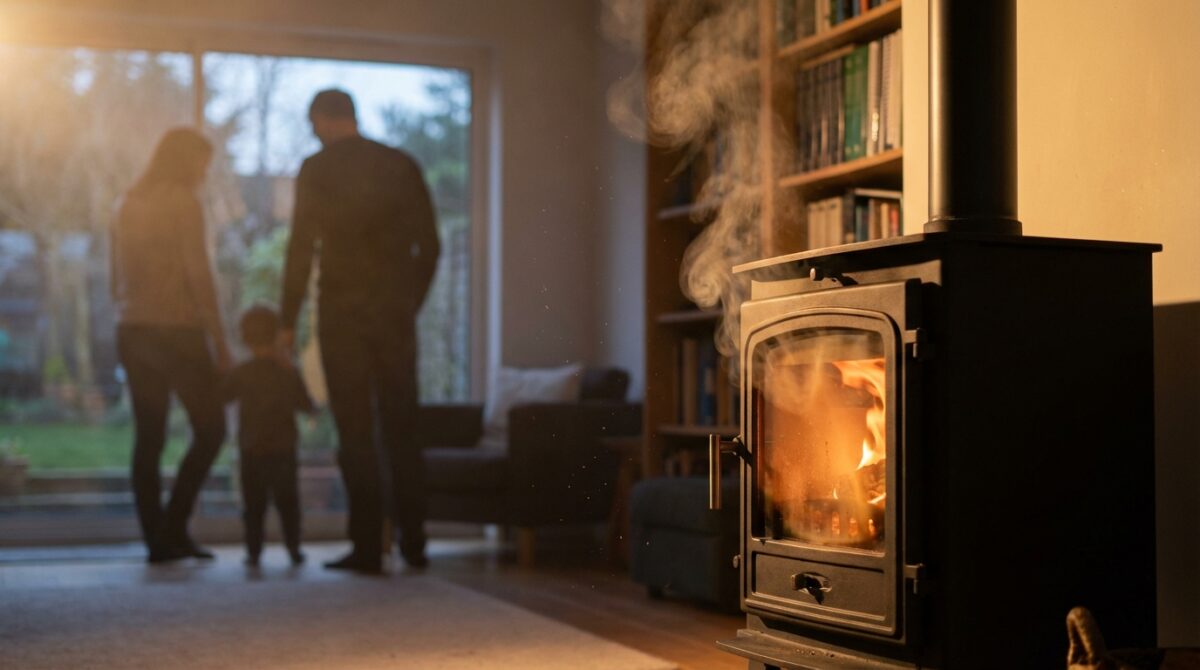
Air quality, fine particles and what happens in your lungs
Domestic burning now produces about 20% of the UK’s fine particulate pollution (PM2.5), roughly the same as all road traffic. These particles are small enough to slip past the body’s defences, travel deep into the lungs and then into the bloodstream.
The UK government describes PM2.5 as the most dangerous outdoor air pollutant for human health. Research highlighted in the BMJ and other journals links wood smoke to higher risks of heart disease, strokes and respiratory illness. A recent study cited in the consultation connects domestic burners to 2,500 premature deaths, 3,700 cases of diabetes and 1,500 cases of asthma every year in the UK.
Inside the new UK regulations on smoke emissions
At the heart of the plan is a new emissions limit: 1 gram of smoke per hour from any new wood-burning stove sold. That looks dramatic compared with the current 5g per hour cap. Yet about 70% of models tested since 2018 already meet that tighter threshold.
The new standard wouldn’t apply immediately. The consultation suggests a delay of three to five years after legislation passes, giving manufacturers and retailers time to adjust. Analysis from outlets such as BritBrief’s environment section notes that this long lead time could blunt short‑term benefits for air quality.
Cigarette-style health labels for stoves and firewood
Perhaps the most visible shift will be the labels themselves. Draft wording for new stove labels warns that the appliance “emits air pollution into and around your home which can harm your health”. The labels would also show an A–C energy efficiency rating, helping households compare models.
Wood sold for domestic burning would also carry a warning, explaining that “burning in the home leads to air pollution which has a negative impact on the health of you and your family”. The government proposes raising fines for selling damp wood, which produces far more smoke, from £300 to £2,000. Reporting in the Independent and other outlets underlines how this tackles both behaviour and supply chains.
Who is breathing the smoke from “cosy” home fires?
Only about 12% of UK households use wood burners, yet over 90% of them have another form of heating. For many, the stove is less a necessity than an aesthetic choice, a lifestyle symbol of warmth and rural charm.
For Samira, a parent in a dense city terrace, the effect is less romantic. On still winter evenings, smoke from neighbours’ legal stoves drifts into her child’s bedroom, triggering coughing fits. Campaign group Mums for Lungs reports such stories “almost daily”, describing families who feel smoked out of their homes despite burners technically meeting current regulations.
Unequal exposure and pressure on public health
While the glow of the fire belongs to the household that owns the stove, the pollution spreads along the street. People with asthma, children, older adults and those with existing heart or lung disease are hit hardest by wood smoke.
Air quality minister Emma Hardy argues that “dirty air robs people of their health and costs our NHS millions each year”. Health economists link domestic burning to extra hospital admissions, GP visits and medication costs. As coverage of new mortality studies shows, the burden of this pollution is not evenly shared across neighbourhoods.
Why campaigners say the plan still falls short
Clean air organisations welcome clearer information and tighter standards, yet many say the plan leaves a large blind spot. The measures apply mainly to new wood-burning stoves, while hundreds of thousands of existing appliances will keep emitting fine particles for years.
Larissa Lockwood from Global Action Plan compares “less polluting” stoves to low-tar cigarettes: slightly better, but still far riskier than not burning at all. Groups such as Mums for Lungs are calling for action on non‑essential burning and stronger support for cleaner heating, arguing that children’s lungs should not pay the price for decorative fires.
Weak enforcement and a 36% rise in domestic burning
Data uncovered by journalists shows how rarely the current rules are enforced. In the year to August 2025, there were more than 15,000 complaints about illegal wood burning in England. Yet there were no prosecutions and only 24 fines from local authorities.
Over the longer term, government figures reveal that fine particle emissions from domestic burning rose by 36% between 2009 and 2020, largely because of increased wood use. Reports such as recent Guardian environment analyses link this rise not to poverty, but to the popularity of stoves among relatively affluent households.
From cosy fires to cleaner homes: what can change now?
The proposed labels and standards are designed to help households make better choices before installing a stove or buying wood. Yet action does not need to wait for new laws. If you already use a wood burner, several steps can significantly cut smoke emissions and improve public health in your neighbourhood.
Climate scientists also point out that reduced wood burning has a double benefit: fewer health‑damaging particles and lower contributions to climate change when stoves displace cleaner heating options like heat pumps or district heating.
Practical actions for households and communities
For a family considering a new stove, or a neighbour tired of winter smoke, the choices made this year will shape local air quality for years. Some changes are simple behaviour shifts; others need policy support and investment.
Key steps that individuals and local authorities can take include:
- Choosing not to install a new wood-burning stove when another heating source already exists.
- Using truly dry wood (well‑seasoned or kiln‑dried) and never burning waste, treated timber or damp logs.
- Upgrading ventilation and servicing existing stoves to reduce indoor and outdoor leakage of smoke.
- Supporting cleaner heating through local grants, heat pump schemes or district energy projects.
- Engaging with the consultation before it closes on 19 March, to push for stronger, science‑based rules.
For readers wanting deeper policy context, analyses on sites such as Yahoo’s UK news coverage and healthcare policy briefings track how these proposals interact with wider net‑zero and clean air strategies. The consultation’s own foreword sums up the direction: everyone deserves to live where the air they breathe is not quietly shortening their life.
Why are UK wood-burning stoves being given health warnings?
The UK government links domestic wood burning to 2,500 early deaths a year, along with thousands of cases of asthma and diabetes. New labels are intended to warn households that stoves emit fine particles into and around homes, harming lungs and increasing risks of heart and respiratory disease. The warnings aim to shift behaviour and help families make more informed heating choices.
Do modern low-emission stoves solve the pollution problem?
Newer stoves that meet the proposed 1g per hour smoke limit emit less pollution than older models, but they still release harmful fine particles. Clean air experts compare them to low-tar cigarettes: somewhat better, yet far more damaging than not burning at all. Even efficient models contribute to local air pollution when used for non-essential, decorative fires.
If I already have a wood burner, what can I do to reduce harm?
You can cut emissions by burning only very dry wood, never using treated or damp timber, and ensuring your stove is regularly serviced. Keeping fires small and hot, rather than slumbering, also reduces smoke. If you have another heating source, using the stove less often, especially on still cold nights, lowers exposure for neighbours, children and people with asthma nearby.
How does wood burning affect climate change as well as health?
London, San Francisco, and Beijing Make Significant Strides in Slashing Air Pollution Levels
The Reappearance of a ‘Ghost’ Great White Shark Sparks New Questions in the Mediterranean
Wood is sometimes described as renewable, but domestic burning in stoves can still drive climate change. Inefficient combustion releases black carbon and other climate‑warming pollutants. When stoves are used mainly for ambiance in homes that already have cleaner heating, they add emissions that could be avoided entirely, while still damaging local air quality.
When will the new UK regulations on stoves come into force?
The proposals are currently out for consultation, which is scheduled to close on 19 March. If adopted, the stricter smoke limit of 1g per hour would apply only to new stoves and is expected to take effect three to five years after the law is passed. Existing stoves are not directly targeted, which is why campaigners are pushing for stronger, faster measures.