Show summary Hide summary
- Shrinking Antarctic ice and a weakening carbon shield
- Why extra iron did not turbocharge algae growth
- Past ice loss as a warning signal for future climate change
- What this means for policy, modeling, and everyday life
- Limits of the study and what remains unknown
- Why is the Southern Ocean called a global carbon sink?
- Does more Antarctic ice melt always increase carbon sequestration?
- How is Antarctic ice loss linked to sea level rise?
- What are the main uncertainties in this research?
- Can protecting Antarctic ecosystems slow climate change?
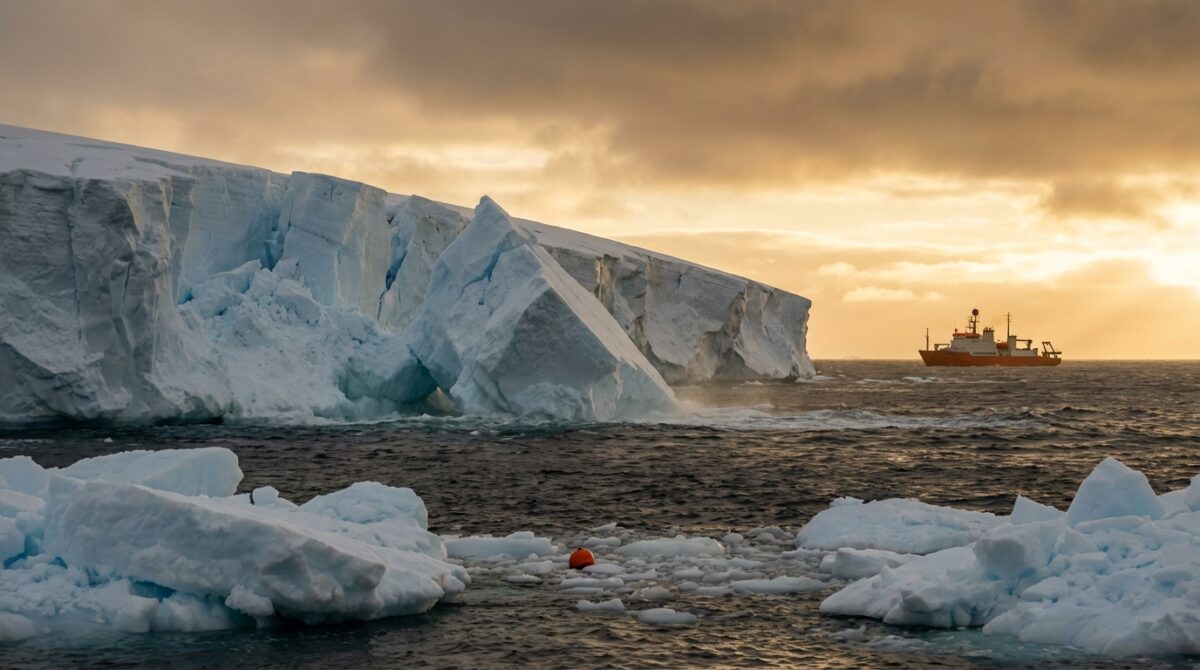
What if the very Antarctic Ice that looks like a frozen fortress was quietly weakening one of Earth’s biggest safety nets against Global Warming? New research suggests that as this ice shrinks, the Southern Ocean’s role as a Global Carbon Sink could fade faster than expected.
The study reshapes how scientists think about the Carbon Cycle in the Southern Ocean and shows that more Ice Melt does not automatically mean more natural Carbon Sequestration. Instead, under certain conditions, shrinking ice may actually make the ocean less effective at soaking up CO₂, with direct consequences for Climate Change and Sea Level Rise.
Shrinking Antarctic ice and a weakening carbon shield
Researchers from the University of Oldenburg and Columbia University’s Lamont-Doherty Earth Observatory, part of the Columbia Climate School, report in Nature Geoscience that past changes in the West Antarctic Ice Sheet (WAIS) closely tracked shifts in marine algae growth in the Southern Ocean. Lead author Torben Struve and his team analyzed a deep-sea sediment core and found an unexpected pattern: when more iron-rich sediment entered the ocean from icebergs, algae did not grow faster.
Why Are the World’s Oceans Growing Darker? Exploring the Causes Behind This Global Phenomenon
How to Create a DIY Worm Farm That Can Compost Food Scraps, Paper, and Even a Whole Kangaroo
This result overturns a long-held assumption. For decades, many climate models assumed that increased iron from melting ice would boost algae, strengthen the Southern Ocean’s Global Carbon Sink, and partially offset Global Warming. The new work shows that this link is not guaranteed, especially south of the Antarctic Polar Front, where the story of Shrinking Ice is more complicated than previously thought.
How scientists decoded the Southern Ocean’s past
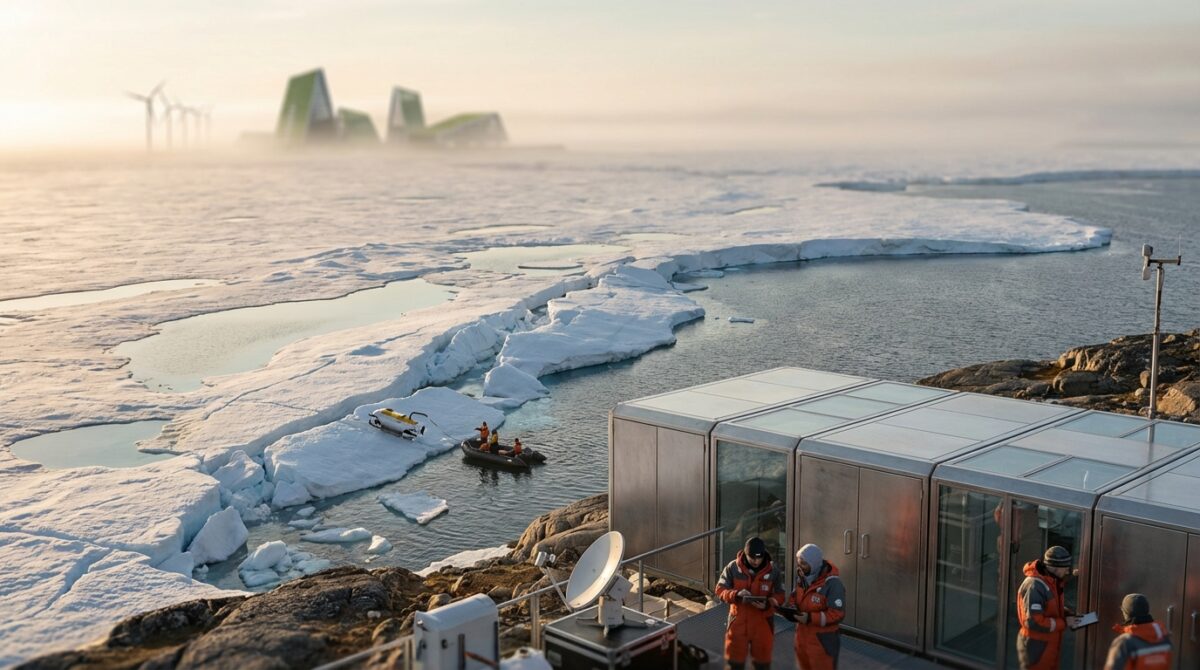
The methodology is straightforward to describe: scientists linked microscopic algae remains and iron-rich particles in a single sediment core to reconstruct CO₂ uptake and ice loss over multiple glacial cycles. The core, collected in 2001 from the Pacific sector of the Southern Ocean at more than three miles depth, captured roughly the last several hundred thousand years of environmental history.
By combining geochemical tracers, particle size analysis, and indicators of biological productivity, the team could distinguish iron arriving as airborne dust from iron scraped off the continent by icebergs. Statistical comparisons between iron inputs and algae markers showed a weak or even negative relationship in key warm periods, with confidence levels high enough (often above 95%) to reject the “more iron = more algae” shortcut for this region.
Why extra iron did not turbocharge algae growth
Under normal conditions north of the Antarctic Polar Front, iron is the limiting nutrient: more iron tends to mean more algae and stronger Carbon Sequestration. That pattern has been backed up by earlier work on glacial dust transport and is reflected in several recent syntheses, including studies featured by Nature and large-scale ocean fertilization experiments.
South of the Polar Front, where this new core comes from, the team found that iron delivery peaked during warmer intervals, when the WAIS retreated and released more icebergs. However, much of that iron arrived in a highly “weathered” state. Chemically altered over long periods beneath the ice sheet, the iron was poorly soluble and therefore largely inaccessible to algae, even when concentrations in the sediment were high.
The hidden role of old, weathered rock beneath West Antarctica
Evidence points to a layer of very old bedrock beneath the WAIS, ground down repeatedly as the ice advanced and retreated. When the ice sheet thinned during warm interglacial periods, increased iceberg calving scraped and exported this weathered material into the Southern Ocean. The sediment record shows pulses of such debris near the end of glacial periods and during peak warm phases.
Because the iron in this rock was already heavily oxidized, it barely dissolved into seawater. Struve and co-author Gisela Winckler emphasize that what matters for Ecosystem Stability is not just the quantity of iron, but its chemical form. Their interpretation aligns with other recent work on rapidly changing Antarctic systems, such as the studies summarized by the Australian Antarctic Division, which also highlight complex feedbacks between ice, ocean chemistry, and biology.
Past ice loss as a warning signal for future climate change
The sediment core also records how sensitive the WAIS has been to relatively modest warming. Several lines of evidence, including independent ice-sheet reconstructions, indicate major retreat during the last interglacial, about 130,000 years ago, when global temperatures were comparable to today. The new study’s iron and iceberg signals support the idea that large volumes of ice were lost from West Antarctica during that time.
This history matters because WAIS retreat links directly to future Sea Level Rise and the pace of Climate Change. Contemporary observational work, reported for instance by Reuters on rapid Antarctic ice loss and by research on the “Great Ocean Slowdown”, suggests that continued Ice Melt could simultaneously raise sea levels and weaken global overturning currents.
Feedbacks between shrinking ice, carbon sink, and ocean circulation
These findings connect to a broader concern: Antarctic Shrinking Ice appears to be linked with a slowdown of deep ocean circulation and changes in how heat and carbon are moved around the planet. Work summarized by SciTechDaily on the “Great Ocean Slowdown” describes how diminishing Antarctic Ice may reduce the strength of Antarctic overturning circulation by up to 20% by mid-century.
In combination with the new Nature Geoscience results, a picture emerges where continued WAIS retreat could simultaneously weaken the physical and biological components of the Southern Ocean Global Carbon Sink. While the study itself does not prove causation for future conditions, its reconstruction of past feedbacks raises clear concerns for planners and policymakers.
- More Ice Melt → more iceberg-derived, weathered iron, but little extra algae growth.
- Less effective Carbon Sequestration → higher atmospheric CO₂ for the same human emissions.
- Warmer oceans and rising Sea Level → additional stress on coastal communities and marine food webs.
What this means for policy, modeling, and everyday life
For climate modelers, the study sends a clear message: using a simple “iron fertilization” rule for Antarctic waters risks overestimating the strength of future ocean CO₂ uptake. The carbon sink in this region is dynamic, sensitive to Shrinking Ice patterns, and dependent on geochemistry that models must represent more realistically.
For governments and businesses planning long-term infrastructure, the work underscores that Sea Level Rise and lost carbon uptake are intertwined. A city like the fictional coastal hub “Southport” might face higher adaptation costs, not only because of more frequent flooding, but also because global mitigation becomes harder if natural sinks weaken.
Limits of the study and what remains unknown
The research is based on a single, exceptionally well-studied core from the Pacific sector of the Southern Ocean. While the sample provides high-resolution insight into one key region, it cannot fully represent the entire Antarctic margin. The relationship between iron form, algae response, and the Carbon Cycle may vary in other basins, such as the Atlantic or Indian sectors.
Moreover, past warm periods did not include the same level of human-driven greenhouse gas emissions or land-use changes. The authors therefore use careful language: the results suggest that continued WAIS loss could reduce Southern Ocean CO₂ uptake, but they do not claim a precise forecast. That caution leaves space for follow-up projects, which several groups are already pursuing, including studies reported on platforms like ScienceDaily focusing on Antarctic tipping elements.
Why is the Southern Ocean called a global carbon sink?
The Southern Ocean absorbs a large share of human-emitted CO₂ because cold, dense waters there take up carbon and transport it into the deep ocean. Marine algae also help by using dissolved CO₂ for photosynthesis, locking some carbon into sinking organic matter. Together, these physical and biological processes turn the region into a major global carbon sink.
Does more Antarctic ice melt always increase carbon sequestration?
No. The new Nature Geoscience study shows that extra iron from melting-related icebergs can arrive in a chemically weathered form that algae cannot easily use. In the Pacific sector south of the Antarctic Polar Front, higher iron inputs during warm periods did not boost algae growth and did not strengthen the carbon sink.
How is Antarctic ice loss linked to sea level rise?
When the West Antarctic Ice Sheet thins and retreats, grounded ice that once rested on land or seafloor ridges moves into the ocean and contributes to global sea level rise. Floating sea ice does not directly raise sea level when it melts, but its loss can speed up glacier flow and expose more ice to warm water.
What are the main uncertainties in this research?
How Squid Triumphed Over Earth’s Greatest Extinction to Dominate the Oceans
Jungle Wildlife Shares a Common Tree as Their Preferred Latrine Spot
Key uncertainties include how representative one sediment core is for the whole Southern Ocean, how future warming will affect iron chemistry in different regions, and how marine ecosystems will respond to simultaneous stressors such as acidification, warming, and changing currents. These unknowns mean the results highlight risks rather than deliver exact predictions.
Can protecting Antarctic ecosystems slow climate change?
Protecting Antarctic ecosystems cannot replace emissions cuts, but it can help preserve existing carbon sinks and maintain ecosystem stability. Measures such as reducing black carbon pollution, regulating fishing, and supporting science-based marine protected areas can limit additional stress while global society works to reduce greenhouse gas emissions.