
Show summary Hide summary
- River Thames swimming bid reshapes London’s blue spaces
- What bathing water status really means for swimmers
- The 13 shortlisted prime locations for official recognition
- Who benefits from cleaner public swimming waters?
- What comes next for River Thames swimming and beyond?
- Everyday actions to keep swimming waters clean
- Is the River Thames at Ham and Kingston safe to swim in now?
- What does official bathing water recognition change for a river?
- Can I swim anywhere in the River Thames in London?
- How are the 13 shortlisted locations chosen?
- What can communities do if they want their river designated?
From “biologically dead” to nearly swimmable: in one lifetime, the River Thames has leapt from toxic gutter to potential city pool. Now, a stretch between Ham and Kingston is among 13 prime locations shortlisted for official recognition as monitored swimming waters – and that changes everything for how this river is treated.
At the heart of the story sits a simple question: if thousands of people already wild swim here, shouldn’t the water be clean enough to protect them? This is what local groups, scientists and regulators are now testing in real time.
River Thames swimming bid reshapes London’s blue spaces
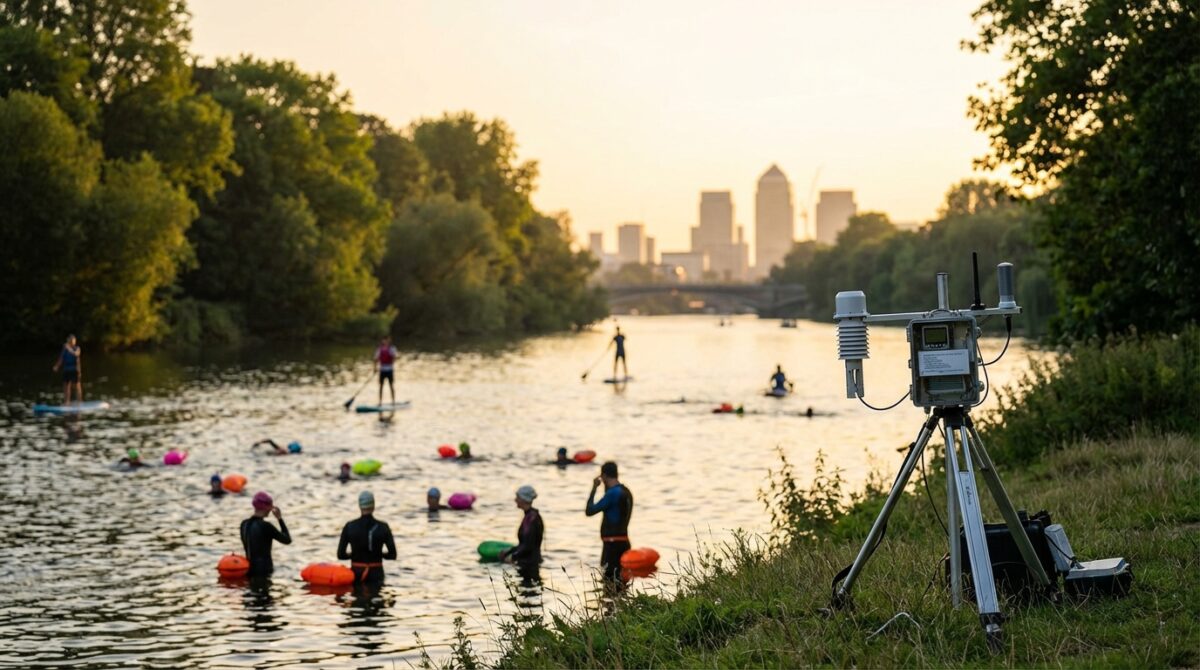
The proposed bathing zone covers a calm reach of the River Thames at Ham and Kingston in south-west London, already buzzing with paddleboards, club sessions and informal open water dips year-round. Campaigners gathered usage data showing many thousands of swims across the seasons, from icy dawn plunges to summer family outings.
When Valuing Nature Falls Short: Can Bold Strategies Rescue Our Planet?
Portugal Faces Urgent Call to Tackle Climate Crisis Following Devastating Storms
Their evidence persuaded the government to place this stretch on a national shortlist of prime locations for new designated bathing waters, alongside coastal favourites and rural rivers. If approved, it would become the first official public swimming site on the tidal Thames in London, a milestone reported across outlets from the BBC to specialist platforms such as The London Current’s deep dive on River Thames swimming.
From ‘dead river’ to living, swimmable ecosystem
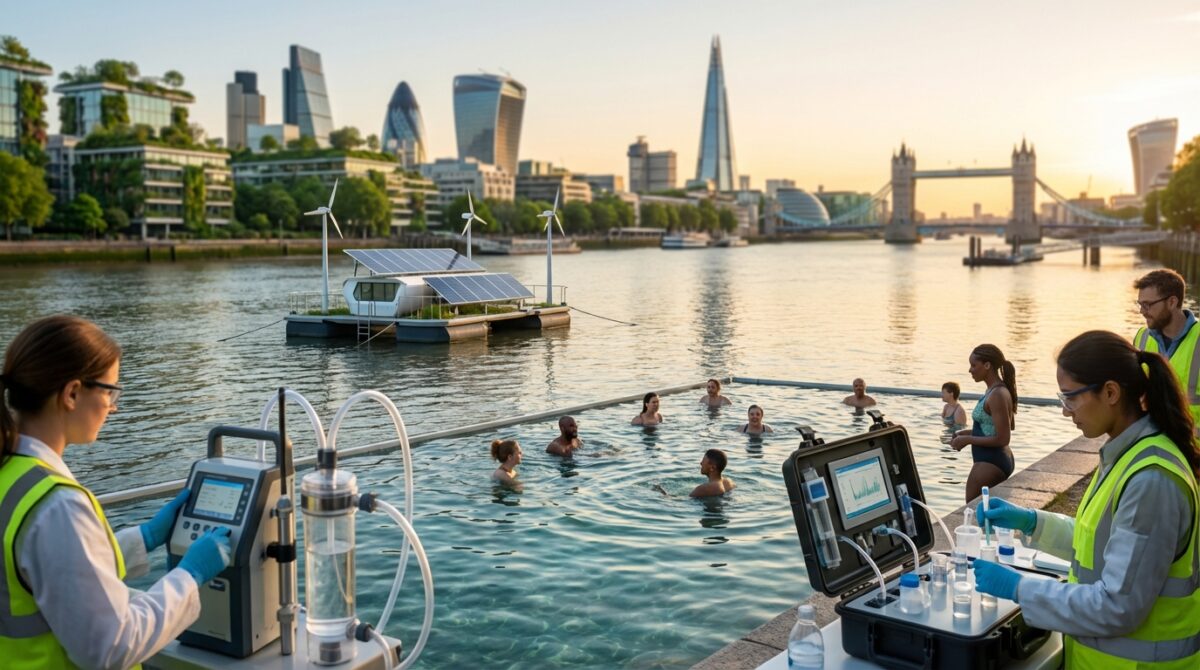
When the Natural History Museum and the Zoological Society of London reviewed the Thames in 1957, scientists described it as “biologically dead”. Oxygen levels had collapsed under sewage and industrial effluent. By the 2020s, after tighter laws and major investment, surveys counted over 100 species of fish and even regular harbour porpoise and seal sightings.
This ecological rebound mirrors other London microclimate stories, from peacocks to scorpions thriving in hidden warm niches, documented in investigations like reports on the capital’s surprising wildlife. Together, they show how cleaner water and shifting local climates reshape which species – including humans in wetsuits – can thrive.
What bathing water status really means for swimmers
“Official bathing water” is more than a badge. Under the EU-derived rules still applied in England, the Environment Agency must test designated sites regularly during the bathing season for faecal indicator organisms such as E. coli and intestinal enterococci. Results slot into four categories: excellent, good, sufficient or poor.
Once a site becomes official, regulators can no longer look away when pollution spikes. Water companies face sharper scrutiny over storm overflows and sewage spills, while councils must post clear information when water quality drops. For swimmers, that means fewer guesswork days and more evidence-based decisions about when to get in.
Pressure on water companies and contested projects
The Ham and Kingston bid lands at a tense moment for Thames Water. The company wants to draw tens of millions of litres a day from the river near this stretch and replace it with treated wastewater from Mogden sewage works, as part of a recycling scheme to meet future supply gaps. The Environment Agency rejected an earlier version of this plan in 2019 over environmental risks.
Bathing status at Ham would make such proposals harder to push through without robust proof they won’t worsen pollution or harm wildlife. It echoes the Wharfe at Ilkley in Yorkshire, where the UK’s first designated river bathing site triggered more than £85 million of upgrades to cut sewage contamination. Swimmers, scientists and regulators are now watching to see if the Thames can follow that trajectory.
The 13 shortlisted prime locations for official recognition
The Thames is part of a wider wave of rivers, estuaries and beaches pushing for recognition. The proposed new sites would raise England’s tally to about 464 designated bathing waters, a small but telling increase in where regulators must test and publish data. Each location reflects a local community that effectively said: we swim here, so monitor it.
Among the shortlisted spots are tidal creeks, northern beaches and inland meadows. Some are already iconic for water sports and natural swimming spots, others are quiet bends used mainly by locals on hot days. Together, they sketch a map of a country rediscovering outdoor water as part of daily life.
Where the new bathing water candidates are located
From north to south, the proposed additions include:
- Little Shore, Amble, Northumberland – a compact sea swimming cove popular with year-round dippers.
- New Brighton Beach (east), Merseyside – a busy sandy stretch used by families and cold-water clubs.
- River Dee at Sandy Lane, Chester, Cheshire – a long-standing urban dip spot on a historic river.
- River Swale at Richmond Falls, Yorkshire – dramatic cascades where bathers have gathered for decades.
- Falcon Meadow, Bungay, Suffolk – a grassy riverside used for quiet swims and paddle sessions.
- Pangbourne Meadow, Berkshire – the Thames reach that helped inspire “The Wind in the Willows”.
- River Fowey at Lostwithiel, Cornwall – an inland tidal stretch linking town life and estuary.
- Newton and Noss Creeks, Devon – sheltered open water inlets off the River Yealm.
- Canvey Island Foreshore, Essex, and Sandgate Granville Parade Beach, Kent – estuary and coastal bathing spots.
- Queen Elizabeth Gardens, Salisbury, Wiltshire – city-centre river swimming framed by parkland.
- East Beach at West Bay, Bridport, Dorset – a Jurassic Coast favourite.
- River Thames at Ham and Kingston, Greater London – future flagship for urban River Thames swimming.
Each of these sites now enters a six-week consultation where residents, clubs and local authorities can support or challenge the proposals, a process explained in depth in coverage such as water sector briefings on the 13 new bathing spots.
Who benefits from cleaner public swimming waters?
Designated sites redistribute power towards those who enter the water. Wild swimmers, parents, paddleboard instructors and rowing coaches all gain access to regularly updated pollution data. This matters in a country where campaign group River Action notes that all but two of England’s 14 existing inland bathing waters have recently tested as poor.
Health services also have a stake. Cold-water immersion is linked in several studies to better mental health and resilience to stress, yet that benefit disappears if swimmers end up with gastrointestinal infections or skin problems from sewage-contaminated water. Better monitoring means fewer nasty surprises and more days when people can safely take the plunge.
From local clubs to national policy shifts
Grassroots organisations have driven much of this change. At Ham, the Teddington Bluetits – a social swimming group with more than 2,000 members – logged swims, gathered testimonies and worked with scientists to build a case. On the River Swale, volunteers from Save Our Swale spent long, wet days sampling at different sites to track the footprint of storm overflow discharges.
Government has started to respond. The environment department now prioritises sites with strong evidence of regular swimming, while water ministers speak of rivers and beaches as social hubs where “families make memories” and older swimmers keep active. Behind the warm language lies a harder edge: once a site is designated, it becomes much harder to ignore pollution for the sake of short-term savings.
What comes next for River Thames swimming and beyond?
The immediate step is consultation. Local residents can submit views online or at community meetings, supporting the Ham and Kingston proposal or raising concerns around safety, access and wildlife disturbance. City Hall’s own mapping has warned that much of the tidal Thames remains unsafe for swimming, so this would be a carefully defined exception rather than a green light for jumping in anywhere.
Over the next seasons, the Environment Agency will collect and publish water quality data. If the site meets the thresholds, signage will go up, and outdoor swimming groups will gain a new benchmark river venue inside the capital, complementing managed locations like the Royal Docks and Hampstead Ponds.
Everyday actions to keep swimming waters clean
Decisions in parliament and boardrooms matter, but so do everyday habits. Misconnected home plumbing can send washing machine water into rivers. Wet wipes flushed down toilets can clog sewers and trigger spills. Pesticides and fertilisers on gardens or allotments can wash into local streams after heavy rain.
For readers who care about natural swimming spots, a few steps help: support river charities, log pollution sightings with citizen science apps, back local campaigns for designation, and choose products and building work that reduce pressure on drains. Each action tilts the system towards a future where blue spaces are for swimming, not just for stormwater.
Is the River Thames at Ham and Kingston safe to swim in now?
The Ham–Kingston stretch is heavily used by experienced wild swimmers, but it is not yet an officially designated bathing water. Water quality can vary, especially after heavy rain when storm overflows are more likely to discharge. Until full bathing water status and regular monitoring are in place, swimmers should check local group updates, avoid swimming after downpours and be cautious if they have weak immune systems.
What does official bathing water recognition change for a river?
Once a site becomes an official bathing water, the Environment Agency must test it regularly during the bathing season for bacteria linked to sewage. Results are published, and local authorities must warn the public when quality is poor. Water companies come under stronger pressure to cut sewage spills and upgrade infrastructure near the site, which over time can lead to cleaner, more reliable conditions for swimming and other water sports.
Can I swim anywhere in the River Thames in London?
No. Most of the tidal Thames through central London is still classed as unsafe for swimming because of pollution, fast currents and boat traffic. The proposed Ham and Kingston section is relatively sheltered and already popular with swimmers, which is why it is being considered for bathing water status. Always follow local safety advice, avoid busy navigation channels and use recognised access points where possible.
How are the 13 shortlisted locations chosen?
Shrinking Antarctic Ice Threatens the Stability of a Crucial Global Carbon Sink
Urgent Efforts Underway to Curb Suspected Bird Flu Spread Among Swans in Thames Valley
Officials select candidate sites based on evidence that large numbers of people already swim there during the season. Local groups and councils submit applications with user counts, photos, and often water sampling data. The government then publishes a shortlist, opens a consultation and asks the Environment Agency to assess pollution risks before deciding whether to add the sites to the national bathing waters list.
What can communities do if they want their river designated?
Residents can form or join a local river group, gather data on how many people swim, and work with environmental NGOs to design a strong application. Simple steps include logging daily swimmer numbers, recording any pollution events and engaging local councillors. Successful campaigns, such as those at Ilkley and on the River Swale, show that persistent, well-documented local effort can shift national policy and bring long-term benefits for both people and wildlife.