Show summary Hide summary
- Plastic pollution in Australian waterways by the numbers
- Citizen data meets cutting-edge plastic research
- Remote beaches, ghost nets and turtle nesting grounds
- Where citizen science is changing policy on plastic
- How Plastic Patrol turns clean-ups into lasting change
- Joining the next wave of community action
- How do citizen scientists actually help reduce plastic in waterways?
- Is picking up litter really enough to protect marine life?
- Can anyone take part in Plastic Patrol activities?
- What types of plastic are most commonly found in Australian waterways?
- How can sports clubs reduce microplastics from synthetic turf?
On a hockey pitch in Melbourne’s north, a green victory hides a stark number: one synthetic field can shed between 10kg and 100kg of plastic fragments into nearby waterways. Those invisible slivers are now turning creeks, rivers and beaches across Australia into slow-motion plastic mines.
While government rules lag, a growing Plastic Patrol army of Citizen Scientists is stepping onto riverbanks, stormwater drains and remote beaches. Their goal is simple and stubbornly practical: count every fragment, trace every bottle, and push decision-makers until the litter pipeline into Australia’s waterways begins to close.
Plastic pollution in Australian waterways by the numbers
Across the country, Australians now generate more than 3 million tonnes of plastic waste each year. Clean-up surveys of parks, beaches and creeks show plastic accounts for more than 80% of litter in public spaces, from food wrappers to bottle caps and foam.
How to Create a DIY Worm Farm That Can Compost Food Scraps, Paper, and Even a Whole Kangaroo
How Squid Triumphed Over Earth’s Greatest Extinction to Dominate the Oceans
Research on urban catchments confirms the trend. Studies cited by organisations such as Conservation Volunteers Australia indicate that plastic forms well over three-quarters of marine debris collected in city waterways. These figures match wider findings reported in outlets like recent marine litter assessments, making plastic the dominant pollutant shaping many Australian shorelines today.
From synthetic turf to stormwater drains
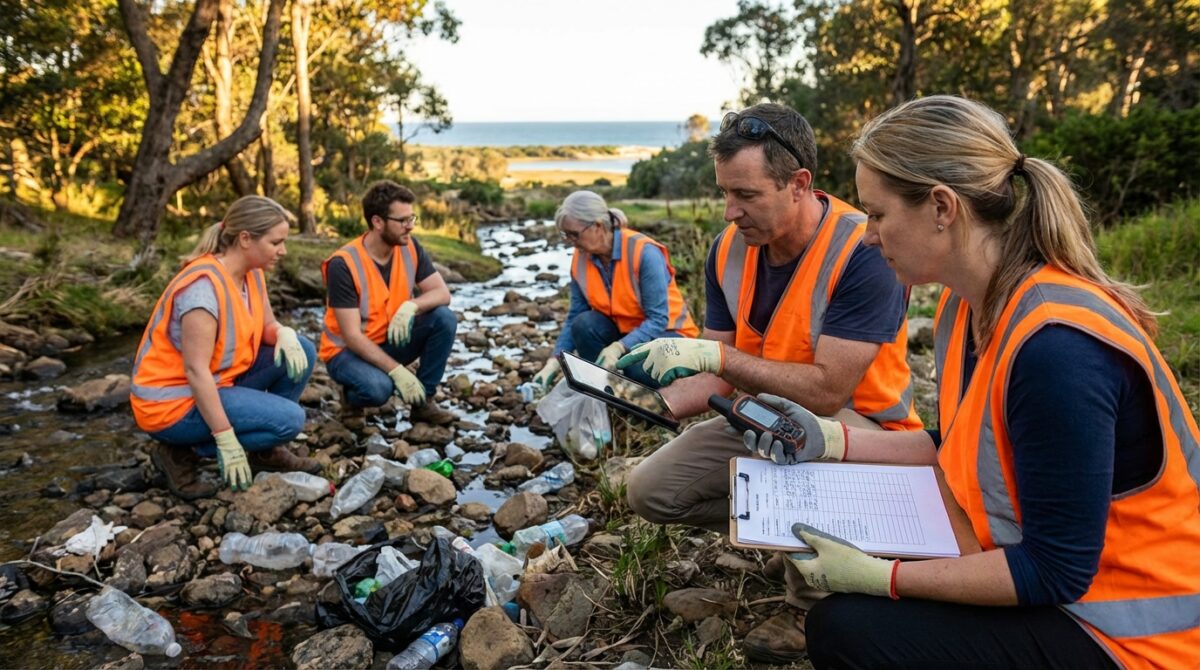
Near Darebin Creek in Melbourne, community campaigner Neil Blake has quietly weighed the problem. Over three years, he has completed 56 separate collections of artificial grass fragments washed from a local hockey pitch into the waterway, using paper bags and electronic scales at the Port Phillip EcoCentre’s new community science lab.
A review by the New South Wales chief scientist warned that a single synthetic pitch can leak tens of kilograms of plastic granules every year into stormwater systems. Wind, rain and even leaf blowers nudge the fragments off the field, where they travel through gutters and drains, then into rivers and bays, adding another layer to long-lived pollution.
Citizen data meets cutting-edge plastic research
What transforms litter picking into Environmental Conservation science is measurement. At the Port Phillip EcoCentre in St Kilda, a community lab offers microscopes, safety gear and guidance from trained scientists. Residents arrive with jars of sand or stormwater, curious about microplastics hiding in their local environment.
Executive officer April Seymore describes how that shared space turns “anecdotes into evidence”. People leave not only with answers but also with numbers they can take to councils and regulators. That data now feeds wider research, from CSIRO coastal surveys to international work on microplastic impacts in journals such as Marine Pollution Bulletin.
AI, GPS and the science of how litter moves
Technology is expanding the reach of this grassroots Community Action. Projects led by CSIRO and partners now use AI and cameras to identify and monitor litter across creeks and streams, analysing images to map hotspots and model how rubbish behaves in heavy rain. Details of these systems are highlighted in initiatives like AI-based litter monitoring.
In Melbourne, another team is releasing GPS-tracked bottles into suburban drains to trace precisely how litter rides stormwater to Port Phillip Bay. Results from this experiment, showcased by RMIT researchers in recent GPS tracking studies, reveal that some bottles can reach beaches in under a day after a downpour, shrinking the distance between a dropped wrapper and a seabird’s stomach.
Remote beaches, ghost nets and turtle nesting grounds
At the opposite end of the country, the plastic story looks different but lands in the same ocean. On Australia Bay in Arnhem Land, about 550km north-east of Darwin, Sea Shepherd Australia crews have joined Gumurr Marthakal Indigenous rangers on demanding clean-ups of a remote, culturally significant turtle nesting beach.
Campaigner Graham Lloyd describes arriving after a two-day journey to find the sand buried under decades of marine debris: abandoned fishing gear or “ghost nets”, medical items such as blood bags, toilet seats and an overwhelming tide of single-use plastics. These missions feed standardised CSIRO coastal transect surveys, creating one of the clearest pictures yet of how far plastic from across the Asia-Pacific can travel.
Plastic, climate and biodiversity: a connected crisis
Scientific reviews now link plastic waste to three overlapping pressures: climate change, biodiversity loss and ocean acidification. Manufacturing and incinerating plastics emit greenhouse gases, while drifting fragments damage coral, entangle turtles and seabirds, and carry invasive species or pathogens across oceans.
Microplastics also interact with chemical pollutants and are increasingly found in marine food webs, adding weight to warnings from campaigns such as “A Little Taste of Plastic”. The message is simple: the more plastic enters rivers and seas, the more likely it is to circle back onto plates, even as it weakens already stressed marine ecosystems.
Where citizen science is changing policy on plastic
From Western Australia to Queensland, local groups are building datasets that regulators struggle to ignore. A long-term “conscientious beachcombing” study near Perth recorded more than 12,000 pieces of litter over 168 visits, with 87% identified as plastic and around a third linked to fishing and boating activities.
Across the survey period, researchers documented clear drops in six litter categories, including balloons and straws, with four reductions matching local government waste rules. This alignment supports a growing body of work, including analyses hosted on platforms like ScienceDirect, that use citizen-collected data to test whether bans and levies actually shift what washes ashore.
When recycling collapses, communities step in
The breakdown of programs such as REDcycle, which once handled a slice of Australia’s soft plastics, underlined how fragile current systems remain. Before the collapse, only a small percentage of flexible packaging was being recovered; since then, total recovery has slipped further, while production volumes have kept climbing.
Environmental advocates like Jeff Angel from the Total Environment Centre argue that Citizen Scientists now help plug a regulatory gap, reminding policymakers that millions of tonnes of historic plastic are still fragmenting into microplastics. Their evidence underpins calls for a strong global plastics treaty and for coordinated national bans on the most damaging items.
How Plastic Patrol turns clean-ups into lasting change
Behind every filled rubbish sack sits a set of coordinates, categories and counts. Groups like BeachPatrol, Ausmap and Clean Up Australia use simple tools so volunteers can record what they find and where, creating maps of pollution hotspots from urban rivers to offshore islands.
In Victoria, BeachPatrol’s nurdle counts have revealed some of the highest pellet densities recorded globally, prompting calls for stricter controls on plastic manufacturing and transport. That work has been reported widely, including in analyses such as national pellet surveys, which highlight how small resin beads can escape factories and spread through coastal ecosystems.
Joining the next wave of community action
For people wanting to move from concern to action, several projects offer clear entry points. The Australian Microplastics Assessment Project (Ausmap) has already engaged more than 10,000 participants, identifying over 60 microplastic hotspots nationwide through sediment sampling.
Others join Clean Up Australia Day events each March, or look up local initiatives through the Australian Citizen Science Association’s project finder. Waterway-focused options range from river litter surveys to the Australian Conservation Foundation’s platypus monitoring, where residents log sightings to help track how urbanisation and Sustainability measures influence this elusive species.
- Join a local beach or creek clean-up and record every item found.
- Use citizen science apps to log litter, wildlife sightings and waterway conditions.
- Support sports clubs shifting from synthetic turf to lower-impact designs.
- Cut single-use plastics at home and at work, focusing on packaging and takeaway items.
- Share verified plastic data with councils, MPs and community groups to drive policy.
How do citizen scientists actually help reduce plastic in waterways?
They collect standardised data on litter types and locations, not just rubbish bags. That information shows councils, state agencies and researchers where plastic is entering waterways, which policies work, and which products cause the most damage, guiding bans, clean-up priorities and infrastructure upgrades.
Is picking up litter really enough to protect marine life?
Clean-ups alone cannot solve plastic pollution, but they remove dangerous items like ghost nets, ropes and sharp fragments before wildlife encounters them. When combined with strong data collection and pressure for better product design and regulation, they form a powerful part of a wider solution.
Can anyone take part in Plastic Patrol activities?
Yes. Most projects welcome people of all ages and experience levels. Organisers usually provide safety guidance, data sheets or apps, and simple training so participants can collect reliable information while staying safe around water and traffic.
What types of plastic are most commonly found in Australian waterways?
Jungle Wildlife Shares a Common Tree as Their Preferred Latrine Spot
How Beavers Transform Rivers into Potent Carbon Capture Ecosystems
Surveys across Australia frequently record food wrappers, bottle caps, polystyrene foam, fishing gear, pellets known as nurdles, and small fragments of hard and soft plastic that are no longer identifiable. Together they make up the majority of marine debris in many catchments.
How can sports clubs reduce microplastics from synthetic turf?
Clubs can install better containment borders, maintain fields to prevent infill loss, avoid using leaf blowers near drains, and consider alternative surfaces when upgrading. Working with councils on drainage design and monitoring runoff helps limit how many plastic fragments reach nearby creeks and rivers.