Show summary Hide summary
- Jungle wildlife turning one tree into a toilet hub
- Why one strangler fig becomes the preferred latrine spot
- How a communal tree toilet shapes animal behavior and ecology
- Human impact on this fragile canopy communication network
- Protecting common tree latrine spots for future research
- Why do many jungle animals share the same tree latrine spot?
- What makes Ficus tuerckheimii special compared with other trees?
- How did scientists discover these canopy latrines?
- Do other animals outside the canopy use communal latrines?
- Can human visitors damage these natural communication hubs?
- FAQ
Picture a single canopy latrine site in the Costa Rican jungle where wild cats, sloths, porcupines and monkeys all choose the same preferred latrine spot. This is not a fairy tale, but a real discovery changing how scientists understand wildlife ecology in the forest canopy.
Jungle wildlife turning one tree into a toilet hub
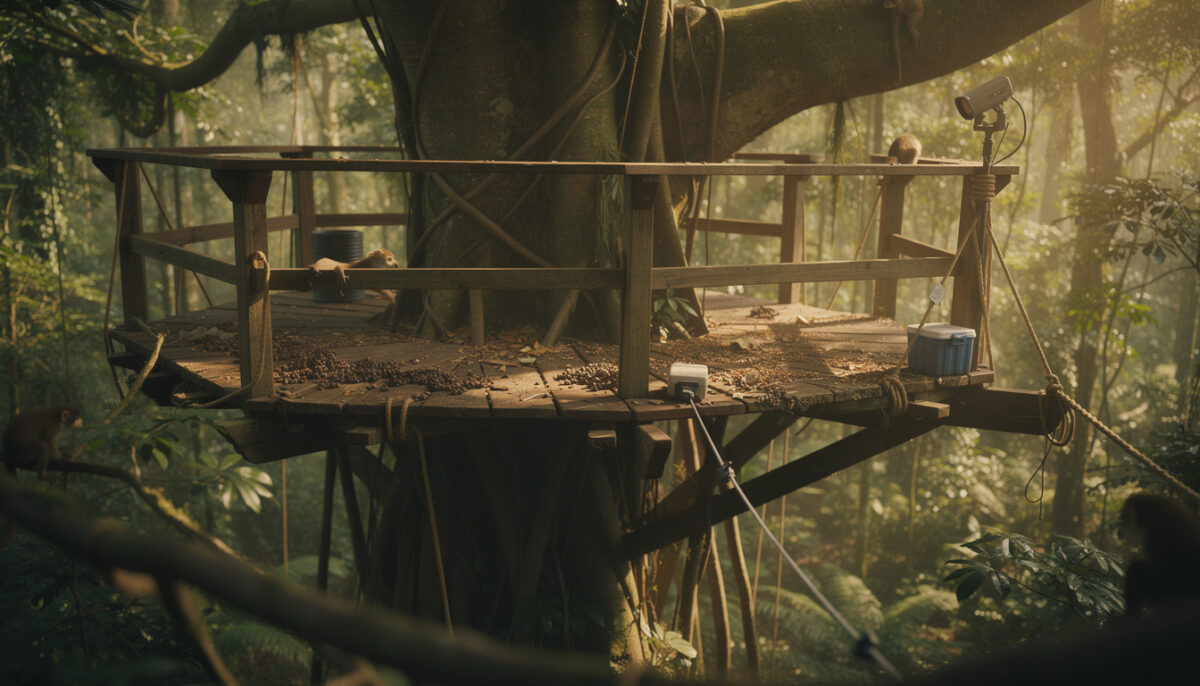
During a canopy survey in the Monteverde cloud forest, ecologist Jeremy Quirós-Navarro went looking for a flat place to secure a camera. Thirty metres above the ground, he spotted a natural platform on a huge strangler fig, covered with faeces of many colours and textures. That odd “floor” turned out to be a shared defecation site used by multiple forest species.
Curious, his team installed video traps on that fig, Ficus tuerckheimii. Over two months, the cameras revealed something stunning: 17 different mammal species used the same canopy latrine site. For a single site, that is almost the full list of tree-dwelling mammals known from that jungle, turning one plant into a genuine communication hub for animal behavior. Read more about wildlife animal behavior in other environments.
How Beavers Transform Rivers into Potent Carbon Capture Ecosystems
Rising Ocean Temperatures Trigger a Dramatic Shift in Antarctic Sea Ice Patterns
Which animals use this canopy defecation site?
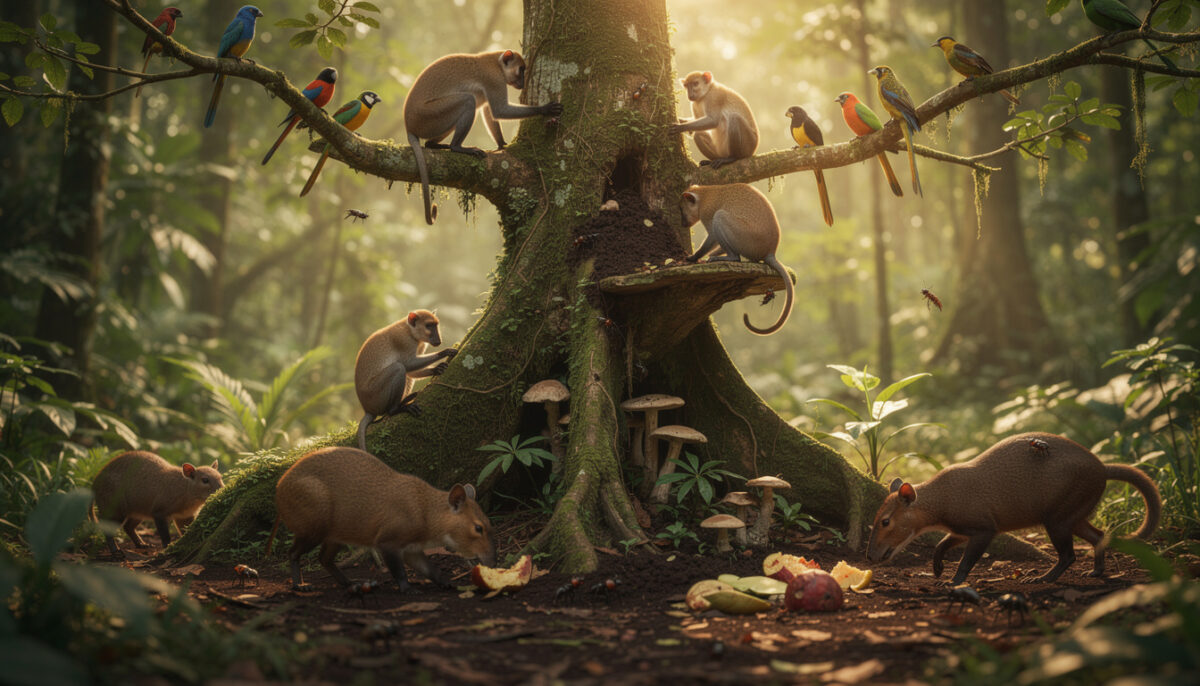
The videos showed a surprising cast. Margays, small wild cats, visited to spray urine and patrol what looked like a scent-marked crossroads. Mexican hairy dwarf porcupines came to defecate and rub branches, weaving their own chemical signature into the mix. Opossums, coatis, white-faced capuchins, howler monkeys and weasels also passed through, each leaving traces.
The biggest surprise came from two-toed sloths. These slow-moving mammals were believed to descend to the ground to defecate, exposing themselves to predators. Yet some individuals chose this common tree platform high in the canopy instead. Their presence forces researchers to rethink sloth routines and shows how little is known about life thirty metres up. If you are curious about dramatic animal discoveries, visit great white shark mediterranean for another surprising wildlife event.
Why one strangler fig becomes the preferred latrine spot
Quirós-Navarro’s team surveyed another 170 trees in the area. They found additional latrines, but always on the same species of strangler fig, Ficus tuerckheimii. No other tree offered quite the same architecture. This pattern echoes work on other species, where specific animal latrine sites become regular “bathrooms” rather than random dirty corners of the forest.
The structure of these figs explains their popularity. As they envelop and eventually kill a host tree, they form an open cluster of branches at canopy height, shaped like an upturned hand. In the centre sits a protected, relatively flat bowl. For wary jungle wildlife, that configuration creates a safe, comfortable place where predators are easier to detect and branches act like aerial highways linking different parts of the natural environment.
One tree, many functions for forest animals
These long, arching branches can reach an estimated twelve metres, sometimes bridging gaps above rivers. For monkeys, porcupines or anteaters such as the northern tamandua, a single fig may connect feeding areas that would otherwise be difficult or risky to cross. The latrine platform then becomes more than a toilet: it doubles as a junction where paths and smells intersect. Explore similar issues of tailings dam failure affecting animal movement.
Similar multi-purpose sites exist on the ground. Studies of tapir latrines in tropical forests and ocelot “bathrooms” show that communal toilets can serve as feeding patches, territorial markers and social hubs. The strangler fig adds an aerial version of this phenomenon, revealing a hidden layer of shared habitat use above the forest floor.
How a communal tree toilet shapes animal behavior and ecology
Why would so many species defecate and urinate in the same place instead of scattering waste? A key reason lies in communication. Scent marks carry rich information about identity, sex, reproductive status and even health. When multiple animals visit the same latrine spot, they effectively read and update a chemical bulletin board, much like lemurs using “latrine trees” described in previous research. Dive deeper into how valuing nature falls short in protecting essential biodiversity.
For solitary or nocturnal animals such as margays or opossums, crossing paths directly can be rare. The shared fig acts as a safe communication place to exchange information without meeting face to face. Each visit leaves a fresh layer of data in smell form, helping maintain familiarity and social bonds, even when individuals move through the canopy at different times of day or night.
From predator evasion to seed dispersal
Communal latrines may also help reduce risk. By concentrating dung in one location, prey can limit the spread of strong odours that might guide predators throughout the jungle. Hyenas and rhinos show comparable patterns on the ground, where clustered waste seems to double as both warning sign and territorial line. The fig platform appears to play the same role vertically.
There is a botanical angle too. Seeds passing through stomachs accumulate on the fig’s central basin. Insects arrive to feed, other mammals arrive to hunt those insects or eat undigested seeds, and nutrients build up. Over time, this turns the canopy latrine into a biodiversity hotspot, where wildlife ecology, plant growth and nutrient cycling interact in a tight, elevated loop.
- Communication hub: overlapping scents relay identity and reproductive status between rarely meeting individuals.
- Navigation landmark: the same tree serves as a stable reference point within dense forest.
- Predation management: concentrated odours may limit broader scent trails through the jungle.
- Food resource: seeds, insects and dung-feeders gather, attracting more forest animals.
- Connectivity node: extended branches link distant parts of the canopy, easing movement.
Human impact on this fragile canopy communication network
To bring these invisible dynamics to life, imagine a young field biologist, Sara, joining the Tropical Canopy Ecology Project. Climbing her first strangler fig, she discovers a latrine platform where climbers once camped, flattening the dung and trampling the delicate micro-habitat. The camera data show a sharp drop in visits just after the camping trip.
That kind of disturbance is not rare. Ficus tuerckheimii is popular among canopy tourists because its “hand” of branches feels safe and offers flat sleeping spots. A single group setting hammocks over the latrine can erase scent layers, destroy insect communities and temporarily break a key route for jungle wildlife, with ripple effects across the shared habitat.
Protecting common tree latrine spots for future research
Researchers now worry that by damaging even one such fig, people disrupt communication between patches of forest. If these trees serve as bridges across rivers and gaps, losing them means longer detours, riskier crossings and broken scent networks for animals that rely on consistent routes. The effect goes beyond a dirty platform; it reshapes how the canopy functions as a whole.
For conservation teams and canopy-tour operators, this discovery changes how sites are chosen and managed. Marking canopy latrines as off-limits, shifting hammocks a few metres away and educating visitors about these hidden toilets can protect both behaviour patterns and future research opportunities on animal behavior in the treetops.
Why do many jungle animals share the same tree latrine spot?
Multiple species use the same strangler fig platform because it offers safety, stable access routes and a powerful scent communication hub. By concentrating faeces and urine in one place, animals can exchange information about identity and mating status while reducing predator risk elsewhere in the forest.
What makes Ficus tuerckheimii special compared with other trees?
This strangler fig forms an open crown of long branches with a natural basin at canopy height, like an upturned hand. That shape creates a flat, protected defecation site and a set of branch “highways” that connect different parts of the canopy, sometimes even above rivers, making it uniquely attractive as a shared habitat node.
How did scientists discover these canopy latrines?
Ecologists searching for camera placements in the Monteverde cloud forest noticed platforms covered in varied faeces about 30 metres up strangler figs. After installing video traps, they recorded 17 mammal species using the same site over two months, revealing previously unknown patterns of canopy wildlife ecology and communication.
Do other animals outside the canopy use communal latrines?
Yes. Ground-dwelling species such as rhinos, hyenas, tapirs and ocelots are known to defecate repeatedly at fixed sites. Studies show these animal latrines mark territory, guide movement and create feeding hotspots, similar to how canopy fig latrines operate above the forest floor.
Can human visitors damage these natural communication hubs?
Human activities such as camping or installing platforms directly on latrine sites can flatten dung layers, disturb insects and interrupt regular visitation by mammals. Moving camping spots away from known latrines and minimising contact with these platforms helps preserve the hidden communication network used by canopy wildlife.
FAQ
What is a canopy latrine site?
A canopy latrine site is a specific spot in the upper branches of a tree where multiple wildlife species regularly defecate. These sites act as natural communication hubs for animals living in the forest canopy.
Why do different animals use the same canopy latrine site?
Many species share a canopy latrine site to leave scent signals, communicate territory, or exchange information through faeces. This behaviour helps them avoid conflict and understand which animals are nearby.
How was the canopy latrine site in the Costa Rican jungle discovered?
Researchers found the canopy latrine site during a survey in the Monteverde cloud forest and set up cameras to observe wildlife. They discovered at least 17 mammal species using the same spot on a large fig tree.
What animals were observed at the canopy latrine site?
Microplastics Descend from the Sky, Contaminating Forest Ecosystems
Scientists Unlock a 12,800-Year-Old Climate Enigma Buried in Greenland’s Ice
The canopy latrine site attracted a range of mammals including wild cats, sloths, porcupines, monkeys, opossums, and coatis. Each species used the site for defecation or scent marking.
Why are canopy latrine sites important for ecologists?
Canopy latrine sites provide insight into how species interact and communicate in the treetops. Studying these sites helps ecologists understand animal behaviour, social structures, and the overall health of jungle ecosystems.