
Show summary Hide summary
- How UK floods supercharge habitat loss for wildlife
- From local deluges to a ‘new normal’ climate pattern
- Beavers, sponge cities and nature-based flood defenses
- What can be done now to protect birds, butterflies and dormice?
- Five practical actions you can support or start
- How do UK floods specifically threaten birds, butterflies and dormice?
- Are these extreme floods definitely linked to climate change?
- Can beavers really help reduce flood risk for wildlife and communities?
- What role do towns and cities play in protecting wildlife from floods?
- Where can I find more information on the impact of floods on wildlife?
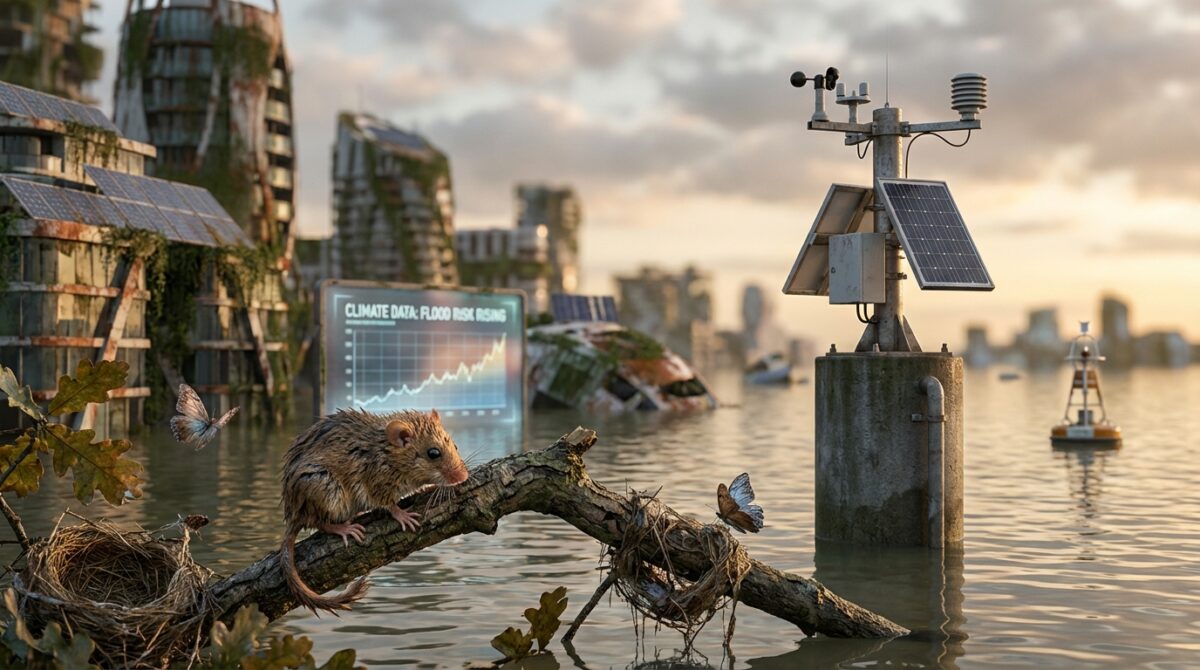
Hedgehogs and dormice drowned in hedgerows, butterfly eggs stripped from riverbanks, garden birds left without food: after Storm Chandra dumped more than 110mm of rain on parts of the west of the UK in just 24 hours, the soundtrack of the countryside turned strangely quiet.
That silence feels almost apocalyptic to conservation teams standing in chest‑deep water on nature reserves. While towns across England count the cost of the latest UK floods, experts warn that the real, hidden toll is unfolding under the surface – in sodden nests, submerged burrows and washed‑out meadows where wildlife once clung to higher ground.
How UK floods supercharge habitat loss for wildlife
Storm Chandra was not just “a bit of bad weather”. Between Tuesday and Wednesday, rain gauges in parts of south‑west England passed 110mm, breaking January daily records and forcing “danger to life” alerts. According to the Met Office and UK climate scientists, intense rainstorms are now about 20% more severe than in the pre‑industrial climate because warmer air holds more moisture.
England’s Red Squirrels on the Brink: Is There Hope?
Destabilized Ice Shelf Spurs Fast Movement of Antarctic Glacier
That extra water turns river valleys into temporary lakes. In places like Ottery St Mary in Devon, whole reserves vanished beneath brown floodwater. Burrows used by dormice, bank‑side hollows where birds shelter, and the vegetation that protects overwintering butterflies and other insects were simply erased. What looks like a single storm on the weather map becomes a form of rapid habitat loss on the ground.
Why floods feel ‘apocalyptic’ for birds, butterflies and dormice
When waters rise this fast, only scavengers win. As one Devon Wildlife Trust worker put it, the floodwaters are “only good for crows and ravens”, which move in once the water drops to feed on the carcasses of hedgehogs, dormice and voles trapped by the surge. For ground‑nesting or low‑nesting birds, entire clutches can be wiped out overnight.
Insects pay a quieter price. Many butterflies overwinter as eggs or caterpillars tucked into grass stems or leaf litter. A metre‑deep torrent scrapes those away, leaving a “missing generation” in spring. That gap then ripples up the food chain: blue tits timing their chicks to the caterpillar boom may find branches eerily bare. What starts as climate change-driven flooding ends as empty nest boxes a few months later.
From local deluges to a ‘new normal’ climate pattern
The National Trust’s recent reviews of weather and wildlife describe a pattern now familiar across the country: drought, fires and heatwaves give way to months of rain and then widespread UK floods. Reports from organisations such as the National Trust and the RSPB show sharp declines in some insect and bird populations after back‑to‑back extreme years.
This rollercoaster is fast becoming the “new normal” for British nature, as highlighted in analyses of extreme weather and UK wildlife. Instead of slow, predictable seasons, animals now face whiplash: parched soils one summer, waterlogged nesting grounds the next. Recovery time between shocks is shrinking, leaving fragile species exposed.
Wetlands erased, floodplains straightened – and wildlife squeezed
One statistic explains much of the current crisis: more than 90% of the UK’s wetlands have disappeared over the last century. What once acted like a giant sponge now covers barely 3% of the land. Rivers have been straightened, embanked and forced to race water off farmland and into towns, rather than spilling onto natural floodplains.
For wildlife, that engineering means fewer refuges when rivers roar. Amphibians lose breeding pools, wading birds lose feeding shallows, and small mammals like dormice are pushed into thin strips of hedgerow. Each major flood then slices into an already narrowed space, accelerating the long‑term squeeze on wildlife caused by development and intensive land use.
Beavers, sponge cities and nature-based flood defenses
Amid the damage, conservationists keep returning to one idea: let nature help slow the water. Across parts of Devon, Hampshire and the Isle of Wight, reintroduced beavers are quietly rebuilding what was lost. Their dams turn fast‑flowing streams into chains of ponds and wetlands that hold back rain, reduce flood peaks and create rich habitat for insects, fish and birds.
Researchers estimate at least 2,000 beavers now live in Britain, after an absence of about 400 years. Their engineering brings clear benefits: during storms, ponds spread and store water; in dry spells, they release it slowly, keeping ecosystems running. Conservation teams say humans can spend years mapping, modelling and permitting the same kind of intervention – but beavers “do it for free” every night.
From Wuhan to Berlin: global lessons for UK floods
Cities worldwide are experimenting with the so‑called “sponge city” model, which treats green space as infrastructure. In Wuhan, for example, parks and wetlands absorb flood pulses from the Yangtze, while Berlin uses vegetated roofs and porous pavements to catch rain before it hits drains. These systems turn urban areas into vast soakers rather than hard funnels.
UK planners are watching closely. Integrating ponds, rain gardens and restored streams into towns could ease pressure on rivers and provide stepping‑stone habitats for insects, bats and garden birds. That approach also links neatly with wider discussions on UK biodiversity and security, where climate resilience and nature recovery are treated as two sides of the same coin.
What can be done now to protect birds, butterflies and dormice?
Big structural changes—like reconnecting rivers with floodplains—take years, but there are immediate steps that can soften the blow of future storms. Conservation bodies and local groups often highlight three priorities for anyone worried about wildlife in a warming climate: make space for water, rebuild living corridors, and back evidence‑based policy.
On the ground, this means restoring bogs, re‑meandering streams and improving soil so rainfall can sink in rather than run off compacted fields. At the same time, gardens, farms and urban verges can become lifelines for butterflies, birds and small mammals displaced by repeated UK floods.
Five practical actions you can support or start
Small, local choices stack up when storms hit. Whether in a village washed by Storm Chandra or a city far from the nearest river, residents can tilt the odds back towards thriving nature:
- Leave “messy” corners with long grass and leaf litter so overwintering insects survive heavy rain.
- Plant native hedgerows and trees on slopes to slow runoff and provide shelter for dormice and songbirds.
- Install water‑butts and rain gardens to catch roof runoff before it reaches drains and rivers.
- Support wetland and beaver restoration projects run by local wildlife trusts.
- Back policies that protect floodplains from development and fund nature-based climate change adaptation.
Those shifts give caterpillars somewhere to cling during the next deluge and offer hedgehogs and dormice a dry bank when rivers surge. They also reinforce the message carried by reports such as the recent analysis of Storm Chandra’s wildlife impacts: society can choose landscapes that shed water violently, or ones that soak it up and share the space with nature.
How do UK floods specifically threaten birds, butterflies and dormice?
Fast-rising floodwater drowns ground-nesting birds, fills dormouse nests and burrows, and strips away vegetation holding butterfly eggs or caterpillars. Because many species cluster in low-lying hedgerows, meadows and riverbanks, intense floods can wipe out whole local populations in a single event, leaving fewer adults to breed in spring.
Are these extreme floods definitely linked to climate change?
Climate scientists and the UK Met Office report that heavy rainfall events are now around 20% more intense than in the past because warmer air holds more moisture. That does not mean climate change causes a particular storm, but it loads the dice toward more severe downpours, higher river levels and more frequent flooding that harms wildlife and people.
Can beavers really help reduce flood risk for wildlife and communities?
Beaver dams slow water in small rivers, spread it across wetlands and store it in a series of ponds. This reduces peak flows downstream and creates refuges where fish, insects and birds can survive storms. While beavers cannot prevent every flood, especially in big river catchments, they are a powerful part of wider nature-based solutions when combined with restored wetlands and healthy soils.
What role do towns and cities play in protecting wildlife from floods?
Urban areas often speed floodwater into rivers through drains and hard surfaces, raising peaks that swamp habitats downstream. By adopting ‘sponge city’ ideas—green roofs, rain gardens, parks that hold temporary water—towns can slow and store rainfall. These features also create pockets of habitat that help insects, birds and bats move and recover after extreme weather.
Where can I find more information on the impact of floods on wildlife?
River Thames Among 13 Prime Locations Shortlisted for Official Swimming Recognition
When Valuing Nature Falls Short: Can Bold Strategies Rescue Our Planet?
Detailed reports and case studies are available from organisations such as the National Trust, the RSPB and local wildlife trusts. For a news-led overview, pieces like the article on how storms affect birds, butterflies and dormice or broader reviews of extreme weather and UK wildlife bring together scientific findings, field observations and practical responses in one place.