

Show summary Hide summary
- From allotted prairie to toxic mining wasteland
- Indigenous leadership takes back control of reclamation
- Turning a poisoned site into a sustainable homeland
- Cultural memory, food sovereignty and long‑term resilience
- Why this transformation matters beyond Tar Creek
- How did the Quapaw Nation gain control of the cleanup?
- Is the land now safe for farming and cattle?
- What happens to the toxic chat piles that are removed?
- How does this project support long-term sustainability for the Quapaw Nation?
- Can other Indigenous communities replicate this model of reclamation?
An orange creek running through grey slag heaps. Children warned not to play outside. Then, a herd of bison grazing where nothing once grew. This is the story of how one Indigenous Nation turned a toxic mining scar into a living homeland.
From allotted prairie to toxic mining wasteland
They call this place the Laue, 200 acres of grassland inside the Quapaw Nation in northeast Oklahoma. In the late 1800s, part of it was allotted to Charley Quapaw Blackhawk, when federal policy broke communal lands into individual parcels to push Native people toward Jefferson’s ideal of yeoman farmers.
For more than a century, though, little grew. Half the Laue lay buried under pale mountains of mine waste known as chat piles. Lead and zinc taken from the Tri‑State Mining District between 1891 and the 1970s left behind rock laced with heavy metals. By 1983, 40 square miles, including nearly all Quapaw territory, had been declared the Tar Creek Superfund site, one of the country’s worst contaminated landscapes.
Build Safe Spaces for Hedgehogs: Plus 7 More Ways to Support Our Spiky Companions
How Microplastics Could Be Silently Harming Your Brain and Driving Alzheimer’s and Parkinson’s Diseases
When the ground turned poisonous
Mining left more than ugly hills. Chat piles, some spreading over nearly 100 acres, smothered soil and released toxic dust into the air. Below ground, about 300 miles of tunnels honeycombed the rock. Collapses swallowed cattle, cars and even homes, with one cave‑in covering nearly four acres.
In 1979, acidic mine water surfaced and Tar Creek ran the color of rust. A 1994 study showed 34% of Native American children nearby carried dangerous levels of lead in their blood, echoing patterns described in research on mining on tribal lands. For families like rancher Larry Kropp’s, childhood meant sledding down poison piles and being told to avoid open shafts that pocked their own reservation.
Indigenous leadership takes back control of reclamation
Federal contractors arrived with grants and big machinery, but left fields half-cleared when money dried up. Some firms were paid by the pound. They scraped away not only chat, but the thin layer of fertile topsoil needed for future crops. Boulders dumped in place made it impossible to move tractors across the land.
Quapaw leaders finally drew a line. According to former construction and agriculture director Chris Roper, the message was simple: outside crews were no longer welcome on Quapaw land. The tribal chair told him to handle the reclamation himself. A rented bulldozer, a tribal heavy‑equipment operator, and a new model of Environmental Restoration was born.
From Superfund client to cleanup contractor
The team began cleaning chat piles, hauling rock, bringing in topsoil, seeding and mulching the ground. After tallying expenses, they sent the bill to the Environmental Protection Agency. The agency paid. This small act flipped the script: the Quapaw were no longer passive victims of toxic mining, but service providers managing their own recovery. Learn more about impactful climate strategies in When Valuing Nature Falls Short: Can Bold Strategies Rescue Our Planet?.
In 2013, the tribe secured a $2 million EPA contract to clean a 40‑acre site known as the Catholic 40, once home to a boarding school for Quapaw children. Since then, they have overseen all chat pile remediation at Tar Creek using their own equipment and crews, becoming the first and only tribe to run a full Superfund cleanup. Their experience now aligns with broader calls for responsible mining in Indian Country that centers tribal authority and knowledge.
Turning a poisoned site into a sustainable homeland
Once chat is removed, larger stones are crushed and used in roadwork, where asphalt safely traps any remaining lead. Finer material goes to an engineered repository, later sealed under clean soil. The Quapaw refused to leave bare scars. They insisted each remediated parcel must support life again, or the job was not done.
To rebuild fertility, crews spread mushroom compost, tested for contaminants at 6‑ and 12‑inch depths, then planted cover crops. Land that passes EPA thresholds can host row crops. Marginal soils still grow rye or fescue for cattle, while some patches become wildlife habitat. Nearly 100 jobs have been created, about half held by tribal citizens, showing how sustainability and employment can move together. For more on changing farming landscapes, see Deforestation Disrupts Amazon’s Atmospheric Rivers, Leading to Increased Aridity.
Laue, Bird Dog and the return of agriculture
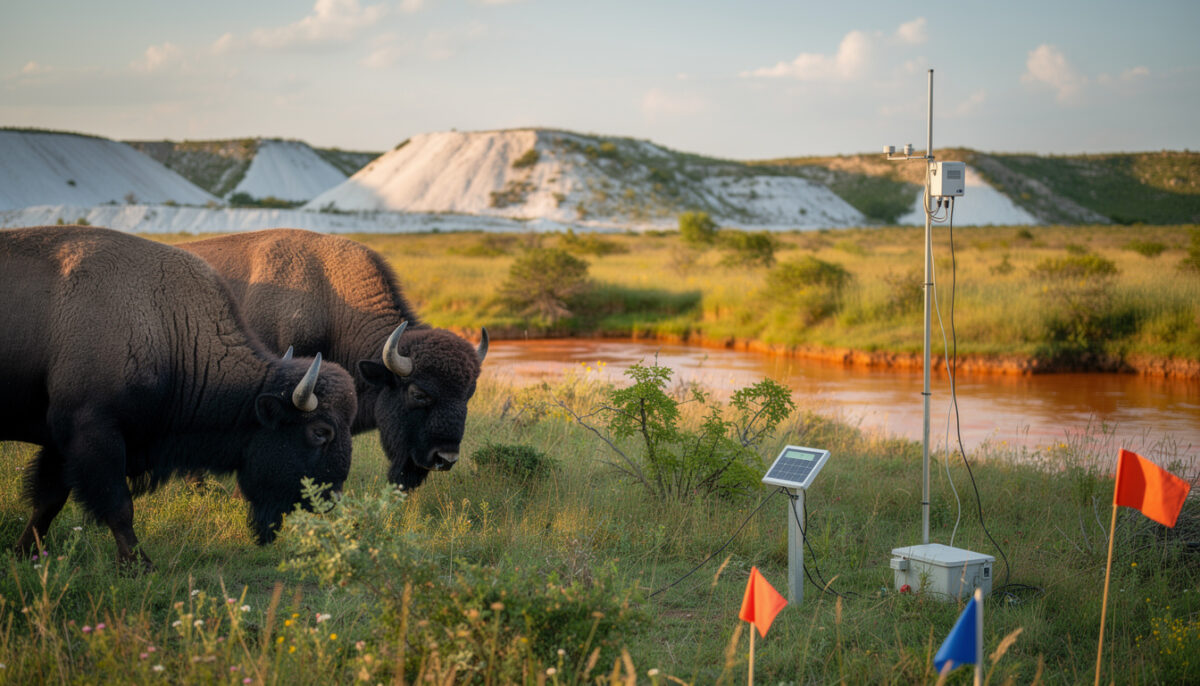
On the Laue today, green oats stand about two feet high. Around 400 head of cattle rotate through the pastures, each move designed so animals do not graze down to bare dirt and ingest residual contaminants. For ranchers like Larry Kropp, seeing cattle feed on ground he once sledded as a child is a quiet victory.
Another site, the 160‑acre Bird Dog, lay beneath an 850‑foot‑tall chat pile until cleanup began in 2019. Agriculture director Mitch Albright planted wheat as a first test. The soil still lacks the dark, rich color of prime topsoil, so he weighs options: reseeding with native grasses, using bison or cattle to build organic matter, or dedicating the area to hunting. The guiding principle remains simple: every acre must serve the homeland, even if it never turns a financial profit.
Cultural memory, food sovereignty and long‑term resilience
For the Quapaw, farming is more than economics. Historical accounts from the 1600s describe miles of fields filled with corn, pumpkins, beans, sunflowers and fruit trees along what is now eastern Arkansas. Men hunted, women tended crops, and both carried political responsibility, a social order that baffled colonists locked into “agrarian sexism”.
Rebuilding agriculture at Tar Creek reconnects with that legacy. The tribe now manages around 2,500 acres of row crops, including corn, wheat and soybeans. A bison herd grazes near the Downstream Casino Resort, providing meat and a living reminder of plains ecologies. Greenhouses and gardens raise tomatoes, cucumbers and traditional medicines, while a tribally owned meat‑processing plant keeps protein flowing to community households. There’s growing interest worldwide in food security and resilience, like shared in Study Reveals: Extreme Heat Exposure Could Double by 2050 with 2°C Global Temperature Rise.
Why this transformation matters beyond Tar Creek
Tar Creek has become a reference point for other communities staring at their own toxic legacies. Exhibitions such as Tar Creek: Toxic Legacies, Racism and Tribal Landscape Transformations show how environmental damage, racism and dispossession intertwine. At the same time, case studies on how tribes are reclaiming and protecting ancestral lands highlight Indigenous‑led recovery as a model for climate‑era land management.
For other tribal nations, the Quapaw experience offers a concrete path: insist on control, link Environmental Restoration with food sovereignty, and see every cleanup contract as both hazard removal and nation‑building. Turning a mining wasteland into a functioning homeland shows that healing landscapes can also heal governance, identity and long‑term sustainability. Their approach to quapaw nation land restoration is now watched as a model.
- Chat piles removed and safely repurposed or contained.
- Soils tested, amended with compost and cover crops.
- Land repurposed to row crops, grazing, wildlife or hunting.
- Jobs created within the Indigenous Nation’s own workforce.
- Food systems rebuilt around bison, cattle, vegetables and traditional plants.
How did the Quapaw Nation gain control of the cleanup?
After years of incomplete federal remediation, Quapaw leaders told outside contractors to leave their territory and began doing the work themselves. They rented equipment, used tribal operators, documented costs, and invoiced the EPA. When the agency reimbursed them and later awarded a formal Superfund contract, the tribe shifted from being cleanup subjects to being the primary remediation contractor on their own land.
Is the land now safe for farming and cattle?
Remediated parcels go through extensive testing. Environmental staff sample soils at multiple depths to verify that heavy metal levels meet EPA standards. Where results are acceptable, the agriculture department plants row crops or perennial grasses. Cattle and bison graze under carefully managed rotations to avoid overgrazing and limit exposure to any remaining contaminants, creating a monitored but productive landscape.
What happens to the toxic chat piles that are removed?
Excavated chat is sorted. Larger stone is used in road construction, where asphalt encapsulates the remaining lead. Finer waste is transported to a designated repository engineered to contain contamination. The repository is gradually covered with clean soil and vegetation, turning a highly hazardous material into a controlled and monitored feature instead of an open, wind‑blown source of dust.
How does this project support long-term sustainability for the Quapaw Nation?
Scientists Unveil Massive Spiraling Plumes Concealed Within the Depths of Greenland’s Ice Sheet
Scientists Sound Alarm: Australia’s ‘Zombie Tree’ Faces Possible Extinction Within a Generation
The cleanup creates jobs, restores farmland and strengthens food sovereignty. Agricultural revenue from crops and livestock complements income from casinos and other enterprises. At the same time, reviving traditional relationships with plants, animals and soil reinforces cultural identity. This mix of economic diversification, ecological repair, and cultural renewal underpins long‑term sustainability for the Nation.
Can other Indigenous communities replicate this model of reclamation?
Yes, the Quapaw experience offers a roadmap, though each site is unique. Key elements include asserting tribal authority over cleanup decisions, building in‑house technical capacity, pairing remediation with clear plans for post‑cleanup land use, and negotiating directly with agencies like the EPA. Many Indigenous communities dealing with legacy mining pollution are now studying Tar Creek as a practical template for their own reclamation efforts.