
Show summary Hide summary
- How beavers turn rivers into carbon capture machines
- Wetlands engineered by beavers: a net carbon sink
- Climate impact: small animals, measurable national benefits
- Beavers, changing ecosystems and research frontiers
- Where this nature-based solution fits into climate planning
- How do beavers increase carbon capture in rivers?
- Do beaver wetlands release too much methane to be climate friendly?
- Can restoring beavers really impact national carbon emissions?
- Are there downsides to beavers reshaping river ecosystems?
- How is this research changing river management strategies?
- FAQ
Imagine your local stream quietly turning into a hidden climate ally, locking away carbon faster than nearby forests. That is exactly what happens when beavers move in, reshape rivers, and build the kind of wet ecosystems that scientists now call powerful, long-term carbon vaults. To learn more about these processes, visit beavers are turning rivers into powerful carbon sinks.
How beavers turn rivers into carbon capture machines
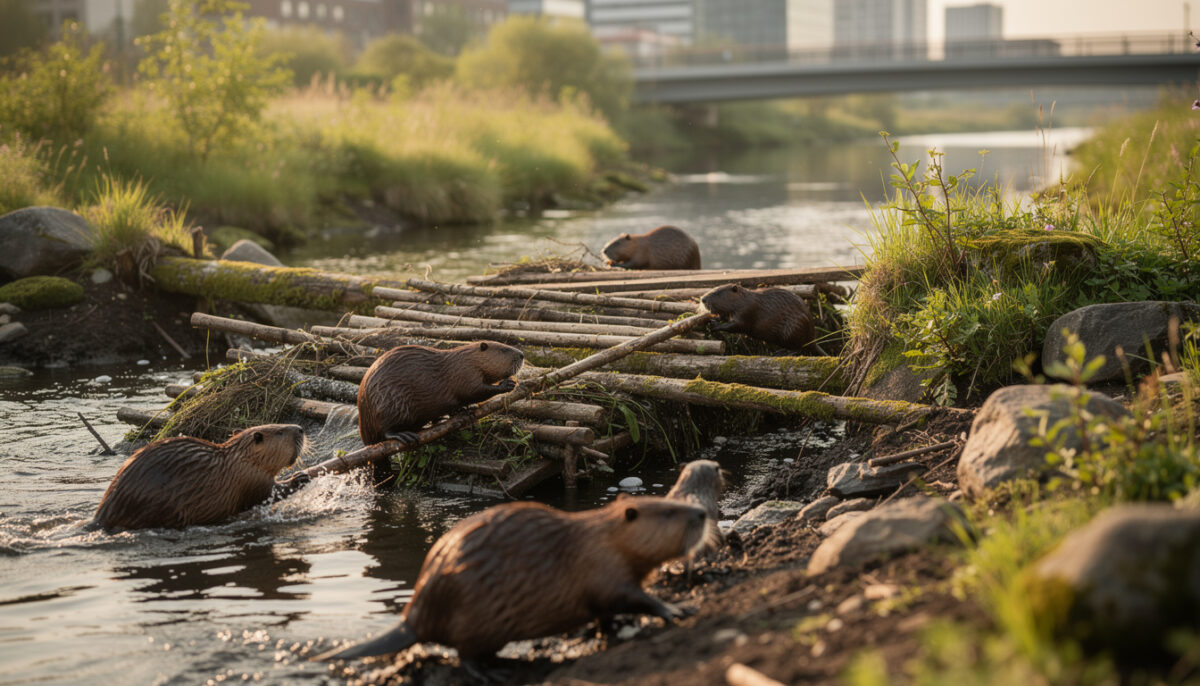
At the heart of this story is dam building. Through relentless dam construction, beavers slow flowing water, spill it onto the floodplain, and create complex wetlands. In a Swiss stream corridor monitored for more than a decade, this engineering transformed a simple channel into a dense network of ponds, side arms, and soggy soils.
Researchers from Birmingham, Wageningen and Bern combined hydrology, chemistry and soil analyses to follow every major pathway of carbon capture. Their verdict: beaver-shaped wetlands stored carbon up to ten times faster than comparable reaches without beavers, turning a former conduit for CO2 into a persistent sink. For further perspectives on nature-based strategies, see valuing nature falls short.
Rising Ocean Temperatures Trigger a Dramatic Shift in Antarctic Sea Ice Patterns
Microplastics Descend from the Sky, Contaminating Forest Ecosystems
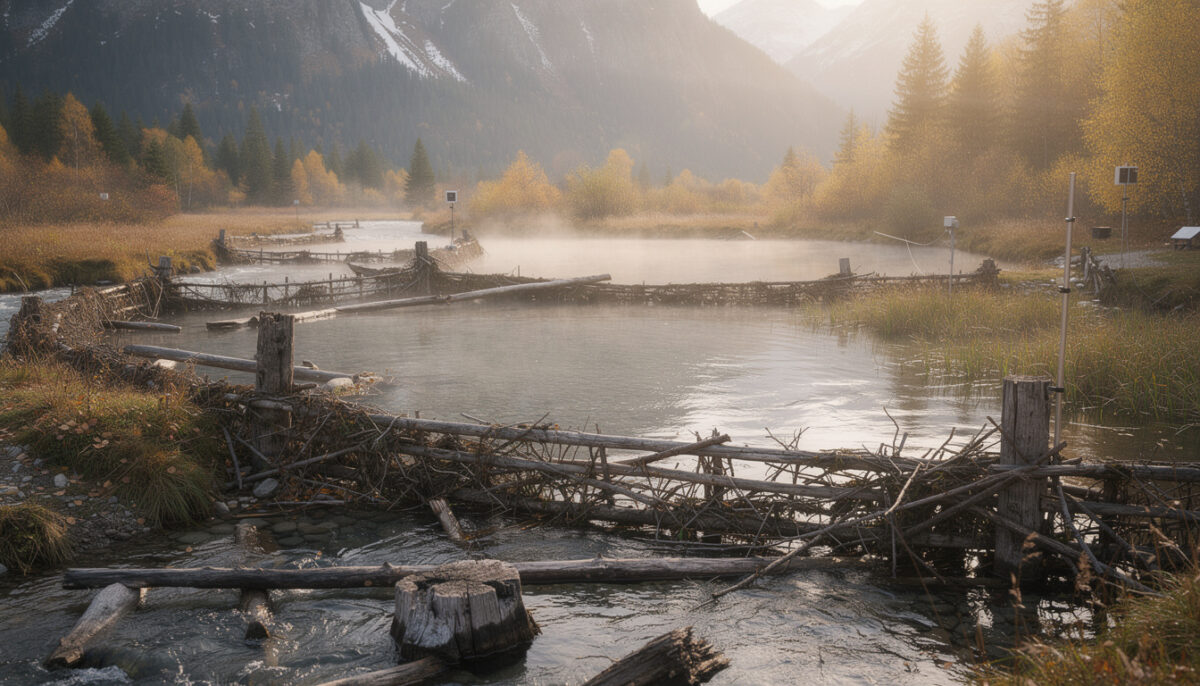
From dam construction to full carbon sequestration system
What happens chemically when the first logs hit the water? Flow slows, sediments settle, and previously clear water begins to carry fine organic matter into newly flooded soils. Dissolved inorganic carbon in groundwater is trapped and transformed, while vegetation colonises shallow pools and banks, feeding continuous carbon sequestration in roots and peat-like layers.
In the Swiss site, this process added up impressively. Over 13 years, the beaver corridor locked away roughly 1,194 tonnes of carbon, averaging about 10 tonnes of CO2 per hectare each year. That pace rivals some restored peatlands and shows why these animals are now entering climate policy conversations across Europe.
Wetlands engineered by beavers: a net carbon sink
The research team did not stop at surface measurements. They tracked greenhouse gases year-round and built a full carbon budget for the beaver-influenced landscape. Across seasons, the wetland behaved as a strong net sink, storing around 98 tonnes of carbon per year, primarily through sub-surface retention of dissolved inorganic carbon.
Summer brought a twist. Lower water levels exposed mud and plant debris, briefly flipping the system into a carbon source as CO2 emissions spiked. Yet annual totals still showed clear net storage. Methane, a frequent concern in marshy environments, contributed less than 0.1% of the overall carbon balance, easing fears that extra CH4 might cancel the benefits.
Why sediments and deadwood matter so much
The long game is played in mud and timber. Sediments trapped behind dams accumulated up to 14 times more inorganic carbon and eight times more organic carbon than nearby forest soils. Almost half of the stored carbon sat in deadwood from surrounding riparian forests, wedged in channels or half-buried in banks.
As years pass, these woody deposits and fine sediments layer up, locking carbon away for decades as long as the dam network remains. This is why scientists writing in sources like beavers can convert stream corridors to persistent carbon now treat beaver wetlands as serious long-term storage systems rather than short-lived experiments.
Climate impact: small animals, measurable national benefits
To test the wider environmental impact, scientists scaled their results to all floodplains in Switzerland suitable for beaver return. The numbers suggest these engineered wetlands could offset around 1.2–1.8% of national annual emissions, without ongoing human management or high-tech infrastructure.
That percentage may sound modest, yet for a single native species working for free, it is striking. Similar patterns are being reported in other European catchments and summarised in outlets such as Wageningen University news and international climate briefings that track nature-based solutions alongside renewable energy and urban adaptation.
Biodiversity and habitat restoration as extra dividends
Carbon is only one part of the story. Beaver-driven habitat restoration shapes living conditions for everything from amphibians to migratory birds. Complex ponds and channels create refuge during droughts, spawning grounds for fish, and rich feeding zones for insects and bats.
In a decade, an initially simple headwater can become a layered mosaic attracting species that had vanished. While some wetland expansions may challenge certain land uses, the combined gains in biodiversity, water retention, and carbon storage are pushing agencies to integrate beavers into river restoration strategies rather than treat them as nuisances. To explore the interconnectedness of wildlife populations, see wildlife animal behavior.
Beavers, changing ecosystems and research frontiers
For climate modeller Emma Clarke, who advises a regional water authority, the Swiss results changed how she evaluates small catchments. Instead of viewing headwater ecosystems purely as sources of dissolved carbon heading downstream, she now treats active beaver zones as adjustable sinks that alter budgets at basin scale.
This shift lines up with broader ecological research ranking animal behaviours among the forces reshaping Earth, alongside studies that, for instance, compare mammal life strategies or explore how extreme weather, including major UK floods, disrupts bird and insect populations as reported in dedicated climate briefings.
Where this nature-based solution fits into climate planning
No serious scientist claims that beavers alone can balance national inventories. The message is different: when countries restore native engineers in the right places, they gain reliable, low-maintenance carbon sequestration alongside flood buffering and resilience. For river managers, the question shifts from “Should we tolerate beavers?” to “Where do they deliver the most value?”
Strategic mapping of suitable valleys, coordinated with farmers and local communities, can turn contentious reintroductions into shared projects. When that happens, small family groups of beavers become partners in climate adaptation, quietly stacking carbon into sediments, ponds and woody debris year after year.
- Slow water, store carbon: dams reduce flow speed, boosting sediment and carbon deposition.
- Create wetlands: flooded zones promote plant growth and organic matter accumulation.
- Trap deadwood: fallen trunks and branches become long-lived carbon reservoirs.
- Support biodiversity: richer habitats strengthen ecosystem resilience to climate extremes.
How do beavers increase carbon capture in rivers?
By building dams, beavers slow water, trap sediments and flood adjacent land. These changes encourage wetlands to form, where organic matter, dissolved inorganic carbon and deadwood accumulate. The combined effect turns formerly fast-flowing channels into zones of long-term carbon storage rather than simple conduits to the ocean.
Do beaver wetlands release too much methane to be climate friendly?
Field measurements from a long-studied Swiss beaver wetland showed methane made up less than 0.1% of the total carbon budget. While small methane emissions occur, they are outweighed by the volume of carbon stored in sediments, vegetation and buried wood, leaving the system as a strong net sink over the year.
Can restoring beavers really impact national carbon emissions?
Scaling the Swiss results to all suitable floodplains suggested beaver wetlands could offset 1.2–1.8% of annual emissions there. This will not replace decarbonising energy or transport, but it offers a measurable, low-cost contribution that also improves biodiversity, water retention and resilience to droughts and floods.
Are there downsides to beavers reshaping river ecosystems?
Their dams can flood fields, forest tracks or infrastructure if reintroductions are poorly planned. Collaboration with landowners, flow devices at problematic dams and careful catchment mapping help balance these impacts. Where managed well, the benefits for carbon storage, wildlife and hydrology tend to outweigh the drawbacks.
How is this research changing river management strategies?
Managers increasingly see beavers as active partners in habitat restoration rather than obstacles. Carbon-focused studies encourage integrating beaver zones into climate plans, alongside other ecological concerns such as how severe floods threaten birds and insects documented in dedicated environmental reports. This broader view supports government tried hide this alarming report on ecosystem collapse for more holistic river corridor design.
FAQ
How do beavers help with carbon sequestration?
Beavers contribute to carbon sequestration by building dams that slow water flow, create wetlands, and trap organic material. These wetlands store more carbon in their soils and sediments, significantly enhancing the process of beavers carbon sequestration.
Why are beavers considered important for reducing carbon in rivers?
Beavers are crucial for beavers carbon sequestration because their engineering transforms rivers into effective carbon sinks. Their dams encourage the accumulation and storage of organic matter that would otherwise be released as CO2.
How effective is beavers carbon sequestration compared to forests?
Scientists Unlock a 12,800-Year-Old Climate Enigma Buried in Greenland’s Ice
Tectonic Movements Traced Back: Earth’s Crust in Motion 3.5 Billion Years Ago
Recent studies show that beavers carbon sequestration in engineered wetlands can occur up to ten times faster than in similar areas without beavers. This makes beaver-modified rivers surprisingly powerful for capturing and storing carbon.
Are there environmental risks to increased beaver activity for carbon capture?
While beavers carbon sequestration offers substantial climate benefits, changes in water flow and flooding may affect local habitats. However, most research indicates that beaver wetlands generally boost biodiversity and ecosystem resilience.