
Show summary Hide summary
- Somerset residents living with water at the door
- Why Somerset floods are becoming more frequent and intense
- Drains, decisions and delayed reports: where flood management fails
- Who is affected when Somerset residents face a sea of water
- Adapting Somerset for a wetter future climate
- What residents, councils and readers can do next
- Turning anxiety into practical, local action
- Why are Somerset residents seeing flooding in places that never flooded before?
- How does climate change influence heavy rainfall over Somerset?
- What protections exist for flooded households in Somerset?
- Can better drain maintenance really reduce flood risk?
- What can individuals do if they live in a flood-prone area?
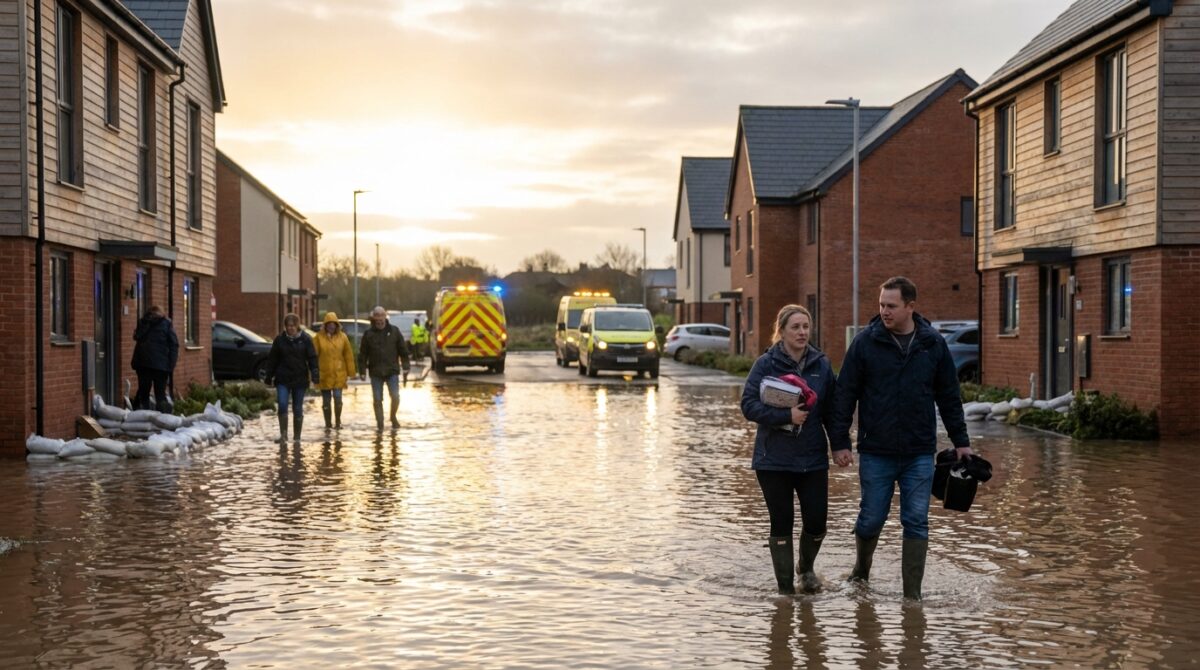
At 1am in Taunton a boxer puppy started barking. Minutes later, its owners opened the back door and found not a garden, but a sea of water stretching across their estate. For dozens of flooded Somerset residents, this was not a freak event, but a warning about Britain’s future flood management in a warming climate.
The scene playing out across Somerset this winter is not only about sodden carpets and ruined furniture. It is a live experiment in how communities cope when heavy rain, blocked drains and rising rivers collide with ageing infrastructure and slow decision-making.
Somerset residents living with water at the door
On a modern estate in Taunton, the Wade family watched water creep indoors for the first time in 13 years. Even in the notorious Somerset Levels flooding of 2014, their street stayed dry. This time, around 50 households were hit as Storm Chandra swept across south-west England.
How to Create a DIY Worm Farm That Can Compost Food Scraps, Paper, and Even a Whole Kangaroo
How Squid Triumphed Over Earth’s Greatest Extinction to Dominate the Oceans
What shocked neighbours was that nearby Black Brook did not overtop. Instead, water appears to have erupted through obstructed drains, turning roads into channels. Local reports, including coverage from BBC journalists on the ground, describe homes inundated long before river levels peaked, exposing weaknesses far from national flood walls and embankments.
From Ilminster park homes to the Somerset Levels moors
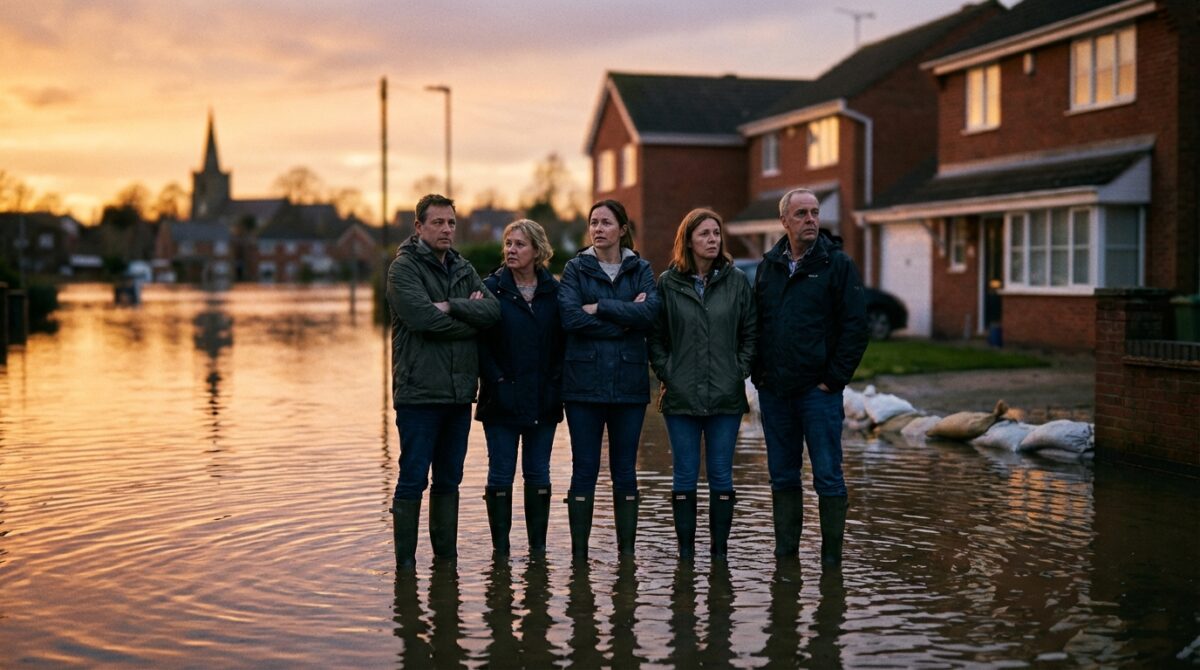
East in Ilminster, a residential park was again surrounded by water almost to thigh height. Long-time resident Allison Bushby was jolted awake by a flood alarm at 1am and stepped outside into cold, brown water pooling from fields, culverts and drains.
Having been flooded at almost the same time last year, she now stores belongings in heavy-duty boxes, lifting them onto worktops the moment rain intensifies. Her improvised system shows how residents quietly adapt while formal emergency response systems struggle to keep pace.
Why Somerset floods are becoming more frequent and intense
Somerset’s geography makes it a natural bowl. Much of the county is low-lying, ringed by higher ground such as Exmoor and the Blackdown Hills. During intense rainfall, water cascades off these slopes into the Somerset Levels, where rivers, ditches and moors leave little space for extra flow.
According to the UK Met Office and the Intergovernmental Panel on Climate Change, a warmer atmosphere holds around 7% more water vapour per degree Celsius. That extra moisture means storms like Chandra can drop heavier bursts of rain, raising the odds of “once in a century” events happening several times in a generation.
From 2014 floods to 2026: what has changed?
The catastrophic 2014 floods left villages cut off for weeks and prompted a 20-year action plan. Dredging programmes were expanded and more pumps were installed. A detailed Somerset Levels case study used in UK geography courses now documents how river capacity and land use contributed to that disaster.
In response, the Somerset Rivers Authority was created in 2015 to coordinate multiple agencies. Its own review, ten years on from 2014, highlights both progress and gaps. Stronger flood defences protect some communities, yet new trouble spots, like the Wades’ estate, are appearing away from traditional risk maps.
Drains, decisions and delayed reports: where flood management fails
For many residents, the most frustrating failures are invisible. Council officials admit they currently clear drains only when problems are reported, rather than through a planned, countywide schedule. This reactive approach leaves neighbourhoods vulnerable to sudden water damage when intense rainfall hits already clogged systems.
Somerset communities also report long delays before seeing official flood investigation reports. These documents, required under the Flood and Water Management Act, should inform better designs and maintenance. When they arrive late, lessons are learned slowly and people endure another season of anxiety.
Local knowledge versus distant decision-makers
On the moors, campaigners like hairdresser and FLAG spokesperson Bryony Sadler argue that flood management must work with people who know the land intimately. While she walks her dogs, she watches water creep across grazing marsh that was dry only days ago.
In Northmoor, the main drainage channel rose from 4.04 metres at dawn to 4.14 metres by early afternoon. The Environment Agency considers property at risk above 4.13 metres, turning each centimetre into a tangible threat. Families quietly plan evacuation routes for children, pets and elderly relatives, long before official alerts escalate.
Who is affected when Somerset residents face a sea of water
Storms like Herminia, Goretti, Ingrid and Chandra are reshaping daily life for a wide circle of people. Those immediately flooded lose floors, furniture and sometimes livelihoods, but the ripple effects spread through supply chains, public services and local businesses.
Rural economies dependent on farming and tourism are particularly exposed. Soaked pastures, inaccessible lanes and damaged homes reduce incomes for months. Reports such as the recent coverage of evacuations during the Somerset flooding crisis show how quickly villages can be cut off when roads vanish under water.
Wildlife on the edge and the mental toll
Somerset’s floodplains are rich with birds, deer, amphibians and insects. Prolonged inundation forces animals to higher, narrower strips of ground, increasing competition and stress. Residents watching deer pick their way through flood water now ask what happens to hedgehogs, worms and ground-nesting birds when water lingers for weeks.
The emotional strain is harder to photograph. People describe lying awake at night when heavy rain hits roofs, replaying previous flooding in their heads. Phrases like “we live in fear of being flooded again” recur in interviews, turning climate statistics into an everyday mental health issue.
Adapting Somerset for a wetter future climate
Climate scientists expect extreme rainfall events to continue intensifying across the UK. Global studies of water stress in large cities, such as those examined in analyses of the world’s largest cities facing water stress, show how both scarcity and overload can threaten societies. Somerset sits on the “too much water” side of this spectrum.
Locally, councils and residents are starting to move from emergency patch-ups towards long-term resilience. That shift involves physical changes on the ground, new funding models and a cultural acceptance that some areas will flood more often.
From hard defences to smarter, nature-based solutions
Engineers and ecologists increasingly promote a mix of concrete defences and nature-based solutions. Upstream tree planting, wetland restoration and reconnection of rivers to floodplains can slow run-off, buying time for pumps and barriers downstream.
Lessons emerging from research on resilience and rapid restoration in other infrastructure sectors suggest that diverse, distributed systems recover faster. For Somerset, that means not relying on one big wall or pump, but on many small interventions spread across hillsides, villages and farms.
- Proactive drain maintenance schedules in towns and villages, rather than waiting for blockages.
- Property-level protection such as flood doors, airbrick covers and raised electrics.
- Restored wetlands and ponds to hold back peak flows from hills.
- Transparent data and faster reports so residents see risks and responses in real time.
- Targeted grants for flooded households to rebuild in safer, more resilient ways.
What residents, councils and readers can do next
Somerset’s story carries lessons far beyond one English county. As mountain and upland regions globally warm faster than the planetary average, documented in studies of rapidly heating mountain regions, runoff patterns will keep shifting. Lowland communities downstream must adapt now, not later.
Readers watching these floods from elsewhere are not powerless. Many adaptation measures depend on public pressure, informed choices and community organisation as much as on engineers and ministers.
Turning anxiety into practical, local action
For people living in or near flood-prone areas, small steps stack up. Joining local flood groups, logging blocked drains, and attending council consultations help ensure that residents’ experience shapes policy rather than being an afterthought.
For others, supporting organisations working on wetland restoration, backing climate mitigation policies, and reducing personal emissions all contribute to lowering long-term risks. Every fraction of a degree avoided means fewer families woken by barking dogs and finding, outside their back doors, another unexpected sea of water.
Why are Somerset residents seeing flooding in places that never flooded before?
Several factors overlap. More intense rainfall driven by human-caused climate change is overwhelming drains and small streams. Urban expansion has added hard surfaces that shed water quickly. In some newer estates, drainage systems were not designed for current extremes, so water now reappears through blocked or undersized drains rather than over riverbanks.
How does climate change influence heavy rainfall over Somerset?
A warmer atmosphere holds more moisture. According to the IPCC and the UK Met Office, each degree Celsius of warming allows roughly 7% more water vapour in the air. When storm systems form over south-west England, they can therefore release more intense downpours, raising the likelihood of flash flooding and prolonged waterlogging.
What protections exist for flooded households in Somerset?
National schemes sometimes offer grants, such as support of up to £5,000 for resilience measures after serious floods, and insurers may fund repairs. Local councils and the Somerset Rivers Authority coordinate emergency response, pumps and road closures. However, coverage varies, and many residents invest in their own barriers, raised sockets and storage solutions to reduce future damage.
Can better drain maintenance really reduce flood risk?
Jungle Wildlife Shares a Common Tree as Their Preferred Latrine Spot
How Beavers Transform Rivers into Potent Carbon Capture Ecosystems
Regular, proactive maintenance can significantly lower surface water flooding, especially in towns. Keeping gullies, culverts and road drains clear helps intense rainfall enter the network rather than pooling on streets and flowing into homes. It cannot remove all risk from major storms, but it often makes the difference between nuisance puddles and water entering properties.
What can individuals do if they live in a flood-prone area?
You can check official flood maps, sign up for Environment Agency alerts, and prepare a household plan covering evacuation routes and important documents. Installing property-level measures, such as flood doors or non-return valves, reduces damage. Joining local flood action groups also strengthens the community voice when councils and national agencies design new defences and emergency plans.