Show summary Hide summary
- Stunning crocodile close-up that won an ecology photo contest
- Other winning wildlife photographs that reveal hidden dynamics
- Macro worlds: plants, fungi and the art of close-up photography
- How this kind of wildlife photography supports science and policy
- What makes this crocodile close-up different from typical wildlife photos?
- How does an ecology photo contest support conservation?
- Are the animals disturbed by photographers during these close-up shots?
- Can amateur photographers contribute to ecological research?
- Where can I see more images from the Capturing Ecology competition?
A single yellow eye, unblinking above still water, fills the frame. Tiny flies tap at reptilian skin, drinking blood from a predator that could crush bone. This stunning crocodile close-up has just claimed victory in a major ecology photo contest, and it is changing how people see wildlife, predators and the fragile systems that bind them together.
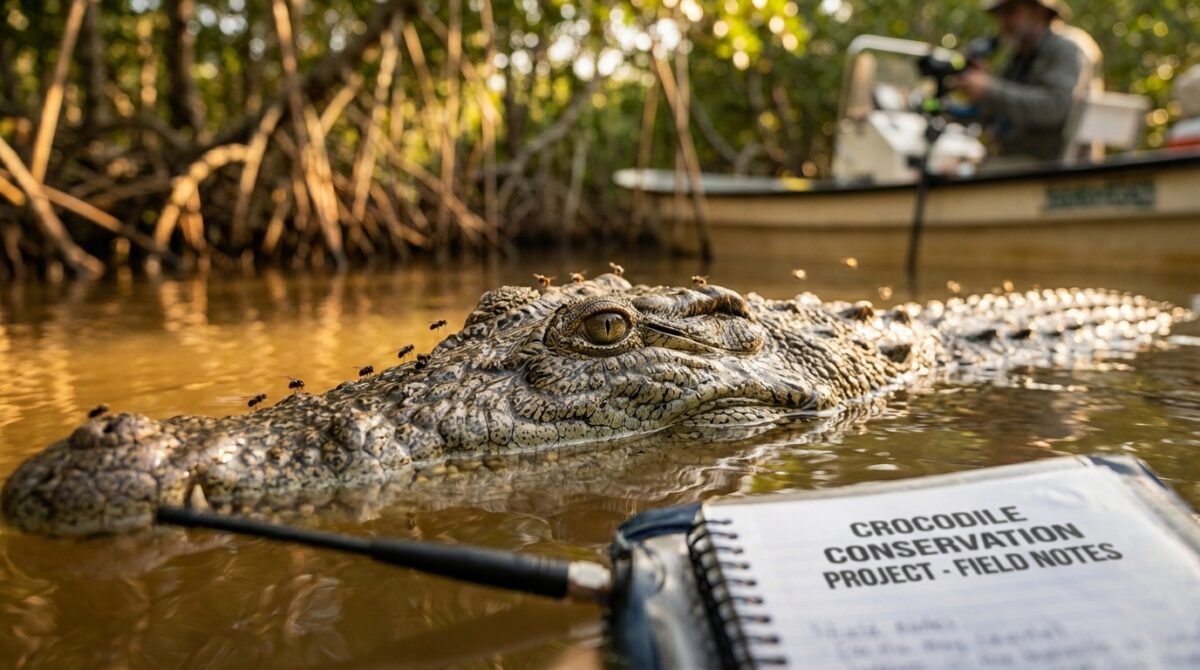
The image, taken in Panama’s Coiba National Park by ecologist and photographer Zeke Rowe, shows biting flies calmly feeding on the head of an American crocodile. The animal rests in a tidal marsh, its gaze fixed on the camera while insects stroll across its armour. Rather than drama and teeth, the scene delivers quiet tension and a rare window into how tiny organisms exploit one of nature’s most feared hunters.
Stunning crocodile close-up that won an ecology photo contest
The British Ecological Society’s annual Capturing Ecology competition celebrates photography that reveals how ecosystems actually work. This year, the overall winner is Rowe’s piercing portrait of a crocodile surrounded by persistent flies, a composition that looks almost abstract at first glance. Only after a second look does the viewer recognise the familiar, ancient outline of a reptile that has changed little since before humans existed.
Six Decades of Data Reveal How Extreme Weather Severely Impacts Baby Birds
Researchers Unveil Seven Mysterious Frog-Inspired Insect Species Concealed within Uganda’s Rainforest
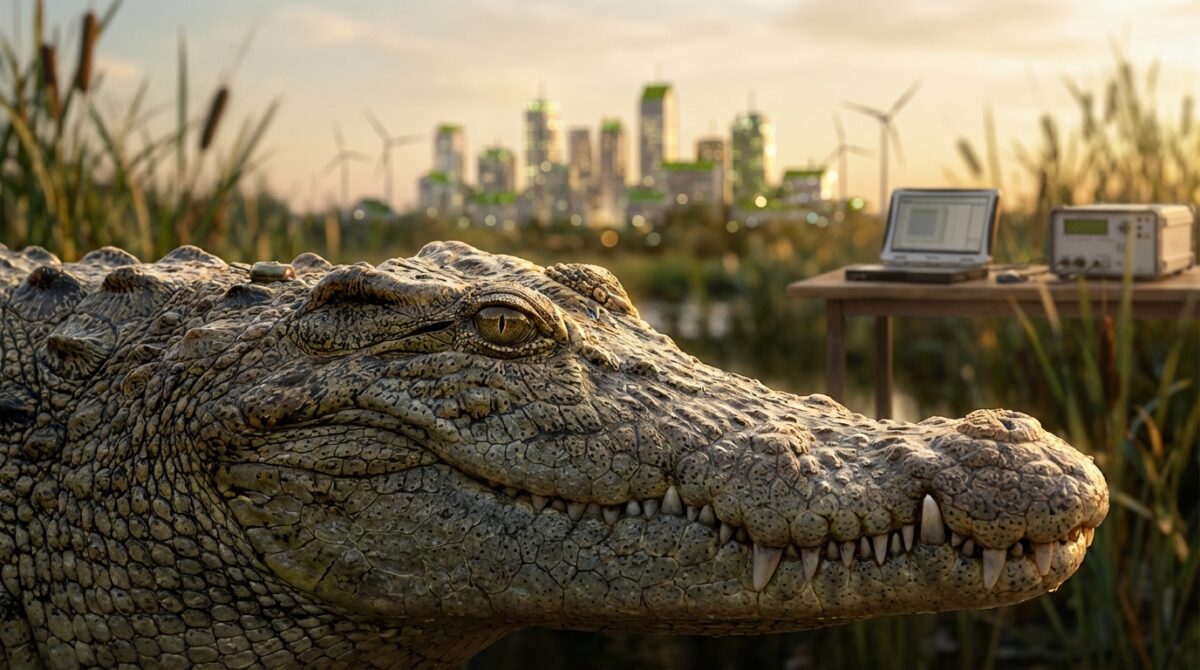
Rowe describes edging forward through the marsh, keeping his body low, waiting until the animal’s eye locked directly on the lens. That decision to remain at water level creates the feeling that the viewer is lying in the mud only metres from a wild crocodile. For audiences familiar with dramatic videos such as insane footage of massive crocodiles filmed at close range or the BBC’s amazing up-close crocodile footage, this still image offers a quieter, more analytical kind of peril.
Why this crocodile portrait matters for ecology and conservation
At first, the flies may look like an incidental detail. For ecologists, they hint at a complex web of parasite–host relationships, energy transfer and animal health. The crocodile’s thick skin and blood supply support insects that in turn feed birds, fish and other species when they are eaten. Even a predator at the top of the food chain acts as a mobile habitat.
Competitions like Capturing Ecology are designed to highlight exactly these overlooked interactions. Each winning frame becomes field data and public outreach at the same time. While people might already know crocodiles from dramatic clips such as this mesmerizing close-up of an American crocodile in action, Rowe’s work pushes viewers to consider insects, marsh plants and tidal rhythms as equal parts of the story.
Other winning wildlife photographs that reveal hidden dynamics
The crocodile portrait shares the spotlight with other category winners that capture different sides of nature. In southern Africa’s Kgalagadi Transfrontier Park, photographer Willem Kruger documented a lioness approaching a busy waterhole. As the predator drew near, flocks of Cape sparrows and other birds scattered in a cloud of wings. The composition freezes the instant when survival instincts ripple through an entire community of animals.
In the rainforests of South-East Asia, another winner, Jamal Kabir, photographed a Wallace’s flying frog launching from a branch. The amphibian’s outstretched webbed feet form green parachutes that allow it to glide between trees. Named after naturalist Alfred Russel Wallace, these frogs link canopy, understory and forest floor, showing how vertical space in tropical forests functions as ecological real estate.
Ecologists in action: from bighorn sheep to coastal fish
The competition does not only focus on charismatic animals. A highly commended image by biologist Peter Hudson shows a bighorn sheep in the Rocky Mountains having its nose carefully swabbed. The procedure is part of a long-term study on pneumonia in wild herds, a disease that quietly devastates lambs each spring. Field teams suspected symptom-free adults were spreading bacteria, so they tested animals, treated infections and watched lamb survival improve over successive seasons.
Another photograph, taken by researcher Liam Brennan, shows three undergraduate students knee-deep in chilly New Brunswick shallows, hauling a beach seine net. Their work tracks seasonal changes in coastal fish communities, building a record of how climate, fishing pressure and warming waters alter marine life. These images place conservation science at the centre of the narrative rather than keeping researchers behind the scenes.
Macro worlds: plants, fungi and the art of close-up photography
Beyond large vertebrates, the photo contest jury also rewarded intimate plant and fungus images. In Chile’s Altos de Cantillana reserve, photographer Francisco Gamboa captured a fly perched delicately on a mushroom cap. Dew, spores and the insect’s compound eyes share the same tight frame, turning a forest floor moment into an illustration of nutrient cycling and decomposition.
For photographers inspired by this kind of work, close-range techniques now benefit from an abundance of reference material. Online archives such as crocodile close-up image collections, ultra-detailed clips like an extreme close-up of a saltwater crocodile blinking, and artistic shots in contests such as the Smithsonian’s eye-of-a-crocodile entry all show how a shift of a few centimetres can transform an image into a story about coexistence.
How this kind of wildlife photography supports science and policy
The British Ecological Society uses its competition as an outreach tool that links research, public audiences and decision-makers. Many of the featured photographers are ecologists or students, and their images often come from fieldwork campaigns already funded through research grants, conservation programmes or university partnerships. The visual output therefore carries the same rigour as a data set, presented in a language that policymakers and citizens immediately understand.
Crocodiles, for instance, often symbolize danger in popular culture. Yet long-term population studies show that healthy crocodile numbers indicate robust wetlands, thriving fish stocks and intact food webs. When a stunning portrait like Rowe’s circulates through science magazines and social media, it can reshape perceptions and support protected area design, similar to how viral videos such as high-resolution crocodile encounters on YouTube have sparked public discussions about river health and human–wildlife interaction.
- Field observations become visual case studies that help explain ecological concepts.
- Emotional impact from close-up images keeps audiences engaged with complex data.
- Policy debates on wetland protection gain concrete, relatable examples.
- Education materials for schools and universities gain vivid illustrations of food webs.
As more of these images are archived and shared, they create a visual history of changing ecosystems, from marshes that shelter crocodiles and flies to mountain ranges where sheep fight invisible infections.
What makes this crocodile close-up different from typical wildlife photos?
Most crocodile photography emphasizes open jaws and aggression. Zeke Rowe’s winning image focuses instead on the animal’s eye and the biting flies feeding on its head. This angle highlights ecological relationships, parasite behaviour and the crocodile’s role as part of a wider community, not just as an isolated predator.
How does an ecology photo contest support conservation?
Ecology-focused competitions connect scientific research with the public by turning field observations into compelling visuals. These images help explain food webs, disease dynamics and habitat value. They also give conservation projects visibility, which can influence funding decisions, education programmes and policies that protect vulnerable ecosystems.
Are the animals disturbed by photographers during these close-up shots?
Responsible wildlife photographers follow strict guidelines: maintaining distance, limiting time near animals and respecting nesting or feeding areas. Many winners are researchers already observing animals for scientific reasons, so they use long lenses, blinds or remote cameras. The goal is to document natural behaviour without altering it.
Can amateur photographers contribute to ecological research?
London, San Francisco, and Beijing Make Significant Strides in Slashing Air Pollution Levels
The Reappearance of a ‘Ghost’ Great White Shark Sparks New Questions in the Mediterranean
Yes. Well-documented images, especially with accurate dates and locations, can support citizen science projects that track species ranges, behaviour changes and seasonal patterns. Platforms and research groups often invite members of the public to share observations that complement professional field surveys.
Where can I see more images from the Capturing Ecology competition?
A selection of winning and shortlisted photographs is available through the British Ecological Society and partner platforms. Coverage such as the New Scientist feature on the piercing crocodile close-up, alongside galleries like the Capturing Ecology photo competition pages, provides curated access to the latest winning entries and their scientific backstories.