Show summary Hide summary
The next time you step outside and hear a sudden chorus of unfamiliar calls, you might be listening to Chilly European Weather reshaping bird migration to the UK in real time. A burst of cold air over Scandinavia and Poland doesn’t just send temperatures plunging; it sends thousands of wings into the sky.
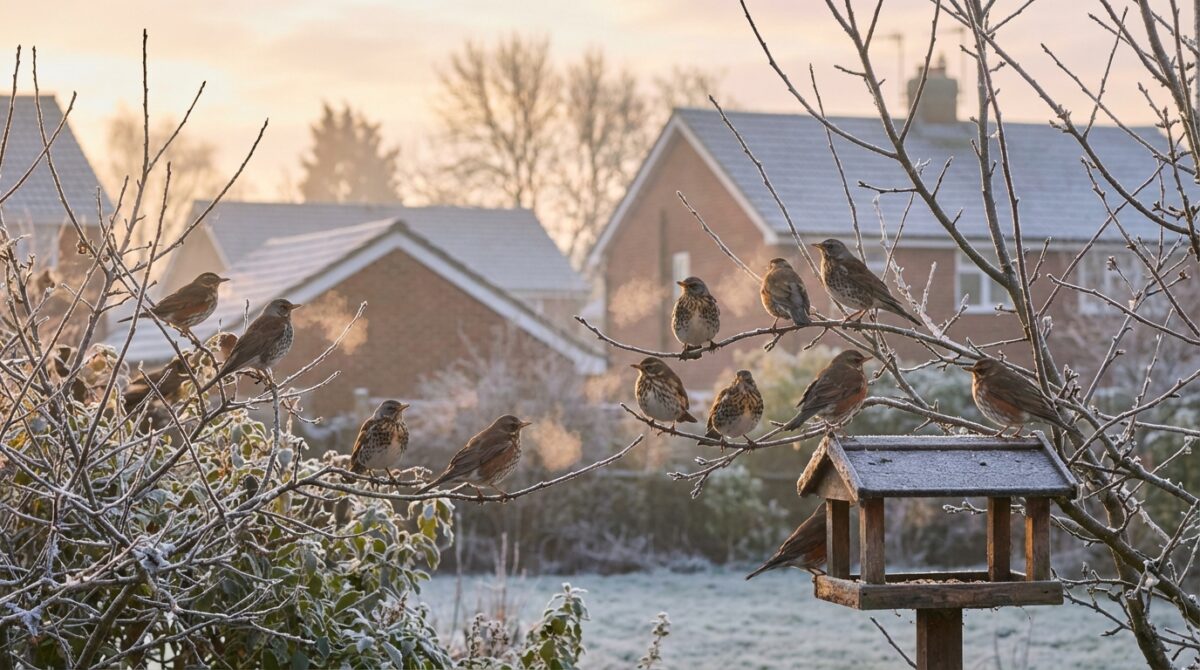
This winter, the Royal Society for the Protection of Birds (RSPB) expects a surge of visiting thrushes, especially fieldfares and redwings, as a prolonged European cold snap coincides with the Big Garden Birdwatch from 23 to 25 January. According to coverage in sources such as The Guardian’s environment pages and specialist outlets like Inside Ecology, meteorology is turning gardens into temporary wildlife corridors.
How cold European weather redirects winter bird migration
When European weather turns sharply colder, a simple physics problem confronts birds: body heat versus falling temperature. Once the thermometer drops well below freezing in regions such as Norway, Sweden and Poland, the ground locks up, worms disappear deeper into the soil and berry crops finish fast. For a medium-sized thrush, that combination becomes a survival calculation.
Scientists Sound Alarm: Australia’s ‘Zombie Tree’ Faces Possible Extinction Within a Generation
Scientists Uncover Hidden Alliance Between Plants and Beetles
The UK climate still offers relatively mild winters compared with large parts of the continent. RSPB chief executive Beccy Speight has pointed out that Britain repeatedly acts as a “winter refuge” for migrants that spend the rest of the year further east and north. As covered by outlets including BritBrief and national news reports, recent cold spells on the continent are already nudging flocks towards British shores.

The science of seasonal flight and survival
Migration may look like a graceful spectacle, yet for each individual bird it is an energy-budget exercise. A fieldfare weighing around 100 grams must balance the calories burned in long-distance flight against what awaits at its destination: thawed soil, berries, hedgerows and garden feeders. Studies collated by institutions working with the RSPB suggest that severe continental cold spells can shift migration fronts hundreds of kilometres west within days.
These movements are tightly linked to seasonal cues. Shortening day length primes birds for migration weeks in advance, but the exact timing often hinges on abrupt weather changes. When snow cover spreads across agricultural land in central Europe, the UK’s patchwork of gardens and parks becomes a mosaic of micro-habitats. That is why, according to analyses highlighted in farming and countryside reports, sudden frosts can trigger overnight arrivals of thousands of migrants along the east coast.
Big Garden Birdwatch: turning gardens into climate observatories
Behind each winter visit from a redwing lies a data point. The Big Garden Birdwatch, launched in 1979, invites people to spend one hour counting birds in gardens or local green spaces and share their records with the RSPB. Last year, almost 600,000 participants logged more than 9 million birds, covering over 80 species, including around 3,000 fieldfares and redwings.
These numbers feed into long-term datasets used by scientists and policy advisers to track how climate and land use are reshaping wildlife. The Met Office, in its analysis of changing weather impacts on wildlife, described how milder winters and altered rainfall patterns influence both resident and migratory species, a theme also explored in pieces such as its 2025 wildlife briefing. The Birdwatch complements professional surveys by filling gaps in space and time, transforming ordinary windowsills into informal monitoring stations.
Who visits, who stays, and what is changing
One headline from recent survey data is the shifting ranking of familiar garden birds. In the latest results, the house sparrow remains in first place for the twenty-second consecutive year, with the blue tit in second. For the first time, the woodpigeon climbed into third position, overtaking the once-dominant starling, which slipped down the table. That reorder hints at subtle ecological shifts, including changes in urban habitats and food availability.
Alongside these resident species, winter migrants add another layer of complexity. Articles such as those on EarthEcoBalance and European-focused news platforms have described how flocks of Scandinavian thrushes, geese and ducks seek milder British conditions when continental cold bites. For households taking part in the Birdwatch, that means a higher chance of catching rare visitors alongside everyday garden regulars.
From chilly gardens to climate signals: what you can do
The unusual winter scene outside someone like Aisha’s semi-detached house in Leeds—dozens of redwings stripping berries from a cotoneaster—does more than brighten an otherwise grey morning. It provides real evidence of how European weather patterns and long-term climate trends intersect. According to synthesis work used by conservation groups, species are moving both northwards and uphill across Europe over recent decades as average temperatures have climbed by around 1.1–1.3°C since pre-industrial times.
Facing those shifts, individual gardens can act as stepping stones. Simple actions improve survival chances for migrating birds pushed into longer journeys by extreme cold. They also help residents engage with complex climate dynamics through direct observation, rather than distant statistics. Each filled feeder or uncut hedge becomes a small adaptation measure, scaling up when repeated across millions of homes.
- Provide reliable winter food: Offer mixed seeds, suet and fruit to support migrants arriving depleted after long flights.
- Keep water ice-free: Break surface ice on bird baths so visitors can drink and clean their feathers.
- Protect hedges and berry shrubs: Delay heavy pruning until late winter to preserve natural food sources.
- Record and report sightings: Join national counts such as the Big Garden Birdwatch and local surveys.
- Reduce garden chemicals: Fewer pesticides mean more insects, supporting both migrants and resident birds.
For those wanting to delve deeper into how these patterns are reported and analysed, pieces from outlets such as Inside Ecology’s Birdwatch explainer and press summaries available via PressReader offer additional context. Together, professional research and citizen observation create a more precise picture of how a cold front over Sweden can translate into a flurry of wings over a suburban lawn in Sheffield.
Why does chilly European weather send more birds to the UK?
When severe cold and snow cover hit parts of Europe, food becomes scarce and frozen ground prevents birds from foraging. The UK usually has milder winters, with higher temperatures and more accessible food. Migratory birds such as fieldfares and redwings move west to find open ground, berries and garden feeders, increasing their numbers in British gardens during cold spells.
Which bird species are most likely to appear during a cold snap?
Fieldfares and redwings, both members of the thrush family, are classic cold-weather arrivals from Scandinavia and eastern Europe. You may also notice increased numbers of starlings, various finches and some waterfowl taking advantage of ice-free lakes and estuaries. Local counts from past winters show that these species respond quickly when continental temperatures plunge for several days.
How does the Big Garden Birdwatch help climate research?
The Big Garden Birdwatch provides long-term, large-scale data on common species. By comparing yearly counts, scientists can detect trends linked to climate change, such as shifts in arrival dates, winter survival and changes in the dominance of particular species. The dataset, compiled from hundreds of thousands of participants, helps researchers and policymakers understand how weather and climate are reshaping bird populations.
What can be done at home to support migrating birds?
You can help by offering varied food, keeping water available, and leaving hedges, ivy and berry plants intact through winter. Minimising pesticides increases insect food, and creating a mix of shrubs and trees offers shelter from wind and predators. Joining citizen science projects and sharing records of unusual visitors also strengthens the knowledge base that guides conservation.
Are colder winters good or bad for birds overall?
This Week in Wildlife: A Soaked Macaque, Four Tiny Piglets, and a Sneaky Fox Stowaway
The Hidden Danger of Mining Waste Dams Worldwide: What Unfolds When They Fail?
Cold winters can benefit some species by reducing parasites and favouring hardy residents, but extreme or prolonged cold increases mortality, especially for small migrants with limited fat reserves. The impact depends on how often severe cold occurs, how quickly birds can move to milder areas such as the UK, and whether they find sufficient food and safe roosting sites when they arrive.