Show summary Hide summary
- How guano harvesting powered a Peruvian kingdom’s rise
- From fertilizers to power: economic development in Ancient Peru
- What this ancient fertilizer strategy means for today
- From seabird cliffs to Earth observation and future farming
- Key lessons from Peru’s guano-powered civilization
- Why was guano so valuable in Ancient Peru?
- How did guano harvesting affect the Chincha Kingdom’s power?
- What evidence shows that ancient farmers used seabird fertilizer?
- Does guano harvesting still matter for today’s agriculture?
- What can modern sustainability policy learn from this Peruvian civilization?
Imagine fields of maize in Ancient Peru, hundreds of kilometres from the coast, growing so vigorously that they reshape power across a region. Behind this boom, not gold or silver, but something far less glamourous: mountains of seabird droppings scraped from offshore cliffs. how seabird poop helped fuel ancient civilizations in Peru.
This is the story of how a coastal Peruvian civilization turned guano into political leverage, food security, and long-lasting cultural heritage that still influence debates on sustainability and natural resources management today.
How guano harvesting powered a Peruvian kingdom’s rise
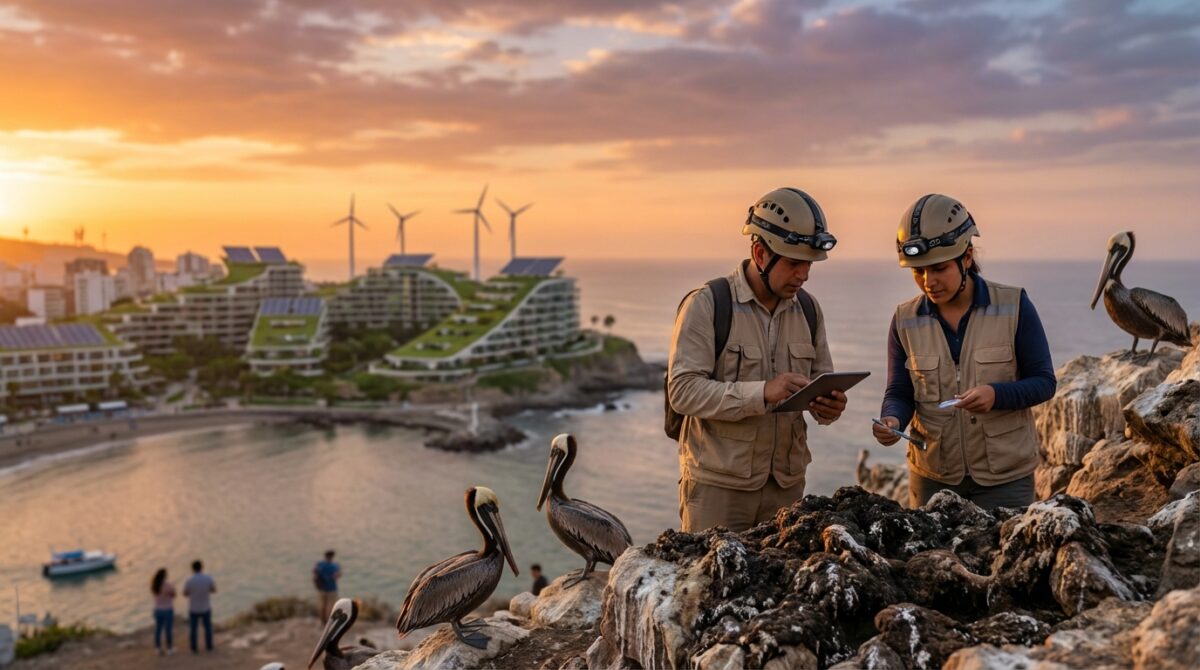
Between AD 1000 and 1400, the Chincha Kingdom controlled one of the most prosperous valleys on Peru’s southern coast. Packed with irrigated fields and busy trade routes, this society thrived long before the Inca annexed it in the 15th century. The Chincha Valley lay only about 25 kilometres from the Chincha Islands, rocky outcrops loaded with seabirds such as Peruvian pelicans, boobies, and guanay cormorants.
Approaching Point Return: Earth’s Imminent Climate Risk
Catch Bird New App Transforms Birdwatching Adventures
Those islands produced thick layers of guano – a blend of droppings, feathers, and carcasses. Local fishers, farmers, and merchants organised systematic guano harvesting, hauling the material inland to fertilise maize fields. Access to this rare, potent fertilizer translated into higher yields, trade surplus, and, crucially, political influence in regional alliances and later with the expanding Inca state.
Scientific clues hidden in ancient maize cobs
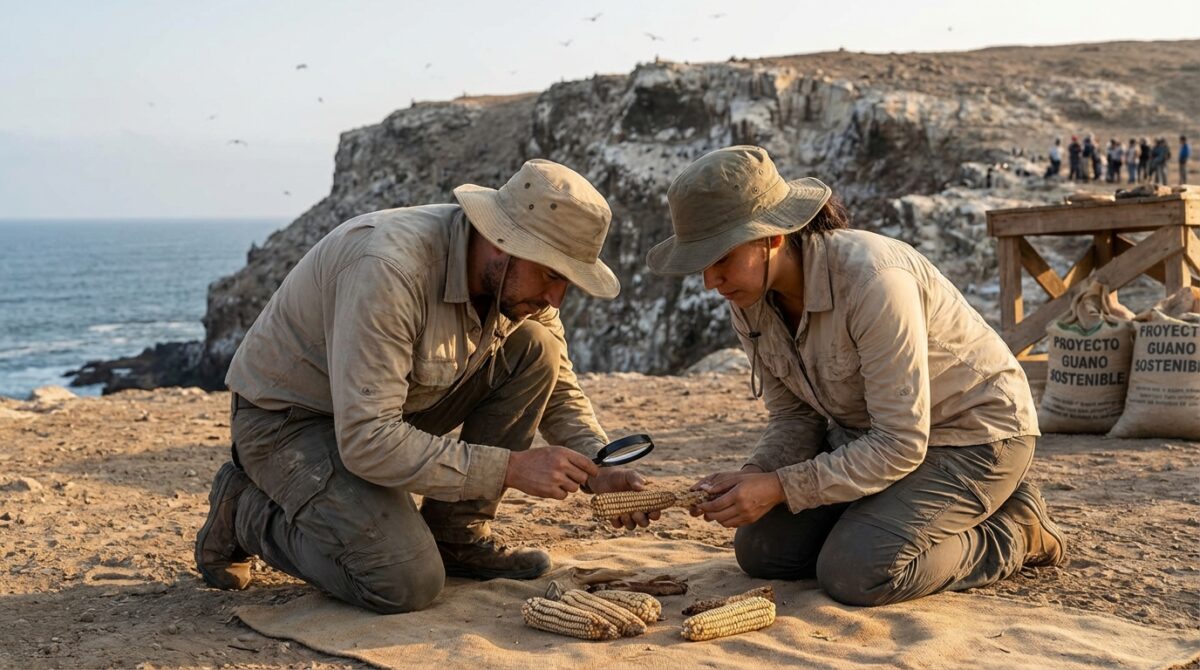
Archaeologists recently examined 35 maize cobs recovered from 14 Chincha cemeteries, many placed as offerings in tombs. To decode past farming practices, the team measured carbon and nitrogen isotope ratios, a technique widely used in planetary science and Earth observation to track chemical fingerprints. Elevated nitrogen-15 values in these cobs revealed that crops had soaked up nutrients typical of marine-derived fertilizer.
To strengthen the case, researchers analysed collagen from 11 ancient seabird bones, including pelicans, boobies, cormorants, a gull, and a penguin. These bones provided a local isotopic baseline for guano. Strikingly, some maize cobs showed nitrogen signatures even higher than the birds themselves, a strong indicator that farmers applied large quantities of seabird-derived nutrients to their fields.
From fertilizers to power: economic development in Ancient Peru
Guano from the Chincha Islands carried extraordinary farming value because the region’s arid climate kept nitrogen from washing away. Thin rainfall let nutrients accumulate over centuries, creating deposits so concentrated that 19th-century traders would later ship them across oceans. For the Chincha, this meant a local, high-impact resource that turned coastal cliffs into engines of economic development.
Control over guano routes and labour likely reinforced social hierarchies. Elites who organised expeditions, storage, and distribution could negotiate with neighbouring groups and, later, with the Inca administration from a position of strength. Seabird motifs carved into ceremonial objects and textiles hint that these animals were more than dinner; they symbolised prosperity, maritime reach, and the invisible link between ocean and field.
Natural resources, sustainability and political tension
The Inca Empire, which absorbed the Chincha in the 1400s, documented strict regulations over guano islands. Early colonial chronicles describe harsh penalties for harming seabirds and tight state control over extraction. That level of management echoes modern debates on sustainability: how to exploit a rich but fragile natural resource without destroying it. the surprising secret behind an ancient Andean kingdom’s rise.
By showing that the Chincha were already using guano by at least AD 1250, the new research suggests a longer history of environmental governance along this coast. The Chincha had privileged access to islands the Inca initially lacked, a strategic advantage that probably shaped negotiations during annexation. Resource control, not only military might, steered the political map of Ancient Peru.
What this ancient fertilizer strategy means for today
Modern agriculture often depends on industrial nitrogen, produced using energy-intensive processes and fossil fuels. The Chincha model offers another perspective: a coastal society feeding inland populations with a renewable, biologically produced nutrient source. That approach reduced the need for land clearing, helped stabilise yields, and limited long-distance food stress across dry landscapes.
Contemporary scientists and space agencies like NASA track nutrient cycles using satellites, from algal blooms to soil moisture. Insights from guano-based systems help refine models of how marine productivity feeds terrestrial food webs. Understanding these links is vital for predicting the environmental impact of overfishing, climate-driven changes in seabird populations, and shifts in coastal ecosystems.
From seabird cliffs to Earth observation and future farming
There is a direct line between Chincha farmers reading seabird behaviour and today’s Earth observation specialists reading satellite imagery. Both groups ask similar questions: where is nutrient flow strongest, which zones are most productive, and how can harvest match renewal? Modern remote sensing can now map guano deposits, monitor bird colonies, and gauge coastal health from orbit.
For arid regions worldwide, the Chincha story highlights how targeted use of organic fertilizer and careful stewardship of wildlife can support long-term agriculture. Rather than romanticise the past, this case encourages pragmatic hybrid strategies: combining historic knowledge of seabird-managed systems with precision farming, climate models, and conservation policies that lower pressure on vulnerable species.
Key lessons from Peru’s guano-powered civilization
The Chincha Kingdom’s experience offers concrete takeaways for policymakers and farmers looking ahead. Their success rested on aligning coastal ecology, inland demand, and social organisation around one resource, without pushing the environment beyond recovery. That balance did not stop imperial conquest, but it left a legacy still visible in soils, isotopes, and cultural symbols.
- Resource access drives power: controlling guano flows translated into influence over trade and alliances.
- Environmental impact can be managed: protecting seabirds preserved long-term yields from the islands.
- Agriculture links ocean and land: marine nutrients fed inland crops, tying coastal health to valley prosperity.
- Cultural heritage encodes ecology: seabird imagery on textiles and ceramics preserved memory of this system.
- Sustainability is strategic: careful extraction supported both economic growth and social stability.
Seen through this lens, the rise of a coastal Peruvian civilization powered by guano becomes more than an archaeological curiosity. It reads like an early case study in integrated resource planning, with lessons for regions facing water stress, soil fatigue, and biodiversity loss today.
Why was guano so valuable in Ancient Peru?
Guano from the Chincha Islands packed very high levels of nitrogen and other nutrients because the climate was extremely dry. Limited rainfall stopped nutrients from being washed away, so farmers could use small amounts to dramatically boost crop yields, especially maize in the Chincha Valley.
How did guano harvesting affect the Chincha Kingdom’s power?
Groups that organised guano harvesting, transport, and distribution controlled a key input for agriculture. This advantage increased food production, supported trade networks, and gave Chincha leaders leverage when negotiating with neighbours and, later, with the Inca Empire.
What evidence shows that ancient farmers used seabird fertilizer?
Researchers analysed the nitrogen and carbon isotopes in ancient maize cobs from Chincha tombs and compared them with isotopes in seabird bones. The maize showed extremely high nitrogen-15 values, a clear chemical fingerprint of fields enriched with seabird-derived fertilizer.
Does guano harvesting still matter for today’s agriculture?
Yes, guano remains a niche but valued organic fertilizer. The Chincha example informs current debates about sustainable nutrient sources, showing how marine ecosystems can support inland farming when extraction respects wildlife and long-term environmental limits.
What can modern sustainability policy learn from this Peruvian civilization?
Did a Cloud-Seeding Startup Truly Boost Snowfall in Utah?
Exposing Truth Battling Big Oil’s Plastic Expansion
The Chincha case shows that managing a single powerful resource—seabird guano—through protection rules and careful distribution can support economic development without collapsing ecosystems. That experience helps guide present-day strategies for balancing productivity, conservation, and cultural heritage.