
Show summary Hide summary
- The fossil that fooled science for 25 years
- Synchrotron imaging exposes hidden teeth
- From octopus icon to nautiloid landmark
- Why reexamining old fossils keeps paying off
- Key lessons from the “not-an-octopus” fossil
- FAQ
- How was the Pohlsepia fossil originally identified as an octopus?
- What evidence led to the Pohlsepia fossil misidentification being corrected?
- Why does the Pohlsepia fossil misidentification matter for science?
- How can fossil decay lead to misidentifications like in the Pohlsepia case?
- Does the Pohlsepia fossil misidentification affect our understanding of ancient marine life?
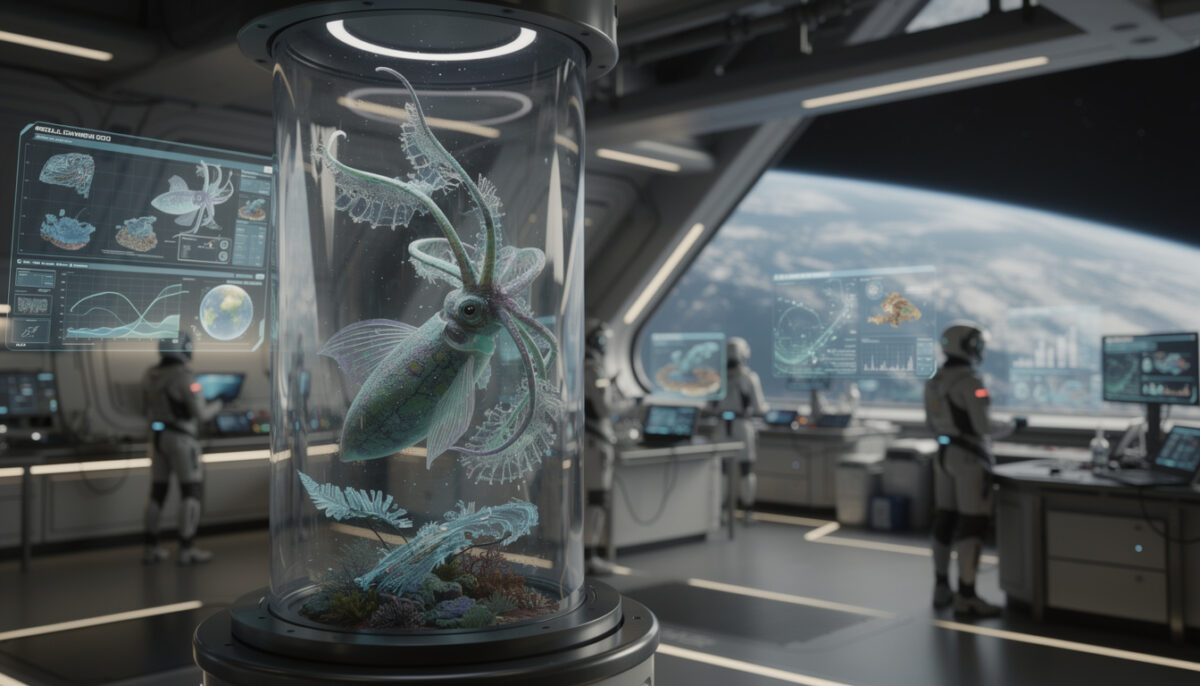
A fossil that rewrote ocean biology textbooks has just been exposed as a spectacular mistake. The famous creature once hailed as the world’s oldest octopus turns out to be something else entirely, hiding tiny teeth that change the story of cephalopod evolution.
The fossil that fooled science for 25 years
When Pohlsepia mazonensis surfaced from the rocks of Illinois in 2000, researchers thought they had struck evolutionary gold. The fossil seemed to show a soft-bodied animal with eight arms and a rounded body, a perfect match for an ancient octopus living 300 million years ago.
That early identification pushed the origin of octopuses back by about 150 million years and earned the specimen a spot in the Guinness Book of Records. Museum guides, documentaries, and school textbooks repeated the story for decades, turning this single slab of rock into a celebrity of marine paleontology.
This Innovative Walking Robot May Revolutionize Our Quest for Life on Mars
A Recent Impact on the Moon Leaves a Striking New Bright Scar
How decay made a nautilus look like an octopus
The twist starts with rot on an ancient seabed. As the animal decomposed before burial, its soft tissues collapsed and spread out, smudging its original shape. When that distorted body later fossilized, the outline resembled an eight-armed creature, perfect for a dramatic but wrong interpretation.
This slow post-mortem transformation misled experts who only had surface details to work with. The fossil’s blurred arms and faint body contours looked convincing enough to assign it to the octopus lineage, turning natural decay into a long-lasting misclassification in the scientific record.
Synchrotron imaging exposes hidden teeth
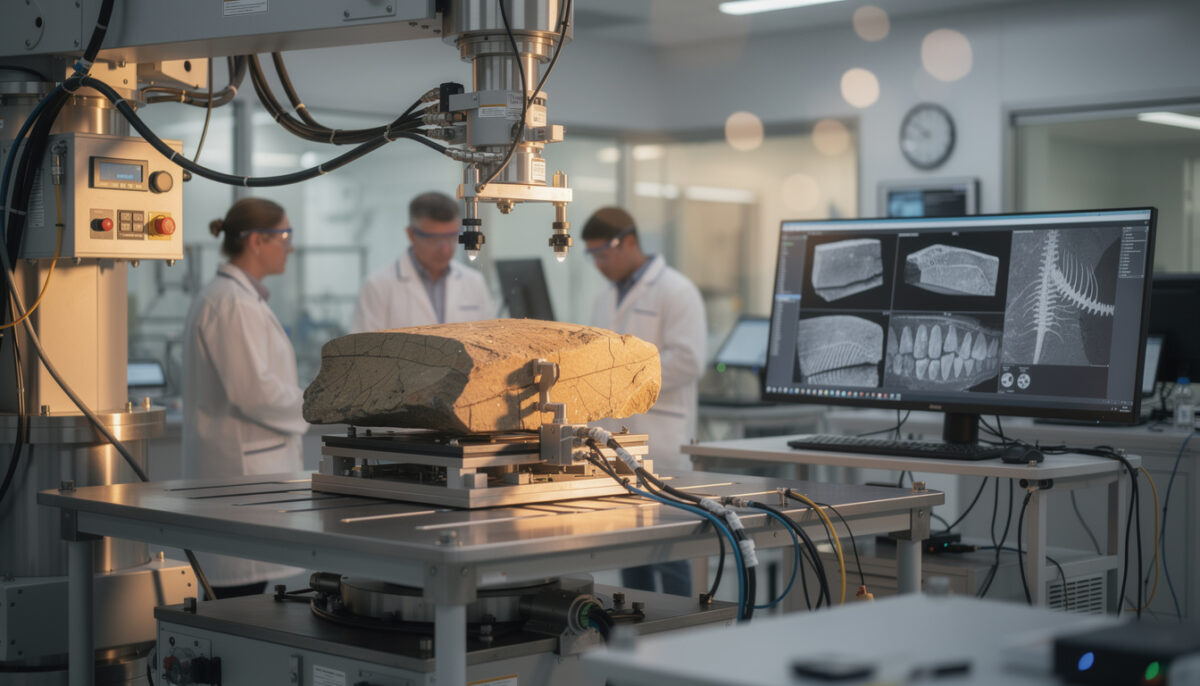
The story changed when a team led by Dr. Thomas Clements at the University of Reading re-examined the fossil using synchrotron imaging. This technique fires intense beams of X-ray light through the rock, revealing microscopic structures that traditional methods cannot detect.
Inside the slab, the team discovered a radula: a ribbon-like feeding organ lined with rows of tiny teeth. Those teeth were the smoking gun. Their shape, number, and arrangement did not match any known octopus species, forcing researchers to rethink everything they thought they knew about this specimen.
Tooth counts that rewrite evolution timelines
Modern and fossil octopuses typically carry seven or nine teeth per row on the radula. The Pohlsepia fossil showed at least eleven tooth-like elements in each row, a pattern completely out of line with octopus anatomy but much closer to that of ancient nautiloids.
Comparisons with known fossils from the same site, including Paleocadmus pohli, highlighted almost identical radula features. Those parallels confirmed that the so-called world’s oldest octopus was actually a nautiloid relative, not an eight-armed pioneer of the deep.
From octopus icon to nautiloid landmark
Reframing Pohlsepia as a decomposed nautilus cousin does more than correct a label. It provides the earliest known example of preserved soft tissue from a nautiloid, beating previous records by roughly 220 million years and offering a rare window into ancient marine ecosystems.
Reports from outlets such as ConnectSci and ScienceAlert underline how this single find reshapes debates about when different cephalopod groups emerged and diversified across the prehistoric seas.
What this means for octopus evolution
With Pohlsepia removed from the octopus family tree, the earliest reliable octopus fossils now fall much later, in the Jurassic period. The evolutionary split between octopuses and their ten-armed relatives such as squids and cuttlefish shifts into the Mesozoic era, not the late Carboniferous as once claimed.
This new timing aligns better with other fossil evidence and modern genetic studies. Instead of a lonely ancient octopus exploring Carboniferous seas, we see a more gradual rise of distinct cephalopod lineages as ocean environments and predator–prey dynamics evolved.
Why reexamining old fossils keeps paying off
For Lena, a fictional graduate student fascinated by ocean biology, Pohlsepia has become a cautionary legend. During her first year, she learned the classic “oldest octopus” story. Just a few semesters later, the same fossil now appears in her lectures as a case study in scientific self-correction.
Her supervisors use it to stress a key lesson: contentious fossils deserve fresh eyes and better tools. Synchrotron scans, geochemical analyses, and digital reconstructions regularly overturn early guesses, revealing hidden organs, lost shells, or previously invisible textures in supposedly well-known specimens.
Links to modern technology and biomimicry
These evolutionary puzzles are not just academic. Engineers and designers mining marine life for inspiration rely on accurate evolutionary stories when they model flexible arms or camouflage systems. Recent work on shape-shifting materials mimicking octopus skin, décrit sur des matériaux inspirés de l’octopus, shows how cutting-edge tech often follows the lead of deep-time biology.
Even behavioural studies, like research on how male octopuses use a preferred arm during mating, depend on knowing where octopuses sit in the broader cephalopod story. Cleaning up past misclassification keeps those comparisons honest and their applications grounded. For further insights into space science, see something massive lies beneath Jupiter’s clouds.
Key lessons from the “not-an-octopus” fossil
For readers following this saga, a few takeaways stand out each time Pohlsepia resurfaces in discussions about prehistoric life and scientific method. These points show how a single misread fossil can quietly steer entire fields for decades.
- Surface impressions can mislead: Decayed outlines may mimic features that were never there in the living animal.
- Hidden microstructures matter: Tiny teeth or tissues often carry more reliable clues than dramatic body shapes.
- Technology changes the past: New imaging methods regularly revise long-accepted evolutionary timelines.
- Labels are provisional: Even record-breaking “oldest” finds may later move to a different branch of the tree.
- Cross-checks with living species: Comparing fossils with modern nautiloids and octopuses prevents overconfident leaps.
Each point reinforces a simple idea: in paleontology, patience and detailed work usually beat spectacular first impressions. For a fascinating look at the ancient star entering the Milky Way, explore further discoveries in the field of cosmic evolution.
Was the oldest octopus fossil really an octopus?
No. The famous fossil known as Pohlsepia mazonensis was long promoted as the world’s oldest octopus, but new synchrotron imaging revealed a radula with tooth patterns that do not match octopus anatomy. Those teeth align with nautiloid features, showing the creature was a decomposed nautilus relative, not an early octopus.
How did scientists discover the misidentification?
Researchers used synchrotron imaging, which sends powerful X-ray beams through rock to reveal internal structures. Inside the Pohlsepia fossil they detected a ribbon-like radula lined with at least eleven tiny teeth per row. That number and layout fit ancient nautiloids better than any known octopus species, exposing the original identification as a misclassification.
What does this change about octopus evolution?
Removing Pohlsepia from the octopus lineage shifts the earliest reliable octopus fossils into the Jurassic period. The evolutionary split between octopuses and ten-armed relatives such as squids is now placed in the Mesozoic era, not the late Carboniferous. This correction brings fossil evidence and genetic studies into closer agreement about when modern cephalopod groups emerged.
Why is the fossil still scientifically important?
Even though it is not an octopus, the fossil now represents the oldest known soft tissue from a nautiloid. That record-breaking preservation helps researchers understand how shelled cephalopods lived, fed, and decayed in ancient marine environments. It also provides a reference point for comparing younger fossils and modern nautilus species.
Can other famous fossils also be mistaken?
Yes. Paleontologists regularly reexamine high-profile fossils as new technologies appear. Imaging, chemical tests, and improved comparisons with living species often reveal overlooked details or past bias. The Pohlsepia case shows that even record-holding specimens can be reassigned when fresh data overturns earlier interpretations.
FAQ
How was the Pohlsepia fossil originally identified as an octopus?
The Pohlsepia fossil appeared to have eight arms and a rounded body, which matched what scientists expected of ancient octopuses. This resemblance led to decades of misidentification until newer studies uncovered features inconsistent with true octopuses.
What evidence led to the Pohlsepia fossil misidentification being corrected?
Fresh analysis found tiny teeth and internal structures revealing the fossil was more closely related to nautiloids rather than octopuses. This important detail showed the pohlsepia fossil misidentification changed textbook cephalopod timelines.
Why does the Pohlsepia fossil misidentification matter for science?
The misidentification changed the perceived timeline of octopus evolution by 150 million years. Correcting it helps provide a clearer picture of when and how cephalopods evolved.
How can fossil decay lead to misidentifications like in the Pohlsepia case?
Did a Black Hole Just Erupt? This ‘Impossible’ Particle Could Be the Key Evidence
Electrifying Dust Storms on Mars Transform the Red Planet’s Chemistry
When soft-bodied animals decay before fossilisation, their tissues can spread out and blur original shapes. This made the Pohlsepia fossil look deceptively like an octopus, leading to its initial misclassification.
Does the Pohlsepia fossil misidentification affect our understanding of ancient marine life?
Yes, it serves as a reminder to revisit old fossils with new techniques and understanding. The Pohlsepia case helps refine our knowledge of ancient ocean ecosystems and the true origins of cephalopods.