
Show summary Hide summary
- Starlink’s 300,000 dodges and the new orbital reality
- Inside SpaceX’s autonomous collision avoidance system
- Orbital traffic, Honghu‑2 and the crowded highway problem
- Explosions, design fixes and lowering orbits for safety
- Lessons for Earth from a constantly dodging satellite network
- Key practices shaping the future of orbital safety
- How many collision avoidance manoeuvres did Starlink perform in 2025?
- Why is Starlink performing so many satellite collision dodges?
- What happens if two satellites collide in low Earth orbit?
- How does SpaceX decide when a Starlink satellite should manoeuvre?
- Can lessons from Starlink’s collision avoidance help other sectors?
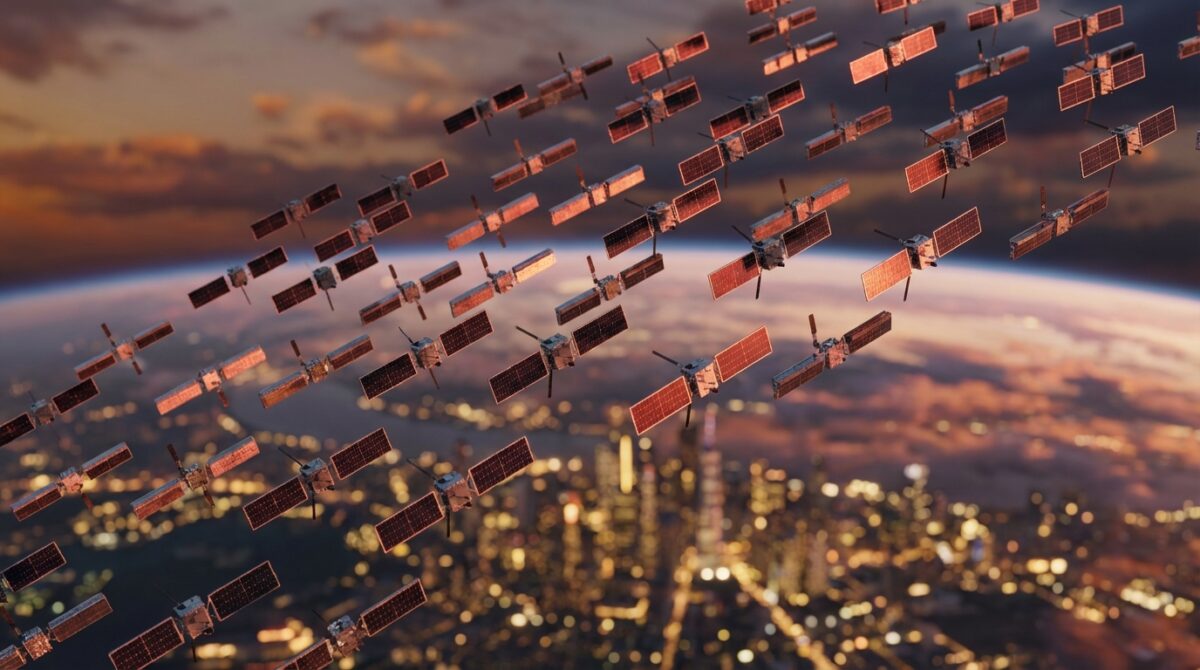
Somewhere over a quiet farm or crowded city in 2025, a Starlink satellite silently fired its thruster every second of the day. By year’s end, SpaceX’s network had executed about 300,000 collision avoidance manoeuvres, each one preventing potential satellite collisions that could have filled Earth’s orbit with hazardous debris.
This constant choreography in low Earth orbit is more than an engineering stunt. It is a stress test for how humanity plans to share near‑Earth space, protect vital services on the ground and keep the sky safe for future missions.
Starlink’s 300,000 dodges and the new orbital reality
According to a report filed with the US Federal Communications Commission at the end of 2025, Starlink satellites carried out about 149,000 collision‑avoidance moves between June and November alone. When added to roughly 144,000 manoeuvres already reported from December 2024 to May 2025, the total reaches around 300,000 for the year. Before mega-constellations, a typical spacecraft might have performed only a few such moves annually.
Potential First Observation of a ‘Dirty Fireball’ Star Explosion Unveiled
Historic Artemis II Mission Launches Astronauts on Pioneering Journey to the Moon
The scale stems from Starlink’s size. Since the first launches in 2019, the constellation has grown to about 9400 active spacecraft, roughly 65 per cent of all operational satellites. SpaceX has publicly discussed the real risks of orbital collision, stressing that two colliding satellites could generate thousands of fragments and threaten entire orbital highways that Earth depends on for communications, navigation and weather monitoring.
Why so many manoeuvres, and why they matter on Earth
To decide when to move, most operators typically act once the calculated collision probability reaches about 1 in 10,000. SpaceX adopts an even more cautious threshold of roughly 3 in 10 million, which means its system orders manoeuvres for far more close approaches. This conservative stance yields a high number of small avoidance burns, but it reduces the chance that any one encounter turns into a debris‑creating event.
Those decisions have very tangible consequences on the ground. Every Starlink satellite forms part of a global satellite network delivering broadband to isolated schools, offshore wind farms and emergency teams after disasters. A handful of destroyed satellites might be replaced, yet a chain reaction of space debris could jeopardise navigation signals, banking transactions and even climate data that your city planners rely on.
Inside SpaceX’s autonomous collision avoidance system
SpaceX has built an architecture that mixes space technology, automation and constant satellite tracking. Each Starlink satellite carries electric ion thrusters and navigates using onboard sensors and data from the US Space Force tracking network. A dedicated system continuously evaluates potential encounters, then commands avoidance burns without waiting for human controllers to analyse each alert.
Analyses such as reports on earlier 50,000 manoeuvre periods show how quickly this automation has scaled. Recent coverage of Starlink’s AI satellite safety highlights algorithms that predict trajectories, estimate risk windows shrinking from months to days and choose minimal adjustments that preserve fuel and network performance.
When days replace months for avoiding satellite collisions
Only a decade ago, operators sometimes had weeks or months to refine avoidance plans. Now, overlapping constellations mean many potential conjunctions emerge just days before closest approach. Analyses such as studies on shrinking warning times describe this compressed schedule and the pressure it creates for agile decisions.
In that environment, small coordination gaps matter. One close encounter in 2025 involved a servicing spacecraft from Japanese firm Astroscale, which according to SpaceX executed an unannounced manoeuvre that complicated predictions. Astroscale said the manoeuvre had been shared in advance and complied with its national guidelines. The case illustrates how human procedures and software must evolve alongside automation.
Orbital traffic, Honghu‑2 and the crowded highway problem
The FCC filing also mentions repeated approaches involving a Chinese satellite called Honghu‑2. Operating in orbits similar to Starlink’s main shells between roughly 340 and 570 kilometres, Honghu‑2 has had more than 1000 close approaches with the constellation. That number reflects the reality of a shared orbital lane gradually filling with different satellite fleets rather than a single conflict.
Researchers warn that this pattern will intensify as more mega‑constellations from the United States, China and other countries expand. One modelling study cited by orbital safety specialists suggests that on current trajectories, manoeuvres across such systems could reach about one million per year by 2027. From a physics perspective, more objects in the same altitude bands statistically produce more close passes, which increases workload and systemic risk.
Owning an orbit, or just crowding it?
Because Starlink populates specific altitude ranges so densely, some astronomers argue that the company effectively dominates those layers of space. The Outer Space Treaty states that space is open to all, yet practical access may feel constrained when one system performs tens of thousands of burns to maintain spacing. Articles exploring Starlink’s technical spacing process and the challenge of manoeuvres in low orbit underline how quickly coordination becomes complex.
For ground‑based astronomy, that density translates into streaks on long‑exposure images and lost observing time. For Earth, it raises questions about who decides how “busy” a given orbital layer may become and how publicly data about manoeuvres and anomalies should be shared.
Explosions, design fixes and lowering orbits for safety
Not every incident ends with a clean dodge. In December 2025, one Starlink satellite suffered a suspected hardware failure and broke apart, shedding dozens of tracked fragments. SpaceX reports that it has removed the problematic components from future designs, attempting to prevent repeats of this kind of fragmentation event.
The company is also adjusting its architecture to reduce long‑term risk. After earlier near misses, including a case involving a Chinese spacecraft, SpaceX announced plans to lower the operational altitude of thousands of satellites. Reporting on how SpaceX will lower Starlink satellites describes the logic: at lower orbits, failing satellites re‑enter sooner, limiting the time they remain as unresponsive hazards.
Lessons for Earth from a constantly dodging satellite network
Much of what keeps Starlink safe echoes challenges you see in air traffic control or autonomous vehicles. Systems must fuse data from many sources, negotiate shared rules and respond reliably to rare but high‑impact events. Case studies such as analyses of how SpaceX manages Starlink collisions frame the constellation as a laboratory for large‑scale autonomy.
The same algorithms that rank collision risks can support climate monitoring fleets, disaster‑response satellites or even swarms of solar‑powered aircraft. Techniques perfected to avoid debris might later help manage drones above cities or optimise shipping routes on changing Arctic seas.
Key practices shaping the future of orbital safety
From these 300,000 dodges, several practices stand out that will likely define orbital safety standards in the coming decade:
- Conservative risk thresholds that trigger avoidance earlier, trading fuel for lower debris probability.
- Autonomous decision systems on board spacecraft, reducing response time when alerts arrive late.
- Transparent reporting of manoeuvres and anomalies to regulators and, increasingly, the public.
- International coordination so that operators share planned manoeuvres and common protocols.
- Design for re‑entry with lower altitudes and components that minimise long‑lived debris if failures occur.
For readers on Earth, these choices influence whether future generations inherit a usable orbital environment or a cluttered shell that limits exploration, climate research and connectivity.
How many collision avoidance manoeuvres did Starlink perform in 2025?
According to SpaceX’s filing with the US Federal Communications Commission, the Starlink constellation conducted roughly 300,000 collision avoidance manoeuvres in 2025. About 149,000 occurred between June and November, and around 144,000 between December 2024 and May 2025, reflecting intensive management of the dense low Earth orbit environment.
Why is Starlink performing so many satellite collision dodges?
The high number results from three factors: the sheer size of the constellation, Starlink’s conservative risk threshold for manoeuvres and increasing orbital crowding. SpaceX acts at a lower collision probability than many operators, and its satellites share altitude bands with other constellations, which multiplies the number of close approaches that require small avoidance burns.
What happens if two satellites collide in low Earth orbit?
A collision between two satellites can generate thousands of fragments of space debris. These pieces spread along the orbit and can hit other spacecraft, risking a chain reaction. Such debris clouds endanger communications, navigation, weather and scientific satellites that support services on Earth, from aviation safety to climate monitoring.
How does SpaceX decide when a Starlink satellite should manoeuvre?
A Groundbreaking New Theory Sheds Light on the Origins of the Big Bang
Webb Telescope Uncovers Enigmatic Explosion Challenging the Laws of Physics
SpaceX uses automated systems that combine tracking data and predictive models to calculate collision probabilities for each close approach. When the estimated risk rises above its internal threshold, about 3 in 10 million, the satellite’s ion thrusters execute a brief burn to change trajectory. The system aims to minimise fuel use while keeping the probability of impact very low.
Can lessons from Starlink’s collision avoidance help other sectors?
Yes. Techniques developed for Starlink—risk modelling, autonomous decision-making and large-scale traffic coordination—can apply to other satellite networks, high-altitude drones and even autonomous vehicles on Earth. The same methods used to prevent satellite collisions can optimise airspace use, improve disaster-response constellations and support more efficient, resilient infrastructure for a connected planet.