
Show summary Hide summary
- The health benefits of singing, dancing and art
- Singing for mental wellness, lungs and social connection
- Dancing as physical fitness and brain training
- Immersive art, mindfulness and stress relief
- What the evidence says about long-term health benefits
- Why active engagement matters more than background entertainment
- Simple ways to bring art into your health routine
- How often should I sing or dance to see health benefits?
- Do I need formal training to benefit from art activities?
- Can creative activities replace conventional medical treatment?
- Are some arts better than others for stress relief?
- What if I feel self-conscious about singing or dancing?
Imagine your doctor prescribing tickets to a choir rehearsal or a night at the theatre. For a growing number of researchers, that scenario is no longer fanciful but a logical extension of what the data show about health benefits of singing, dancing and everyday art.
Far from being a luxury, creative activities are increasingly viewed as a form of preventive medicine for body and mind, changing inflammatory proteins in the blood and even lowering future risk of conditions like heart disease and dementia.
The health benefits of singing, dancing and art
In one of the largest studies on arts and health, a UK team followed around 6000 adults and paired a one-off blood sample with detailed questionnaires about their creative lives. People who sang in choirs, took part in dancing classes, visited galleries or simply crafted at home showed distinct biological signatures.
Researchers Unveil the Two-Decade Enigma of Gold’s Nuclear Origins
Ancient 400-Million-Year-Old Fish Fossils Unveil the Origins of Terrestrial Life
The researchers found that greater engagement in art – from photography to amateur theatre – was linked to beneficial shifts in 18 different proteins. These proteins connect to metabolism, brain cell maintenance and, importantly, lower levels of inflammation, a process tied to diabetes, depression and cardiovascular disease.
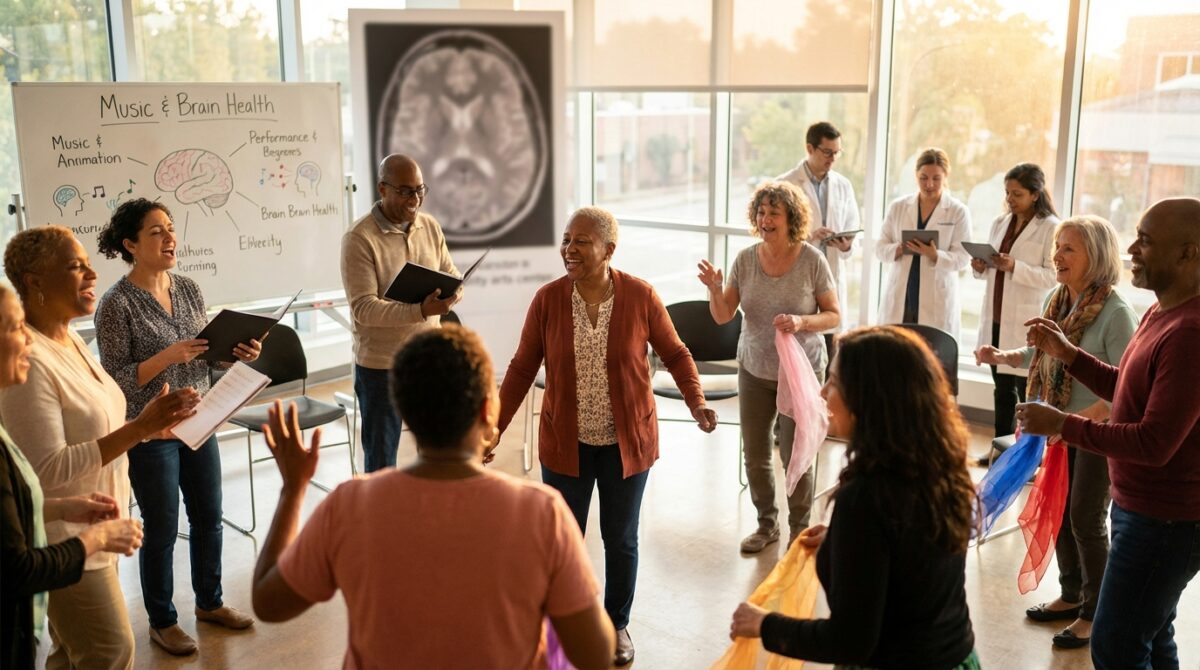
How creative therapy rewires your biology
To understand why singing and dancing might help, the team used proteomics, a technology that measures hundreds of proteins at once. Rather than focusing on one or two markers of stress, they mapped entire pathways linked to the immune system and brain health.
People who reported more frequent and more varied creative activities showed patterns consistent with an immune system gently “rebalanced” towards anti-inflammatory states. According to the study authors, this biological shift explained between 16 and 38 per cent of the link between arts participation and better long-term health outcomes.
Singing for mental wellness, lungs and social connection
Research on singing paints a vivid picture of whole-body impact. Controlled studies, including work synthesized in resources such as health-focused overviews on singing, show that vocal practice improves breathing control, boosts oxygenation and may support immune function.
Physiologically, singing slows your breathing, lengthens exhalations and activates the vagus nerve, a key regulator of stress responses. That pattern supports stress relief, reduced anxiety and a calmer cardiovascular system, complementing other anxiety strategies described in modern behavioural health research like expert anxiety interventions.
Group voices, emotional expression and belonging
When people sing together, the effects amplify. Choir members often report powerful emotional expression and a sense of synchrony with others as breathing and heart rhythms align. Articles such as the BBC’s exploration of why singing is good for your body and mind describe singers feeling “carried” by shared sound.
Studies reviewed by organisations like the British Academy of Sound Therapy and resources on the health impact of singing indicate reduced perceived loneliness and improved mood in community choirs, including among older adults and people living with chronic illness.
Dancing as physical fitness and brain training
For many, dancing is the most joyful way to meet physical activity guidelines. As summarised in medical resources on the benefits of dancing, moderate-intensity dance sessions improve cardiovascular endurance, leg strength and balance, often matching traditional aerobic workouts.
Beyond physical fitness, choreographed movement challenges memory, coordination and reaction time. People with Parkinson’s disease who follow structured dance programmes often show smoother gait and better balance, illustrating how rhythm, movement and focus can re-engage neural circuits involved in walking.
Dancing, mood and long-term brain protection
Dancing also supports mental wellness. Music, social contact and complex movement release dopamine and endorphins, the brain’s reward chemicals. Many participants describe dance classes as a weekly “reset” that helps them manage work stress and emotional overload.
Over years, such engagement may matter for the ageing brain. Population studies suggest that adults who maintain regular social dancing show lower rates of dementia, likely due to the combination of aerobic activity, cognitive challenge and ongoing social connection.
Immersive art, mindfulness and stress relief
Not everyone wants a stage or a dance floor. Quiet practices – sketching, knitting, taking photographs, even engrossed reading – also count as creative therapy. The UK proteomics study explicitly included these home-based activities and still found shifts in inflammation-related proteins.
These quieter forms of art often promote a state close to mindfulness. Attention narrows to colour, texture or story; worries recede into the background. Reviews such as the umbrella analysis of performing arts in journals like open-access medical databases link this type of engagement to lower depressive symptoms and better self-rated health.
Making the science practical in daily life
For someone like “Leila”, a fictional 45-year-old project manager juggling deadlines and family, formal meditation might feel out of reach. A local community choir or a weekly painting circle could deliver similar mindfulness and stress relief through activity that feels natural and social.
Guides on how music affects your health and emotions underscore that the best form of engagement is the one you will actually keep doing. The body appears to respond not only to intensity, but to regular, meaningful creative habits.
What the evidence says about long-term health benefits
The proteomics study did more than capture a momentary mood boost. Using follow-up health data, the team examined who later developed conditions such as heart disease, type 2 diabetes, arthritis, depression and dementia. People with higher arts engagement had a lower future risk of these diagnoses.
Importantly, the researchers accounted for factors like income, education and baseline health. Even after these adjustments, the protein patterns linked to art participation still explained a substantial share of the protective effect, hinting at a genuine biological pathway.
Why active engagement matters more than background entertainment
Scientists studying active musical engagement, including analyses similar to those discussed by experts on how active musical engagement benefits health, draw a key distinction. Listening passively can certainly shift mood, but actively producing sound or movement recruits more of the brain and body.
That may be why singing, dancing and hands-on creative work appear to influence inflammatory pathways, whereas background television does not. The nervous system responds to challenge, coordination and emotional expression, not merely sensory input.
Simple ways to bring art into your health routine
For readers considering how to start, a few simple principles emerge from current research and practice communities:
- Choose enjoyment over perfection: A choir, dance class or craft circle that feels welcoming will support consistent practice.
- Mix social and solo: Alternate group singing or dancing with private drawing or journaling to cover both connection and reflection.
- Link to existing goals: Use dance to meet step targets, or sketching as an evening screen-free wind-down for better sleep.
- Monitor your mood: Notice changes in anxiety, energy and focus, much like tracking progress in anxiety treatment or medical therapies.
Across many settings, from hospital choirs to community theatres, these regular, enjoyable habits appear to be the real drivers of long-term health change.
How often should I sing or dance to see health benefits?
Studies suggest that regular practice matters more than intensity. Engaging in singing, dancing or other creative activities a few times per week, even for 30 to 60 minutes, can support stress relief, mood and physical fitness. More frequent participation may deepen effects, but consistency is the key.
Do I need formal training to benefit from art activities?
Formal training is not necessary. The biological effects seen in large studies include people who simply join community choirs, casual dance classes or home-based crafts. Enjoyment, social contact and active engagement are more important than artistic skill or performance quality.
Can creative activities replace conventional medical treatment?
Art-based activities support mental wellness and physical health, but they do not replace prescribed treatments for conditions such as depression, diabetes or cancer. They work best as complements, alongside medical care, physical activity and evidence-based psychological strategies recommended by health professionals.
Are some arts better than others for stress relief?
Different people respond to different forms of creative therapy. Group singing and dancing combine movement, music and social connection, which many find powerful for stress relief. Others prefer quiet visual arts or photography. The most effective option is the one that feels engaging, sustainable and emotionally meaningful to you.
What if I feel self-conscious about singing or dancing?
Researchers Unveil Microscopic Plant Mechanism Poised to Boost Crop Production Dramatically
How a Peruvian Peak is Turning into a Groundbreaking Particle Detection Frontier
Many adults share that concern. Community programmes, beginner classes and online groups are designed to be supportive, not competitive. Starting with small, low-pressure settings, such as singing along at home or following simple dance tutorials, can build confidence before joining larger groups.