Show summary Hide summary
- What we now know about sourdough microbes and flavor
- From middle school classroom to lab‑grade sourdough experiment
- Detailed results: Kazachstania rules, bacteria follow the flour
- What this means for bread making and flavor design
- Why scientists care: sourdough as a model microbiome
- Limitations, open questions, and careful interpretation
- Does changing my flour really change sourdough flavor?
- Why is Kazachstania yeast so common in starters?
- Can I deliberately choose the microbes in my starter?
- Is sourdough healthier because of its microbiome?
- How does this research connect to other sourdough studies?
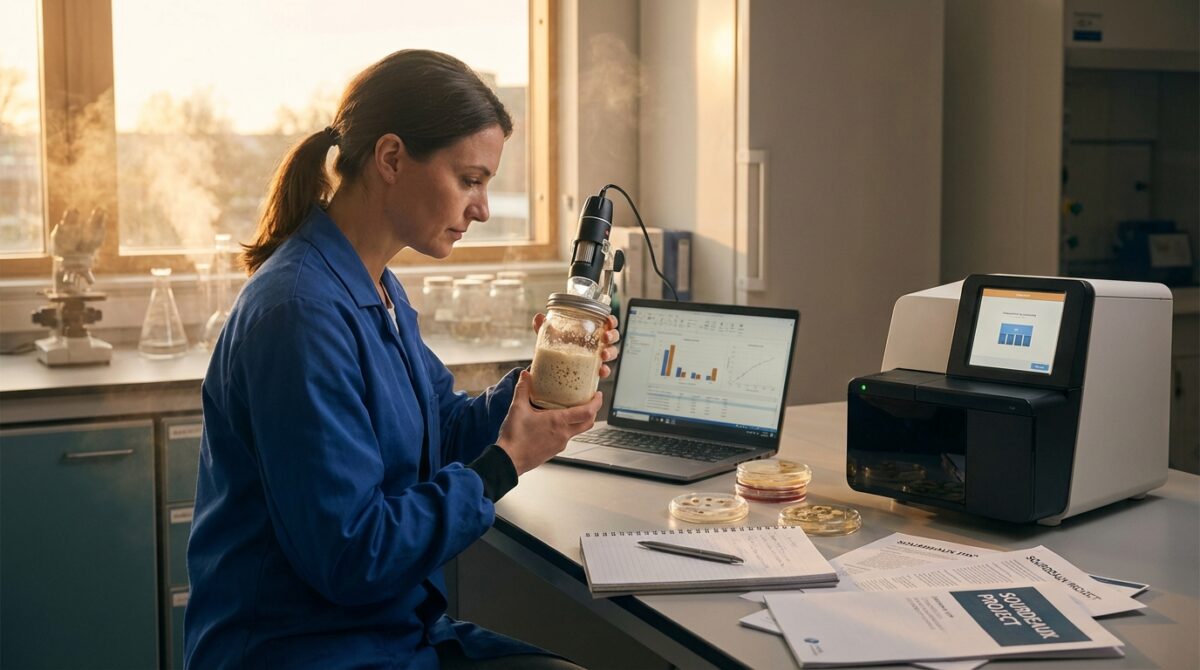
The most surprising finding from recent sourdough research is that a relatively obscure yeast, Kazachstania, quietly dominates many starters worldwide, not the famous baker’s workhorse Saccharomyces cerevisiae. That invisible switch in microbes can subtly redirect flavor, texture, and even how your bread dough behaves.
This new insight comes from work led by evolutionary biologist Caiti Heil, Ph.D., at North Carolina State University, published in the peer‑reviewed journal Microbiology Spectrum. The team shows that the type of flour you choose acts like an ecological filter, nudging your sourdough microbiome toward different bacterial partners, even while the same hardy wild yeast tends to take over.
What we now know about sourdough microbes and flavor
A sourdough starter is just flour and water on the surface, yet it hosts a shifting community of microbes that drives fermentation. Earlier surveys had already catalogued more than 60 bacterial species and over 80 kinds of yeast across starters from different continents, as described in resources such as The life inside your loaf.
Ancient 400-Million-Year-Old Fish Fossils Unveil the Origins of Terrestrial Life
Researchers Unveil Microscopic Plant Mechanism Poised to Boost Crop Production Dramatically
Heil’s study refines that global view. Across all starters in their experiment, yeasts from the genus Kazachstania repeatedly outcompeted rivals. In contrast, the populations of lactic acid bacteria shifted with flour type, suggesting that what you feed your starter can steer sourness, aroma, and structure without changing any other step in your bread making routine.
How the North Carolina State experiment was designed
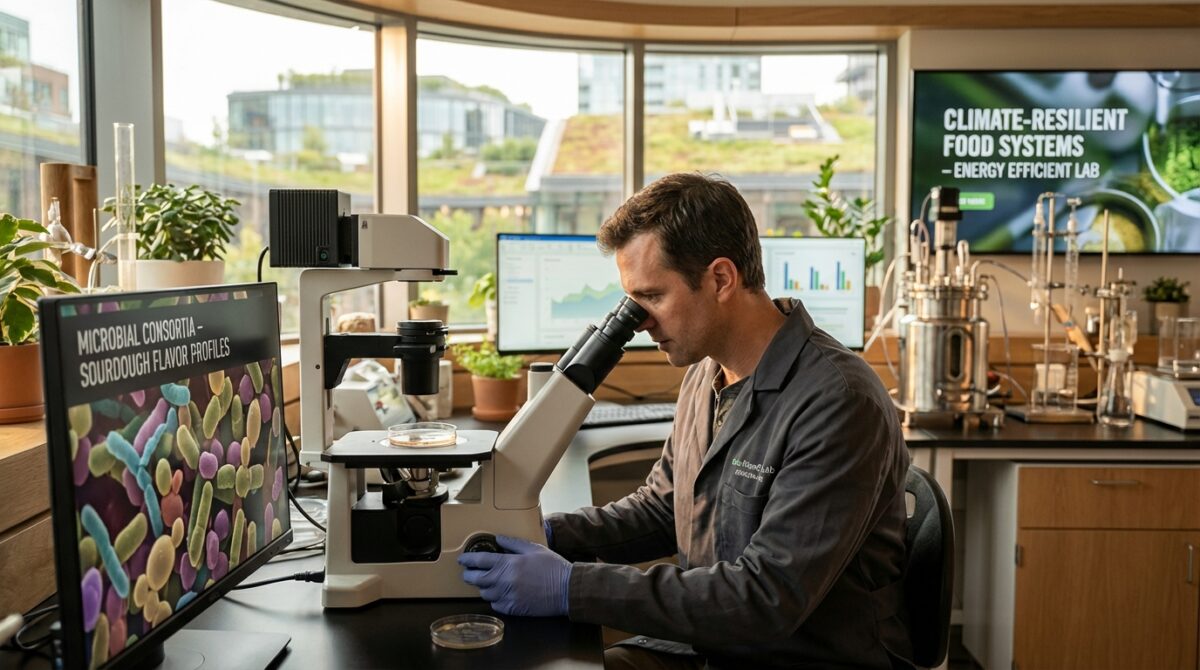
Discover the secret microbes behind sourdough’s unique flavor and learn how they transform ordinary dough into artisanal bread.
To track which microbes thrived, the scientists applied metabarcoding, a DNA‑based method that quickly profiles community members in a sample. This single technique let the team see how the starter culture changed in real time, turning each jar into a living experiment in microbial evolution.
From middle school classroom to lab‑grade sourdough experiment
The project began not in a high‑tech lab, but in a local middle school. Postdoctoral researcher and avid baker Enrique Schwarzkopf, Ph.D., introduced students to fermentation by asking them to grow different starters and compete for the fastest‑rising dough. His own longtime starter, affectionately called Seth, provided a reference point.
This classroom challenge raised a scientific puzzle: if every jar starts with similar ingredients, why do starters mature into such different microbial communities? That question guided the structured experiment later carried out at North Carolina State, echoing ideas discussed in broader reviews such as sourdough under the microscope.
The biochemistry hidden in simple flour and water
From a biochemistry perspective, each flour type offers distinct sugars, fibers, and minerals. Work on wheat fiber dynamics, such as the study summarized in what really happens inside sourdough, has shown how fermentation can remodel plant components.
Heil’s team linked those nutritional profiles to microbial behavior. Whole wheat, richer in bran and micronutrients, favored certain lactic acid bacteria, while refined bread flour selected others. The outcome is not merely academic; the acids and aroma compounds these bacteria release influence how sour your loaf tastes and how its crumb feels when you bite into it.
Detailed results: Kazachstania rules, bacteria follow the flour
At the start of the experiment, DNA sequencing showed that all three flours contained a mix of environmental microbes, including various yeasts. The bacterial signatures were broadly similar too, echoing findings reported in other surveys such as putting sourdough under the microscope. Nothing obvious predicted a clear winner.
After several weeks of repeated feeding, the picture changed. Every starter, regardless of flour type or feeding regime, ended up dominated by Kazachstania yeasts. This was unexpected, because many bakers assume wild yeast means mainly Saccharomyces cerevisiae, long associated with commercial baking and brewing.
How bacteria responded differently to each flour
While the yeast outcome converged, the bacterial side diversified. Starters grown on whole wheat flour showed higher relative abundance of Companilactobacillus, a group linked to robust acid production. By contrast, bread flour starters carried more Levilactobacillus, which may generate a different balance of acids and aromatic molecules.
This pattern supports the idea that flour composition acts as an environmental driver, shaping which bacterial species can compete successfully. The study does not demonstrate direct cause‑and‑effect between a given bacterium and a specific flavor note, but it aligns with wider work on sourdough fermentation chemistry, such as the overview in the science of sourdough fermentation.
What this means for bread making and flavor design
For bakers like Lina, a fictional neighborhood baker trying to fine‑tune her signature loaf, these findings offer a new lever. Instead of changing baking temperature or hydration first, she can test different flours as a way to subtly shift her starter’s microbial balance.
Because microbial composition influences acid levels, aroma compounds, and gas production, altering the flour can, over time, adjust the perceived flavor, crumb structure, and digestibility. The research suggests correlation rather than guaranteed causation, yet the pattern is consistent with broader microbial flavor dynamics reviewed in sourdough science: bacteria, yeast, and flavor dynamics.
Practical ways to steer your starter culture
For readers eager to experiment in their own kitchens, the study indirectly points to several practical strategies that respect the underlying microbiology. Each approach uses the starter’s ecology rather than fighting it.
- Rotate flours strategically: Alternate whole wheat and bread flour feedings over several weeks to encourage a more diverse bacterial community.
- Control feeding intervals: Shorter intervals can favor faster‑growing microbes, while longer gaps select for more acid‑tolerant species.
- Monitor aroma and texture: Track how smell, bubble size, and dough strength change as proxies for shifts in the starter culture.
- Source different starters: Some bakers now deliberately seek cultures with acetic acid bacteria, as described in a tool to enhance the taste and texture of sourdough, to push sourness or complexity.
These steps do not guarantee a specific outcome, but they align your kitchen practice with how microbial communities actually function, rather than relying purely on tradition.
Why scientists care: sourdough as a model microbiome
Beyond baking, Heil’s group views sourdough as an “experimental evolution” system. Each jar contains a contained microbiome that responds quickly to environmental changes, making it easier to study adaptation and competition than in many natural habitats.
The ability to watch wild yeast and bacteria compete over weeks, rather than years, helps researchers test general questions about how communities assemble. Studies like this complement broader syntheses such as the secret life of sourdough, which trace how microbial evolution underpins the tangy loaf many households now prefer.
Limitations, open questions, and careful interpretation
The North Carolina State study involved a defined number of starters, three specific flour types, and a fixed feeding regime over several weeks. That controlled setup strengthens internal comparisons but also narrows how far the results can be generalized to all kitchens, climates, and grains.
Factors not fully captured include room temperature variation, water chemistry, and long‑term maintenance over years, as described in historical starter lineages explored in the secret soul of sourdough. The correlations between specific bacteria and sensory properties still need controlled sensory panels and chemical analyses before firm causal claims can be made.
Does changing my flour really change sourdough flavor?
The study from North Carolina State University suggests that flour type influences which lactic acid bacteria thrive in your starter. Those bacteria release different acids and aroma compounds during fermentation, which can alter perceived sourness and complexity. The relationship is correlational, but many bakers report noticeable shifts in flavor after several weeks on a new flour routine.
Why is Kazachstania yeast so common in starters?
Kazachstania appears to tolerate the acidic, low‑pH environment of mature sourdough very well and competes effectively during repeated feedings. While Saccharomyces cerevisiae is famous in commercial baking, DNA profiling in multiple studies now shows Kazachstania often dominates home and artisan starters, likely because it is better adapted to that specific ecosystem.
Can I deliberately choose the microbes in my starter?
You cannot fully control which species colonize your starter, because microbes also arrive from flour, air, and your hands. However, you can nudge the community by adjusting flour type, hydration, and feeding schedule. Some bakers also swap or buy established cultures, effectively importing a known microbial community to start from.
Is sourdough healthier because of its microbiome?
How a Peruvian Peak is Turning into a Groundbreaking Particle Detection Frontier
Scientists Unveil the Secrets Behind Yeast’s Minuscule Centromeres
Research indicates that sourdough fermentation can change starch structure, degrade some antinutrients, and influence mineral availability. These effects come from microbial metabolism rather than the microbes surviving baking. While many people find sourdough easier to digest, health benefits depend on the whole diet, not on sourdough alone.
How does this research connect to other sourdough studies?
This work builds on global surveys that mapped sourdough diversity and mechanistic studies of fermentation chemistry, such as those summarized by ScienceDaily and other outlets. Together, they show that starters are dynamic ecosystems where flour, environment, and time interact, rather than static mixtures of a few predictable microbes.