

Show summary Hide summary
After a heart attack, your heart does not suffer alone. New research shows it starts a hidden conversation with the brain, the nervous system and immunity, shaping recovery in ways cardiology had never fully mapped.
This quiet dialogue could explain why two patients with similar damage can follow very different paths of healing and why future cardiac rehabilitation may include targeted brain therapies alongside stents and medications.
How the brain-heart connection rewrites heart attack recovery
Scientists at the University of California, San Diego have traced an unexpected feedback loop that activates immediately after a heart attack. Sensory neurons in the heart send electrical distress calls along the vagus nerve to specific hubs in the brain, especially regions involved in stress and autonomic control.
Assessing the Real Risks: How Concerned Should We Be About an AI Apocalypse?
Unexpected Fossil Finds Rewrite the Timeline of Complex Animal Evolution
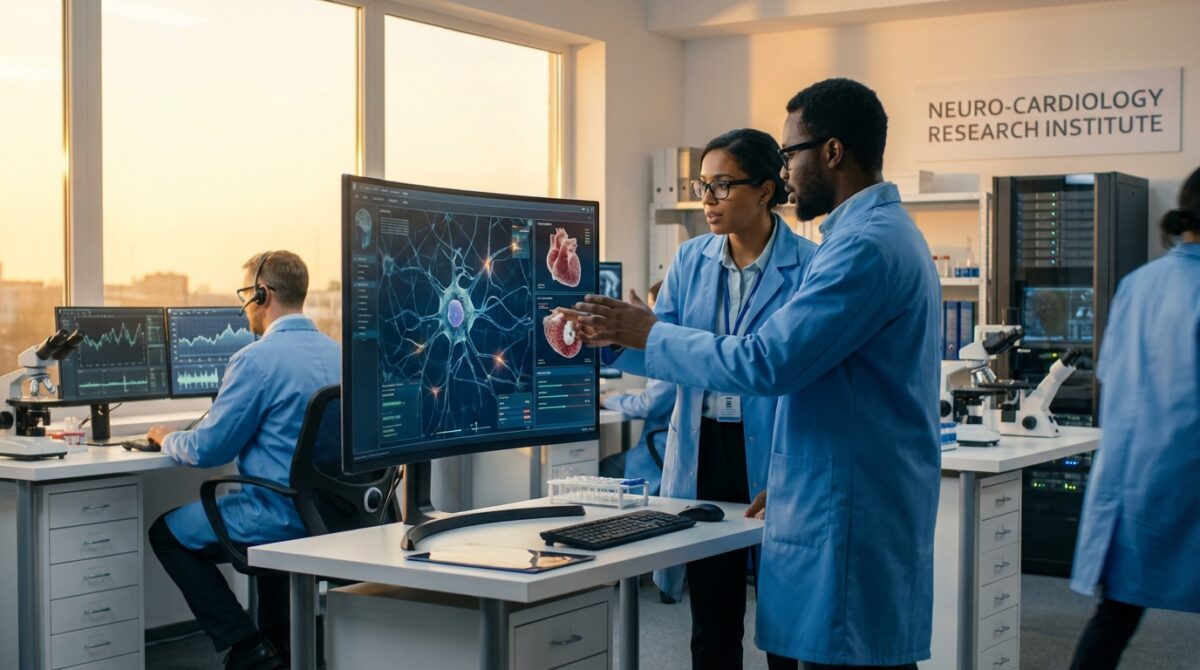
In detailed mouse experiments, researchers chemically cleared the lipids from heart tissue to make it transparent, then induced controlled myocardial infarctions. This allowed them to watch in three dimensions which nerve fibres lit up and how they changed during recovery, revealing a neuroimmune circuit largely hidden until now.
New neurons, new risks: when healing turns into scarring
The team discovered a previously unknown cluster of sensory neurons wrapping tightly around the thick muscular wall of the heart’s ventricle. Before injury, only a sparse network of these fibres was present. After a heart attack, the fibres multiplied severalfold, as if the damaged organ was instructing the nervous system to grow new lines of communication.
Signals from these fibres reached stress-responsive brain regions and triggered a fight-or-flight style reaction. That neural response, in turn, mobilised immune cells that travelled back to the heart, where they formed scar tissue. Some scarring is protective; excessive scarring stiffens the muscle and can push patients towards heart failure, highlighting why understanding this circuit matters for long-term cardiac rehabilitation.
Neuroscience reveals a surprising ally in healing the heart
When researchers used genetic tools to switch off this new nerve cluster so it could no longer signal to the brain, something unexpected happened. The injured region of the heart in mice shrank dramatically, and tissue function improved faster than in untreated animals, suggesting that dampening the circuit can soften the blow of the initial injury.
This kind of targeted manipulation draws directly on concepts from neuroplasticity research: the idea that neural circuits can be remodelled after injury. Here, the same plasticity that helps the nervous system adapt also appears to determine whether post-infarction healing leans toward healthy repair or harmful scarring.
Sleep, inflammation and a second wave of discovery
Parallel work from Mount Sinai adds another layer to the story. According to a recent Mount Sinai report on post-heart-attack sleep, the injured heart sends immune-mediated signals that push the brain toward deeper, longer sleep. This extra sleep appears to reduce inflammation in heart tissue and support cleaner repair.
These findings, echoed in analyses of the heart signalling the brain to increase sleep, show that the same neuroimmune pathways can either worsen structural damage or enhance systemic recovery, depending on timing and intensity. For patients and clinicians, it reframes sleep not as a side effect of illness but as an active therapeutic phase.
What this means for cardiology, drugs and rehabilitation
These discoveries arrive in a field where cardiologists already rely heavily on the nervous system. Beta blockers, for example, have long been standard therapy after myocardial infarction. The new data suggest that part of their benefit may come from quietly dampening the brain-heart connection and its associated immune surge, not only from lowering heart rate and blood pressure.
For specialists like Dr. Sofia Ramirez, a fictional cardiologist guiding many patients through cardiac rehabilitation, this research helps explain why tailored stress management, careful sleep support and autonomic monitoring often correlate with better outcomes, even when imaging shows similar initial damage.
Future therapies: targeting neuroplasticity after a heart attack
Over the next decade, several therapeutic routes are likely to emerge from this work in neuroscience and cardiology:
- Precision nerve modulation using focused vagus nerve stimulation to fine-tune post-infarction signalling without shutting it down completely.
- Immune-targeted drugs that block specific cell types or cytokines only during the narrow window when scarring risk peaks.
- Gene therapies designed to adjust how the newly identified sensory neurons grow and fire, informed by early-stage results in animal models.
- Digital rehabilitation tools that combine wearable sensors, sleep tracking and personalised stress-biology profiles to steer safer recovery.
Researchers are also connecting this work to broader questions about why some minds age resiliently. Studies on why some minds stay sharp throughout life highlight immune-brain interactions that may overlap with the post-infarction circuits now seen in the heart.
From lab bench to daily life: why this science matters to you
For patients like the hypothetical Daniel, a 58-year-old engineer entering cardiac rehabilitation after his first heart attack, these findings carry practical implications. His care team can now explain that fatigue, strange dreams or heightened anxiety may reflect active brain-heart connection pathways rather than simple weakness.
Understanding that the brain, immune system and heart collaborate in healing also reframes lifestyle prescriptions. Good sleep hygiene, structured stress reduction and adherence to neuro-cardiac medications become ways of influencing powerful circuits that science is finally mapping, rather than generic advice with unclear mechanisms.
How does the brain actually detect a heart attack?
Specialised sensory neurons embedded in the heart wall send electrical and chemical signals along nerves, particularly the vagus nerve, to specific regions of the brain. These areas process pain, stress and autonomic control, then trigger systemic responses that influence inflammation, heart rate and blood vessel tone during recovery.
Can blocking brain signals always improve recovery after a heart attack?
Blocking certain signals helped mice form smaller scars and recover function, but complete shutdown of the pathway is unlikely to be safe in humans. Some communication is needed for repair. Future therapies will probably aim to fine-tune timing and intensity of the brain-heart connection, not eliminate it altogether.
Does better sleep really help the heart heal?
Current studies suggest that increased, high-quality sleep after a heart attack can lower inflammation and support more organised tissue repair. The heart seems to encourage the brain to promote sleep through immune signals. Patients should still follow medical advice, but protecting sleep is a meaningful part of rehabilitation.
What role does neuroplasticity play after a heart attack?
Neuroplasticity allows neural circuits to rewire in response to injury. After a heart attack, sensory fibres around the ventricle grow and reshape connections to the brain. That plasticity can either support adaptive healing or drive excessive stress signalling and scarring, depending on how the circuit is regulated.
How might this research change cardiac rehabilitation programs?
Stanford Researchers Develop Shape-Shifting Material Mimicking Octopus Color and Texture Changes
Groundbreaking Fiber Optic Breakthrough Enables Simultaneous Streaming of 50 Million Movies
Rehabilitation is likely to expand beyond exercise and diet to include closer monitoring of sleep, stress biology and autonomic function. Clinics may integrate targeted neuromodulation, cognitive-behavioural strategies and personalised medication plans that consider the patient’s brain-heart-immune profile, aiming for safer long-term recovery.