
Show summary Hide summary
- From impossible neutrino to Andean observatory dream
- How a canyon becomes a colossal particle detection machine
- Engineering at the edge: building on a near-vertical wall
- What this observatory could reveal about the universe
- From oscillations to quantum gravity hints
- Why use a Peruvian canyon instead of building another underground lab?
- What makes the particles TAMBO targets different from ordinary neutrinos?
- How will TAMBO work with IceCube and KM3NeT?
- When is the full observatory expected to be operational?
- Will TAMBO also contribute to atmospheric and climate-related studies?
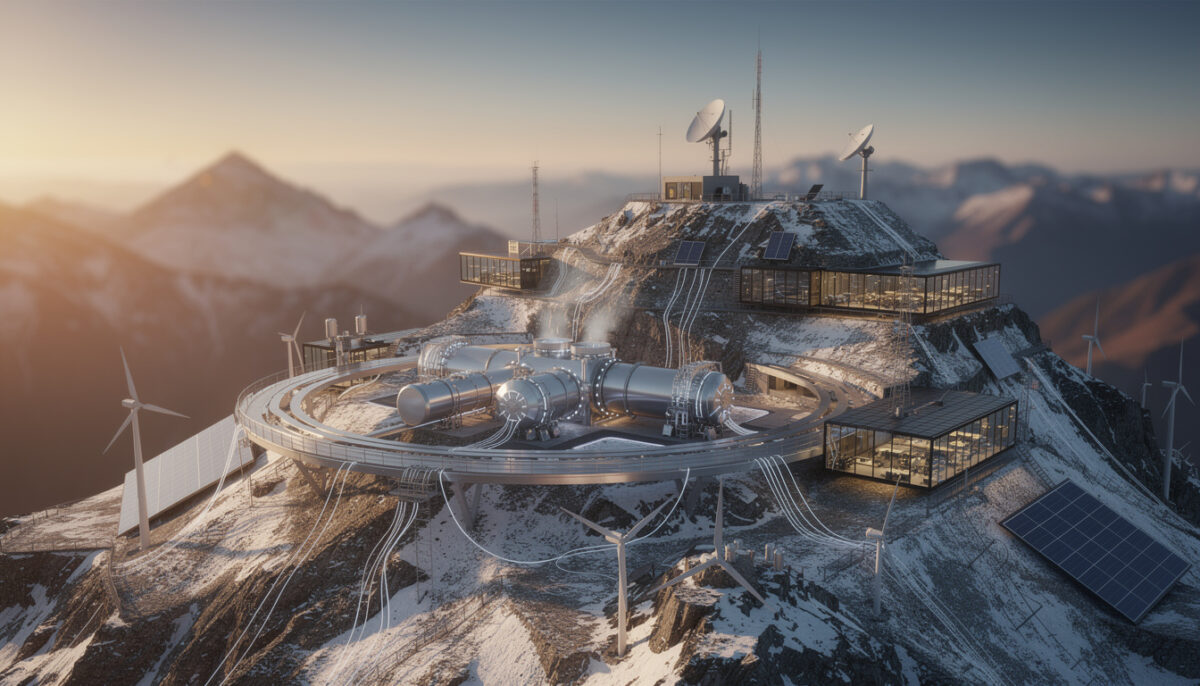
A lonely Peruvian Peak, better known for condors and vertigo-inducing cliffs than physics, is quietly being transformed into a groundbreaking window on the universe’s most elusive particles. High above the Andes, a canyon is about to become a gigantic natural detector, why a Peruvian mountain is becoming an ‘impossible’ particle detector.
From impossible neutrino to Andean observatory dream
For years, ultra-energetic cosmic neutrinos were theory, not daily data. Then IceCube in Antarctica started seeing a few, and in 2013 confirmed the first truly high-energy events. In 2024, the KM3NeT telescope in the Mediterranean shocked the community with a neutrino so energetic many researchers thought the announcement was a mistake.
Physicist Carlos Argüelles-Delgado describes hearing about that event like being told a new colour had been discovered. This single detection hinted at a new population of particles, possibly the long-predicted cosmogenic neutrinos, born when ultra-high-energy Cosmic Rays slam into the cosmic microwave background that fills space.
Scientists Unveil the Secrets Behind Yeast’s Minuscule Centromeres
This Tiny 2-Pound Dinosaur is Transforming Our Understanding of Evolution
Why one Peruvian canyon suddenly matters to astroparticle physics
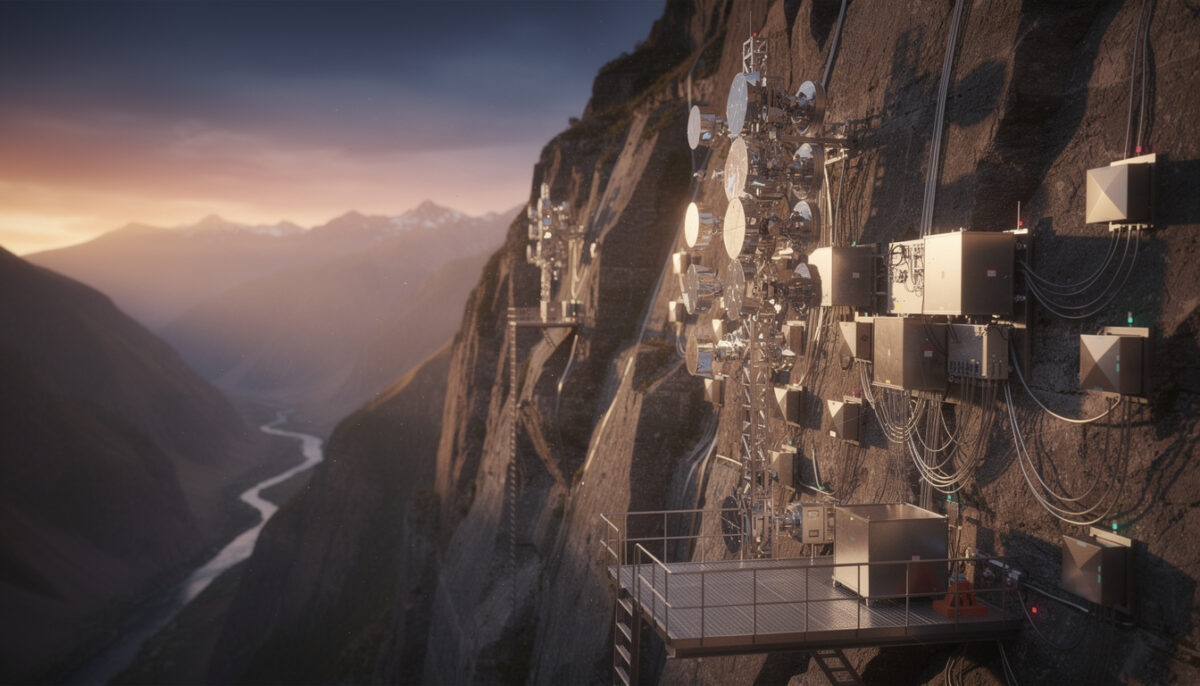
To catch such rare particles, detectors must be enormous in scale. Burying sensors in ice or deep water works, but coverage of the sky remains patchy. Argüelles-Delgado’s idea flips the problem: use the mountain itself as both shield and converter, then tile the opposite wall with detectors. The canyon effectively becomes a gigantic observatory for Earth-skimming neutrinos.
Using satellite maps, his team hunted for valleys four kilometres deep and several kilometres wide. Only around 10 candidates on the planet matched the geometry, mostly in the Himalayas and Andes. Among them, a spectacular Andean site in Peru stood out for its combination of altitude, geology, and access, echoing how AI surveys recently revealed hidden Nazca geoglyphs in the desert, as detailed in discovery of new fossils could resolve the enigma of sail-backed spinosaurs.
How a canyon becomes a colossal particle detection machine
Imagine standing near the rim of this High Altitude valley with a handheld detector. You would be bombarded by cosmic rays and gamma rays, drowning any interesting signal. Shift that detector to the canyon wall, however, and the mountain between you and the sky suddenly blocks almost all this background. The rock becomes a natural filter.
For ultra-energetic neutrinos, the mountain does something else: it finally forces these “ghost particles” to interact. At everyday energies, neutrinos pass through light-years of matter untouched. At the energies TAMBO targets, they are more likely to collide inside a mountain range, producing long-lived tau particles that burst out of the rock and decay into cascades of secondary particles.
TAMBO: the Tau Air-shower Mountain-Based Observatory
The project’s name, TAMBO, nods to Quechua inns that once hosted Inca messengers, the Chasquis. Here, the “guests” are neutrinos travelling from distant galaxies. When a tau neutrino skims Earth, interacts in the rock and escapes, it triggers an enormous shower of charged particles in the canyon air. That shower spreads across a vast area like a fan.
To capture this fan, the plan is to deploy around 5000 flat detectors, each roughly the size of a dining table, across several square kilometres of near-vertical rock. In its pilot phase, TAMBO will start with about 100 detectors, already enough to test the concept and refine harnessing quantum mysteries of these particle cascades.
Engineering at the edge: building on a near-vertical wall
Turning this Peruvian Peak into a working facility means dealing with problems no underground lab faces. Every detector must be safely anchored to fractured rock, supplied with power and communications, and kept alive under brutal UV radiation, storms, and temperature swings. Even moving the hardware into the canyon is a strategy meeting on its own.
The team weighs helicopters against cable systems, knowing that steeper slopes increase both landslide risk and installation costs. Wildlife adds another dimension. Andean condors nest along these cliffs, so structures cannot simply occupy ledges without considering behaviour, just as conservation work in the Amazon has balanced frontier research in equatorial aeronomy and space with local ecosystems.
Local communities, sacred landscapes and shared innovation
Past telescope projects have run into justified opposition when indigenous perspectives were sidelined, as seen at Mauna Kea. For TAMBO, historians and anthropologists inside the collaboration work on responsible siting, engaging villages that depend on farming and tourism. The goal is not reluctant acceptance but genuine shared enthusiasm.
Local stories already weave the canyon and sky together, with Quechua traditions likening a river’s path to the Milky Way’s arc. That narrative aligns naturally with an astroparticle physics experiment that reads cosmic messages. Scientific research here is not arriving in a vacuum; it plugs into existing ways of understanding the universe.
What this observatory could reveal about the universe
Neutrinos carry information that light and charged particles cannot. Photons get absorbed, deflected or blocked by dust and magnetic fields. Charged Cosmic Rays zigzag through galactic fields until their paths forget their origins. Neutrinos, by contrast, travel almost in straight lines from extreme environments like supermassive black holes or gamma-ray bursts.
TAMBO’s focus on the highest energies targets two big frontiers. First, unravelling where ultra-high-energy Cosmic Rays originate and how they accelerate to such wild speeds. Second, probing neutrino oscillations over distance-energy ratios never explored before, which might expose subtle violations of current models, similar in spirit to how a new class of black holes could clarify several cosmic puzzles at once.
From oscillations to quantum gravity hints
Neutrinos shift between flavours as they fly, a behaviour tied to their tiny masses. Cosmic neutrinos that have crossed millions of light-years at extreme energies sample an untouched region of parameter space. Any tiny deviation from expected flavour ratios could point to new physics, perhaps even traces of quantum gravity.
Some theories predict microscopic fluctuations in spacetime itself, which would subtly scramble neutrino oscillations over these huge journeys. If TAMBO and sister experiments like IceCube and KM3NeT see consistent anomalies, those patterns might be the first observational nudge toward a quantum description of gravity.
- Earth-skimming neutrinos interacting in mountain rock
- Tau particle air showers lighting up the canyon atmosphere
- Thousand-square-metre detector arrays mapping shower footprints
- Multi-observatory coordination with IceCube and KM3NeT
- Cross-disciplinary collaboration with local communities and historians
Why use a Peruvian canyon instead of building another underground lab?
The canyon provides three things in one: a huge mass of rock to convert ultra-energetic neutrinos into detectable particles, natural shielding from background cosmic rays, and a wide open volume of air for the resulting particle showers to develop. This turns the entire landscape into part of the instrument, something no conventional tunnel lab can match at similar cost.
What makes the particles TAMBO targets different from ordinary neutrinos?
TAMBO focuses on ultra-high-energy neutrinos, up to a million times more energetic than those from nuclear reactors or the sun. At these energies, neutrinos interact more readily with matter and are likely produced in extreme cosmic accelerators or via interactions between ultra-high-energy cosmic rays and the cosmic microwave background. Their rarity and energy make them powerful probes of new physics.
How will TAMBO work with IceCube and KM3NeT?
TAMBO will act like a viewfinder for the most energetic events, pinpointing directions and times for Earth-skimming neutrinos. IceCube and KM3NeT, sensitive to lower energies and different geometries, can then check whether they detect related signals from the same region of the sky. Combining these datasets improves chances of identifying sources and testing theoretical models.
When is the full observatory expected to be operational?
Scientists Uncover the Fascinating Science Behind Mint’s Cooling Sensation
A Flawless Atom Challenges the Fundamental Laws of Nuclear Physics
The collaboration plans to start with a pilot array of around 100 detectors to validate the concept and engineering. If performance matches expectations and community partnerships progress well, the larger 5000-detector configuration is anticipated in the early 2030s, delivering continuous high altitude monitoring of ultra-energetic neutrinos.
Will TAMBO also contribute to atmospheric and climate-related studies?
Yes. Although its primary goal is astroparticle physics, TAMBO’s dense network of detectors in a high-altitude canyon will record extensive information on atmospheric particle cascades, storm-related effects and long-term background variation. These data can complement broader atmospheric studies in the Andes and help refine models used in both climate research and space weather analysis.