
Show summary Hide summary
- Why these cute creatures make everyone smile
- The biological miracle behind the axolotl myth
- Endangered species in a shrinking Mexican lake
- From global fascination to real conservation action
- What you can do if you love axolotls a lotl
- Why are wild axolotls disappearing if they are so common as pets?
- Are axolotls good pets for children and beginners?
- What makes axolotls so important for medical research?
- Can releasing pet axolotls help save the species?
- How does climate change affect axolotl survival?
The same animal that fills children’s bedrooms as plush toys now survives in the wild at densities as low as 36 axolotls per square kilometre in Lake Xochimilco. That contrast – overflowing tanks and empty canals – sits at the heart of the Global Fascination with axolotls and what it means for a warming, rapidly changing planet.
Why these cute creatures make everyone smile
Axolotls belong to a tiny group of aquatic salamanders that never grow out of their juvenile phase. Wide-set eyes, a permanent smile and feathered gills give them the face of a cartoon character rather than a laboratory icon.
For children scrolling TikTok in London or São Paulo, they are first encountered as cute creatures in memes, games and songs. According to Conservation International, the most familiar colour morph, bubble‑gum pink, barely exists in nature but dominates on socks, hoodies and night‑lights. In Mexico, the axolotl even appears on the 50‑peso banknote, so popular that millions of notes are reportedly kept as collectibles rather than spent.
Researchers Unveil the Two-Decade Enigma of Gold’s Nuclear Origins
Ancient 400-Million-Year-Old Fish Fossils Unveil the Origins of Terrestrial Life
From viral icon to unique pets at home
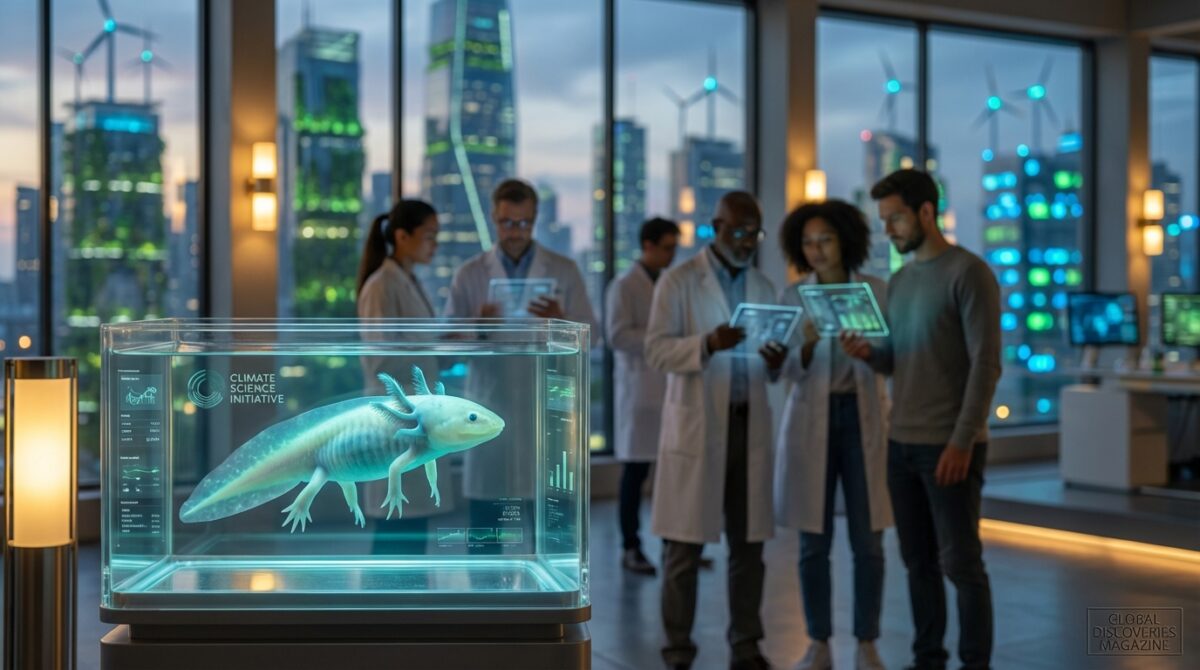
Retail buyers describe axolotls as a “must‑have character” for Generation Alpha, with brands from building blocks to plush pillows racing to include them. That digital fame has spilled into real water: pet shops that rarely saw them a decade ago now sell them as unique pets to first‑time amphibian keepers.
In one small rehoming centre in England, tanks line an entire spare room, each holding rescued axolotls whose owners underestimated the cost of filtration, cooling and feeding. Similar stories appear across Europe and North America. Reports highlighted by Northeastern University researchers describe “accidental breeders” suddenly caring for dozens of larvae, unsure what to do next.
The biological miracle behind the axolotl myth
Beneath the memes sits a biological miracle. Axolotls can regrow lost limbs, repair parts of their heart and even reconstruct significant portions of their spinal cord and brain. Regeneration that takes humans months of rehabilitation can be completed by an axolotl in a matter of weeks.
Scientists at the Centre for Regenerative Medicine in Edinburgh and other institutes keep large research colonies to unravel how this works at the cellular level. As Britannica explains, the animal’s paedomorphosis – staying in a larval state for life – seems tightly linked to its regenerative capacity. Understanding that link could one day influence treatments for nerve injuries, strokes or even degenerative diseases.
Life between tadpole and elder, in slow motion
Unlike most salamanders, axolotls never leave the water. They reach sexual maturity yet retain their external gills and tadpole‑like tails, living up to 15–20 years in captivity. In the wild they are short‑lived, usually five to six years, due to predators and pollution.
According to National Geographic, this “forever young” body plan evolved in the high‑altitude lakes around Mexico City, where stable cool water and abundant prey once allowed slow but steady growth. As climate change warms shallow waters and alters rainfall patterns, that delicate balance is shifting fast.
Endangered species in a shrinking Mexican lake
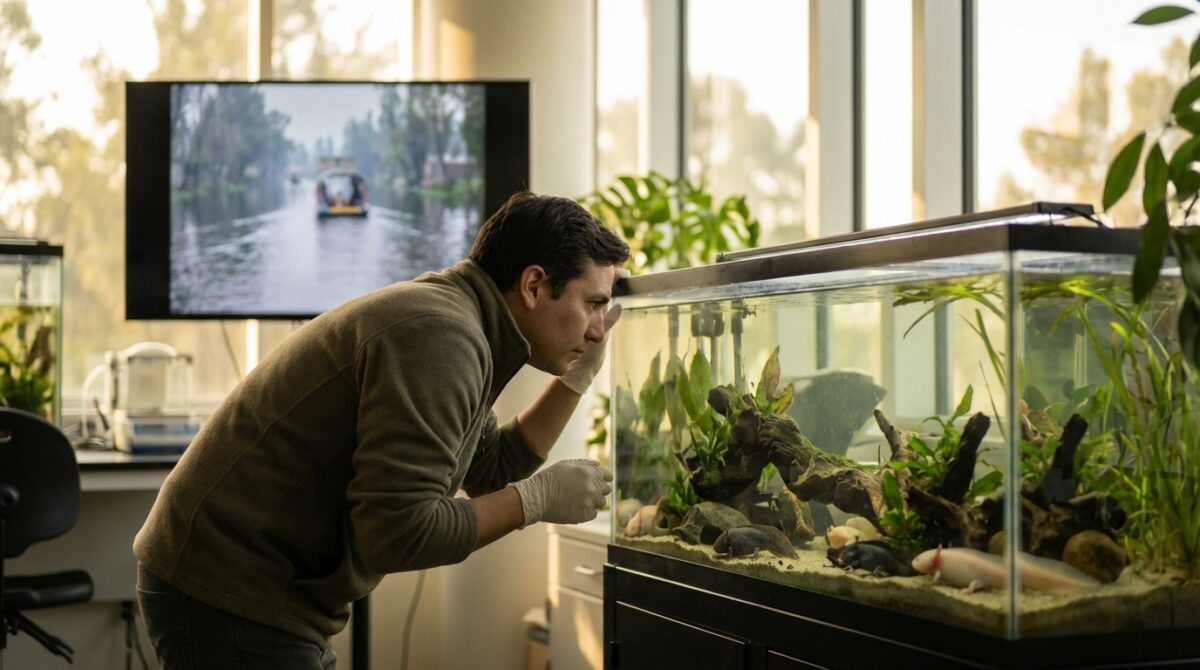
While millions meet axolotls on screens, their natural home in southern Mexico City tells another story. Lake Xochimilco, a network of ancient canals and floating gardens, is now the last significant wild refuge for these endangered species. Urban expansion has drained wetlands, fragmented habitat and loaded the water with sewage and agrochemicals.
A long‑running census led by ecologist Luis Zambrano has tracked a steep decline. Surveys reported about 6,000 individuals per square kilometre in 1998, dropping to 100 in 2008 and just 36 in 2014. New counts, supported by campaigns like Adoptaxolotl, suggest numbers remain critically low. Carp and tilapia, introduced decades ago, now outcompete and eat young axolotls; in one small canal, researchers removed 600 kilograms of tilapia with a single 100‑metre net.
Pop culture abundance versus ecological reality
To many wildlife enthusiasts outside Mexico, global visibility looks like success. Pop culture ubiquity can mask ecological absence. A detailed overview from CNN’s reporting on axolotls warns that aquarium tanks worldwide create the illusion of security while wild populations continue to slide towards local extinction.
This gap matters for more than sentiment. Wild axolotls are part of a complex chinampa farming system that buffers floods, stores carbon and supports rural livelihoods on the edge of a megacity. When their habitat degrades, water quality, food production and climate resilience all suffer together.
From global fascination to real conservation action
The turning point is whether fascination turns into responsibility. Conservation groups and Mexican scientists see the current wave of interest as an opportunity to channel support toward restoring Xochimilco and improving conditions for captive animals.
Resources such as Earth.org’s axolotl spotlight and analyses on Earth.com emphasise that habitat protection, not just breeding, is vital. Without clean, cool canals and refuges from invasive fish, releases from captivity would offer little more than a brief photo opportunity.
What you can do if you love axolotls a lotl
For people who cannot help but smile every time an axolotl appears on screen, several concrete actions are available. None require a laboratory or a flight to Mexico.
- Support habitat work: Back organisations funding wetland restoration and traditional chinampa agriculture around Xochimilco.
- Choose pets responsibly: Research water temperature, tank size and lifespan before purchasing. Adoption from rehoming centres can reduce pressure on trade.
- Demand better urban water policy: In cities worldwide, cleaner waterways and wetland buffers help amphibians and people cope with climate extremes.
- Share accurate stories: When posting fan art or memes, include a line about their status as wild amphibians on the brink.
For deeper background that connects trend and threat, readers can turn to long‑form explainers like this exploration of how axolotls took over the world or conservation‑focused pieces such as recent coverage of their extinction risk. The more the story is told in full, the more that viral charm may help secure a future for the animals it celebrates.
Why are wild axolotls disappearing if they are so common as pets?
Captive axolotls live in controlled tanks, while their wild relatives depend on the canals of Lake Xochimilco. Urbanisation, polluted inflows, invasive fish like carp and tilapia, and changing rainfall patterns have degraded that habitat. Popularity in pop culture does not automatically translate into protection for wild populations.
Are axolotls good pets for children and beginners?
Axolotls are often marketed as easy, unique pets, but they need chilled, well‑filtered water, large tanks and careful feeding. They can live 10–15 years, so they are a long‑term commitment. Many rescues report abandoned animals from owners who underestimated the costs and complexity of amphibian care.
What makes axolotls so important for medical research?
Axolotls can regenerate limbs, parts of their heart, spinal cord and even brain tissue. Researchers study how their cells avoid scarring and instead rebuild complex structures. Insights from this biological miracle could inform future therapies for nerve injuries, burns and degenerative diseases in humans.
Can releasing pet axolotls help save the species?
Researchers Unveil Microscopic Plant Mechanism Poised to Boost Crop Production Dramatically
How a Peruvian Peak is Turning into a Groundbreaking Particle Detection Frontier
Releasing captive axolotls into the wild is not recommended. Pet animals may carry diseases or genetic traits that do not match local populations. Without restored, protected habitat, released individuals are unlikely to survive. Supporting habitat restoration and science‑led reintroduction projects is far more effective.
How does climate change affect axolotl survival?
Rising temperatures and more erratic rainfall warm and destabilise the shallow canals of Xochimilco. Warmer, low‑oxygen water stresses axolotls and favours invasive fish and algal blooms. Protecting and restoring wetlands, improving water quality and reducing pollution all help buffer these amphibians against climate impacts.