
Show summary Hide summary
- Ancient fossils in Egypt that move the ape family tree
- How one jaw challenges East Africa’s dominance in human evolution
- What the teeth and jaws reveal about life 17 million years ago
- From Aegyptopithecus to Masripithecus: a longer Egyptian story
- Key takeaways for understanding primate origins
- How old are the Masripithecus fossils from Egypt?
- Why do scientists think Masripithecus is close to the common ancestor of apes?
- What can the teeth of Masripithecus tell us about its lifestyle?
- Does Masripithecus mean East Africa is no longer important for ape evolution?
- What fossils are still missing to complete the picture?
- FAQ
- What makes the recent ape ancestor fossils in Egypt so significant?
- Where were the ape ancestor fossils in Egypt found?
- How do the ape ancestor fossils in Egypt change our understanding of primate evolution?
- What is the species name given to the ape ancestor fossils discovered in Egypt?
- Why is the jaw structure of the ape ancestor fossils in Egypt important?
Imagine tracing your family back not just centuries, but 17 million years, to a single jaw buried in Egyptian desert sands. Those Ancient Fossils, no bigger than your hand, may now be rewriting where every living ape – including you – truly began .
At Wadi Moghra in northern Egypt, a small research team led by a young paleontologist changed the conversation on Primate Origins with one dusty field season.
Ancient fossils in Egypt that move the ape family tree
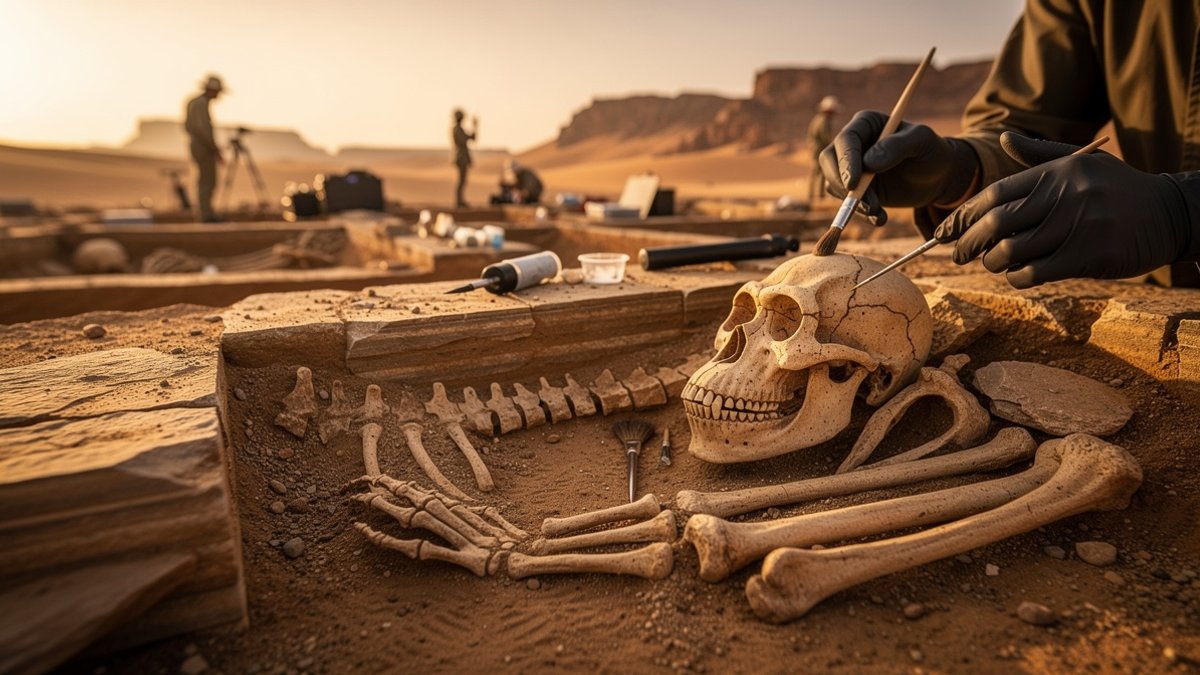
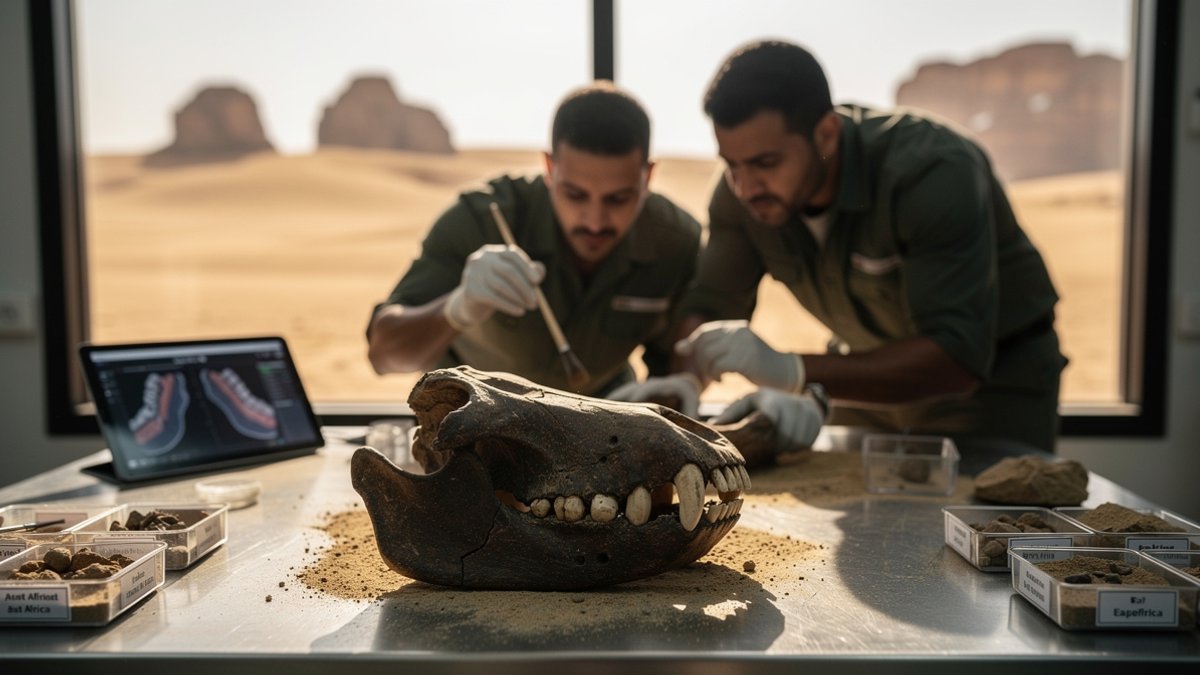
Between 2023 and 2024, excavations at Wadi Moghra uncovered four fossil pieces: the front of a mandible with two molars preserved in place, and another jaw fragment from a second individual. The rocks that trapped them are dated to around 17–18 million years ago, in the early Miocene.
The Tiny Titan: World’s Smallest QR Code, Smaller Than Bacteria, Promises Data Storage for Centuries
Earth’s Origins: The Possibility of Formation from Two Distinct Solar Rings
The new species, named Masripithecus moghraensis, immediately stood out. The jaw is deeper and more robust than those of monkeys of the same period, and the teeth carry the rounded, complex pattern that researchers expect in early apes. For specialists in Evolution and Anthropology, this combination rang every alarm bell.
Why Masripithecus looks like a true ape
Lead researcher Shorouq Al‑Ashqar focused on the symphysis, the zone where the two halves of the lower jaw fuse. In apes, this area shows a specific internal buttressing pattern. In Masripithecus, that structure closely matches later hominoids rather than monkeys.
The molars add another line of evidence. They are low-crowned, rounded and heavily ridged, with the second and third molars almost the same size. This dental set points to a hominoid, not a typical Old World monkey, nudging Masripithecus near the Common Ancestor of all modern apes. For a look at how these discoveries may challenge assumptions, you can read about 18 million-year-old fossils of ape found in Africa.
How one jaw challenges East Africa’s dominance in human evolution
For decades, textbooks framed East Africa as the great cradle of Human Evolution. Iconic fossils from Kenya and Tanzania seemed to anchor the origin of hominoids there, pushing northern Africa to the sidelines of Paleontology. For more on cultural shifts during this period, see ancient Stone Age symbols that may also redefine origins.
The Wadi Moghra material disrupts that narrative. If Masripithecus really sits at the base of the hominoid tree, then the earliest phase of the ape story may have unfolded in northeastern Africa. Researchers behind the first detailed description, such as those featured in this overview of Masripithecus, now argue that the geographic spotlight needs to expand well beyond the Rift Valley.
A new starting point for modern apes
Biogeographic models built from this Fossil Discovery point to northern Africa and the Middle East as a likely homeland of the last common ancestor of all living apes during the early Miocene. At that time, the African and Arabian plates were drifting north, narrowing marine barriers with Eurasia.
By 16 million years ago, some apes had already reached Europe and Asia. Masripithecus, slightly older, helps explain how an early hominoid radiation could spread once those land connections opened, turning Wadi Moghra into a key waypoint in global primate history.
What the teeth and jaws reveal about life 17 million years ago
From a few teeth, Al‑Ashqar’s team extracted details of diet, body size and even social hints. Masripithecus likely weighed around 25 kilograms, roughly comparable to a small female chimpanzee yet larger than most monkeys from that interval.
The large canines on both specimens suggest they were males, hinting at some form of competition or display behavior. While the limb bones remain unknown, the jaw alone indicates a powerful bite matched to a versatile lifestyle.
Diet, habitat and daily challenges of Masripithecus
The crenulated molars point to a mixed diet. Masripithecus probably relied heavily on fruit, yet could also crack nuts and seeds when seasons turned harsh. That ability to exploit both soft and hard foods would have been a valuable survival trait in a dynamic Miocene landscape.
Wadi Moghra’s ancient environment likely alternated between wooded zones and more open areas near water. Without limb bones, researchers cannot say whether Masripithecus spent more time in trees or on the ground, but the robust jaw suggests a primate constantly working through tough plant material just to stay alive.
From Aegyptopithecus to Masripithecus: a longer Egyptian story
Masripithecus does not appear out of nowhere. Earlier in the Oligocene, another Egyptian primate, Aegyptopithecus zeuxis, already sat near the split between apes and Old World monkeys. This species, described in detail on pages like the Aegyptopithecus entry, showed a smaller brain than many expected, yet a body plan close to the common ancestor of catarrhines.
Together, Aegyptopithecus and Masripithecus frame a long local sequence: from early anthropoids just before the ape–monkey split, to a Miocene hominoid edging toward the root of modern apes. Northern Egypt, once a blank zone on many maps of Human Evolution, now looks like a long-term laboratory of primate change.
Why this matters beyond primates
Wadi Moghra’s story echoes other recent discoveries shaking deep-time narratives. Research on ancient Stone Age symbols suggests early humans experimented with graphic codes far earlier than previously thought, just as Masripithecus pushes the geographic horizon of apes.
Across fields, from ancient genes older than life to early seafaring, scientists keep finding that our origins are more widespread and complex than older models allowed. Masripithecus simply plays that same disruptive role for apes and their shared Common Ancestor.
Key takeaways for understanding primate origins
For a reader following new work on Paleontology and ape evolution, Masripithecus offers several clear points to remember. Each one shifts how you interpret future fossil headlines and museum exhibits.
- Location shift: Early hominoid evolution now has strong evidence in northern Egypt, not only in East Africa.
- New candidate ancestor: Jaw and molar features place Masripithecus near the base of the hominoid lineage.
- Diet and ecology: Flexible fruit‑based feeding with the capacity to process hard foods suggests ecological resilience.
- Broader timelines: Combined with earlier forms like Aegyptopithecus, Egypt hosts a long record of key primate stages.
- Ongoing debate: Alternative interpretations will continue as new fossils and methods refine the ape family tree.
Anyone tracking Primate Origins can expect Wadi Moghra to feature in future debates about where our distant cousins – and ancestors – truly emerged.
How old are the Masripithecus fossils from Egypt?
The Masripithecus moghraensis remains from Wadi Moghra are dated to roughly 17–18 million years ago, in the early Miocene. The age comes from dating the sedimentary layers encasing the fossils, combined with correlations to known regional rock sequences and faunas. This places Masripithecus just before many apes began expanding into Europe and Asia.
Why do scientists think Masripithecus is close to the common ancestor of apes?
Researchers point to several ape-like traits in the mandible and molars. The symphysis of the lower jaw shows internal reinforcement comparable to later hominoids, and the molars are low, rounded and strongly ridged, with the second and third molars nearly equal in size. Phylogenetic analyses combining these traits with other Miocene primates consistently place Masripithecus within the hominoid branch, near its base.
What can the teeth of Masripithecus tell us about its lifestyle?
The complex, crenulated molars indicate an animal adapted to a varied diet. Masripithecus probably relied heavily on fruits yet had the ability to process harder items like nuts and seeds. Such versatility suggests it lived in a habitat with seasonal fluctuations in food availability, and that a powerful jaw was crucial for tackling tougher resources when preferred foods ran short.
Does Masripithecus mean East Africa is no longer important for ape evolution?
East Africa remains central for studying ape and early human fossils, with many famous discoveries from Kenya, Ethiopia and Tanzania. Masripithecus does not replace that record; it complements it. The Wadi Moghra fossils show that northern Africa also hosted early hominoids, implying a broader geographic stage for ape evolution than previously assumed rather than a single exclusive cradle.
What fossils are still missing to complete the picture?
Limb bones of Masripithecus are the biggest gap. Without arms, legs, hands and feet, researchers cannot determine whether it moved mainly in trees, on the ground or in a mixed way. More skull material would also clarify brain size and facial structure. Future work at Wadi Moghra and nearby sites aims to recover these elements and test current hypotheses about this potential ancestor of all living apes.
FAQ
What makes the recent ape ancestor fossils in Egypt so significant?
The newly discovered ape ancestor fossils in Egypt may represent one of the closest common ancestors of all living apes. Their unique jaw and teeth structure suggest early links to modern apes, offering fresh insight into primate evolution.
Where were the ape ancestor fossils in Egypt found?
The ape ancestor fossils in Egypt were unearthed at Wadi Moghra in northern Egypt. This site has provided researchers with crucial fossils dating back around 17–18 million years.
How do the ape ancestor fossils in Egypt change our understanding of primate evolution?
These fossils suggest that northern Egypt played a major role in early ape evolution, challenging the long-held belief that East Africa was the sole origin. The discoveries highlight that our ape ancestors may have had a wider geographic distribution.
What is the species name given to the ape ancestor fossils discovered in Egypt?
The Selfish Gene: A Timeless Classic That Continues to Electrify Evolutionary Science
Ancient Elephant Remains Uncover Striking Insights into a Neanderthal Hunting Episode
The species identified from the ape ancestor fossils in Egypt is called Masripithecus moghraensis. It was named after the site Wadi Moghra and displays features closer to early apes than to monkeys.
Why is the jaw structure of the ape ancestor fossils in Egypt important?
The jaw structure of the ape ancestor fossils in Egypt shows internal features typical of apes rather than monkeys. This provides key evidence that these fossils could be from a lineage close to the common ancestor of all apes.